

Commentary
Judy Dempsey
{
  "authors": [
    "Judy Dempsey"
  ],
  "type": "commentary",
  "blog": "Strategic Europe",
  "centerAffiliationAll": "",
  "centers": [
    "Carnegie Endowment for International Peace",
    "Carnegie Europe"
  ],
  "collections": [
    "Brexit and UK Politics"
  ],
  "englishNewsletterAll": "",
  "nonEnglishNewsletterAll": "",
  "primaryCenter": "Carnegie Europe",
  "programAffiliation": "",
  "programs": [],
  "projects": [],
  "regions": [
    "Europe",
    "Western Europe",
    "United Kingdom"
  ],
  "topics": [
    "Foreign Policy",
    "EU"
  ]
}
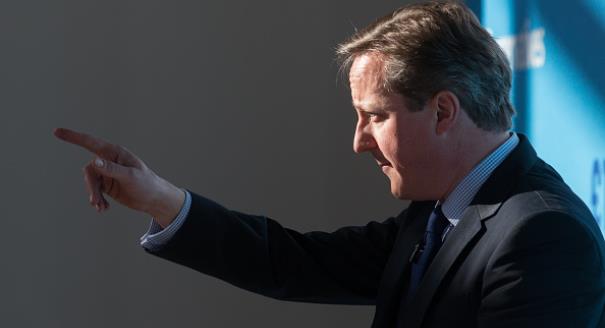
Source: Getty
The UK is moving dangerously close to leaving the European Union. It will require a radical shift in British policy to avert the country’s departure.
Britain has everything it wants from the European Union.
Yet if David Cameron, the British prime minister, is reelected in the general election to be held on May 7, he intends to renegotiate the terms of Britain’s EU membership. More importantly, he will then hold a referendum before the end of 2017 on whether the UK should remain in the EU.
Either way, Cameron has set Britain on a collision course with its European allies and with the United States. This is shortsighted and dangerous for all concerned.
Despite such a looming catastrophe, Cameron has been playing a pernicious game with Europe since taking his Conservative Party to power in 2010. He has used every opportunity to lambast Brussels and its bureaucracy in the hope of boosting his popularity back home.
At the same time, he has insulted hundreds of thousands of hardworking citizens from Eastern and Central Europe who moved to Britain after their countries joined the EU in 2004. Numerous studies have shown how these immigrants have contributed to Britain’s economy and have not milked the country’s social services, as Cameron has so often implied.
Cameron’s anti-immigrant rhetoric was intended to keep the populist and nationalist UK Independence Party, or UKIP, at bay. Instead, the prime minister’s words have had the contrary effect, with damaging consequences. UKIP has eaten into Cameron’s support. And Britain’s reputation as an open and welcoming country for motivated immigrants has been tarnished—except, of course, when it comes to Russian oligarchs.
Cameron has set #Britain on a collision course with its European allies and with the US.Tweet This
Indeed, looking back, it is surprising that Britain ever joined the EU. When it did so in 1973 under a Conservative prime minister, London already had an ambiguous relationship with Brussels. That ambiguity was a trait continued by Labour governments. Over the years, successive British governments have quarreled with Brussels, mostly over the competences of the European Commission, the EU’s executive.
Yet in retrospect, the sovereignty of the member states has not been undermined, contrary to what British and other Euroskeptics across Europe would argue. Defense, health, education, and tax policy are still national competences, while the internal market and competition are EU responsibilities. Without these two fundamental powers, the EU would be an oxymoron.
Moreover, Britain has negotiated many opt-outs. It is not a member of the eurozone. It is not a member of the passport-free Schengen zone. It has a special rebate on its contribution to the EU budget. And it is no longer part of the EU’s justice and home affairs policies.
Tellingly, as Europe faces increasing terrorist threats, Britain has chosen to remain in the European Arrest Warrant system, which allows member states to speed up the extradition of any EU citizen without a political decision. London has chosen to support the European Arrest Warrant precisely because it is in Britain’s interests.
More than ever, #Britain and the other 27 member states have an interest in strengthening the EU.Tweet This
And that is exactly why the UK should remain in the EU: it is in the country’s interests, and Europe’s, to do so. More than ever, Britain and the other 27 member states have an interest in strengthening the EU. The security and economic threats facing the EU, as well as the transatlantic relationship, are too great for any one EU country to go it alone.
It is naive to believe that Britain’s intelligence services or judicial authorities can deal with cybersecurity, cross-border terrorism, and all kinds of trafficking without closer cooperation with the country’s European allies.
It is naive, too, to believe that Britain or other member states can withstand Chinese or Russian attempts at corporate takeovers without the support of the European Commission’s powerful competition arm. As Britain and other EU countries indulge in lucrative bilateral deals with Beijing and Moscow, both China and Russia are adept at playing off the member states against each other.
Yet without the EU’s competition authorities, Russia would have been able to build the South Stream gas pipeline across the Black Sea. That project, which was later abandoned, would have enabled Russia to control large swaths of the gas market in Southeastern Europe.
Cameron has ducked these issues, even though there is a greater need than ever for more competition, more open markets, and closer cooperation to deal with the immense security threats facing Europe. Instead, Cameron has turned Britain to look inward at a time when it should be doing the opposite.
Britain’s introspection is not about the country trying to come to terms with the collapse of empire. That is long past. It is about a British government willfully allowing its influence in Europe to slip away for populist, short-term gains. And even though many EU countries, particularly Germany, do not want Britain to leave Europe, it is hard to see German Chancellor Angela Merkel rushing to rescue whichever party wins on May 7.

Nonresident Senior Fellow, Carnegie Europe
Dempsey is a nonresident senior fellow at Carnegie Europe
Recent Work
Judy Dempsey
Judy Dempsey
Carnegie does not take institutional positions on public policy issues; the views represented herein are those of the author(s) and do not necessarily reflect the views of Carnegie, its staff, or its trustees.
The war in Iran proves the United States is now a destabilizing actor for Europe and the Arab Gulf. From protect their economies and energy supplies to safeguarding their territorial integrity, both regions have much to gain from forming a new kind of partnership together.

Rym Momtaz
French President Emmanuel Macron has unveiled his country’s new nuclear doctrine. Are the changes he has made enough to reassure France’s European partners in the current geopolitical context?
Rym Momtaz, ed.
European reactions to the war in Iran have lost sight of wider political dynamics. The EU must position itself for the next phase of the crisis without giving up on its principles.

Richard Youngs
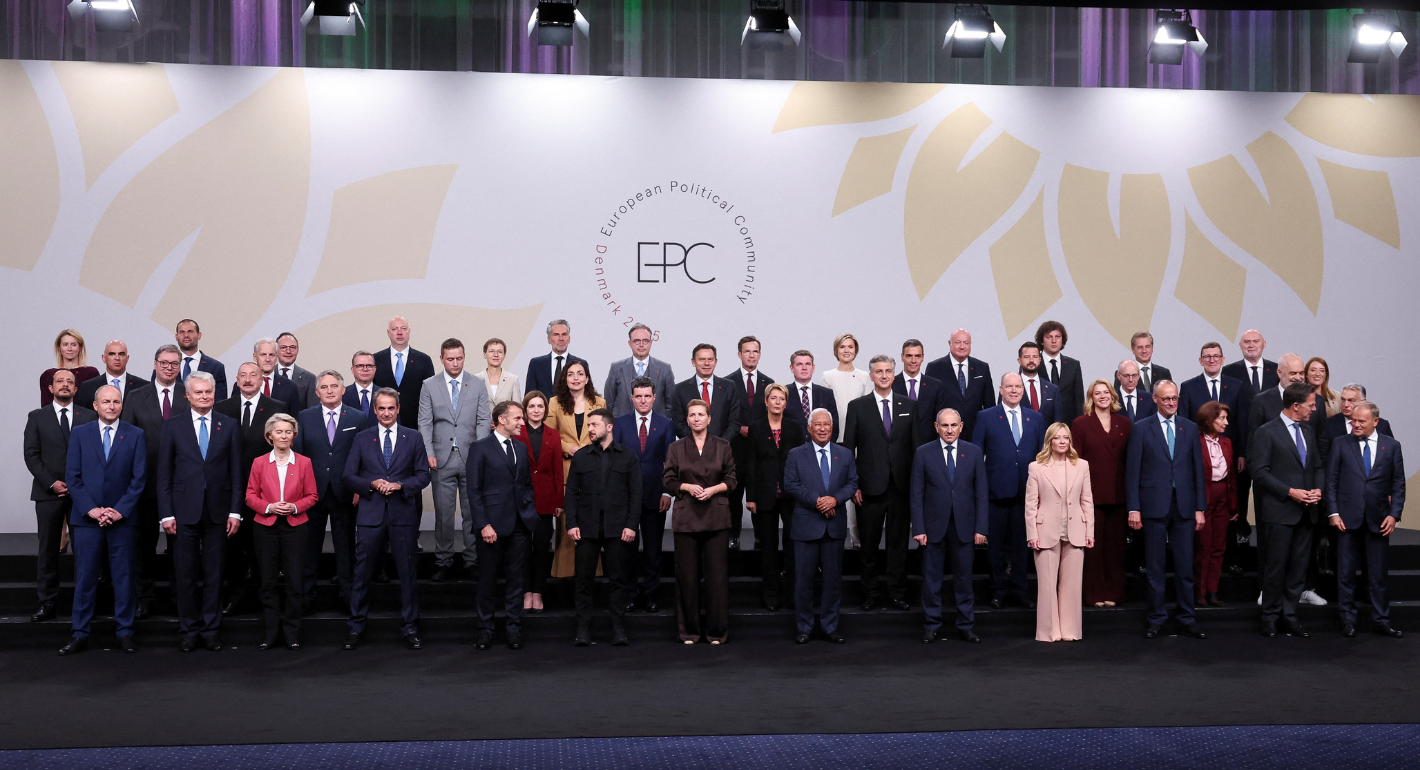
Europe isn’t as weak in the new geopolitics of power as many would believe. But to leverage its assets and claim a sphere of influence, Brussels must stop undercutting itself.

Dimitar Bechev

Europe’s reaction to the war in Iran has been disunited and meek, a far cry from its previously leading role in diplomacy with Tehran. To avoid being condemned to the sidelines while escalation continues, Brussels needs to stand up for international law.

Pierre Vimont