

Commentary
Judy Dempsey
{
  "authors": [
    "Judy Dempsey"
  ],
  "type": "commentary",
  "blog": "Strategic Europe",
  "centerAffiliationAll": "",
  "centers": [
    "Carnegie Endowment for International Peace",
    "Carnegie Europe"
  ],
  "collections": [
    "EU Integration and Enlargement"
  ],
  "englishNewsletterAll": "",
  "nonEnglishNewsletterAll": "",
  "primaryCenter": "Carnegie Europe",
  "programAffiliation": "",
  "programs": [],
  "projects": [],
  "regions": [
    "Europe",
    "Eastern Europe",
    "Western Europe"
  ],
  "topics": [
    "EU",
    "Foreign Policy"
  ]
}
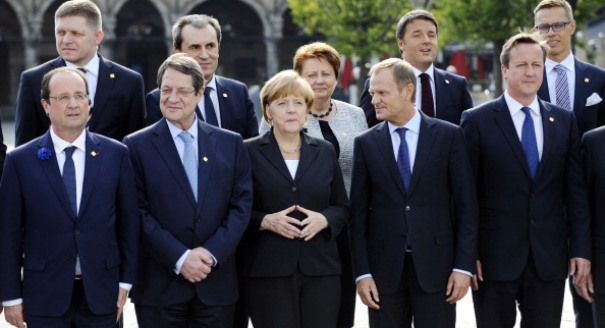
Source: Getty
Every week, a selection of leading experts answer a new question from Judy Dempsey on the foreign and security policy challenges shaping Europe’s role in the world.
Every week, a selection of leading experts answer a new question from Judy Dempsey on the foreign and security policy challenges shaping Europe’s role in the world.
Nothing undermines solidarity in the EU as much as the deep crisis of mutual trust. Whether it is a matter of the fair distribution of asylum seekers, debt relief for Greece, a stronger common foreign and defense policy, or the necessary steps to make monetary union sustainable, in the absence of confidence, none of these objectives can be reached.
Nothing undermines EU solidarity as much as the crisis of mutual trust.Tweet This
Without trust, governments revert to national solutions, even at the risk of losing key achievements of European integration such as the passport-free Schengen zone or even the common currency. Just as functionalism posits (positive) spillover effects for the way integration spreads from one area to the next, so there is also negative spillover when mistrust arising from one area of cooperation infects other areas, throwing the entire process into reverse.
How did Europe get into this mess? There are many causes, including a lack of leadership and honesty in public communication, overreliance on technocratic fixes, the surrender of the political space to populist demagogues, and insufficient efforts to overcome the deep divisions created by the financial crisis.
There is no silver bullet to restore the EU’s lack of trust. But if this most pernicious of all deficits is not tackled energetically, the process of unraveling will surely continue.
Yes, indeed.
Social solidarity, at least, is still intact. Oxfam is a veteran NGO and one of the best at fighting poverty all over the world. Humanitarian organizations, religious charities, and local volunteers across the continent strive to nurture the poor, welcome immigrants, and comfort the elderly.
Political solidarity is another matter. Germany will not help Greece in a show of solidarity. After World War II, the United States did not help Germany, Japan, and Italy—former foes—out of solidarity. Washington decided to foster a new world order to face Russia, and it worked.
Don't blame a lack of #solidarity for Europe's disorder.Tweet This
So in Europe, nobody will act out of solidarity, and that is quite OK. Greek Prime Minister Alexis Tsipras and Finance Minister Yanis Varoufakis aren’t losing their hands because Ebenezer Scrooge Europe is short-changing them. The Greek tragedy unfolds along two plotlines. European leaders lack the political genius to muster a plan to keep Athens in the eurozone; at the same time, they continue to push for reforms amid the economic turmoil that the country’s elites managed to concoct. Tsipras cozied up to a loony Stalinist crowd and, goose-stepping alongside the neo-Nazi Golden Dawn party, managed to create quite a mess.
So don’t blame a lack of solidarity for Europe’s disorder. Blame mediocrity from the EU, and blame populism and a lack of realism from Athens.
The past few months have not provided a showcase of European solidarity—with the two notable exceptions of continued sanctions on Russia for the country’s interference in eastern Ukraine, on the one hand, and the EU’s united stance against Greece, on the other. Yet this should be a time when Europeans realize more than ever the importance of the European project. The EU finds itself surrounded by instability on a scale that even the largest member states cannot manage alone.
#Europe must make a leap in the federal direction.Tweet This
The continent faces a stark choice between consolidation and fragmentation. In the past, crises were the catalyst for increased unification, and this is very much the case today. Europe must reverse the trend toward devolution back to its nations and make a leap in the federal direction.
For all its shortcomings, the European Commission has the common European interest as its focus and is best positioned to respond to the series of challenges Europe is facing. The EU’s executive must concentrate on consolidating the union’s core and on ensuring solidarity in dealing with migration from the south. The member states, through the Council of Ministers, must allow the commission to do so and must reverse the current trend away from the Community method, which emphasizes the role of supranational decisionmaking.
If this means letting Greece quit the eurozone and the UK leave the EU, then the price will have to be paid. But now is the time for Europeans to become truly European.

Nonresident Senior Fellow, Carnegie Europe
Dempsey is a nonresident senior fellow at Carnegie Europe
Recent Work
Judy Dempsey
Judy Dempsey
Carnegie does not take institutional positions on public policy issues; the views represented herein are those of the author(s) and do not necessarily reflect the views of Carnegie, its staff, or its trustees.
The war in Iran proves the United States is now a destabilizing actor for Europe and the Arab Gulf. From protect their economies and energy supplies to safeguarding their territorial integrity, both regions have much to gain from forming a new kind of partnership together.

Rym Momtaz
French President Emmanuel Macron has unveiled his country’s new nuclear doctrine. Are the changes he has made enough to reassure France’s European partners in the current geopolitical context?
Rym Momtaz, ed.
European reactions to the war in Iran have lost sight of wider political dynamics. The EU must position itself for the next phase of the crisis without giving up on its principles.

Richard Youngs
Europe isn’t as weak in the new geopolitics of power as many would believe. But to leverage its assets and claim a sphere of influence, Brussels must stop undercutting itself.

Dimitar Bechev
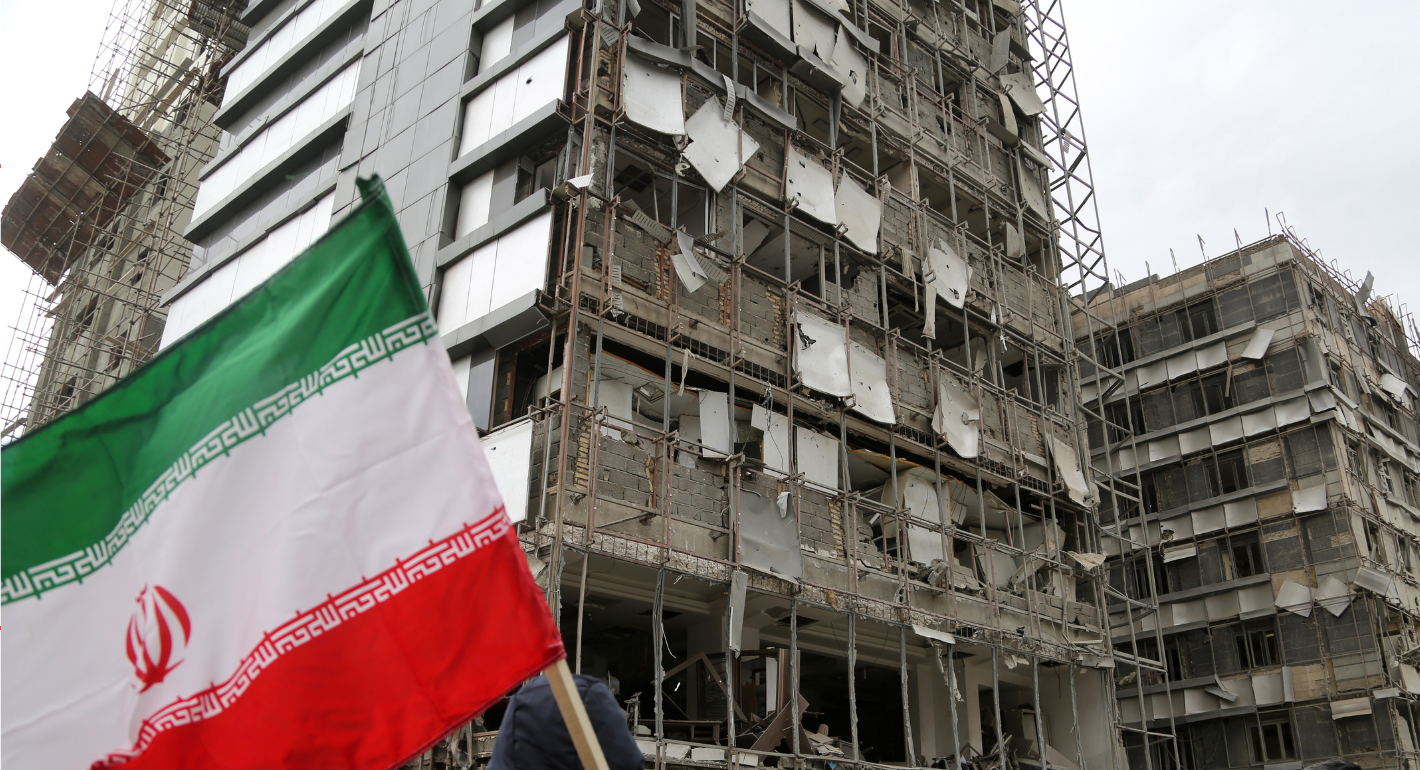
Europe’s reaction to the war in Iran has been disunited and meek, a far cry from its previously leading role in diplomacy with Tehran. To avoid being condemned to the sidelines while escalation continues, Brussels needs to stand up for international law.

Pierre Vimont