

Commentary
Before the next wave of EU enlargement takes place, the union needs to grapple with thorny questions of how power is distributed among its members.
Emil Sondaj Hansen, Ditte Brasso Sørensen
{
  "authors": [
    "Louise van Schaik",
    "Margriet Drent"
  ],
  "type": "commentary",
  "blog": "Strategic Europe",
  "centerAffiliationAll": "",
  "centers": [
    "Carnegie Endowment for International Peace",
    "Carnegie Europe"
  ],
  "collections": [],
  "englishNewsletterAll": "",
  "nonEnglishNewsletterAll": "",
  "primaryCenter": "Carnegie Europe",
  "programAffiliation": "",
  "programs": [],
  "projects": [],
  "regions": [
    "Europe",
    "Western Europe"
  ],
  "topics": [
    "Foreign Policy",
    "EU"
  ]
}
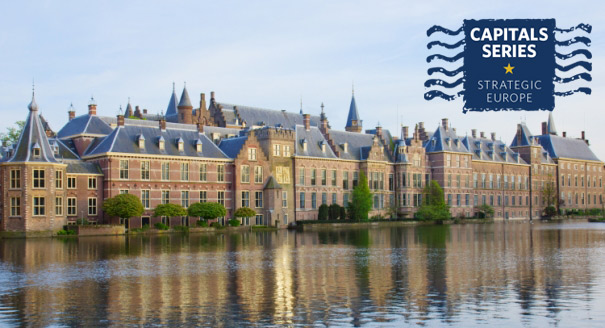
Source: Getty
Dutch foreign policy is relatively engaged and ambitious. But the Netherlands lacks a clear vision on key security issues and on ways to mitigate risks.
Strategic Europe continues its series devoted to explaining the foreign and security policy ambitions of the 28 EU member states. We have asked our contributors from each capital to give a candid assessment of their country’s perception of security and strategy, with a ranking on a scale from 0 (the laggards) to 5 (the ambitious). This week, the spotlight is on the Netherlands.
*
The release of a new season of the U.S. TV series House of Cards in February 2015 prompted Dutch Foreign Minister Bert Koenders to conclude that realism had returned to Europe. Arguably, the real turning point for the Netherlands was the downing of Malaysia Airlines Flight 17 over eastern Ukraine in the summer of 2014, with the loss of 193 Dutch lives. Since then, the Dutch are more willing to sacrifice economic gains for increased security and are more interested in using the EU as a vehicle to strengthen that security.

In terms of foreign policy ambitions, the Dutch do relatively well and could be ranked 4 out of 5. The Netherlands is aiming to obtain a nonpermanent seat on the UN Security Council for the 2017–2018 term. The country also participates in military missions abroad, such as in Mali.
The Netherlands cooperates pragmatically with neighboring countries to maintain critical defense capabilities and improve the usability of its forces. Prominent examples are the country’s extensive naval cooperation with Belgium and the integration of the Dutch Airmobile Forces into the German Rapid Forces Division.
Changes in Dutch foreign policy are proceeding slowly but surely. In 2014, The Hague decided on a limited increase to the country’s defense budget and reversed cuts to the funding of the intelligence service from 2015 onward. For 2016, another increase in defense spending is expected.

Dutch businesses tacitly accept the EU economic sanctions imposed on Russia after Moscow’s interference in eastern Ukraine—even though Dutch exporters suffer and sometimes look for creative ways to circumvent the Russian ban on imports of EU dairy products, fruits, and vegetables.
The main problem with Dutch foreign policy is that despite its good intentions, the Netherlands lacks a well-thought-out vision on key security issues and on ways to mitigate risks. The Hague has limited military capabilities and little appetite to scale up funding to the levels that the country realistically needs to face current and new security challenges.
The Dutch government acknowledges that the EU is best equipped to face the challenge of hybrid warfare, given the union’s ability to link defense, diplomacy, and development. This may be true, but it is unclear how the Dutch see such wishful thinking being made operational. How does the Netherlands enable the EU to operate effectively in war zones? Would the Dutch accept casualties from an EU military mission?
At the same time, the transatlantic reflex in security and defense policies is still very much alive in The Hague. Does the Netherlands really believe the EU can tackle hybrid warfare without the United States being involved?
The Netherlands was initially skeptical about the necessity to draft a new European Security Strategy to replace the original 2003 document. This position changed after the rapid deterioration of the security situation at the EU’s southern and eastern borders, an area referred to today as a ring of instability. In view of its presidency of the EU Council of Ministers in the first half of 2016, the Netherlands now hopes to play a role in the process toward a new security strategy.
The Dutch government is looking for a strategy that has a broad outlook and also takes into account threats to internal security. The terrorist attacks in Paris and Copenhagen in early 2015 and the large groups of jihadist volunteers leaving European cities to join the self-styled Islamic State have highlighted the interconnectedness between external and internal threats.
On finance and trade issues, the Netherlands is a considerable international force, but it is also understanding new realities. The country has indicated it will follow other EU member states in joining the Chinese alternative to the World Bank, the Asian Infrastructure Investment Bank. The Dutch government has also agreed to share its seat on the board of the International Monetary Fund with Belgium, to accommodate the concerns of emerging economies that there are too many Europeans in the Bretton Woods institutions.
The Transatlantic Trade and Investment Partnership was initially not widely debated in the Netherlands. But recently, the investor-to-state dispute settlement mechanism, which would allow companies to take legal action against governments whose decisions risk undermining firms’ investments, has become a bone of contention. The coalition partners in The Hague are divided, with the center-left Labor Party rather hostile to TTIP and the conservative-liberal People’s Party for Freedom and Democracy favoring the opening up of trade relations with the United States.
In sum, a new sense of realism has entered Dutch foreign policy. The current government is rather constructive when it comes to strengthening the EU’s diplomatic aspirations and policies. Citizens do not contest a larger role for the EU on foreign policy matters, whereas they are more critical of Europeanization in other areas.
Nevertheless, a key issue is whether the Dutch truly believe the EU can deal with matters of high politics without the United States being involved. Are the Dutch ready to abandon Frank Underwood while letting the EU embrace his Machiavellian style?
Louise van Schaik and Margriet Drent are senior research fellows at the Netherlands Institute of International Relations, Clingendael. They coordinate the knowledge groups on EU in the World and Security, respectively.
Louise van Schaik
Margriet Drent
Carnegie does not take institutional positions on public policy issues; the views represented herein are those of the author(s) and do not necessarily reflect the views of Carnegie, its staff, or its trustees.

Before the next wave of EU enlargement takes place, the union needs to grapple with thorny questions of how power is distributed among its members.


Emil Sondaj Hansen, Ditte Brasso Sørensen

A summer of escalation in the Black Sea has hurt Ukraine economically and is exacerbating world food security. A truce is needed—as is a broader reframing of Europe’s Ukraine strategy.

Thomas de Waal

Are Germany’s economic, industrial, and political struggles becoming a liability for the EU’s ability to rise to the geopolitical moment?

Rym Momtaz, ed.

European Commission President Ursula von der Leyen is about to give her annual address on the state of the EU. Here’s what she won’t—but should—say.
Rym Momtaz

The aftermath of the Ceuta crisis shows Europe has drawn the wrong lessons. Rather than doubling down on failed migration policies, the EU needs to address the underlying roots of such episodes.

Richard Youngs