

Commentary
As we close out another season of Strategic Europe, it is worth taking stock of the deep shifts underway.
Rym Momtaz
{
  "authors": [
    "Magda Tsakalidou",
    "Stratos Pourzitakis"
  ],
  "type": "commentary",
  "blog": "Strategic Europe",
  "centerAffiliationAll": "",
  "centers": [
    "Carnegie Endowment for International Peace",
    "Carnegie Europe"
  ],
  "collections": [],
  "englishNewsletterAll": "",
  "nonEnglishNewsletterAll": "",
  "primaryCenter": "Carnegie Europe",
  "programAffiliation": "",
  "programs": [],
  "projects": [],
  "regions": [
    "Europe",
    "Western Europe"
  ],
  "topics": [
    "EU",
    "Democracy"
  ]
}
Source: Getty
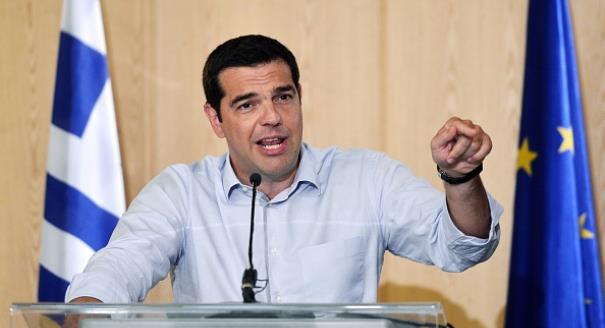
Greece’s ruling Syriza party looks set to win the snap election to be held on September 20. Yet the victory may be thin, resulting in a new coalition government.
In a recent interview with public television, former Greek prime minister Alexis Tsipras defended his tactics in negotiating a third bailout package with his country’s international creditors, arguing that “as in life so in politics, one needs to take risks.” Tsipras’s decision on August 20 to call a fresh election for September 20 was one more political gamble, as the leader of Greece’s ruling far-left Syriza party seeks to consolidate his grip on power.
A closer look reveals that a Pyrrhic victory appears the most likely outcome, at least for now. Two months after Greece held a referendum on the proposed bailout program, and with the package only recently inked, the country is not yet out of the woods. Once again, political and economic uncertainty looms large, threatening to push Greece into a downward spiral.
Tsipras lost control of the Greek parliament after he signed the bailout program despite its overwhelming rejection in July’s referendum. When a faction of Syriza members of parliament who constitute the party’s most radical voices, represented by the former Communist Panagiotis Lafazanis, withdrew their support for the government, Tsipras announced a snap election. In doing so, he opted against the possibility of forming a new coalition.
The rationale behind Tsipras’s decision is that given the painful austerity measures that must be implemented in the following months as part of the bailout package, as well as the government’s loss of parliamentary control and mounting pressure from Lafazanis’s newly established political formation, a new election was inevitable.
Tsipras’s two major concerns have been the center-right New Democracy, which has been regrouping under a provisional leadership, and Lafazanis, who has been in the process of setting up his political network. Reasonably, Tsipras’s strategy was to take his opponents by surprise, and hence, time has been of the essence. Without its radical faction, the best bet for Syriza is to consolidate its dominance of the center left and achieve an emphatic victory that will allow the party full control of the parliament.
As Greece heads toward the election, Syriza is the frontrunner, with the party’s members expressing their confidence in a landslide. Such optimism, however, is far-fetched, despite polls that until some time ago were suggesting Syriza was ahead of New Democracy by more than 10 percentage points.
After all, every Greek political party that has introduced a bailout program has sustained serious political damage. Following July’s referendum, there has been growing dismay among Syriza’s voters at the U-turn that led to the third bailout program as well as the capital controls that were imposed at the end of June.
The position of Greek farmers will be of critical importance in the election, as they represent 13 percent of the country’s total labor force and massively supported Syriza in the last election in January 2015. Now that the new bailout program stipulates painful austerity measures for small, family-owned units, the farmers’ support is far from guaranteed.
It should be taken for granted that political parties from both ends of the spectrum will severely criticize Tsipras for the inconsistency between his past rhetoric and his current agenda. In parallel, tensions within Syriza have reached boiling point, and a number of high-ranking officials have been distancing themselves from the party ahead of the coming election.
Hence, although Syriza is in the lead in this race, a marginal victory appears to be the most plausible outcome, and consequently, Tsipras will have to look for a coalition partner. Currently, he rejects any partnership with the so-called systemic parties, referring to the centrist The River, the center-left Panhellenic Socialist Movement (PASOK), and New Democracy. According to recent polls, the right-wing Independent Greeks will barely make it into the parliament, and thus a Syriza–Independent Greek coalition might not be enough for a parliamentary majority.
In light of this, Syriza should be expected to climb down from its hostile rhetoric and form a coalition government with The River or PASOK to avert a political deadlock and an economic collapse. Of course, under this scenario, Tsipras would have to explain why he rejected earlier invitations to form a coalition government, instead putting Greece through a new election.
Problems in Greece will keep on mounting in the aftermath of the election. The new government will have to walk a tightrope from day one, rebuilding relations with creditors, restoring citizens’ trust, and pursuing necessary reforms. The prospects for Greece are far from rosy, as unemployment is still at unsustainably high levels, the economy has returned to recession, and political polarization impedes any attempt at consensual politics. Under these circumstances, Syriza will have to implement a series of austerity measures that most of its members have openly denounced.
Even if New Democracy wins the election, this would not make much difference: during previous periods in government, the center-right party has proved unable or at least unwilling to change the course of the country and fight chronic problems such as corruption and tax evasion. The elephant in the room is that after almost six years of crisis and with the economy having shrunk by more than 25 percent, the new bailout program runs the risk of failing because of political fatigue and vested interests that impede any structural reforms.
Since May 2014, Greece has organized two parliamentary elections, one referendum, European Parliament elections, and municipal elections. This prolonged political instability has paralyzed the reform process, diminishing hopes of stability and economic recovery. Regardless of the composition of the next government, Greece’s new political leadership will face the daunting task of implementing a questionable bailout program that has been characterized as Greece’s last opportunity and in which very few Greeks believe.
The odds are that after September 20, a new election will again be just around the corner. The eurozone’s biggest headache is far from over.
Magda Tsakalidou is a final-year law student at Aristotle University of Thessaloniki and a researcher on economic relations between the EU and East Asia.
Stratos Pourzitakis is a PhD candidate at the Department of Government and International Studies at Hong Kong Baptist University, under the scholarship of the EU Academic Program in Hong Kong.
Magda Tsakalidou
Stratos Pourzitakis
Greek Ministry of Finance
Carnegie does not take institutional positions on public policy issues; the views represented herein are those of the author(s) and do not necessarily reflect the views of Carnegie, its staff, or its trustees.

As we close out another season of Strategic Europe, it is worth taking stock of the deep shifts underway.

Rym Momtaz
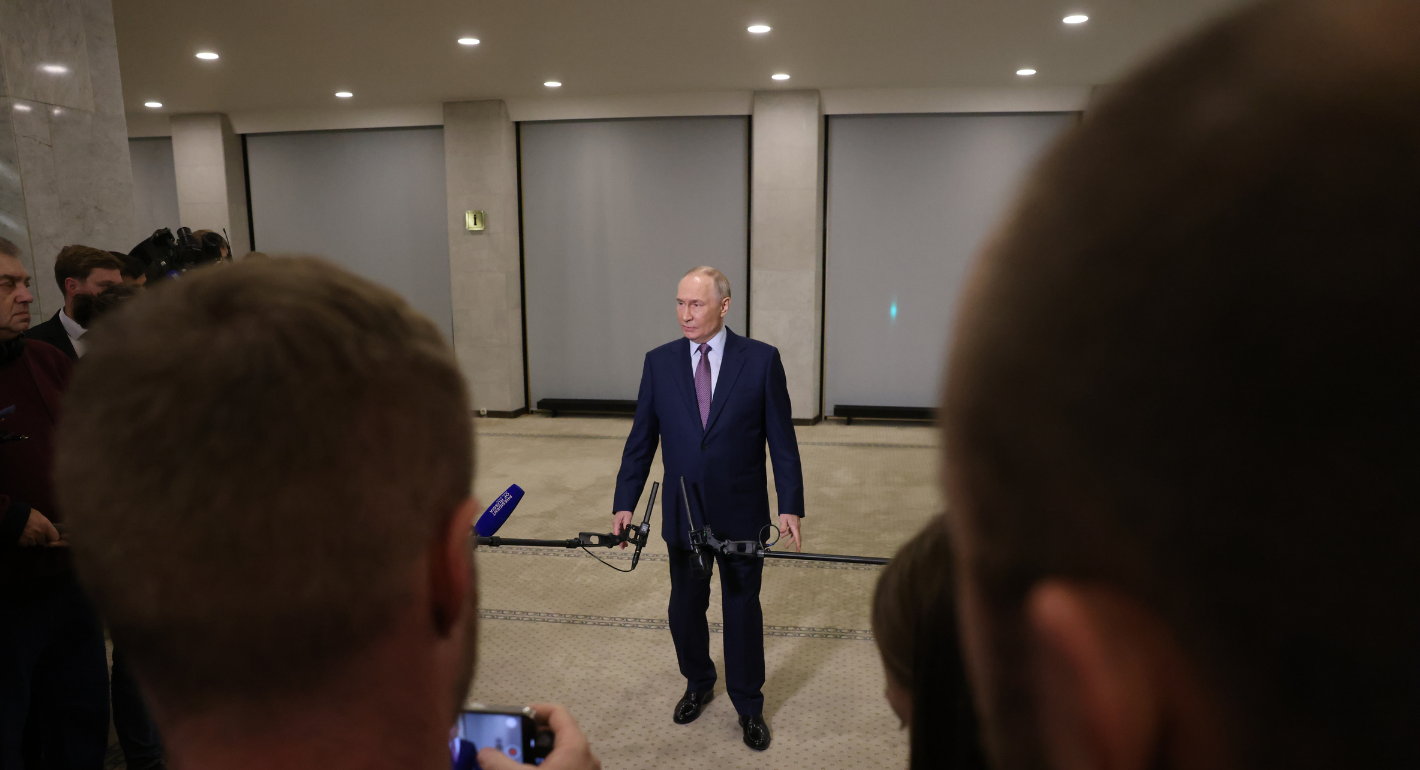
The EU had to compromise to adopt a twenty-first sanctions package against Russia, exposing growing cracks in the union’s resolve. Is this latest, weaker round worth it to keep pressure on Moscow?
Rym Momtaz, ed.

Trump is distracted and Ukraine wants Europe to step up. The continent’s leaders must find their voice and assert it in talks with Russia.

Alissa de Carbonnel

Mounting economic strain and battlefield losses will not necessarily make the Kremlin less dangerous. They could instead push Moscow toward a more aggressive hybrid campaign designed to test NATO’s Eastern flank, exploit allied hesitation, and fracture European resolve.

Maksym Beznosiuk
Over the past ten years, NATO has held almost as many summits as it did during the entirety of the Cold War. Are they still useful, or is it time to stop holding annual meetings?
Rym Momtaz, ed.