

Commentary
Nathalie Tocci, Jan Techau
{
  "authors": [
    "Jan Techau"
  ],
  "type": "commentary",
  "blog": "Strategic Europe",
  "centerAffiliationAll": "",
  "centers": [
    "Carnegie Endowment for International Peace",
    "Carnegie Europe"
  ],
  "collections": [
    "EU Integration and Enlargement"
  ],
  "englishNewsletterAll": "",
  "nonEnglishNewsletterAll": "",
  "primaryCenter": "Carnegie Europe",
  "programAffiliation": "",
  "programs": [],
  "projects": [],
  "regions": [
    "Europe",
    "Western Europe"
  ],
  "topics": [
    "Foreign Policy",
    "EU"
  ]
}
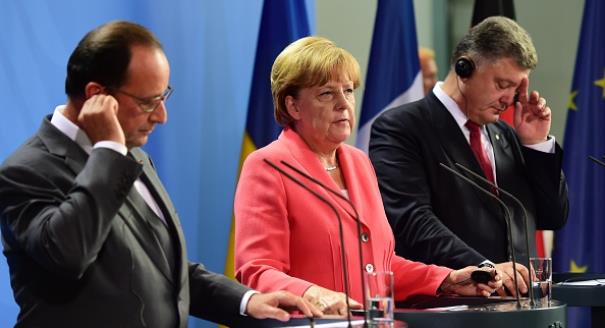
Source: Getty
Between now and the end of 2015, a number of fundamental crises will combine to push the capacity for European policymaking to its limits.
The fall season is always the hard part of European policymaking. After the long summer break, what could be conveniently fitted into a full six months in the first half of the year must be squeezed into the brutally short run between early September and mid-December.
In 2015, these three and a half months promise to be extraordinarily dense. Rarely has the outlook for that period been more dismal than this time around. Numerous crises of fundamental quality will overlap and push the capacity for European policymaking to its limits. The coming months could well be remembered as the autumn of our discontent.
Whether the unavoidable system of mandatory quotas for refugees across the EU can be implemented in a universally acceptable way remains doubtful. The political bargains needed to get there will be extremely tough to negotiate, and even if the system came about, ugly scenes might follow, like those seen very recently in Germany, where refugees were attacked in violent riots organized by neo-Nazi gangs.
At the same time, the Russia-Ukraine crisis, Europe’s most important foreign policy stress test, will enter its next round. Toward the end of the year, the EU’s 28 nations will assess the implementation of the so-called Minsk II agreement to end the fighting in eastern Ukraine. The result of that assessment will have a decisive impact on whether the EU’s sanctions regime against Russia can stay in place or must be abandoned. Unanimity will be needed for the continuation of the measures, and the haggling over whether or not Minsk is a success has already begun.
While not all EU members may agree, the accord has produced some relative calm. But key provisions have not been implemented—and in fact, Russia never meant to implement them. The government of President Petro Poroshenko in Kiev is not without blame here either, so a unified EU position might be difficult to sustain on an issue of the highest priority for European security. A show of disunity among EU members would be disastrous.
The fall season is always the hard part of European policymaking.Tweet This
All this will play out against the backdrop of the developing diplomatic effort to curb Iran’s nuclear program. The international agreement reached in Vienna on July 14 will most likely be ratified by the U.S. Congress in mid-September, but the key part of the story is only then to follow: how can the verification regime that will be put in place to oversee the implementation of the agreement be tough and verifiable?
More importantly, perhaps, how can violations by Iran, which many observers expect to occur, be sanctioned in a meaningful way? The deal is only as good as its verification system, and the doubts about that part of the agreement remain profound.
Also in the fall, the next drama over global efforts to tackle climate change will enter its next stage. Between November 30 and December 11, the world will congregate in Paris to negotiate global climate protection goals and the way to get there. Despite some hopeful signs coming from both the United States and China, chances for a meaningful deal that does not water down goals and tools are small.
China’s massive current economic downswing will make things all the more difficult. A meaningless result in Paris, or outright failure, could send yet another message of irresponsibility from the global community and add to a feeling of impotence in the face of complex, cross-border problems.
At least four important elections will add suspense but also the possibility of harder times ahead. Poland (on October 25), Spain (before December 20), Greece (perhaps as early as mid-September), and Turkey (most likely in November) will elect new parliaments and therefore new governments.
Poland is expected to become a less constructive player if the staunchly conservative Law and Justice party comes first in the poll.
In Spain, the big question is how strong the populist Podemos party will emerge from the vote, and how much of an impact it might have after a government is formed. The party’s antireform rhetoric raises fears that Spain’s fairly successful way of dealing with the fallout from the financial crisis may come to an end.
Rarely has the political outlook for the fall been more dismal than in 2015.Tweet This
In Greece, Prime Minister Alexis Tsipras will seek a fresh mandate after effectively having been reformatted from Marxist revolutionary to more pragmatic problem solver. Can he get reforms done while keeping the country together? Or will renewed populism be too strong a temptation?
The outcome of the Greek election is as unclear as that of the Turkish poll, which became necessary after no government could be formed following the last election barely three months ago. Many external observers fear that Turkish President Recep Tayyip Erdoğan’s party might score the success of a parliamentary majority that it could not achieve in June, giving Erdoğan even more power to rebuild the country after his own taste.
Add to all of this the increasingly harsh rhetoric coming out of the early stages of the 2016 U.S. presidential election cycle, the worsening of the domestic situation in Russia, the risk of global recession after China’s economic meltdown, more atrocities by the self-styled Islamic State in Syria and Iraq, the ever-growing possibility of a major terrorist attack in Europe, a victory by the left-leaning Jeremy Corbyn in the UK Labour Party’s leadership race, and a new round of espionage leaks by American whistleblower Edward Snowden—and you have all the ingredients for a crisis cocktail of historic proportions. Not to mention the unknown unknowns, black swans, and freak accidents.
Strong nerves will be needed this fall. Make sure to follow Carnegie Europe to make sense of it all.

Director, Europe Team, Eurasia Group
Techau is director with Eurasia Group's Europe team, covering Germany and European security from Berlin. Previously, he was director of Carnegie Europe.
Recent Work

Nathalie Tocci, Jan Techau
Jan Techau
Carnegie does not take institutional positions on public policy issues; the views represented herein are those of the author(s) and do not necessarily reflect the views of Carnegie, its staff, or its trustees.
French President Emmanuel Macron has unveiled his country’s new nuclear doctrine. Are the changes he has made enough to reassure France’s European partners in the current geopolitical context?

Rym Momtaz, ed.
European reactions to the war in Iran have lost sight of wider political dynamics. The EU must position itself for the next phase of the crisis without giving up on its principles.

Richard Youngs
Europe isn’t as weak in the new geopolitics of power as many would believe. But to leverage its assets and claim a sphere of influence, Brussels must stop undercutting itself.

Dimitar Bechev
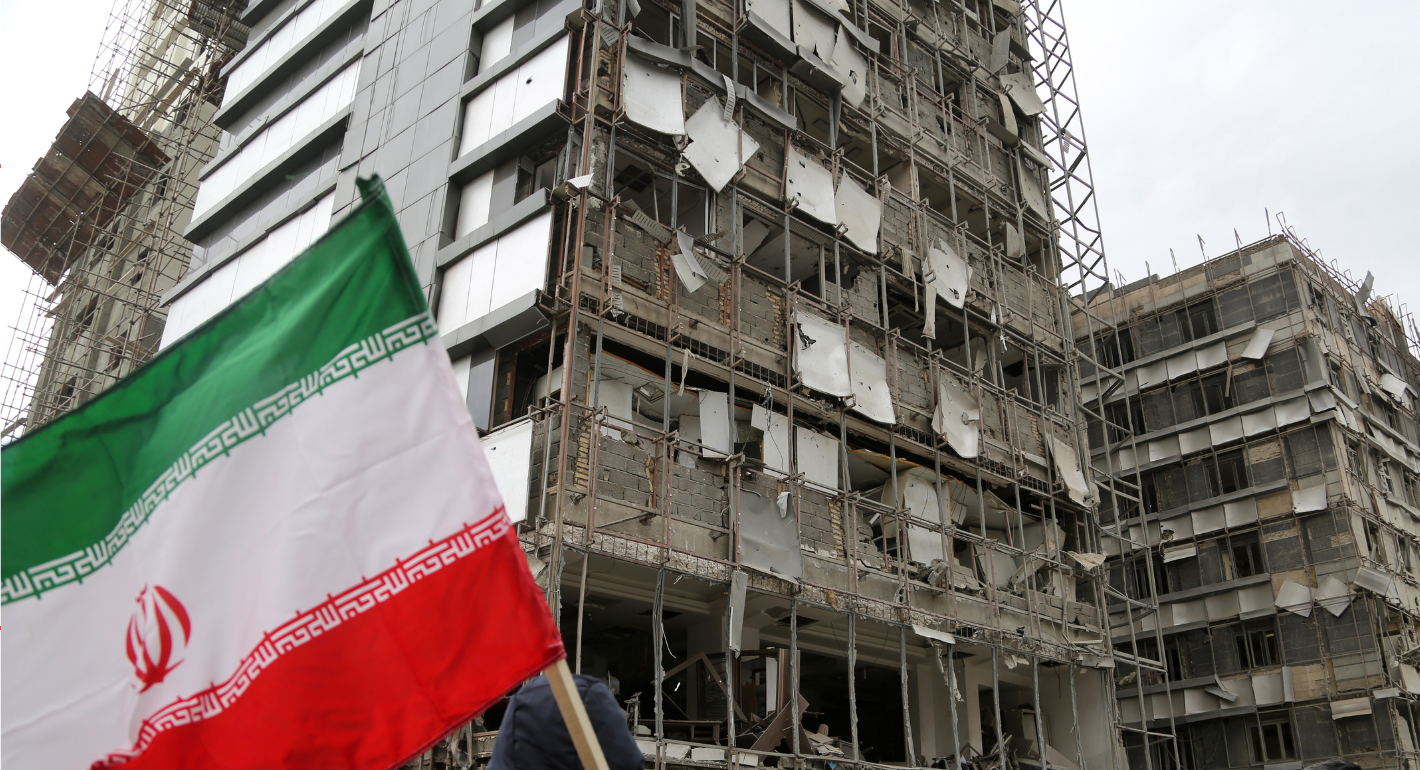
Europe’s reaction to the war in Iran has been disunited and meek, a far cry from its previously leading role in diplomacy with Tehran. To avoid being condemned to the sidelines while escalation continues, Brussels needs to stand up for international law.

Pierre Vimont
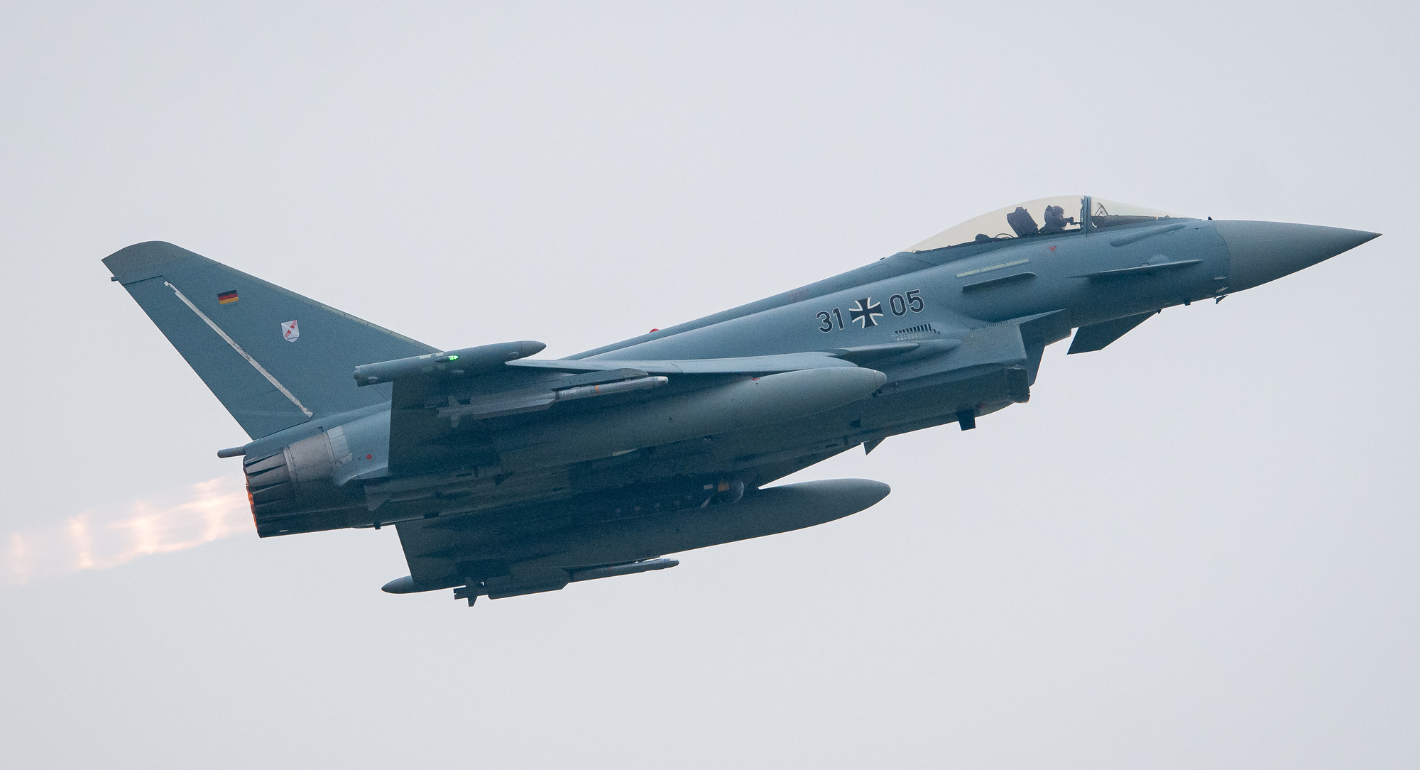
France and Germany’s failure to agree on the Future Combat Air System (FCAS) raises questions about European defense. Amid industrial rivalries and competing strategic cultures, what does the future of European military industrial projects look like?
Rym Momtaz, ed.