

Commentary
Judy Dempsey
{
  "authors": [
    "Judy Dempsey"
  ],
  "type": "commentary",
  "blog": "Strategic Europe",
  "centerAffiliationAll": "",
  "centers": [
    "Carnegie Endowment for International Peace",
    "Carnegie Europe"
  ],
  "collections": [
    "Europe’s Eastern Neighborhood"
  ],
  "englishNewsletterAll": "",
  "nonEnglishNewsletterAll": "",
  "primaryCenter": "Carnegie Europe",
  "programAffiliation": "",
  "programs": [],
  "projects": [],
  "regions": [
    "Europe",
    "Türkiye",
    "Middle East",
    "Eastern Europe"
  ],
  "topics": [
    "Democracy",
    "Civil Society"
  ]
}
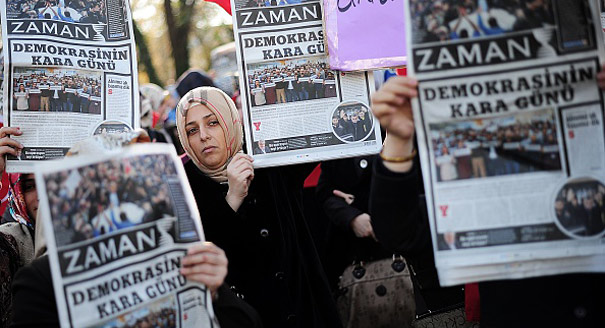
Source: Getty
Democracies are doing too little to support activists struggling to defend press freedom, argues Dunja Mijatovic, the OSCE’s outgoing representative on freedom of the media.
During her six years as the representative on freedom of the media of the Organization for Security and Cooperation in Europe (OSCE), Dunja Mijatović has seen an erosion of press freedom in many of the organization’s 57 member states. Look at what happened in Turkey on March 4. The police raided the offices of the Zaman newspaper, whose journalists had criticized Turkish President Recep Tayyep Erdoğan’s increasingly authoritarian policies.
The erosion of media freedom was described in a depressing assessment by Mijatović, a feisty Bosnian who was born in Sarajevo and who knows from firsthand experience how war fuels propaganda and how countries in transition often pay lip service to press freedom.
They are certainly not doing that in Central Asia. There, the media are particularly vulnerable. In Kyrgyzstan, a country Mijatović said was “once a shining example in the region in terms of the work we were doing,” media freedom is in jeopardy.
As for Azerbaijan, President Ilham Aliyev has waged an unremitting campaign against independent journalists and independent nongovernmental organizations. Scores of activists are behind bars. “Many say the crackdown in Azerbaijan is related to the government’s fear of another Maidan,” Mijatović said, referring to the pro-democracy movement that brought down Ukraine’s former president Viktor Yanukovych, or maybe the falling price of oil.
Whatever the reason, she criticizes the response from the international community to such crackdowns. “For me and for others working on human rights, you need like-minded countries to echo what you are saying,” she said. “There are people in prison for standing up for their rights. There are people being intimidated, beaten, killed, with no judicial investigation. It’s not only in Azerbaijan. It’s in many other states too.”
Then there’s the issue of media ownership that impinges on press freedom. In Russia, Ukraine, and the Western Balkans, the media have become a political tool for the elites and oligarchs. “You see how civil society in Russia has been severely weakened. The independent media are disappearing. But this should not be a sign for all of us just to shrug our shoulders. We have to deal with people who are willing to protect the profession,” Mijatović argued.
In Ukraine, as soon as Petro Poroshenko became president in 2014, she raised with him the issue of media ownership. “Poroshenko said he was going to sell all his assets except Channel 5 TV. And I said to him the first thing he should get rid of was the television,” Mijatović recalled. He didn’t. It rankles her. “We managed to help [Ukraine] a lot with changing legislation. But there’s still impunity. Kiev is still not delivering when it comes to attacks on journalists,” she added.
Closer to home, Mijatović has kept up the pressure on Hungary and, more recently, on Poland, countries that fought to rid themselves of Communism but whose governments have now turned on the media.
But it is the Western Balkans that Mijatović is particularly worried about. For her, the transitions there are far from complete. “Twenty years after the war, many things have been achieved. You could see a way forward. But it’s sliding back again. There’s stagnation,” she said.
One reason is the legacy of the Yugoslav Wars of the 1990s, which led to terrible bloodshed and suffering. “In general, the whole region has the same sort of illness: trying to overcome the scars and bruises created during the war,” Mijatović explained. The other reason is a reluctance by leaders to accept democratic values. “They can can change their T-shirts and call themselves democrats,” she said.
She also cited the region’s rampant corruption, the threats meted out to investigative journalists, and the way in which broadcasting has still to be radically overhauled. “State television in the Western Balkans has not been transformed into a genuinely public-service broadcaster,” Mijatović said. “We are still fighting against impunity. The region has quite good laws, but when it comes to implementation, it is almost zero. It is all related to the lack of political will.”
Mijatović believes that the transitions in the Western Balkans will not be completed if there is no stick from the European Commission.
Leaving aside Europe’s refugee crisis, which has the potential to destabilize the region, Mijatović also said not enough international attention was being paid to the Western Balkans—either for lack of interest or because there were other, more pressing issues such as the conflicts in Syria or Ukraine.
“It’s as if [the international community] were saying the Balkans is fine. But we are anything but fine,” Mijatović opined as she passes to her successor the many files related to the ever-growing attacks on media freedom in OSCE countries.

Nonresident Senior Fellow, Carnegie Europe
Dempsey is a nonresident senior fellow at Carnegie Europe
Recent Work
Judy Dempsey
Judy Dempsey
Carnegie does not take institutional positions on public policy issues; the views represented herein are those of the author(s) and do not necessarily reflect the views of Carnegie, its staff, or its trustees.
French President Emmanuel Macron has unveiled his country’s new nuclear doctrine. Are the changes he has made enough to reassure France’s European partners in the current geopolitical context?

Rym Momtaz, ed.
European reactions to the war in Iran have lost sight of wider political dynamics. The EU must position itself for the next phase of the crisis without giving up on its principles.

Richard Youngs
Europe isn’t as weak in the new geopolitics of power as many would believe. But to leverage its assets and claim a sphere of influence, Brussels must stop undercutting itself.

Dimitar Bechev
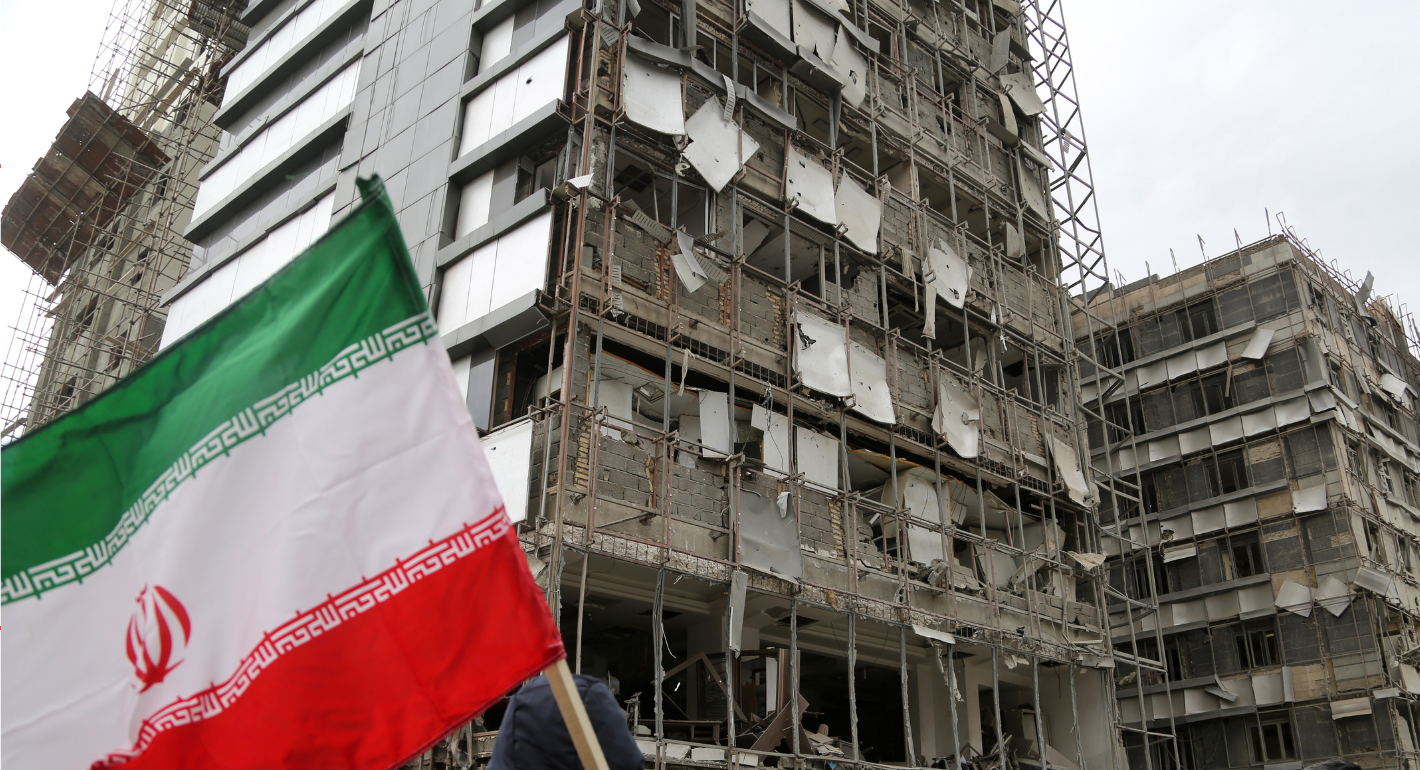
Europe’s reaction to the war in Iran has been disunited and meek, a far cry from its previously leading role in diplomacy with Tehran. To avoid being condemned to the sidelines while escalation continues, Brussels needs to stand up for international law.

Pierre Vimont
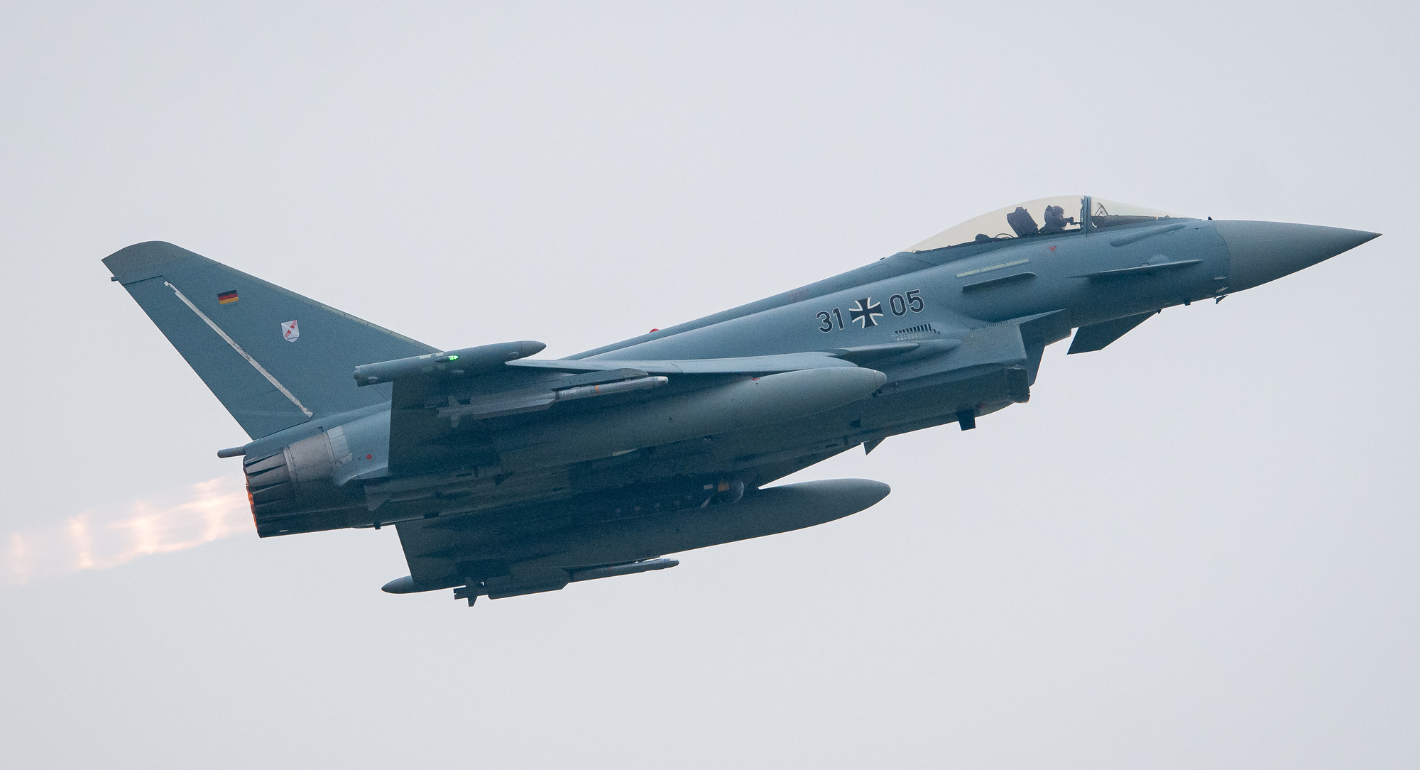
France and Germany’s failure to agree on the Future Combat Air System (FCAS) raises questions about European defense. Amid industrial rivalries and competing strategic cultures, what does the future of European military industrial projects look like?
Rym Momtaz, ed.