

Commentary
Thomas de Waal
{
  "authors": [
    "Thomas de Waal"
  ],
  "type": "commentary",
  "blog": "Strategic Europe",
  "centerAffiliationAll": "",
  "centers": [
    "Carnegie Endowment for International Peace",
    "Carnegie Europe",
    "Carnegie Russia Eurasia Center"
  ],
  "collections": [
    "Europe’s Eastern Neighborhood"
  ],
  "englishNewsletterAll": "",
  "nonEnglishNewsletterAll": "",
  "primaryCenter": "Carnegie Europe",
  "programAffiliation": "",
  "programs": [],
  "projects": [],
  "regions": [
    "Europe",
    "Eastern Europe",
    "Moldova"
  ],
  "topics": [
    "Security"
  ]
}
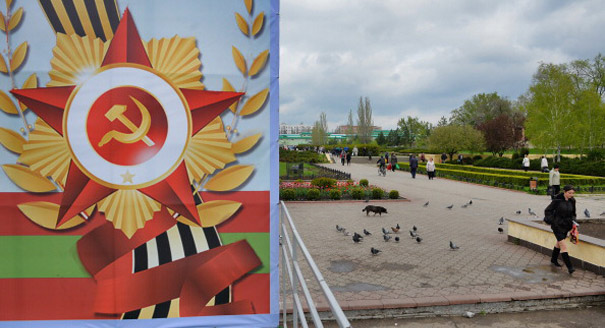
Source: Getty
Moldova’s election of a pro-Russian president may be symbolically important but is unlikely to assuage the conflict in the country’s breakaway region of Transdniestria.
The election of the Socialist and avowedly pro-Russian candidate Igor Dodon as president of Moldova on November 13 has had a far bigger impact in the news than his small country usually enjoys. Observers have predicted that Moldova will swing away from the EU and back into Russia’s orbit. They have paid particular attention to comments Dodon has made that Ukraine’s annexed peninsula of Crimea is a de facto part of Russia and that a similar rapprochement by Chişinău with Russia might help resolve Moldova’s protracted conflict with the breakaway territory of Transdniestria.
But a reality check is needed here. First, although Dodon’s elevation to the position of head of state has symbolic importance, his constitutional powers are very limited. Real power in Moldova still lies with the country’s parliament, government, and behind-the-scenes patron, businessman Vladimir Plahotniuc, all of whom will keep up Moldova’s pro-European orientation. Plahotniuc derives more benefit from Dodon’s victory than he would have from the success of the defeated candidate, pro-European former education minister Maia Sandu. He will now use the election of a pro-Russian president to try to leverage more support from the country’s Western partners.
Second, whatever the new president may say about the Transdniestria conflict, one person cannot move the strict parameters that have defined it for twenty-five years. Dodon will know only too well that in 2003, an attempt by then Moldovan president Vladimir Voronin—at a time when the president had real executive powers—to do a deal with Russia on the territory crashed in flames.
That is also a lesson for the much more modest ambitions of Germany, which in 2016, as chairman of the Organization for Security and Cooperation in Europe (OSCE), has tried to move the Transdniestria peace process forward. Germany’s intention was good, especially as this conflict now has a destabilizing effect on Ukraine. Evidently, German Foreign Minister Frank-Walter Steinmeier also saw Transdniestria as a second-order issue on which the West could reestablish some trust with Moscow.
Progress, unfortunately, has been minimal, even though Transdniestria looks much more tractable than other conflicts in Europe. After all, there is almost no ethnic animosity between the sides and constant traffic between the two banks of the Dniester River. And in 2016, Transdniestria quietly signed up to Moldova’s commitments under its agreement with the EU to create a Deep and Comprehensive Free Trade Area.
But the incentives to make a deal that changes the status quo are few, in both Chişinău and Tiraspol as well as with the Transdniestrians’ patron in Moscow. Everyone wants to get more out of a peace agreement than is currently possible.
Germany at least managed, after a two-year pause, to revive the so-called 5+2 negotiating format that consists of Moldova, Transdniestria, the OSCE, Russia, and Ukraine, with the United States and the EU as observers. But since a high-level meeting in Berlin in June, little has happened. The Berlin Protocols set out a series of achievable measures, which stalled mainly due to objections from the government in Chişinău (allowing the authorities in Tiraspol to claim the moral high ground, although they are perfectly capable of being intransigent if the mood suits them).
Two issues in particular would have served to reduce Transdniestria’s isolation from the world. One was a plan to allow cars with Transdniestrian license plates to travel outside Moldova. The sticking point, about the registration of data, should not be difficult to overcome. The other issue was the authorization of diplomas from the university in Tiraspol, which would allow Transdniestrian students to study elsewhere in Europe. According to some who were involved in the negotiations, Chişinău was inflexible, even when presented with some creative solutions to overcome these problems.
In August, several dozen Moldovan experts signed a public letter rejecting the approach of the Berlin meeting. The letter, which seems to have been coordinated with the Moldovan government, opposed any moves on Transdniestria that did not follow an explicit agenda of reintegrating the breakaway territory. The letter’s authors complained about international organizations—implying the German-led OSCE and the EU—putting “pressure on its constitutional authorities to urge them to make unilateral concessions incompatible with the norms and principles of international law.”
One can certainly fault Moldova’s negotiators and experts for a lack of courage. But it is not so much their fault personally as a problem of the political context. Put simply, it is unrealistic to expect Moldova to move forward on Transdniestria while the country’s bigger identity crisis is unresolved. That crisis has dogged the country since its independence from the Soviet Union in 1991, with divisions between Romanian and Russian speakers and confusion about the country’s future orientation toward Moscow or the EU. The crisis has deepened since 2014, when much of the elite was discredited by a major corruption scandal, and has been accentuated by the presidential election.
Transdniestria is also having an election on December 11—and it is also nervous. The economy is in a terrible state. The territory’s problem is how to reconcile a political loyalty to Moscow, which is also Transdniestria’s security patron, with an economic relationship with the EU, where most of the territory’s exports go. Whoever wins the election—either the current leader, Yevgeny Shevchuk, or his main challenger and speaker of the local parliament, Vadim Krasnoselsky—needs to make some painful economic reforms to keep up the vital trading relationship with the rest of Moldova and the EU.
With both elections out of the way, new groundwork can begin. The year 2017, with no elections, at least provides a breathing space. The Moldovan side is being encouraged to come up with a national strategy for Transdniestria and a more comprehensive approach to its many national minorities. Without that, Chişinău can’t really make a credible case to Transdniestrian separatists.
Transdniestria may be considered an easy conflict to solve, but some of the simple conditions for its resolution simply do not look to be there. There is a lot of work to be done.

Senior Fellow, Carnegie Europe
De Waal is a senior fellow at Carnegie Europe, specializing in Eastern Europe and the Caucasus.
Recent Work
Thomas de Waal
Thomas de Waal, ed.
Carnegie does not take institutional positions on public policy issues; the views represented herein are those of the author(s) and do not necessarily reflect the views of Carnegie, its staff, or its trustees.
The war in Iran proves the United States is now a destabilizing actor for Europe and the Arab Gulf. From protect their economies and energy supplies to safeguarding their territorial integrity, both regions have much to gain from forming a new kind of partnership together.

Rym Momtaz
French President Emmanuel Macron has unveiled his country’s new nuclear doctrine. Are the changes he has made enough to reassure France’s European partners in the current geopolitical context?
Rym Momtaz, ed.
European reactions to the war in Iran have lost sight of wider political dynamics. The EU must position itself for the next phase of the crisis without giving up on its principles.

Richard Youngs
Europe isn’t as weak in the new geopolitics of power as many would believe. But to leverage its assets and claim a sphere of influence, Brussels must stop undercutting itself.

Dimitar Bechev
Europe’s reaction to the war in Iran has been disunited and meek, a far cry from its previously leading role in diplomacy with Tehran. To avoid being condemned to the sidelines while escalation continues, Brussels needs to stand up for international law.

Pierre Vimont