

Commentary
Thomas de Waal
{
  "authors": [
    "Thomas de Waal"
  ],
  "type": "commentary",
  "blog": "Strategic Europe",
  "centerAffiliationAll": "",
  "centers": [
    "Carnegie Endowment for International Peace",
    "Carnegie Europe",
    "Carnegie Russia Eurasia Center"
  ],
  "collections": [
    "Europe’s Eastern Neighborhood"
  ],
  "englishNewsletterAll": "",
  "nonEnglishNewsletterAll": "",
  "primaryCenter": "Carnegie Europe",
  "programAffiliation": "",
  "programs": [],
  "projects": [],
  "regions": [
    "Russia",
    "Eastern Europe",
    "Caucasus",
    "Azerbaijan",
    "Armenia"
  ],
  "topics": [
    "Security",
    "Military"
  ]
}
Source: Getty
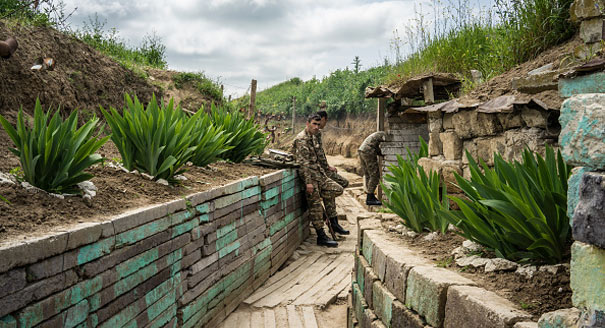
A descent into renewed fighting in the South Caucasus is the last thing anyone wants—least of all the ordinary Armenians and Azerbaijanis who will be caught in the middle of it.
Every year, as the spring thaw is awaited in the mountains of Armenia and Azerbaijan, the small coterie of scholars and experts who keep an eye on the Nagorny Karabakh conflict ask, “Will there be war?” This year, Karabakh watchers are especially gloomy. Twenty-sixteen was a bad year, and 2017 could yet be worse.
Over four days last April, up to 200 Armenians and Azerbaijanis died in the worst fighting since 1994 across the so-called line of contact that divides their two armies east of the disputed territory of Nagorny Karabakh and cuts across Azerbaijani territory that the Armenians captured as they secured a victory in the conflict of the 1990s.
The violence precipitated a flurry of diplomatic activity over the summer. The Azerbaijanis tentatively agreed to measures to strengthen the 1994 ceasefire regime, and the Armenians assented to a more comprehensive negotiating process. But in the last six months, the deals provisionally concluded in the summer have slowly unraveled. The Karabakh situation has defaulted to a familiar and depressing mix of mutual accusations of bad faith, Azerbaijani frustration, Armenian inertia, and diplomatic wrestling over tiny details.
Of course, as U.S. Founding Father Benjamin Franklin said, a bad peace is better than a good war. A new conflict in the Caucasus could lead to thousands of casualties and economic devastation—without resolving the core issues of the dispute. But there is a danger that the parties could miscalculate and end up fighting anyway, despite their better judgment.
The arrangements made in 1994–1995 after the ceasefire was signed look less and less sustainable: no peacekeepers, a tiny Organization for Security and Cooperation in Europe monitoring mission with a limited mandate, and a process that has managed the situation but not resolved it. In 1994, the 250-kilometer (155-mile) line of contact was a string of hastily dug trenches separating the two armies, across which conscript soldiers took occasional potshots—and sometimes met to chat and exchange cigarettes. Now, it is the most militarized zone in Europe, bristling with artillery, long-range missile launchers, attack helicopters, and military drones. Azerbaijan has spent billions of dollars of oil revenues on new weaponry. The Armenians have spent less but maintained a credible defensive capability, thanks to buying Russian weapons at discounted prices.
In the four-day war in April 2016, the Azerbaijani side recaptured two small pockets of territory. The psychological boost the Azerbaijanis received was far bigger. The perception of a successful military offensive helped reverse two-decades-old feelings of humiliation, and an upsurge of patriotism helped distract the Azerbaijani population from a shrinking economy and falling currency.
Now that the latest diplomatic initiative, spearheaded by Russian Foreign Minister Sergey Lavrov, has stalled, there is a temptation for Baku to retry what might be called military leverage—to launch another operation to recapture territory and put pressure on the Armenian side.
The risk is that a small operation would inevitably escalate into something even more serious than last time. The Azerbaijani authorities would be under pressure to capture substantial amounts of territory, rather than the small slivers they took last time. The Armenians would be under pressure from their public to fight more strongly than they did last April and reverse any gains made by the other side.
Both sides almost certainly overestimate their military prowess. Both also have newly acquired deadly weaponry. The Armenians have obtained Iskander missiles from Russia that they exhibited at an Independence Day parade in September 2016. The weapons have a range of 280 kilometers (174 miles) and could be targeted at urban centers or oil and gas infrastructure in Azerbaijan. This would be a desperate option, but possible if a larger-scale Azerbaijani were launched. Such a move would also be in line with Armenia’s 2015 military strategy, which permits preemptive action in the name of deterrence. The Azerbaijanis have made big weapons purchases from Israel, including an Iron Dome missile-defense system and military drones.
If the military context is dangerous, the political one is no better. Azerbaijan’s oil boom has ended and the economy has declined further over the last year, shrinking by around 4 percent in 2016, with the manat having lost 57 percent of its value since January 2015.
In Armenia, President Serzh Sargsyan faces a tricky parliamentary election on April 2. When the vote is completed, his country is due to make the transition to a new constitution in which executive power switches from the president to the parliament. This is widely perceived as a gambit by Sargsyan, whose second and last presidential term ends in 2018, to find a way of shoring up his own power. The switch is controversial and the opposition will use the election to challenge him in all ways possible.
A final factor of instability is international turbulence—the election of Donald Trump as U.S. president, ongoing crises in the EU—which is being felt in the South Caucasus and could encourage the parties to behave more irresponsibly and believe they can get away with more.
If there is fighting, it will be hard to manage. In April 2016, Moscow negotiated a verbal ceasefire between the parties. But it is a misconception that Moscow is pulling the strings in the Karabakh conflict. Moscow has never been in control since the dispute broke out in 1988, having tried variously to back one side or the other or to mediate. Currently, Russia is highly distrusted in both countries and neither Baku nor Yerevan will allow it to impose its own agenda on their number one national issue.
In short, the threat of preemptive violence over Karabakh needs to be met with intense preemptive diplomacy. A descent into new conflict in the South Caucasus is the last thing anyone wants—least of all the ordinary Armenians and Azerbaijanis who will be caught in the middle of it.

Senior Fellow, Carnegie Europe
De Waal is a senior fellow at Carnegie Europe, specializing in Eastern Europe and the Caucasus.
Recent Work
Thomas de Waal
Thomas de Waal, ed.
Carnegie does not take institutional positions on public policy issues; the views represented herein are those of the author(s) and do not necessarily reflect the views of Carnegie, its staff, or its trustees.

French President Emmanuel Macron has unveiled his country’s new nuclear doctrine. Are the changes he has made enough to reassure France’s European partners in the current geopolitical context?

Rym Momtaz, ed.
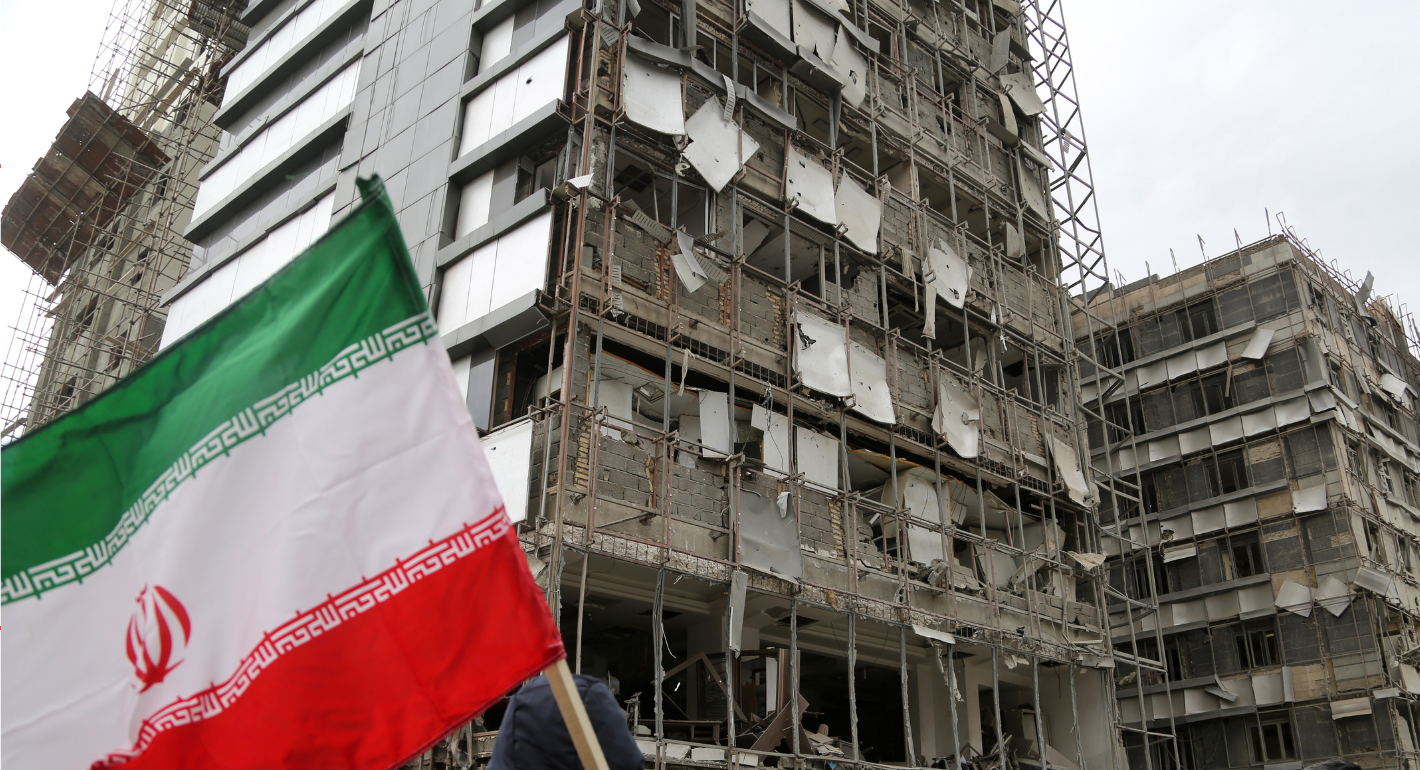
Europe’s reaction to the war in Iran has been disunited and meek, a far cry from its previously leading role in diplomacy with Tehran. To avoid being condemned to the sidelines while escalation continues, Brussels needs to stand up for international law.

Pierre Vimont
France has stopped clinging to notions of being a great power and is embracing the middle power moment. But Emmanuel Macron has his work cut out if he is to secure his country’s global standing before his term in office ends.
Rym Momtaz
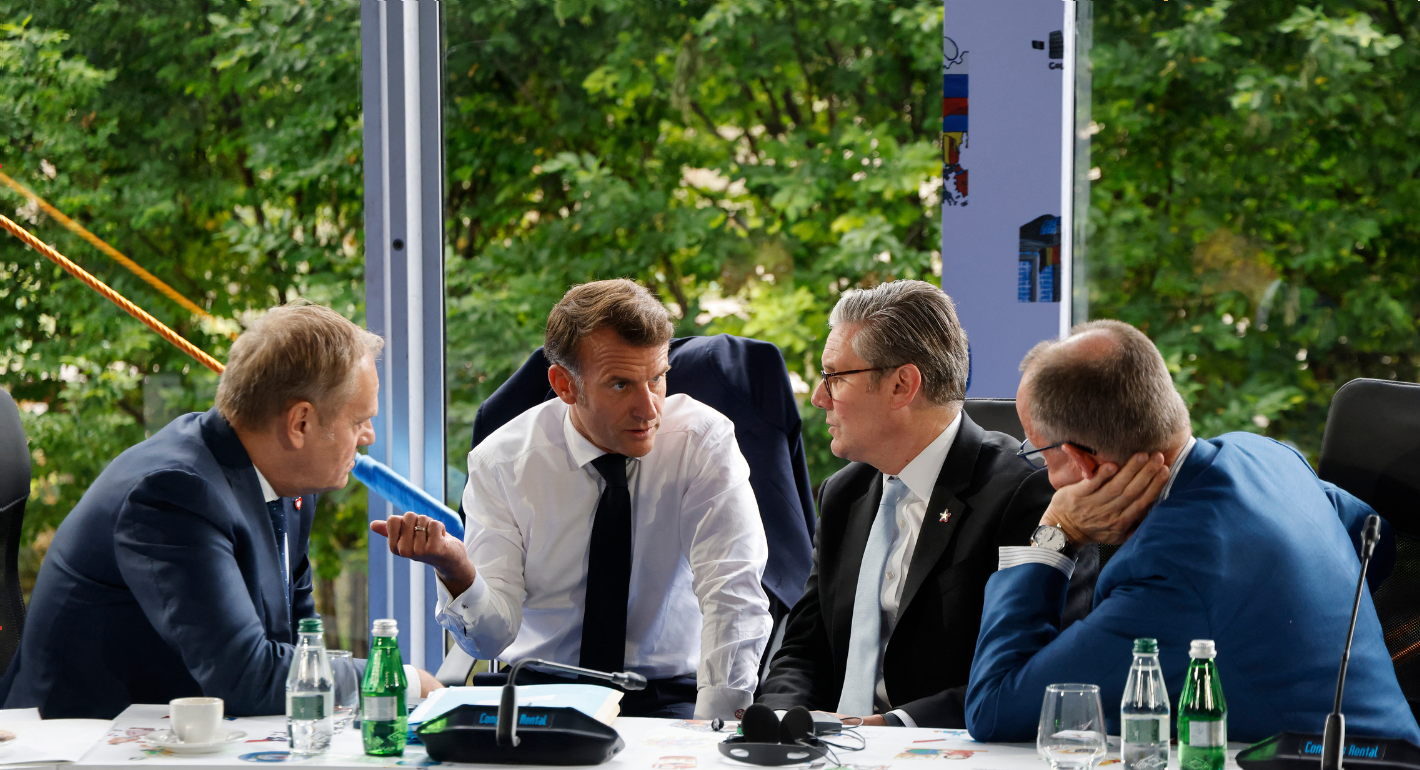
Leaning into a multispeed Europe that includes the UK is the way Europeans don’t get relegated to suffering what they must, while the mighty United States and China do what they want.
Rym Momtaz
A prophetic Romanian novel about a town at the mouth of the Danube carries a warning: Europe decays when it stops looking outward. In a world of increasing insularity, the EU should heed its warning.
Thomas de Waal