The NATO meeting of heads of state and government slated for May 25 is certain to center on a handful of key issues, defense spending primary among them. On this matter, the administration of U.S. President Donald Trump hopes to accelerate the achievement of defense spending goals to which the alliance has already agreed. For their part, European NATO member states are likely to parry such requests and avoid committing to anything more than they already have.
Although not the worst in European NATO when it comes to burden sharing, Germany has recently been the focus of attention in the transatlantic debate over defense spending, primarily because of its large, prosperous economy and its position as first among equals in Europe. Unfortunately, Berlin appears to be hiding behind a number of specious arguments to avoid doing more than it has already announced.
In recent intra-alliance debates over defense spending, Germany has frequently relied on three arguments to counter Washington. First, Berlin has argued that foreign aid should count toward security spending. This is a view widely held across most of Europe—that diplomacy and development are just as important as the military in providing achievable, sustainable security. This comprehensive approach, as it’s known in Europe, is similar to the whole-of-government approach pursued, at least rhetorically, by the United States for many years as well.
Germany is correct that diplomacy and development are critical components of Western security. For example, there appears to be a positive correlation between some types of foreign assistance and reductions in terrorist attacks. At the same time, other evidence suggests that the connection between foreign aid and positive security or development outcomes is mixed at best. More importantly, though, Germany—along with the other members of the alliance—made a political commitment to spend the equivalent of 2 percent of its GDP on defense, not on foreign assistance. Roping in foreign aid muddles the focus on defense spending and would necessitate a complete reexamination of security spending goals.
The second argument frequently relied on in Germany is that the 2 percent goal ignores defense spending outputs. It is true that the 2 percent goal fails to measure what the allies get for their defense dollars, euros, and pounds. Berlin argues, for instance, that German contributions to current operations should count for something.
European leaders—especially those willing and able to deploy forces abroad over distance and time—are right to press for inclusion of output measures. Until allies agree on a fair, accurate, more comprehensive measure of outputs, however, NATO could simply publish progress toward the usability goals it already tracks. At their Wales summit in 2014, allies pledged once again to meet their usability goals: 50 percent of each member’s overall land force strength should be deployable, and 10 percent of that strength should be either engaged in or earmarked for sustained operations. However, allies failed to publish progress toward the goals. Making these data public would be a simple, interim way of assessing outputs.
Third, although not often stated publicly, many in Germany fear that increasing defense spending to the equivalent of 2 percent of GDP—yielding a budget of $67 billion, far higher than the current $41 billion—would raise fears among Germany’s neighbors of the country’s overmilitarization and domination. Germany has long preferred to be in third place among European NATO member states, behind the United Kingdom ($56 billion) and France ($44 billion): a leader, but not the leader. A defense budget of $67 billion would make Germany the largest defense spender in European NATO.
To think that a significantly larger German defense budget alone would send chills through Germany’s neighbors is probably inaccurate. For one thing, Germany remains steadfastly anchored by its own constitution and by Western multilateral institutions such as NATO and the EU, which collectively prevent potential militaristic adventurism.
Moreover, Germany’s European allies—especially those to the East—seem eager for Berlin’s leadership in defense and security. Germany has been welcomed as a framework nation in NATO’s enhanced forward presence initiative, sending its forces to Lithuania on a rotational basis. And although he was speaking of more than just the military, former Polish foreign minister Radosław Sikorski famously said in 2011, “I fear German power less than I am beginning to fear German inactivity.” In the same vein, Baltic state leaders recognize that in any armed crisis launched by Russia, Germany would play an important role as a first responder.
It seems increasingly apparent that some German officials are relying on a fallacious set of arguments, including the purported concerns of other European countries, as a convenient excuse to avoid spending more on defense. With the September federal election just around the corner, campaign politics are playing a role as well—German Chancellor Angela Merkel is keen to avoid making defense spending any more of a campaign issue than it already is. More practically, Berlin is right to want to ensure increased defense spending is purposeful and avoids unnecessary duplication.
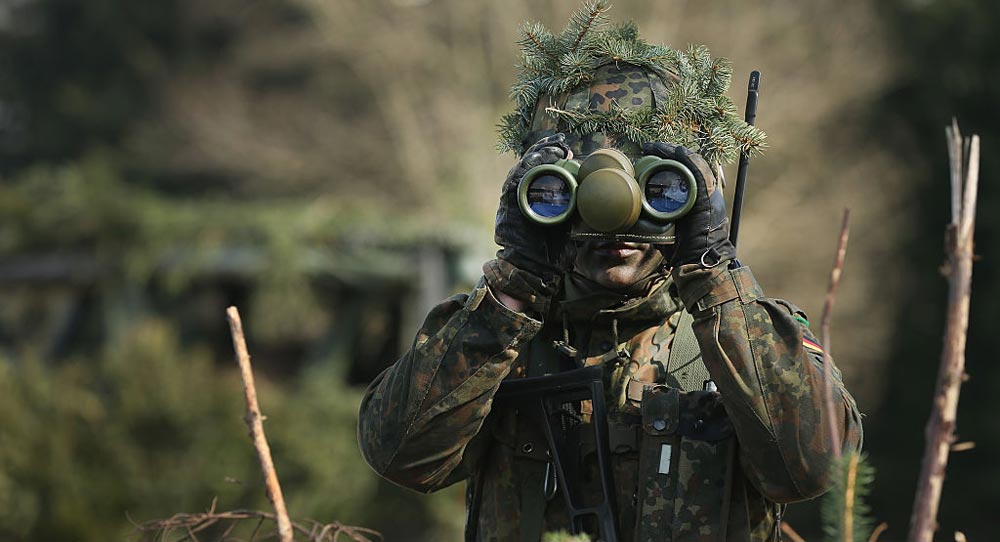
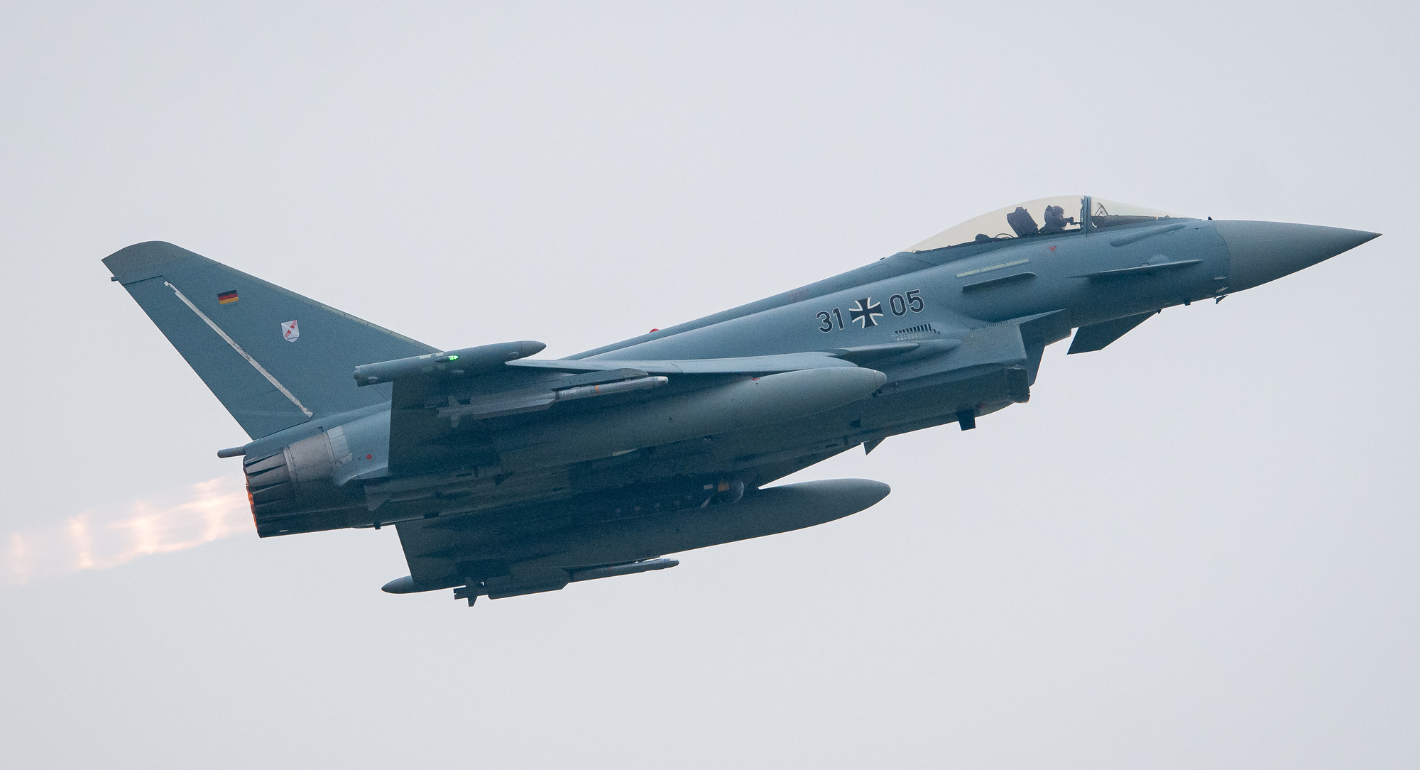
But there is no shortage of needs in the Bundeswehr, including filling units that are fully manned only on paper, ending an equipping model whereby only deploying units receive their full complement of equipment, and replenishing woefully underfunded readiness accounts. Other necessities include expanded intelligence and reconnaissance capabilities and sufficient modernized infrastructure not simply for German forces but also for U.S. and other allied forces based in Germany.
In sum, given the many important defense and security requirements facing the Bundeswehr, as well as the political commitments taken on by the German government, the arguments for not doing more seem increasingly dubious at best.
John R. Deni is a research professor of security studies at the Strategic Studies Institute of the U.S. Army War College and an adjunct professor at the American University’s School of International Service. The views expressed are those of the author and do not necessarily reflect the official policies or positions of the U.S. Department of the Army, the U.S. Department of Defense, or the U.S. government.