

Commentary
Gwendolyn Sasse
{
  "authors": [
    "Gwendolyn Sasse"
  ],
  "type": "commentary",
  "blog": "Strategic Europe",
  "centerAffiliationAll": "",
  "centers": [
    "Carnegie Endowment for International Peace",
    "Carnegie Europe"
  ],
  "collections": [
    "Europe’s Eastern Neighborhood"
  ],
  "englishNewsletterAll": "",
  "nonEnglishNewsletterAll": "",
  "primaryCenter": "Carnegie Europe",
  "programAffiliation": "",
  "programs": [],
  "projects": [],
  "regions": [
    "Europe",
    "Eastern Europe",
    "Ukraine"
  ],
  "topics": [
    "Political Reform",
    "EU"
  ]
}
Source: Getty
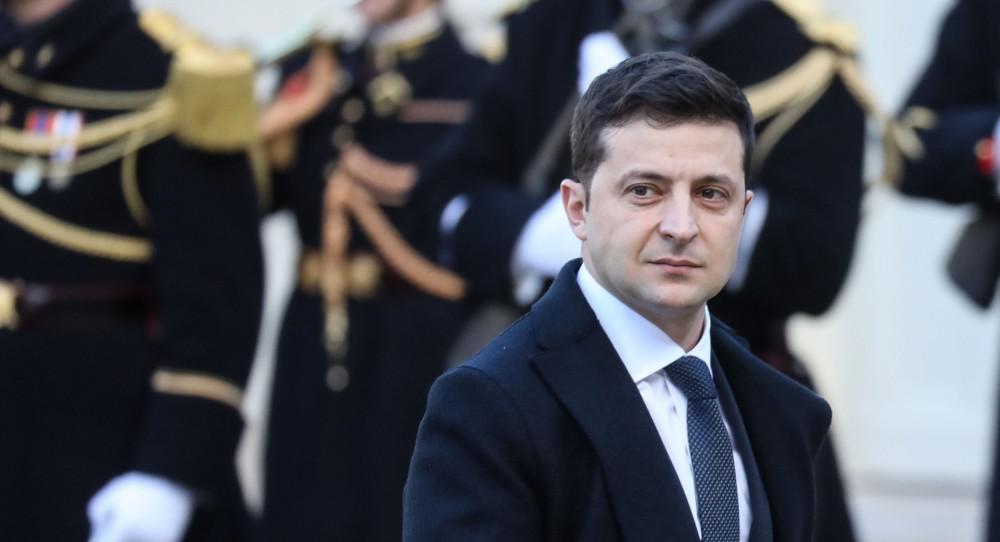
Ukraine’s president is trying to reassert his control through a radical government reshuffle, but this risky strategy may well backfire.
The first cabinet of the presidency of Ukraine’s Volodymyr Zelenskiy, appointed after the 2019 parliamentary election, lasted for about seven months.
On March 4, 2020, the Ukrainian parliament approved a new prime minister, Denys Shmygal, dismissed eleven of the previous seventeen ministers, swapped the responsibilities of two of the remaining ones, and left four ministries temporarily vacant.
This is more than a government reshuffle. Replacing so many ministers at once, leaving important posts like the energy and economy ministries unfilled, and dismissing Prosecutor General Ruslan Ryaboshapka—who had gained respect inside and outside of Ukraine for his stance on corruption—a day later signals that something is not going according to plan.This reorganization of the government is a public recognition that the ambitious reform results Zelenskiy had hoped to deliver are proving harder to achieve than expected. In response to this realization, he is trying to reassert his control through a government reset. This is a risky strategy that may well backfire.
By appointing Shmygal—young and by and large unknown to the Ukrainian public—as prime minister, Zelenskiy is adopting the same strategy as he did with his predecessor, the now former prime minister Oleksiy Honcharuk. But with this appointment, another, more unfortunate pattern is also repeating itself: it is unclear how close Shmygal has been to one of Ukraine’s main oligarchs, Rinat Akhmetov.
So, while Zelenskiy has managed to put a bit more distance between himself and oligarch Ihor Kolomoyskiy lately, he is now giving rise to new suspicions about his oligarchic links.
Swapping the roles of Vadym Prystaiko and Dmytro Kuleba—the former has now become minister of European integration instead of foreign minister, and vice versa—also indicates the extent to which Zelenskiy is forced to balance interests and loyalties in his own team. By appointing personal confidant Andriy Yermak as head of his presidential administration before the cabinet change, Zelenskiy had to adjust the role of Prystaiko to limit the visible disagreements he had with Yermak on foreign policy.
Given that Zelenskiy won the presidential election in April 2019 with an unprecedented majority across the country by galvanizing different hopes, expectations, and opposition against the incumbent, Petro Poroshenko, disappointment was bound to set in eventually. This process has begun.
For the moment, the critical asset of the current administration is still societal trust in the president himself. Trust is a tricky commodity, however, in particular amidst an ongoing war and a structural reform process centered on an anticorruption agenda, which by definition has to be a medium- to long-term endeavor but is expected to generate results in the short term.
Trust in Zelenskiy has fallen since his election in April 2019, but it is still high, according to a range of opinion polls hovering around 50–60 percent, which is significantly higher than the trust levels for any other politician in Ukraine. One of the main continuities from before 2019 is that trust in political institutions in general, especially parliament and government, is low.
Similarly, the optimistic outlook of the electorate on the country’s future development that accompanied the post-election period has waned. The speedy top-down introduction of legislation in parliament without much consideration is reinforcing this trend.
Thus, Zelenskiy’s own approach to maintain public support is to keep societal trust in institutions low by blaming them when things go badly. But an eventual spillover into lower trust in the president himself is unavoidable.
The personalization of politics in Ukraine demonstrates a dilemma shared by both democratic and authoritarian systems: trust in the central political figure can overshadow distrust in the government and parliament only up to a certain point.
In a speech accompanying the dismissal of Honcharuk and his cabinet, Zelenskiy openly blamed the now former prime minister for not delivering the envisaged reforms, emphasizing in particular the unsatisfactory progress with regard to healthcare reforms, social welfare, and basic utility provision—all issues of direct concern to the population.
This rhetoric is familiar from authoritarian settings where presidents distance themselves from their government when things go badly in an attempt to pin responsibility on others.
In an authoritarian system, the pressure builds more gradually but can ultimately be unleashed quickly in connection with a succession crisis. In a democratic country like Ukraine, the link between trust in the president and trust in other political institutions is more immediate and mutually corrosive. This is the challenge Zelenskiy faces.
His reorganization of the cabinet signals his awareness of this dynamic, but he should also know that he cannot repeat a government reset every six months. The unrealistic expectation seems to be that the new government can achieve more than its predecessor within the next six months.
For the moment, Zelenskiy has demonstrated that he remains in control of the political system. His decision has shown a sense of resolve but also amounts to an admission that he has made mistakes with regard to personnel decisions.
In the short run, this may help to sustain trust in him as a person, but the political agenda of the incoming government is as crowded and difficult as that of the outgoing one. Having played the card of a radical cabinet reorganization so soon, Zelenskiy has limited his own capacity to draw on this option again.
Each subsequent dismissal of the prime minister would shorten the time horizons for policymaking and eat into Zelenskiy’s own approval ratings, his main asset.
Gwendolyn Sasse is a nonresident senior fellow at Carnegie Europe and director of the Centre for East European and International Studies (ZOiS) in Berlin.

Nonresident Senior Fellow, Carnegie Europe
Gwendolyn Sasse is a nonresident senior fellow at Carnegie Europe. Her research focuses on Eastern Europe, with a particular focus on Ukrainian politics and society, EU enlargement, and comparative democratization.
Recent Work
Gwendolyn Sasse
Gwendolyn Sasse
Carnegie does not take institutional positions on public policy issues; the views represented herein are those of the author(s) and do not necessarily reflect the views of Carnegie, its staff, or its trustees.

A summer of escalation in the Black Sea has hurt Ukraine economically and is exacerbating world food security. A truce is needed—as is a broader reframing of Europe’s Ukraine strategy.

Thomas de Waal

Are Germany’s economic, industrial, and political struggles becoming a liability for the EU’s ability to rise to the geopolitical moment?

Rym Momtaz, ed.

European Commission President Ursula von der Leyen is about to give her annual address on the state of the EU. Here’s what she won’t—but should—say.
Rym Momtaz

The aftermath of the Ceuta crisis shows Europe has drawn the wrong lessons. Rather than doubling down on failed migration policies, the EU needs to address the underlying roots of such episodes.

Richard Youngs
An overwhelming victory by a far-right-wing party in a small state in eastern Germany will have major repercussions for Chancellor Friedrich Merz’s coalition.

Judy Dempsey