

Commentary
As we close out another season of Strategic Europe, it is worth taking stock of the deep shifts underway.
Rym Momtaz
{
  "authors": [
    "Oded Eran",
    "Shimon Stein"
  ],
  "type": "commentary",
  "blog": "Strategic Europe",
  "centerAffiliationAll": "",
  "centers": [
    "Carnegie Endowment for International Peace",
    "Carnegie Europe"
  ],
  "collections": [
    "Europe’s Southern Neighborhood"
  ],
  "englishNewsletterAll": "",
  "nonEnglishNewsletterAll": "",
  "primaryCenter": "Carnegie Europe",
  "programAffiliation": "",
  "programs": [],
  "projects": [],
  "regions": [
    "Middle East",
    "Europe",
    "Israel",
    "Palestine",
    "United Arab Emirates",
    "Western Europe"
  ],
  "topics": [
    "Foreign Policy",
    "EU"
  ]
}
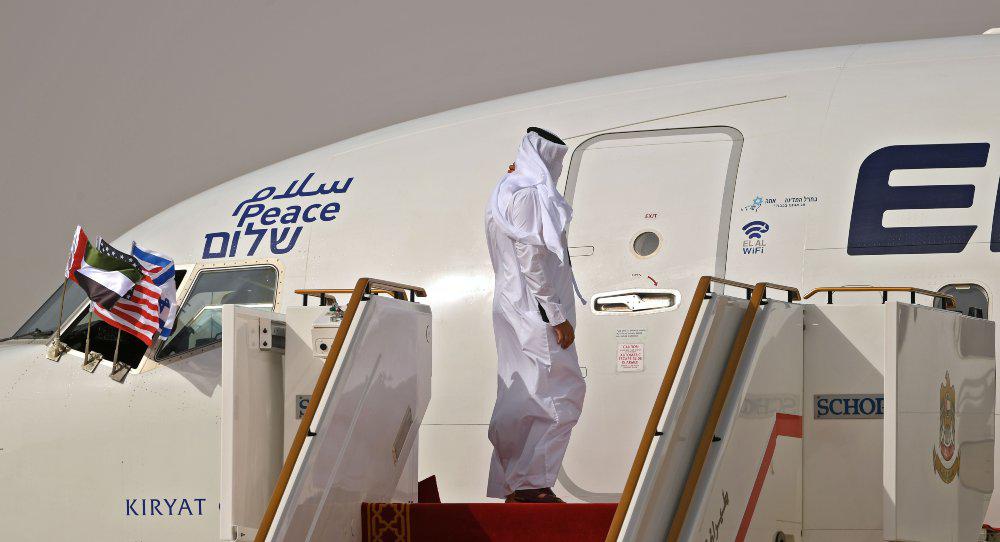
Source: Getty
The EU should seize the historical opportunity of the Israel-UAE agreement to propose bold, new ideas for resolving the Israeli-Palestinian conflict and bringing peace to the Middle East.
Recent developments in the Eastern Mediterranean and the Middle East yet again exposed the inherent weakness of the EU’s Common Foreign and Security Policy pillar.
Turkey’s aggressive policies in the Mediterranean have been met by a feeble EU response. Meanwhile, the normalization agreement between Israel and the United Arab Emirates (UAE) announced on August 13, 2020, confirmed the EU’s irrelevance in a potentially significant political development for the Middle East in general and for the Israeli-Palestinian conflict in particular.
Following the announcement of the agreement between Israel and the UAE, EU High Representative for Foreign Affairs and Security Policy Josep Borrell described the step as “fundamental” for the stabilization of the region as a whole. The EU, he added, was ready to work together with its regional and international partners toward a “comprehensive and lasting peace for the entire region.”
Borrell described the suspension of Israel’s unilateral annexation plans in the deal as a positive step. He repeated the EU’s commitment to a negotiated and viable two-state solution and readiness to work for the resumption of meaningful negotiations between Israelis and Palestinians.
The agreement—which was announced jointly by Israel, the UAE, and the United States—is a significant one. The spokesman of the Emirati foreign ministry said it was about time that the “region should demonstrate its skills in solving problems together” and that “the lack of communication with Israel has created a dead end.”
Interestingly, unlike previous peace treaties—such as the one signed in 1994 between Israel and Jordan—which had not been conditional on Israeli action or inaction concerning the Palestinian issue, the Israel-UAE agreement is linked to the latter by committing Israel to refrain from any annexation move.
The agreement presents yet another opportunity for the region that should not be missed. Indeed, it should be seized by the EU.
For too long, Brussels has issued repetitive and ineffective statements, whose impact on the parties concerned and on the region at large was negligible.
The combined disastrous effects of the Arab Spring—which began in late 2010—and the coronavirus pandemic crises juxtaposed against a normalization process between Israel and the UAE—and possibly other Arab states—offer the EU yet another historical opportunity for a bold initiative. But what kind of initiative?
In trying to devise a grand strategy for the region, it is useful to revisit the model of the 1991 Madrid Peace Conference, which was based on a two-track approach: a bilateral Israeli-Palestinian track and a multilateral track that should include all the countries in the region that would want to join in the effort to resolve the transnational issues that cannot be resolved otherwise.
Those outstanding issues are water, environment, refugees, economic cooperation, and nuclear proliferation, arms control, and regional security.
Clearly, since the EU will not be able to shoulder these challenges alone—and given its responsibility as a neighboring region—it should take the lead, as it did in the negotiations leading to the 2015 Joint Comprehensive Plan of Action, the deal aimed at preventing Iran from developing nuclear weapons.
In practice, this would mean engaging the United States, China, Russia, additional states as required, and leading Arab States. Such an international umbrella should assist in launching, accompanying, and helping to implement the agreements reached.
This approach can be adopted by a UN Security Council resolution. Such a resolution, while not making progress conditional on one track or the other, may also ensure that Israelis and Palestinians commit to not changing the legal and political situation in the West Bank. In the meantime, the UN Security Council would monitor progress in both tracks.
The task is daunting.
The EU has to shed its dogmatic and unrealistic approach toward resolving the Israeli-Palestinian conflict. Since the 1980 Venice Declaration, which laid the basis for EU policy on the Israeli-Palestinian issue, the EU has been a prisoner of its own rigid formula for solving the conflict.
This has stifled the EU’s ability to promote ideas and policies commensurate with the two-states-for-two-peoples principle. A new approach needs to be sufficiently flexible for different models of attaining this goal, which would enable the EU to be an active, influential player in the region.
The EU then has to make it clear to the Palestinian leadership that by repeated rejection of compromises they risk being abandoned by the international community.
Similarly, Israel should be told that the international community supports an Israel that is democratic and predominantly Jewish, but cannot tolerate unilateral steps that eliminate the two-state solution.
Furthermore, the EU has to convince Arab and Muslim states to discard their old, anti-Israel slogans. Then, the EU has to bring together under one roof international actors who cooperate rather than compete and who see the Middle East not as an arena of jostling, but rather as an area in need of urgent economic rehabilitation, political stability, and peace.
In short, the EU should seize upon the Israel-UAE agreement to revive its role as the initiator of a vision for the Middle East based on meaningful leadership, partnership, and peacemaking.
A daunting challenge? It certainly is. But Europe can no longer simply react.
Oded Eran and Shimon Stein are veteran Israeli ambassadors to the EU and Germany, respectively. Both are senior research fellows at the Institute for National Security Studies.

Oded Eran
Oded Eran is an Israeli diplomat who served as head of the negotiating team with the Palestinians between 1999 and 2000. He is currently a senior fellow at the Institute for National Security Studies at Tel Aviv University.

Shimon Stein
Carnegie does not take institutional positions on public policy issues; the views represented herein are those of the author(s) and do not necessarily reflect the views of Carnegie, its staff, or its trustees.

As we close out another season of Strategic Europe, it is worth taking stock of the deep shifts underway.

Rym Momtaz
The EU had to compromise to adopt a twenty-first sanctions package against Russia, exposing growing cracks in the union’s resolve. Is this latest, weaker round worth it to keep pressure on Moscow?
Rym Momtaz, ed.

Trump is distracted and Ukraine wants Europe to step up. The continent’s leaders must find their voice and assert it in talks with Russia.

Alissa de Carbonnel

Mounting economic strain and battlefield losses will not necessarily make the Kremlin less dangerous. They could instead push Moscow toward a more aggressive hybrid campaign designed to test NATO’s Eastern flank, exploit allied hesitation, and fracture European resolve.

Maksym Beznosiuk

Over the past ten years, NATO has held almost as many summits as it did during the entirety of the Cold War. Are they still useful, or is it time to stop holding annual meetings?
Rym Momtaz, ed.