

Commentary
Judy Dempsey
{
  "authors": [
    "Judy Dempsey"
  ],
  "type": "commentary",
  "blog": "Strategic Europe",
  "centerAffiliationAll": "",
  "centers": [
    "Carnegie Endowment for International Peace",
    "Carnegie Europe"
  ],
  "collections": [
    "Transatlantic Cooperation"
  ],
  "englishNewsletterAll": "",
  "nonEnglishNewsletterAll": "",
  "primaryCenter": "Carnegie Europe",
  "programAffiliation": "",
  "programs": [],
  "projects": [],
  "regions": [
    "Europe",
    "North America",
    "Eastern Europe",
    "Western Europe"
  ],
  "topics": [
    "Security",
    "NATO"
  ]
}
Source: Getty
Western Europeans have always held NATO’s top job. It’s time to pass the baton eastward, where governments understand the scale of the threats facing the region and the transatlantic alliance.
It’s head-hunting season again!
It didn’t take much for Ursula von der Leyen to be nominated by her conservative Christian Democratic Union party for a second term as European Commission president.
The former German defense minister has been a staunch defender of Ukraine, consistently advocating for more political, financial, and military support for Kyiv. Should she garner the required support to get the job, she is intent on creating a defense portfolio inside the commission. Just imagine the jockeying for that special position. But that’s down the road.
What is not so far away is the big NATO summit taking place in Washington D.C. this July. At that point, the United States will be in the throes of a presidential election campaign. Leaving aside Donald Trump’s tirades against those NATO members who haven’t met the defense spending target of 2 percent target of GDP, even saying Russia can do what it likes because the United States is not going to rush to defend them, the alliance should remain focused.
And that focus must continue to be Ukraine. The outcome of Russia’s full-scale war launched in February 2022 and its occupation of parts of Ukraine that started ten years ago is about the credibility and commitment of Western and allied support. And more. The outcome of the war will determine the stability of eastern Europe and the security of the European continent. By now all NATO countries surely recognize the collective threat the transatlantic alliance is facing.
This is why the successor to Jens Stoltenberg, the Norwegian who has been at the helm of NATO since 2014 and who is expected bow out after the summit, is crucial. Stoltenberg, who agreed to stay on last year after NATO members couldn’t agree on who should replace him, became deeply committed to Ukraine. He didn’t mince his words about Russia. And like every NATO boss, he spent a lot of time liaising with Washington—the alliance’s pay master.
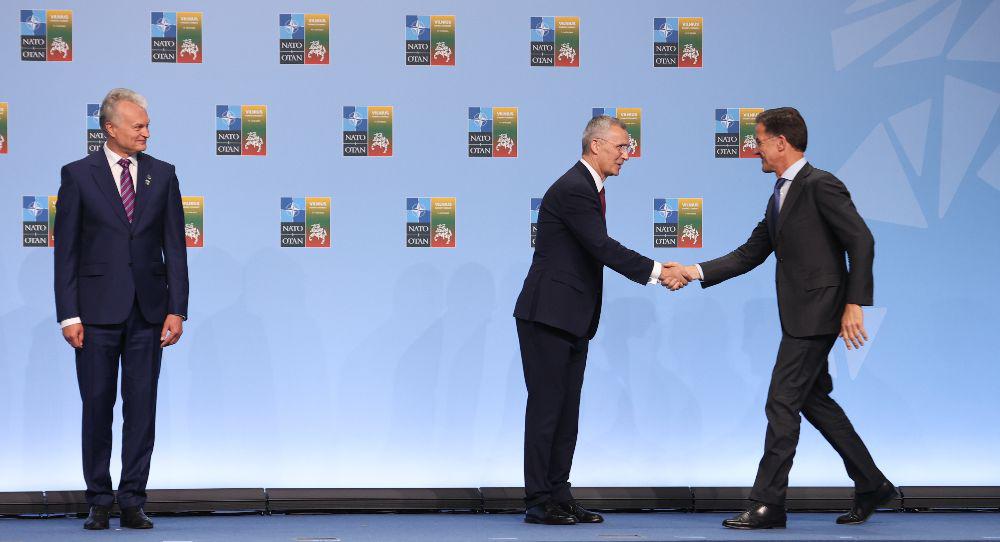
The lobbying to replace him has already started. The talk, for now, is that Mark Rutte, the outgoing Dutch prime minister, is top of the pecking order. The general sense is that he would not get tougher on Russia and, given his Atlanticist outlook, would get on with whoever is in the White House. Also, the machinations of Dutch politics and forming governments have shown how adept Rutte is at finding compromises and reaching consensus. So, is he a shoo-in?
Why should he be? There have already been three Dutch NATO secretary generals. And all the other bosses were from Western European countries. Isn’t it time for the alliance to opt for someone from the Baltic States, Poland, or Central Europe?
The chatter against this idea is a bit depressing. In private conversations, Western European officials say a NATO leader from this region would be too anti-Russian, too antagonistic, and even put NATO on a collision course with Russia.
Essentially, despite the fact that the Balts and Central Europeans, along with Romania and Bulgaria, have been in the alliance for decades—some since 1999, others since 2004—they are considered by their Western European counterparts as not only still “new” but also different.
Yet their accession is what has made NATO what it is today. The non-Western European members have made NATO, for want of a better word, different. It is not just because of their unambiguous support for Ukraine. They understand the fundamental threats facing Europe.
What is more, their past contrasts sharply with that of their Western Europeans. By virtue of being occupied, of having their sovereignty suppressed, of having their history subjugated to a Soviet narrative, they instinctively understand why NATO must keep adapting in the post–Cold War era.
And there are other reasons to pass the baton over to the Eastern flank. It’s not only because these countries have increased their defense spending and rightly warned about Russia’s imperialist ambitions under Vladimir Putin. And it is not only because they fear for their own future security—which is why Poland and the Baltic States as well as Romania are ramping up their defense capabilities.
It is about ending the divisions between “old” and “new” NATO members. It is about forging a collective narrative about security, which surely should be easier to do inside the military alliance than in the EU.

Nonresident Senior Fellow, Carnegie Europe
Judy Dempsey is a nonresident senior fellow at Carnegie Europe
Recent Work
Judy Dempsey
Judy Dempsey
Carnegie does not take institutional positions on public policy issues; the views represented herein are those of the author(s) and do not necessarily reflect the views of Carnegie, its staff, or its trustees.

Before the next wave of EU enlargement takes place, the union needs to grapple with thorny questions of how power is distributed among its members.


Emil Sondaj Hansen, Ditte Brasso Sørensen

A summer of escalation in the Black Sea has hurt Ukraine economically and is exacerbating world food security. A truce is needed—as is a broader reframing of Europe’s Ukraine strategy.

Thomas de Waal

Are Germany’s economic, industrial, and political struggles becoming a liability for the EU’s ability to rise to the geopolitical moment?

Rym Momtaz, ed.

European Commission President Ursula von der Leyen is about to give her annual address on the state of the EU. Here’s what she won’t—but should—say.
Rym Momtaz

The aftermath of the Ceuta crisis shows Europe has drawn the wrong lessons. Rather than doubling down on failed migration policies, the EU needs to address the underlying roots of such episodes.

Richard Youngs