

Commentary
Rym Momtaz, ed.
{
  "authors": [
    "Rym Momtaz"
  ],
  "type": "commentary",
  "blog": "Strategic Europe",
  "centerAffiliationAll": "",
  "centers": [
    "Carnegie Endowment for International Peace",
    "Carnegie Europe"
  ],
  "englishNewsletterAll": "",
  "nonEnglishNewsletterAll": "",
  "primaryCenter": "Carnegie Europe",
  "programAffiliation": "",
  "programs": [],
  "projects": [],
  "regions": [
    "Lebanon",
    "Middle East",
    "Israel"
  ],
  "topics": [
    "Security",
    "Military",
    "EU",
    "Migration",
    "Foreign Policy"
  ]
}
Source: Getty
Europe’s financial, diplomatic, and military power could help create the conditions for a sequenced de-escalation in Lebanon. It is also a chance for Europe to prove its ability to act independently of the United States outside the European continent.
Crises in Lebanon often become global moments of truth, and we are at one such moment again.
This small bankrupt state is where local, regional, and global actors often confront the real measure of their power, where diplomatic posturing comes crashing into hard realities.
Despite repeated assertions of the EU’s geopolitical power and the multifaceted potential adverse effects on Europe of a Lebanon in crisis, there is mostly deafening silence and inertia from the continent.
There are hundreds of thousands of European citizens in harm’s way in Lebanon who could soon require costly and dangerous evacuation. A further collapse of the state in Lebanon—one of the major risks engendered by the ongoing Israeli aggression—could push up to a million refugees to attempt to reach Cyprus, which is a mere few hours’ swim away. Beyond this potential migration crisis and its ripple effects on European politics, there is the possibility of a domino effect destabilizing Syria and Iraq, and a possible resurgence of terror attacks in Europe.
But unlike in many other crises in the world, here, Europeans actually have a trifecta of financial, diplomatic and military power to wield. And the actions the EU and its member states could take are less hamstrung by the deep divisions among EU countries over Israel.
As southern Lebanon faces a fourth potential Israeli invasion and occupation since 1978, de-escalation requires actions and measures that should be well within the reach of Europeans and the EU, especially if they want to retain their status among global powers.
But to be effective, they must do something they have consistently struggled with: work together on a multipronged approach that leverages their collective weight and includes diplomacy, humanitarian aid and an area Europeans have notoriously shunned—taking the risk to use military assets in Lebanon.
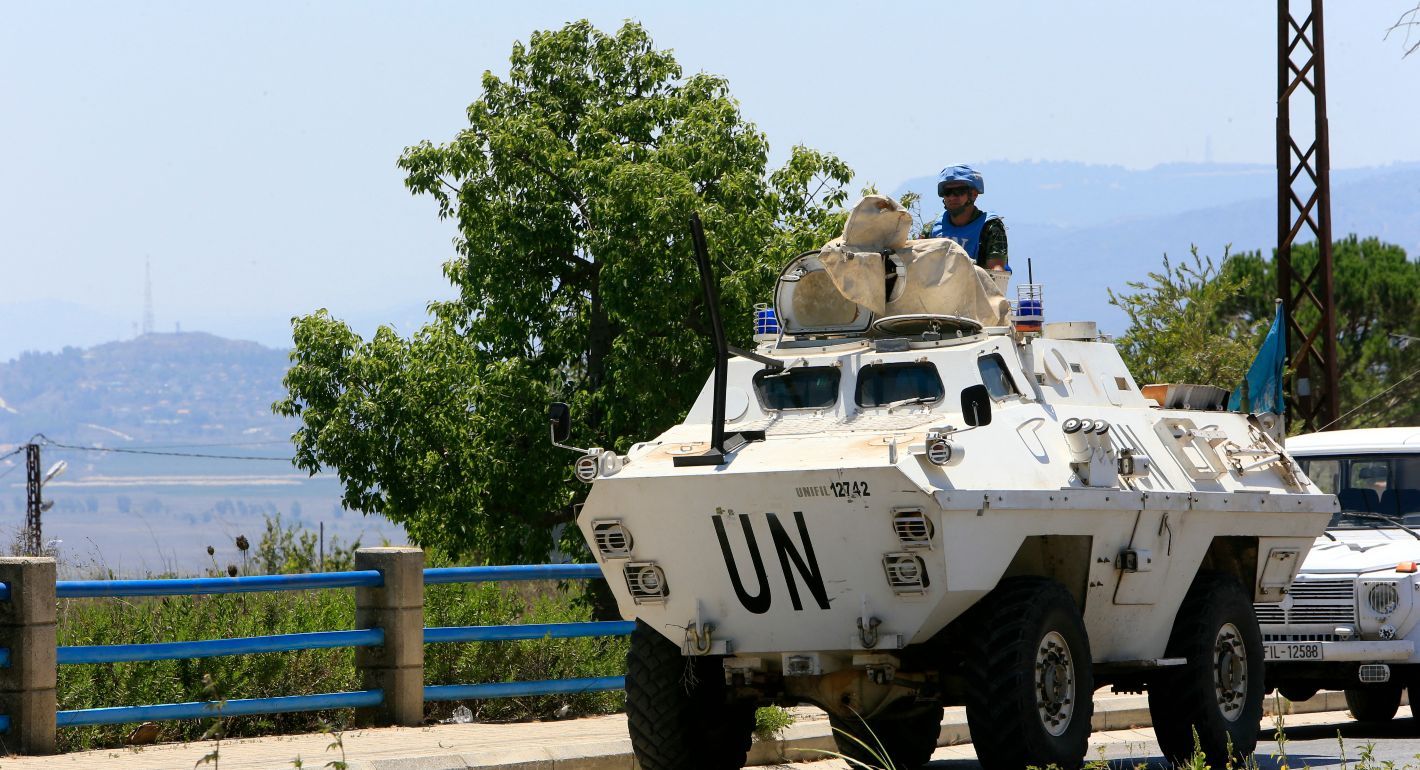
In short, by using diplomacy and their military weight in the United Nations Interim Force in Lebanon (UNIFIL) they could make a significant and necessary contribution to establishing the conditions for a sequenced de-escalation, at least on the Lebanese side. The caretaker Lebanese government has repeatedly expressed its willingness to accept a ceasefire, though it will need diplomatic and military support to take the additional step of declaring it unilaterally. This cannot happen without beefing up UNIFIL and the Lebanese Armed Forces (LAF) to enable the state to enforce the ceasefire on its side.
Though each step is fraught with considerable difficulties owing to the nature of Hezbollah and its relationship with Iran, as well as the weakness of the Lebanese state, the toughest part will continue to be getting any kind of pause or cessation of hostilities from Israel as well as effective U.S. pressure in that direction.
Yet there is a security argument to be made with Israel and the United States.
Since Hezbollah launched its first rocket attacks in October in support of Hamas after its terror attack against Israel on October 7, the Israeli bombing campaign in Lebanon has effectively decapitated and kneecapped the Iran-backed militia. The campaign has been exceptionally successful at assassinating several key commanders who will be exceedingly difficult to replace, including Hassan Nasrallah, who led the organization for thirty-two years. And it has managed to destroy a large amount of its weapons depots and launch pads. Even though the armed group still retains military capabilities, an Israeli occupation of southern Lebanon is more likely to be an opportunity for Hezbollah to regroup and achieve successes than a chance to defeat it and bring security to the inhabitants of northern Israel.
Strengthening the Lebanese state, through the LAF and with a stronger role for UNIFIL, is a more sustainable path to security.
Diplomatically, three European countries have cards to play. France and the UK have a historic standing in Lebanon and in coordinating on Lebanon with the United States. Italy, as the lead nation in UNIFIL and the current president of the G7, also has diplomatic leverage.
Militarily, Europeans have the means already in theater. Of the 10,058 peacekeepers making up UNIFIL, fourteen EU countries from across the bloc provide more than 3,600 soldiers—a third of the troops—with Italy, Spain, and France in the lead. This gives Europeans more military mass on the ground, on the frontline of a war, than in Ukraine.
Expanding UNIFIL’s margin of maneuver and means would not require a new mandate from the UN Security Council, eliminating the risk of a U.S. veto. The goal would be to transform the heretofore ornamental international force that merely records violations by Hezbollah and Israel into a force actually capable of enforcing at least part of the UNSC resolution 1701. This would pool not only financial costs but also military and political risk.
Financially, the mechanisms and budgets are already there. Rather than using the €1 billion aid package EU Commission President Ursula von der Leyen and Cypriot President Nikos Christodoulides announced in May to pay off a failing state to shield itself from migration, the EU would be well advised to use it in support of UNIFIL, the LAF, and for the massive humanitarian needs created by the ongoing Israeli aggression. The European Peace Facility could be used to further enhance the Lebanese Army’s capabilities.
U.S. President Joe Biden is no Ronald Reagan, who during Israel’s 1982 invasion of Lebanon not only refrained from using America’s veto to shield Israel at the UN but also suspended the delivery of F-16 fighter jets and restricted aid and military assistance to Israel to force a withdrawal of its troops from the Lebanese capital Beirut.
The U.S. stance on the conflict and a combination of ideology and domestic political considerations is increasingly endangering European interests and stability. That pattern looks set to become part of the new transatlantic dynamic, including in theaters far beyond this conflict. Figuring out a strategy for Lebanon could also help the Europeans start crafting a new diplomacy for the era that lies ahead.

Editor in Chief, Strategic Europe
Rym Momtaz is the editor in chief of Carnegie Europe’s blog Strategic Europe. A multiple Emmy award-winning journalist-turned-analyst, she specializes in Europe and the Middle East and the interplay between those two spaces.
Recent Work
Rym Momtaz, ed.
Rym Momtaz
Carnegie does not take institutional positions on public policy issues; the views represented herein are those of the author(s) and do not necessarily reflect the views of Carnegie, its staff, or its trustees.

Much has been said of the changes Brussels is trying to make to the EU enlargement process. Here’s why gradual integration might—or might not—be the answer.

Dimitar Bechev

The European Commissioner for Trade is headed to China. But after President Xi’s bridge-building visit to Washington, can a more isolated EU overcome Beijing’s stranglehold on critical raw materials? Who will blink first?
Rym Momtaz, ed.

The domestic impacts of how long it is taking to end the war in Ukraine have pushed the French electorate to the political extremes and compromised the country’s diplomatic capacity.
Rym Momtaz

Before the next wave of EU enlargement takes place, the union needs to grapple with thorny questions of how power is distributed among its members.


Emil Sondaj Hansen, Ditte Brasso Sørensen

A summer of escalation in the Black Sea has hurt Ukraine economically and is exacerbating world food security. A truce is needed—as is a broader reframing of Europe’s Ukraine strategy.

Thomas de Waal