

{
  "authors": [
    "Roderick MacFarquhar"
  ],
  "type": "event",
  "centerAffiliationAll": "dc",
  "centers": [
    "Carnegie Endowment for International Peace"
  ],
  "collections": [],
  "englishNewsletterAll": "asia",
  "nonEnglishNewsletterAll": "",
  "primaryCenter": "Carnegie Endowment for International Peace",
  "programAffiliation": "AP",
  "programs": [
    "Asia"
  ],
  "projects": [],
  "regions": [
    "China"
  ],
  "topics": []
}
Mao's Last Revolution
Thu, October 5th, 2006
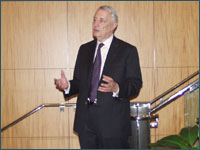
IMGXYZ537IMGZYXHarvard professor Roderick MacFarquhar, a China expert who has written a number of books on the Cultural Revolution including The Origins of the Cultural Revolution, discussed his most recent book on the topic, Mao's Last Revolution. Though the book is a historical look at a period of Chinese history (1966-1976), this period is crucial to the understanding of contemporary China. The Cultural Revolution was so traumatic, comments MacFarquhar, that it convinced Deng Xiaoping that a drastic change in policy was necessary for the sustainability of the Party. In short, MacFarquhar argues, the reforms one sees in China today are the direct result of the Cultural Revolution that convinced the Party it would not stand unless it changed course.
Mao's Last Revolution also provides a clearer picture of what happened during that tumultous decade than previously possible. The Cultural Revolution severely undermined the legitimacy of the Party, something that it has yet to regain fully. Because of this, it is still a sensitive topic in China, one that is never written about or discussed. This book incorporates all that one currently can know about the event, and puts the facts out there for future Chinese historians who, perhaps one day in a more liberal society, will be able to complete the story.
Carnegie does not take institutional positions on public policy issues; the views represented herein are those of the author(s) and do not necessarily reflect the views of Carnegie, its staff, or its trustees.
Event Speaker
Roderick MacFarquhar