

{
  "authors": [
    "Prerna Mukharya",
    "A. Didar Singh",
    "Constantino Xavier",
    "Saksham Khosla"
  ],
  "type": "event",
  "centerAffiliationAll": "",
  "centers": [
    "Carnegie Endowment for International Peace",
    "Carnegie India"
  ],
  "collections": [],
  "englishNewsletterAll": "",
  "nonEnglishNewsletterAll": "",
  "primaryCenter": "Carnegie Endowment for International Peace",
  "programAffiliation": "",
  "programs": [],
  "projects": [
    "Political Economy"
  ],
  "regions": [
    "South Asia",
    "India"
  ],
  "topics": [
    "Economy"
  ]
}
Cinema, Culture, and Policy: Swades and the Diaspora
Wed, September 27th, 2017
New Delhi
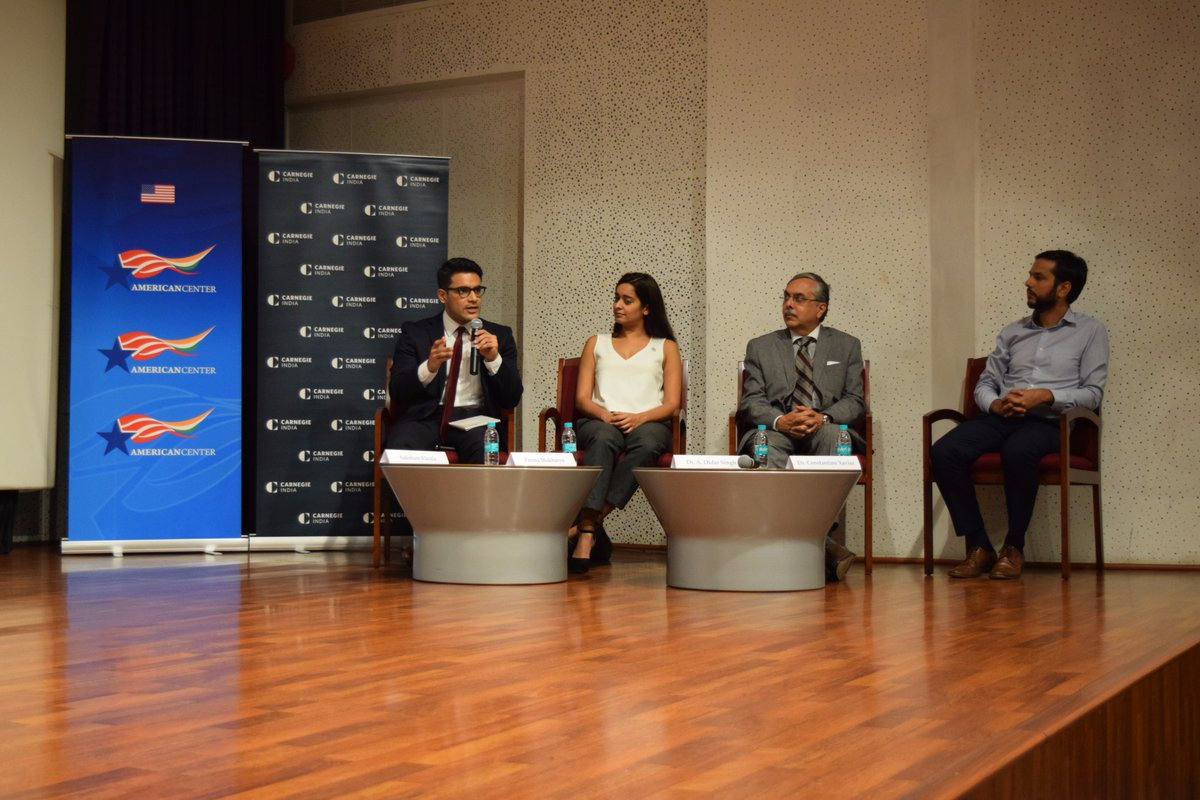
The Indian diaspora, a source of financial, ideational, and human capital flows and the largest such population in the world, constitutes a key strategic asset for India. In 2004, the Hindi film Swades depicted the increasingly visible phenomenon of return migration—members of the Indian diaspora that worked or studied abroad choosing to return to India. As part of the Culture, Cinema, and Policy series, Carnegie India, in partnership with the American Center in New Delhi, hosted Prerna Mukharya, A. Didar Singh, and Constantino Xavier for a panel discussion on the economic consequences of migration and the policies used by the Indian government to leverage the strengths of its diaspora. Saksham Khosla moderated the discussion.
Discussion Highlights
- The Diaspora and Liberalization: In the pre-liberalization era, panelists contended that migrant outflows dominated, with both a weak economic case and few policies to encourage the return of the Indian migrants limiting their engagement with India. After the reforms of the 1990s however, participants noted that a rapidly growing Indian economy became more attractive for the diaspora and encouraged it to contribute significantly to India’s development trajectory. Discussants noted that greater interest by the diaspora was gradually met with increased policy activity from both the central and state governments in India to encourage investments, facilitate visa access, and utilize the expertise of Indians abroad. While the narrative on migration has today shifted from ‘brain drain’ to ‘brain gain,’ participants stressed that the despite its contributions, the diaspora should only be perceived as an important partner in India’s growth and not a savior.
- Central and State Policies for Diaspora Engagement: Panelists asserted the Modi government’s renewed outreach in the form of the prime minister’s visits abroad, the biennial Pravasi Bharatiya Diwas, and efforts to streamline residency and economic participation in India has done well to engage diaspora populations. Panelists also noted that state-level policies such as those developed by the governments of Punjab and Kerala have helped to mobilize financial flows from the diaspora. More such programs, they said, could facilitate greater participation by members of the diaspora in the Indian economy.
- Diaspora Policy in the Future: Along with the economic and policy factors, participants also highlighted how many students and professionals abroad were attracted by the opportunity to effect change on a much larger scale in India than in their host nations. Going forward, they said, India would continue to benefit from its ties with overseas Indians if domestic economic stability and growth endures, challenges to doing business in India are removed, and flexible partnerships between Indian and foreign institutions are developed to allow for the free flow of skilled workers.
This event summary was prepared by Moumita Mukherjee, an intern at Carnegie India.
Carnegie does not take institutional positions on public policy issues; the views represented herein are those of the author(s) and do not necessarily reflect the views of Carnegie, its staff, or its trustees.
Event Speakers
Prerna Mukharya
A. Didar Singh
Former Fellow, Carnegie India
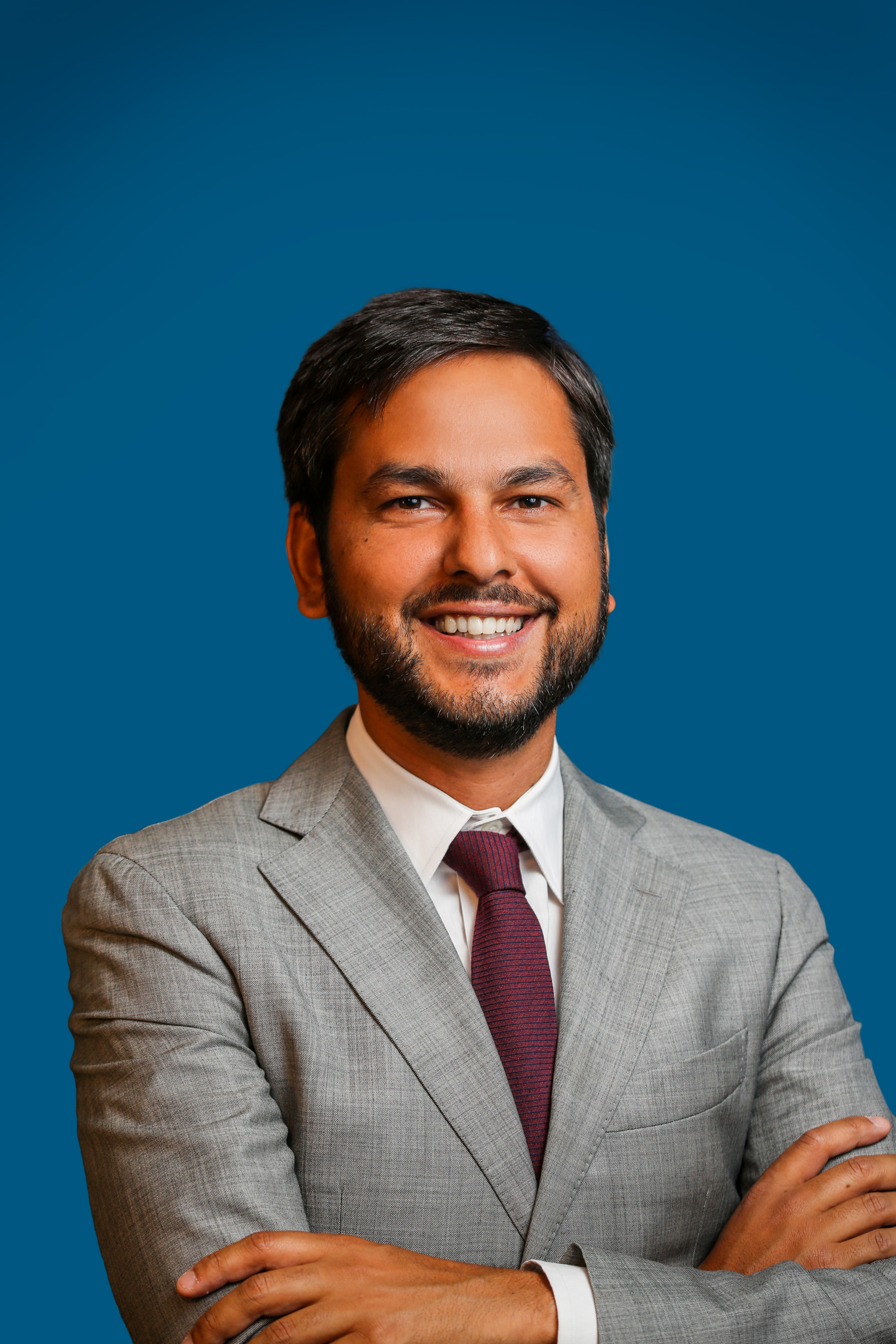
Constantino Xavier was a fellow at Carnegie India, based in New Delhi. His research focus is on India’s foreign policy, with emphasis on relations with its neighboring countries and South Asian regional security.
Saksham Khosla
Former Research Analyst, Carnegie India
Saksham Khosla was a research analyst at Carnegie India.