

Commentary
By failing to address Palestinian representation, the current process is bound to lead to just another temporary arrangement.
Nathan J. Brown
{
  "authors": [
    "Emma Gabrielyan",
    "Lilia Shevtsova"
  ],
  "type": "legacyinthemedia",
  "centerAffiliationAll": "dc",
  "centers": [
    "Carnegie Endowment for International Peace",
    "Carnegie Russia Eurasia Center"
  ],
  "collections": [],
  "englishNewsletterAll": "ctw",
  "nonEnglishNewsletterAll": "",
  "primaryCenter": "Carnegie Russia Eurasia Center",
  "programAffiliation": "russia",
  "programs": [
    "Russia and Eurasia"
  ],
  "projects": [],
  "regions": [
    "Caucasus",
    "Russia",
    "Armenia",
    "Eastern Europe",
    "Ukraine"
  ],
  "topics": [
    "Security",
    "Foreign Policy"
  ]
}
Source: Getty
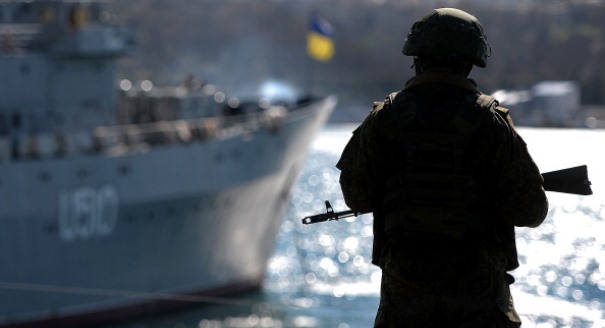
Armenian President Serzh Sargsyan has said that he supports the Crimean referendum, but it is hard to say whether Armenia’s authorities could have expressed another view.
Source: Aravot
Formally, the Kremlin has not officially declared about the state of war with Ukraine. Ukraine does not resist the Kremlin’s actions. However, Russia’s actions coincide with the signs of the occupation of a part of Ukrainian territory. A precedent is created when Russia may try to “protect the interests of the Russian-speaking population” in other unrecognized states. But, as far as I understand, such a scenario does not threaten Armenia…
- I do not have any counter-argument with which I can counteract Garry Kasparov. I share the conclusion about the West’s “paralysis” situation. It is manifested at least in the fact that the West does not know how to react to the collapse of current world order and the violation of the fundamental principle of inviolability of post-war borders.
With regard to democratic approaches to Russia, currently the attitude will not be cloudless. Can we talk about the inevitable confrontation…? I think it is early to draw such a conclusion. However, the cold autumn between the relations has already reached. It will pass to a cold winter, time will tell. You are asking about the possibility of “constructive approaches” towards Russia by the West. I do not understand how you understand this approach. Should the West recognize the annexation by Russia? Or, Should the West force Russia to come out of Crimea…? Neither one nor the other will happen anytime soon.
- If the two presidents have really come to this conclusion, which you mention, it means that they have confirmed that they do not accept the international norms. Can we consider the situation happened after occupying the territory of a country by another country a “free” expression of will? Does the President Sargsyan really consider the expression of will in Crimea free? In this case, he is simply misinformed. As to the willingness of the two presidents to abide by international laws and the UN Charter, it is commendable. However, one of them has violated the UN Charter. I find it hard to say whether Armenia’s authorities could have made another approach in this situation, in which Armenia has appeared.
- No one can predict what direction Russian tentacles would extend. Two factors are important. First, from this time onward, Moscow will force Russia a militaristic and military paradigm, which means expansionism and search for an enemy. Secondly, the states that are in the orbit of Russia (and you can decide for yourself how it is as a state) will have to pay for the economic loyalty and Russian support. Not so comfortable conditions for survival.
Emma Gabrielyan

Former Senior Associate, Russian Domestic Politics and Political Institutions Program, Moscow Center
Shevtsova chaired the Russian Domestic Politics and Political Institutions Program at the Carnegie Moscow Center, dividing her time between Carnegie’s offices in Washington, DC, and Moscow. She had been with Carnegie since 1995.
Carnegie does not take institutional positions on public policy issues; the views represented herein are those of the author(s) and do not necessarily reflect the views of Carnegie, its staff, or its trustees.

By failing to address Palestinian representation, the current process is bound to lead to just another temporary arrangement.

Nathan J. Brown
In an interview, Sergei Melkonian discusses Armenia’s and Azerbaijan’s careful balancing act among the United States, Israel, and Iran.

Armenak Tokmajyan

Just look at Iraq in 1991.

Marwan Muasher

A coalition of states is seeking to avert a U.S. attack, and Israel is in the forefront of their mind.

Michael Young

Baku may allow radical nationalists to publicly discuss “reunification” with Azeri Iranians, but the president and key officials prefer not to comment publicly on the protests in Iran.

Bashir Kitachaev