

Commentary
In an interview, Ian Lustick and Eli Clifton discuss their new book on why a prominent ally has so much influence in America.
Michael Young
{
  "authors": [
    "Sylvie Goulard",
    "Gerald Knaus"
  ],
  "type": "questionAnswer",
  "centerAffiliationAll": "",
  "centers": [
    "Carnegie Endowment for International Peace",
    "Carnegie Europe"
  ],
  "collections": [
    "EU Integration and Enlargement"
  ],
  "englishNewsletterAll": "",
  "nonEnglishNewsletterAll": "",
  "primaryCenter": "Carnegie Europe",
  "programAffiliation": "",
  "projects": [
    "Europe Head-to-Head"
  ],
  "regions": [
    "Europe",
    "France",
    "Germany",
    "Ukraine",
    "Moldova",
    "Western Balkans"
  ],
  "topics": [
    "EU",
    "Foreign Policy",
    "EU Enlargement",
    "NATO",
    "Security"
  ]
}
Source: Getty
Despite offering security benefits to candidates and the EU alike, the enlargement agenda appears stalled. Why is progress not being made, and is it time for Europe to rethink its approach?
In a public debate moderated by Carnegie Europe Director Rosa Balfour, leading experts Sylvie Goulard and Gerald Knaus exchanged views on the question “could a smaller EU be stronger than an enlarged bloc?” The event took place in the context of Carnegie’s Europe Head-to-Head project. Excerpts from the conversation, which have been edited for clarity, are below. Listen the full discussion here.
Professor of Practice, SDA Bocconi, former deputy governor of the French Central Bank, and former French minister of the armed forces
Three points answer this question. The first is to ask what we mean by “stronger.” The original purpose of European integration was to unite people: Europe is not only an alliance of states, it is not just about diplomacy, it is also about sharing sovereignty—about being together in something with a sense of belonging. And here I have some doubts with how the EU is approaching enlargement currently.
This is all the more dispiriting because everyone should want enlargement to be a success, and this is the second point. The people knocking at our door are fully Europeans: Ukrainians in particular are living through a tragedy, fighting a war for their survival and future in the union. So it’s not that we don’t want them. But we need to make sure the whole process will be a success, and in doing so we should not create false expectations. Here, the EU has been very disappointing: Ukraine was given the status of candidate country in December 2023, more than two years ago, and we still don’t have progress because decisions that need to be taken unanimously are blocked by vetoes at every step. We see the games Hungarian Prime Minister Viktor Orbán plays. We see how he tries to block the decisionmaking process. People often argue against enlargement by saying the union would struggle to take decisions with an increased membership, but this is a problem we already face.
The last point is about language and expectations. Enlargement is presented as a merit-based system of incentives: Candidates do political reform in exchange for access to the union. But the need for merit is imposed only on the candidates; there is nothing imposed on existing members. We have lots of problems with the rule of law in our own countries, after all. If we want the EU to be more than just a market, we need to make sure that we have the right procedures in place for defending the rule of law at home as well as in candidate countries. In a nutshell, what we need is a whole-of-society project. Unfortunately, it is not manifesting: Polls show that very few Europeans know what is at stake, and many simply ignore what is going on. And with all the threats we are facing—Russia, the war, uncertainty in the transatlantic relationship—this internal weakness prevents Europe from being strong.
To get enlargement back on track, Europe needs a vision and leadership. If a group of member states believe they can take action, but don’t want to have to wait for other countries who don’t share their views to catch up, then they should act as a smaller group. This is how the Schengen Area came about, and it is how the euro was started: It is a good way to move ahead, and it is not a new idea. But any version of two-speed Europe should strive for inclusivity and stay ready to accept some members that may not be ready to join now, but could be later.
The question is which countries will be part of today’s avant-garde. In France and Germany, the major powers perhaps best placed to lead, it seems the governments are completely forgetting their responsibility to the future of the EU. There are divergences, certainly, but this has always been the case between Paris and Berlin. French President Emmanuel Macron and German Chancellor Friedrich Merz need to sit down, hash out the differences in their visions, and emerge with a new, inclusive, and forward-looking blueprint. Because if we lose Franco-German cooperation, we lose everything. When the European project began after the Second World War, France and Germany sharing resources and sovereignty was the decisive step, because they were the big powers. It was difficult then and it will be difficult now, but cleaning up the bilateral mess will be crucial.
Founding Chairman, European Stability Initiative
We need to enlarge, but the way we are doing it now will not work. So what can we do about it? Because in the end, it’s in our parliaments and governments that we need to make the argument that enlargement will be a net positive. Ukrainians, Moldovans, or the people in the Balkans all already see the benefit of joining the EU. That’s why they apply, that’s why they work to meet the criteria for membership. But we need to convince citizens of existing members.
The EU’s unique nature gives it a unique ability to enlarge. It has done so throughout its history, but it was always difficult. And the big enlargement of the early 2000s came as a result of a shock when, at a 1999 European summit in Helsinki, it was decided to open talks with what would eventually be the twelve countries who then joined within a few years. This was because the fourth war in the Balkans had happened, which was the second war in which NATO had to intervene. There was a sense of needing to do something. So, in theory we should be experiencing a similar shock with Ukraine, a similar sense of urgency. But there is no real energy, we’re instead seeing an almost complete lack of movement.
Ukraine applied to join the union in 2022, within days of Russia’s invasion. And it has since become a candidate. But not a single chapter of the enlargement process has been opened. And yes, of course, Hungary vetoes things—we know that. But it’s not just Hungary. Leading politicians in Germany say very openly that they cannot imagine accession for any candidate in the next few years. So, the current process doesn’t work. Not because the commission is failing—although it would benefit from acknowledging problems and proposing solutions more so than it has—but because member states and their publics don’t support it.
It would be a disastrous mistake to continue with the current approach to enlargement, because we’ve seen in Turkey, in Serbia, and in other countries that the longer the process takes, the more the EU loses leverage. But in the case of Ukraine, where we have an allied country that is also the most effective democratic army in Europe, every EU country really has a national interest in a stable, democratic Ukraine in which its citizens believe they have a future. And if you talk to Ukrainians, it’s clear that the future they imagine is very much linked to a credible vision of joining the EU.
So where do we turn for inspiration? The EU’s history may have the answer. When Sweden, Finland, Austria, and Norway were considering joining the bloc, there was no political consensus among the then-twelve members. The solution was to create the European Economic Area, integrating these countries’ economies without yet granting full membership. Three of those four countries then went on to join the bloc fully, with Norway staying out. A similar proposal might just pass in the French, Dutch, and German parliaments. Offering a road map to Moldova or Ukraine for single market access by 2029 or 2030 would give them a concrete goal to anchor their reforms, meaning the coming years will not be wasted. This is a moment for seriousness; Europe needs a serious enlargement policy to meet the challenge.
Use the player below to listen to the whole conversation, or watch it on YouTube.
Invalid video URL
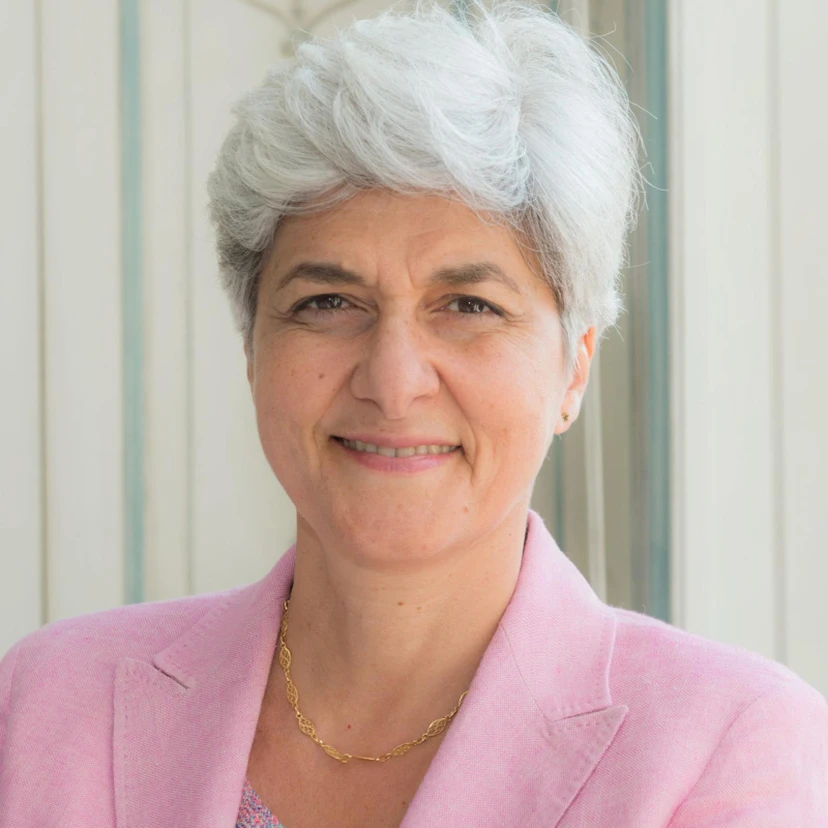
Sylvie Goulard
Professor of Practice, SDA Bocconi, former deputy governor of the French Central Bank and former French minister of the armed forces
Sylvie Goulard is a professor of practice at SDA Bocconi, former deputy governor of the French Central Bank and former French minister of the armed forces.
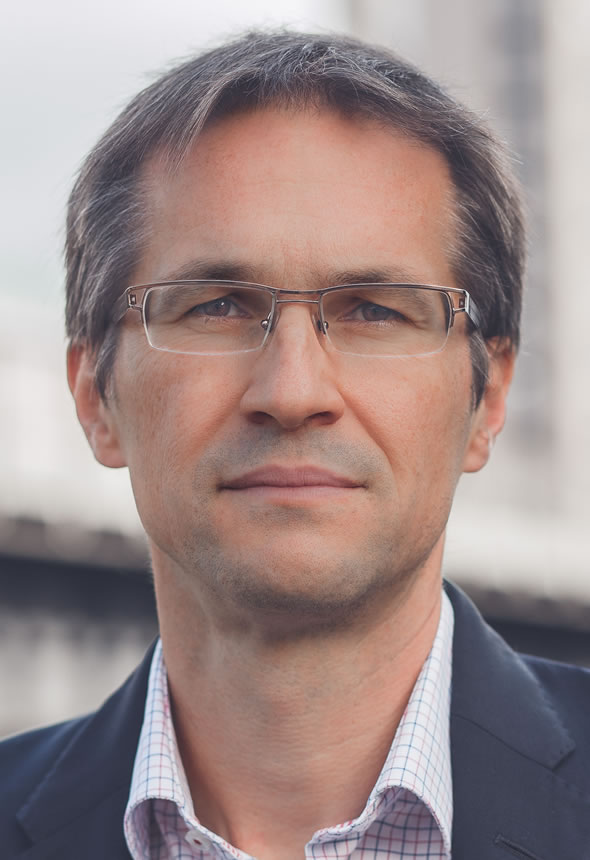
Gerald Knaus
Director, European Stability Initiative
Gerald Knaus is the director of the European Stability Initiative.
Carnegie does not take institutional positions on public policy issues; the views represented herein are those of the author(s) and do not necessarily reflect the views of Carnegie, its staff, or its trustees.

In an interview, Ian Lustick and Eli Clifton discuss their new book on why a prominent ally has so much influence in America.

Michael Young

By failing to address Palestinian representation, the current process is bound to lead to just another temporary arrangement.

Nathan J. Brown
In an interview, Elizabeth Thompson recalls how the country formulated a liberal constitution in 1920, before being denied by France and Britain.
Michael Young

Just look at Iraq in 1991.

Marwan Muasher

A coalition of states is seeking to avert a U.S. attack, and Israel is in the forefront of their mind.
Michael Young