

Commentary
Chung Min Lee
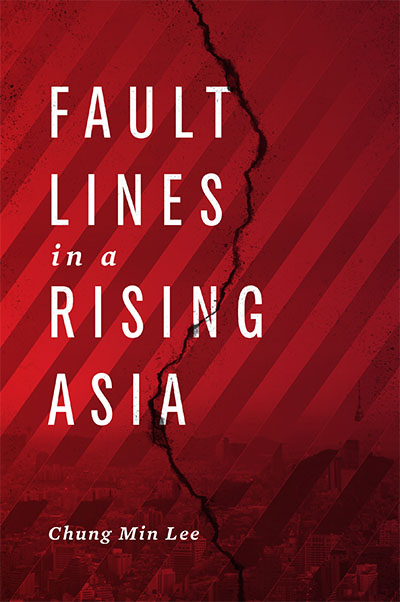
While Asia has been an unparalleled economic success, it is also home to some of the world’s most dangerous, diverse, and divisive challenges.
Source: Carnegie Endowment for International Peace
Asia has already risen by most hard-power measures. But without an understanding of the downsides of Asia’s rise, the conventional narrative is incomplete, misleading, and inaccurate.
Chung Min Lee explores the fundamental dichotomy that defines contemporary Asia. While the region has been an unparalleled economic success, it is also home to some of the world’s most dangerous, diverse, and divisive challenges. Contrary to prevailing wisdom, he says, Asia’s rise doesn’t mean the demise of the West.
“Is Asia ready for the Asian century? Chung Min Lee’s thought-provoking new book raises serious questions about whether Asia’s fragile political structures and fraught geopolitics can sustain global leadership. An important corrective to current jeremiads in America about its own decline and the remorseless rise of the East.”
—Simon Long, Banyan columnist, Economist
“Chung Min Lee—with clarity and tremendous skill—illustrates the political and military challenges that the rise of Asia has brought upon the region.”
—Kiichi Fujiwara, University of Tokyo
Senior Fellow, Asia Program
Chung Min Lee is a senior fellow in Carnegie’s Asia Program. He is an expert on Korean and Northeast Asian security, defense, intelligence, and crisis management.
Recent Work
Chung Min Lee
Carnegie does not take institutional positions on public policy issues; the views represented herein are those of the author(s) and do not necessarily reflect the views of Carnegie, its staff, or its trustees.
In an interview, Marc Lynch discusses his new book decrying the post-1990 U.S.-dominated order in the Middle East.

Michael Young

Just look at Iraq in 1991.

Marwan Muasher

A coalition of states is seeking to avert a U.S. attack, and Israel is in the forefront of their mind.
Michael Young

Baku may allow radical nationalists to publicly discuss “reunification” with Azeri Iranians, but the president and key officials prefer not to comment publicly on the protests in Iran.

Bashir Kitachaev

The country’s leadership is increasingly uneasy about multiple challenges from the Levant to the South Caucasus.

Armenak Tokmajyan