

Commentary
Thomas de Waal
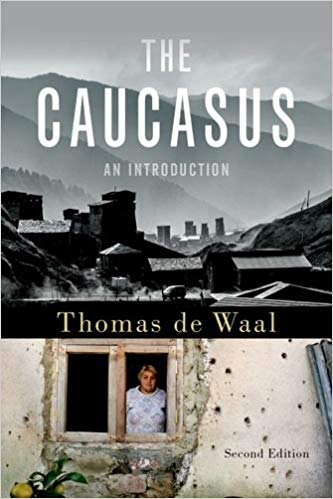
This new edition of The Caucasus is a thorough update of an essential guide that has in-troduced thousands of readers to a complex region.
Source: Oxford University Press
This new edition of The Caucasus is a thorough update of an essential guide that has in-troduced thousands of readers to a complex region. Armenia, Azerbaijan, Georgia and the breakaway territories that have tried to split away from them constitute one of the most diverse and challenging regions on earth--one that impresses the visitor with its multi-layered history and ethnic complexity. Over the last few years, the South Caucasus region has captured international attention again because of disputes between the West and Russia, its unresolved conflicts, and its role as an energy transport corridor to Europe. The Caucasus gives the reader a historical overview and an authoritative guide to the three conflicts that have blighted the region. Thomas de Waal tells the story of the "Five-Day War" between Georgia and Russia and recent political upheavals in all three countries. He also finds time to tell the reader about Georgian wine, Baku jazz, and how the coast of Abkhazia was known as "Soviet Florida." Short, stimulating, and rich in detail, The Caucasus is the perfect guide to this fascinating and little-understood region.
“A compact but rich book examining the southern side of the range, where combustible difficulties afflict three small post-Soviet countries: Armenia, Azerbaijan and Georgia. ...If ever there was a place that needed a competent and even-tempered guide, this was it. Mr. de Waal provides one. Currently an analyst at the Carnegie Endowment for International Peace, he has traveled through and written of the Caucasus more than most any outsider since the Kremlin's grip over the region loosened during the Soviet collapse. His book contains history and knowing flair:..will likely have many lives. Why? The wars that broke out in the 1990s are not over. Mr. De Waal’s book is welcome now, and most useful. If one of the wars flares up again, it will be essential.”
—The New York Times War Blog
“Assiduously researched and lucid primer. While it may be easier for the distant academic to be dispassionate, de Waal is more than that. Through the past two decades, he has written extensively on, and from, the region for British newspapers and the Institute for War and Peace Reporting. He is also the co-author of Chechnya, probably the best contemporary volume on that violent Russian republic. The Caucasus reflects a depth of understanding of the region that doesn’t stray into the didactic. In recent years, other volumes have appeared on the South Caucasus, notably Charles King’s The Ghost of Freedom, and Thomas Goltz’s diaries of Georgia and Azerbaijan. But de Waal has produced the most important work. And, as with any good book, it leaves the reader hungering for more.”
—Foreign Policy
“Nobody has dealt with today’s Transcaucasia as lucidly as Thomas de Waal.”
—Times Literary Supplement
“Well-written, accessible and engaging...[De Waal’s] magisterial histories are an essential part of a comprehensible explanation of the intractable problems that beset the region.”
—International Affairs
“Thomas de Waal has written one of the most vivid, clear-minded accounts of the history and current troubles of the lands between Russia and Turkey.The Caucasus defines easy explanation, and de Waal deftly untangles the webs of mystification and obfuscation that have so often marred our understanding of why this rich and beautiful region, a cradle of diverse civilizations, has failed so miserably to realize its promise.”
—Ronald Grigor Suny, Professor of Social and Political History, and Professor of Political Science, University of Michigan
“Europe and Asia, mountains and flatlands, Christians and Muslims, ancient cultures and modern states--the Caucasus has long been a classic borderland in many senses. Blending first-hand reporting, historical narratives, and original research, The Caucasus is an indispensable guide to the fractious politics and complicated histories of the region’s nations and peoples.”
—Charles King, Professor of International Affairs and Government, Georgetown University, and author of The Ghost of Freedom
“This is the definitive text for anyone interested in this complex region. De Waal describes the deep roots of current conflicts and his analysis of the present situation is right on target. It should be required reading for anyone involved in Caucasian affairs.”
—Richard Miles, former U.S. Ambassador to Azerbaijan and Georgia
“The Caucasus is a mini-encyclopedia, and de Waal a peerless guide for navigating this mountainous maze of tangled enmities and ethnicities.”
—Andrew Meier, author of The Lost Spy: An American in Stalin's Secret Service

Senior Fellow, Carnegie Europe
Thomas de Waal is a senior fellow at Carnegie Europe, specializing in Eastern Europe and the Caucasus.
Recent Work
Thomas de Waal
Thomas de Waal, Areg Kochinyan, Zaur Shiriyev
Carnegie does not take institutional positions on public policy issues; the views represented herein are those of the author(s) and do not necessarily reflect the views of Carnegie, its staff, or its trustees.
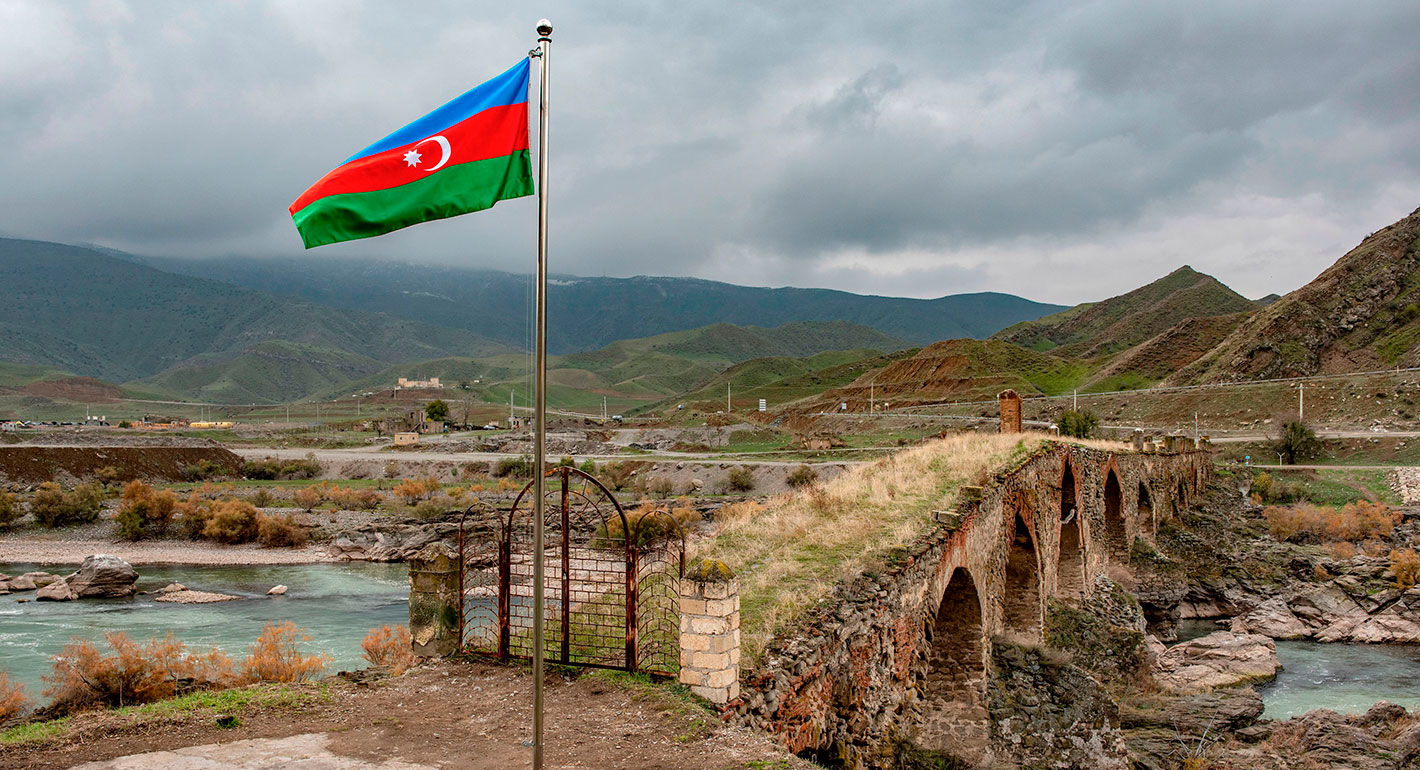
In an interview, Sergei Melkonian discusses Armenia’s and Azerbaijan’s careful balancing act among the United States, Israel, and Iran.

Armenak Tokmajyan

Just look at Iraq in 1991.

Marwan Muasher

A coalition of states is seeking to avert a U.S. attack, and Israel is in the forefront of their mind.

Michael Young

Baku may allow radical nationalists to publicly discuss “reunification” with Azeri Iranians, but the president and key officials prefer not to comment publicly on the protests in Iran.

Bashir Kitachaev

The country’s leadership is increasingly uneasy about multiple challenges from the Levant to the South Caucasus.
Armenak Tokmajyan