

Podcast Episode
A new book goes inside the AI industry and calls for a mass movement to restrain it.
Jon Bateman, Garrison Lovely
On this episode of The World Unpacked, authors Quinn Slobodian and Ben Tarnoff explore Musk’s historical meaning and debate the politics of technocracy with host Jon Bateman.
Invalid video URL
A provocative new book, Muskism: A Guide for the Perplexed, argues that Musk has pioneered a new form of capitalism that fuses technology with political power. Elon Musk is one of the most influential figures of our era. He remade the space, car, social media, and AI industries. He shaped the Ukraine War. He helped put Donald Trump back in office and became Washington’s most powerful official. How can one CEO alter the fate of multiple nations—and what does that say about our world?
Note: this is an AI-generated transcript and may contain errors
Jon Bateman: You know Elon Musk, but have you heard of Muskism? That's the title of a fascinating new book that treats Musk not just as a controversial tech mogul or a political provocateur, but as a major historical figure, someone whose rise reveals important truths about the strange times we're living in. Quinn Slobodian and Ben Tarnoff argue that Musk's eclectic business empire has one common thread. Musk builds technology infrastructures, like satellite communications and transportation networks, that serve real public needs, but also give Musk himself unprecedented leverage over governments and even countries. I sat down with the authors to learn about Muskism, and to debate one of their most provocative claims, that there's something inherently regressive about any effort to to put technology and efficiency at the center of government. We explore the politics of electric cars, the surprising links between Musk's reactionary views and the left-leaning abundance movement, and whether Democrats will launch a doge of their own. I'm John Bateman, and this is The World Unpacked. Quinn Slobodian, Ben Tarnoff, welcome to The World Unpacked. Happy to be here. Thanks for having us. Your book is about Elon Musk. Everyone knows Elon Musk, most of us can name a lot of facts about him, the companies that he runs, the technologies he's involved in, his personal life, his politics. But your book is something different, it's about something you call Muskism. What is Muskism?
Ben Tarnoff : Unlike a lot of commentary on Musk, we're trying to think about him less as an individual, less as a person with a particular psychology and biography, and more as an avatar of a broader political economic System.
Ben Tarnoff: And our inspiration for doing so here is actually Henry Ford and the concept of Fordism. So Musk has often been compared to Ford for a variety of reasons, but commentators of the last century also developed this idea called Fordism, and they did so by looking at the life and work of Henry Ford, looking for instance at the innovations he introduced on the factory floor, in how he managed relations with his workers and so forth. And inferred or extrapolated a broader system for not just how to put production together, not just to organize a factory, but how to organize society more broadly. And that was kind of the thought experiment that led Quinn and I to think about undertaking this book, which is, is there a Muskism that we could infer or extrapolate from the life and work of Elon Musk?
Jon Bateman: Could you define muskism if there is a coherent framework that stitches together all of the different technological, commercial, and political endeavors of this complex and very strange man?
Ben Tarnoff: What is it? Is that Muskism is the promise of sovereignty through technology. That Musk is not selling cars, rockets or satellites so much as he is selling the idea that in an increasingly unstable world, both individuals and nation states can fortify their self-reliance by plugging into his infrastructures. But in doing so, of course, they deepen their dependency on those infrastructures.
Jon Bateman: Maybe you could choose one of Musk's lines of business, present or past, and use that as a vehicle to explain what you mean by sovereignty or dependence.
Quinn Slobodian: So SpaceX is one of his earlier ventures, right? It's founded already in 2002, and it's about to IPO, so go public this year, likely in June, and an enormous valuation, right. There's talk of $1.75 trillion.
Jon Bateman: Companies in the world.
Quinn Slobodian: So what is SpaceX? I mean, people know about the rockets. They've seen those images. They probably know that the SpaceX now provides most of the launch capacity for the US government, almost all of it, in fact, and a good chunk over half of the launch capacity, for the world. They probably that in orbit are now 10,000 plus. Satellites that he started putting up in 2019 through his the wing starlink that are used mostly for You know kind of rural internet connectivity, but also for military operations But they might not know that Recently SpaceX has also swallowed up X AI Which is his attempt to kind of compete with open AI and anthropic and build out self-consciously what he calls the anti-woke alternative. To these companies in something he calls Grok, which is his consumer-facing chat bot. You might not also know that X.A.I. Itself a few months ago bought X.com, so formerly Twitter. So, now you have this really strange, actually, conglomerate that stretches from social media all the way to starships. What you have is the protection of sovereignty and something as basic as the ability to fight a war. Right, famously, Musk turned Starlink off in the field for Ukrainian forces in late 2022, crippling their attempt at an offensive into Russian territory for reasons that he's never really been entirely forthright about. You have sovereignty in the sense of the ability to communicate within the population. XAI itself is now being plugged into the backend of the operating systems of. Places in the federal government. So the everyday operations of government are increasingly backstopped and made possible by these kind of products. And it arguably expands out the ability of governments to do the kind of things they want to do, but it comes with a price, right? It comes with the price of being beholden to Musk. Being subject to his arbitrary decision at any given point. It's a kind of tainted sovereignty that's being offered. It's the sovereignty with a price. And yet it's a deal that increasingly he's securing kind of choke points in things like low earth orbit launch, such that governments are forced to take this deal and there are no real alternatives out there.
Jon Bateman: Now, of course, what he would probably say, and probably what his fans would say, is that this is actually a success story in many ways. That Musk has achieved this high ground control because he has created things that didn't exist and that we needed. Relatively cheap, repeatable space launch capability, as an example. Do you view Musk as someone who is solving problems that the world has, we're kind of solving. Like legitimate problems that the government has, or do you view him as almost a somewhat exploiting these situations in some way and creating like a negative dynamics?
Ben Tarnoff: Well, I think we view Musk as a capitalist, I mean, quite simply, which is to say that he is, like any capitalist, attuned to opportunities. And I think in the case of Musk, uniquely attuned to certain opportunities. He's always been very keen to instrumentalize the state as a source of power and profit, and has, I innovated and at minimum exemplified this tendency toward what we describe as state symbiosis to this growing integration of the public and the private sector as mediated by technology. He's also innovating in a quite traditional way. I mean, SpaceX, over the course of two decades, achieves more than a 90% reduction in the cost of putting mass into orbit. And it does so by introducing optimizations on the shop floor, process innovations of the kind that have been integral to capitalism from its origin point, and introducing new technologies such as reusable rocketry, essentially what makes Starlink feasible. In the first place, much less these even grander aspirations of putting a factory on the moon and Mars colonization. So here I think we're certainly making the case that there's quite a lot that's distinctive about Musk, or we wouldn't have constructed an ism on the basis of it. But this tendency to reduce costs through innovation and the introduction of labor-saving machinery is just a kind of ancient capitalist imperative and one that Musk has been. Particularly effective in channeling.
Quinn Slobodian: Yeah, I think that the question you're asking I think is a good one and he manages to capitalize on openings in genuine social needs and political demands and to insert himself in ways that one would find it difficult to be overly critical of. So for example, I'm thinking of in 2008, a very interesting moment we thought where You have simultaneously the global financial crisis. Iraq war is going badly. Uh... There this sense that middle east oil should not be dictating american uh... Military interventions anymore obama comes into office and says the auto companies are all failing because the global financial crisis i'm gonna bail them out but as i do so i'm going to basically compel them to electrify the auto sector and we're going to use renewables and he v's as a foreign policy tool actually to increase what we call the electric autonomy that the United States has. And to reduce its dependency on fossil fuel imports. This is the moment at which Tesla gets a nearly $500 million loan from Obama's Department of Energy. And it is a life-saving loan, right, early 2009, without that Tesla flops, basically. But nevertheless, this was a moment where Musk acts arguably as, indeed as a capitalist, but also as one who's Interest then kind of align with the social mandate which is then incentivized by the outlay of money by the federal government So it's basically green industrial policy So there's a moment like that Where you can where I personally anyway would see that as probably a positive version of public private partnership of a certain kind Not that dissimilar from what biden and his administration would roll out in the ira years later What's interesting about Musk now though, and I think it's an open question for us about whether it can be subtracted from what we call Muskism, is the way that he now has really foregrounded the idea that all tech is political. Only a few years ago, it still seemed possible that as with Fordism, you know, the assembly line mass production could serve. Communism in the Soviet Union, fascism in Italy, and capitalism in the US. Are Musk's technologies now kind of so politicized on their face that they can't be treated that way anymore? I think it's a very important kind of question we leave the reader with.
Jon Bateman: So just to contrast two of Musk's companies here that we may see as having opposing politics. Tesla, yeah, it has this kind of right-wing vibe nowadays with a cyber truck and this kind of cyberpunk kind of regressive esthetic. But fundamentally, it is the pointy tip of the spear of the American electric car industry, which liberals and Democrats have. Really tried hard to nurture over time. So you could say that's like a left-coded company. On the other hand, you have X and XAI, where it's very clear that Musk is attempting to use those informational tools to propagate right-wing ideas. So those are now kind of right-coted companies. Does someone like you, who I think is coming at it from a more progressive perspective, say, It's BLEEP. Good that Tesla had a relationship with the state because that's a left-coded technology, and it's bad that XAI has a relationship with the State because of the opposing politics? Or does it have something to do with the distinct relationships there?
Ben Tarnoff: So it's a good question. I think the way we would put it is that both the form and the content of the relationship between public and private sector matter here. If state capacity is being built through private means, which is one of the ways we understand muskism and states of biases, that it's not the diminution of state capacity, it's the hollowing out of the state, but it's actually. A reinvigoration of state capacity through private means, capacity to do what? What is the goal of the capacity? I think in the case of a renewable energy transition, which is a goal that Quinn and I certainly support, I think we both see a very large role for the state in that. I think, in fact, far larger than the sort envisioned by either Obama or Biden who both of whom had a vision of the relationship between public and private, in which the public sector was primarily a source of loans, grants, tax advantages, was de-risking private capital in order to crowd in investment. It's a very market-driven approach to the renewable transition, which I think myself and many experts agree. Simply is vastly insufficient for achieving the transition that we require at the scale we require and also in the form that we would like it to to appear. So I think for me it's when we look at Musk it's not quite as simple as saying well Tesla's good and XAI was bad. I think it's more about the question of are we imagining a relationship between public and private in which the public sector is simply securing the conditions for accumulation and that that is imagined to be the instrument of some social end, or is the state asserting itself more directly, getting more directly involved in the pursuit of certain social aims through direct investment, through things like a jobs guarantee, through major public programs that do not rely on simply de-risking. Accumulation and for what end.
Quinn Slobodian: I would maybe go a bit farther and say that I think what we're describing is something about the perils of technocracy itself. I think that if you take what we are describing as muskism as an attempt to organize society the way that the factory floor is organized, to take the forms of rationalization and optimization that might make sense in software engineering or in producing rockets or cars and then you apply it to a society, then it doesn't matter what kind of goals you're shooting for, you are going to start producing inhumane results, right? So let's say, you know, Tesla famously brought their costs down and made kind of breakthroughs by Musk being very ruthless towards, among other things, his workforce, right. I mean, Tesla. May be the darling of liberals in some ways, but it's also notoriously antagonistic to organized labor. The Gigafactory in Germany is the only auto plant in the country without a collective bargaining agreement. So he was aiming for something that we might like, and I agree, energy transition, less reliance on fossil fuels, but he's doing so with this kind of logic of what he calls deletion. Yeah, and you know the and streamlining which is often indifferent to other principles, which you know, democratically We might want to respect. I think that what we're worried about in the end is the way that Humane principles and the traditional political principles of like consultation deliberation compromise End up getting totally swamped in a hyper technocratic engineering Mindset of which musk is only maybe the most exaggerated
Jon Bateman: I'm hearing a lot of connections to the whole abundance debate here.
Jon Bateman: Right? Because I think what I'm hearing from you, Quinn, is that efficiency, the kind of brutal efficiency of capitalism to drive costs down for the sake of some goal, whether good or bad. And the willingness to have a hard charging decision maker or executive that pushes past resistance and maybe is willing to take input, but not an excess of process, that that itself has a kind of politics to it, right? That and I think maybe in your view is is troublesome may be seen as conservative. There now is this rising group of Centrist left-leaning intellectuals like as recline and Derek Thompson and others who are trying to actually reclaim some of what you're putting in the muskism bucket and saying actually Liberals and progressives need to cut costs build state capacity for the things that we care about reduce the kind of veto cracy in society. I wonder just what you make of that connection point. Is that right that someone like Ezra Klein in many ways is trying to create like a progressive Muskism?
Quinn Slobodian: I mean, this is the only explanation for why there was enthusiasm from good chunks of the democratic party for Doge when it was first announced in late 2023, right? I mean Bernie Sanders of all people said that actually this Doge idea might be good for its production of, you know, uh, budget lines in the military.
Ben Tarnoff: Musk himself has actually claimed abundance, he's used the term amazing abundance and has signaled his sympathy and affinity for the project. It's interesting, I'm from San Francisco, I used to live out there, I worked in tech for a while and when I've gone back recently, my very first approximation view of the politics of the Silicon Valley leadership class. Is that folks are either have moved to the right of one form or another, whether have gone fully to Trump or a kind of lighter shade of that, or they're abundances. That abundance is kind of the new liberal hegemonic project that replaced kind of Obama era liberalism of the 2010s, which was kind of the platform era Web 2.0.
Jon Bateman: Yeah, amongst a certain set, yeah, in the tech world and parts of the development world.
Ben Tarnoff: Amongst the certain, not to overgeneralize, but certainly kind of within the venture capital and the founder class. Like if you're a liberal, you're pretty much an abundance person of one sort or another. Abundance expresses this technocratic mindset, which is very deeply rooted in the Silicon Valley, the notion that, you know, there are. Social and political problems that can be best understood as engineering problems and that we need to essentially remove obstacles to optimization. I think for the abundance folks, those obstacles are generally defined as things like environmental review and kind of these layers of laterite interference with construction.
Jon Bateman: You're listening to The World Unpacked with John Bateman, where we dive deep into pressing global issues and make sense of the big forces shaping our world. Now, have you learned anything so far that intrigued or surprised you? Let me know in the comments, or just give us a like. And if you want to hear more of my conversations with the world's most informed and interesting people, you can subscribe right here. Now, back to the show. It feels like an important concern of the book. Is the kind of leverage that Musk is able to get over the state. At the end of the day, we're going to need to have some kind of public-private relationship in the area of technology. We have always had that. We will always have that. But we need to figure out exactly how to design it. How do we create a policy environment to prevent that leverage from becoming excessive? Or what's the right amount of leverage? This also relates to the anthropic discussion and their battles with the Department of Defense. Pete Hegseth and Dario Amadei are kind of fighting in the court of law and the court of public opinion to determine who will control the terms under which AI is used in warfare. That one's kind of interesting because the politics of it kind of flip. In that case, it's the sort of civil libertarians and maybe kind of left coded concerns about military use of AI. In that cases, the private company that is actually like the champion of those sort of, you might call them progressive values. And so... Maybe people of that ilk are cheering on Anthropic as they try to get one over on the government and sort of wrest some control. How do you unpack all of that?
Quinn Slobodian: I mean, I think that one way to answer the question is, which is the category of neoliberalism and which makes certain market benchmarks and assessments of success as the kind of primary focus for policy. So cost benefit analysis, reduction of payroll, the attempt to put more money into people's pockets and reduce the amount of wealth that the United States government itself is centrally We're distributing. Antagonism to the welfare state and so on. And on Doge, you know, it's fascinating because Musk brings in this really cost cutters basically radicalized management consultant attitude to the federal government and brings along his host of you know young interns with him who just go in are just like slashing line items left and right. So in some way it just looks like a very, very aggressive turnaround that a failing company might be subjected to by a new private equity firm or something that acquires it. There's something very retrograde and 80s almost about that attitude towards government that it's just like slash and burn. But what's he doing in the background? This is the thing we really focus on in our chapter on Doge. It's not just cutting, but it's... That's part of it, the deleting. But in the back, it's also integrating new systems and automating certain things that had not been automated before. So making parts of the government legible to each other in ways they weren't before. Introducing kind of interoperability, getting rid of data silos, putting paper records into digital form so that they can be queried and called on to more easily for things like the targeting operations that Ben mentioned. But. Really more domestic reasons too, right? Identifying people for the detention and expulsion as part of the immigration roundups. So there's a point where this, you've taken an aggressive market logic that is paired with a kind of engineering way of doing things and it's a kind of solutionism that is a larger social problem.
Jon Bateman: Can I ask you guys, Doge, it's at the center of all of this, right? And Doge is like, if Muskism is a thing, surely this is the culmination of it so far, right, the moment where all of the ideas and processes that Elon Musk has developed in the private sector and the technologies are actually brought into government in order to re-engineer society, as you say. Now, it was kind of a policy and political disaster. It did a lot of damage, it deleted a lot of important programs. It also was very unpopular and ultimately kind of wound down. But my question to you is, could we imagine a future president of very different politics, maybe even a progressive like AOC, actually creating a doge? And what they would be thinking is, I've come into office with this mandate to do all of these difficult things, expand the social safety net. Be nicer to illegal immigrants, restore the rights of trans people, whatever it is. And you find yourself with a Congress that is dysfunctional and obstreperous and executive branch that is kind of lumbering and incapable and probably stocked with a lot of people who came in under the Trump administration. And you might be pretty tempted to use some of these tools of data aggregation. And kind of political loyalists who could sort of be staffed out into the different agencies to exert some kind of central control over this huge beast of the federal government toward completely different ends. Is that something that you could envision? Would that be advisable?
Ben Tarnoff: Yeah, it's a really interesting question. I mean, it is funny because, you know, for a while we've had scholars and commentators talking about the extraordinary concentration of power in the executive branch. Yeah. That is a historical development that's kind of uncontroversial at this point. But of course, it it's the Republican presidents who manage to actually use that power, and the democratic presidents tend to invent reasons why they can't. You know, that there's far more squeamishness among democratic presidents in actually using the powers of the executive than Republicans. And I think the big question on everyone's minds is for a future democratic president, how do you possibly begin to reckon with the Trump era? You know, I think that the Biden response to that was a failure. I think we need to say that much more. Unambiguously, that Biden, the purpose of Biden, how he presented himself, was someone who was going to inoculate the body politic from Trumpism and the IRA, for instance, Bush and Reduction Act, the CHIPS Act, these various attempts at industrial policy were efforts towards that and they failed catastrophically. So I think the next Democratic president has to come up with a more satisfying answer to that. I think that's a kind of much more. Expansive answer to your question, because it's not simply about how you might use the legacy of Doge or the legacy for the second Trump administration for certain perhaps progressive ends, but more broadly, how you actually undertake some kind of political realignment such that you can to reduce the risk of the right returning to power. And I think I can imagine a number of experiments along those lines. I think they will have to diverge from previous democratic initiatives around increasing the efficiency of government because that was a through line in both Obama and Clinton years. Obama is the one who created 18F and the US digital service, which later became U.S. Doge service, so was doing in the 2010s these, you know, important and, and efforts at bringing some Silicon Valley expertise into government in order to modernize systems. Of course, in the nineties, you have the, um, the experience of, of Clinton, uh, attempting to kind of reimagine government. And this is a reference point that Musk himself has pointed to, but in both cases, you do have this kind of very technocratic liberal. Rhetoric around the increasing the efficiency of government, that it's about basically making things run better, and generally drawing on market metaphors in order to explain how it's going to be better. It's going run better because it's gonna run more like a business. And we need to break out of that frame. The function of government is not to be a business, it's not to run like a business. It's not even to import metaphors and metrics from business. It's actually something else. It's a social state and its purpose is to actually ensure that people have social rights. So I think we can use some of these precedents, we can use some these technologies, but again they have to be oriented toward very different ends and we have to break out of that kind of neoliberal prison of political imagination.
Jon Bateman: Governments and private sector definitely have very different missions, very different modes of being, and that is appropriate. I'll say I'm going back to this AOC Doge thought experiment, right?
Jon Bateman: I mean, if she came into office as president, and let's say one of her ideas was let's hold former Trump officials criminally accountable for crimes that they committed, right? I think she would probably be under great pressure to do something like that. Probably the first thing that she would want to do is to set AI to crawl through all the databases and emails and memos of the entire federal government and discern what decisions were made with what information by whom. And basically get out of the whole Merrick Garland problem of kind of slow walking all these investigations. It just seems to me like almost regardless of what your politics are, the private sector and the musks of the world, they have hit on some insights as to just how to get things done. There's, you know, one needs to be wary of, as you said, I think, Quinn earlier, the politics of these technologies. But at the same time, like, part of the reason why a doge is even politically plausible to begin with, even though it ended in tears, is that people have learned that the government is kind of ineffectual in many ways and that it often is behind in terms of like process innovation.
Quinn Slobodian: Yeah, I mean, I'm going to push back a bit on what you just said there. I think if you talk about just digitization and modernization, which I think is has been was alluding to has been a often democratic led project for the last two decades, then that I think can indeed be used for many different outcomes, but I would suggest that thinking as a historian. The way that moments of national political trauma are worked through are actually very infrequently in the way you just described, especially the automated search for culpability so that you could kind of build out a kind of, I don't know, a database of guilt and then enact punishment. That would go against everything we know about truth and reconciliation after moments of national political trauma, not only in practice, because the people who did all those things are still around and are often still in positions of power and often you're not going to be able to get rid of them very easily without really slowing things down and creating ripple effects that are much worse than what you created and that you're making better in the first place, but also because national ruptures and traumas are actually dealt through community-facing deliberative processes of airing victimhood, airing alternative ways of organizing the national project and not actually doing across the board accountability.
Jon Bateman: I appreciate that, Quinn, and at the end of the day, I think the argument that I'm offering is less about the ends to which it's put and more about the kind of process or tools themselves. So for example, if there was like a truth and reconciliation style like transparency report that someone wanted to do, like post-trump, one could equally say you would want to unleash AI in order to just discern the documentary kind of fingerprints of kind of key decisions that were made.
Quinn Slobodian: But I mean if I can
Jon Bateman: Yeah, go ahead.
Quinn Slobodian: I mean, I think that that would be a very American legalistic way to solve this problem. But I would say even if that was on the table, it would be terrible idea that actually the way that I think we're thinking is that part of the problem here is concentration of decision making and concentration of ownership to an extreme form, to an extremely extent so that alternatives are exterminated and made impossible. So what we'd really wanna do is to kind of like decentralize, diversify forms of ownership, forms of decision-making by kind of breaking exactly the monopoly that you alluded to earlier and making, let's say, local grids that can be governed locally without paying outrageous fees to internet service providers or creating forms of data ownership or data commonwealths or cooperatives.
Quinn Slobodian: So that we aren't just giving over all of our private information to centralized tech companies that do nothing but exploit that. So it really wouldn't, I just don't see any universe in which the solution would be taking the affordances of highly centralized database querying and then using it for good. I think that in that case, the medium is the message, and the form itself is what needs to be undone.
Jon Bateman: In this category of public ownership, I wonder what you make of some efforts toward public ownership of technology that are coming from maybe some surprising places. So Donald Trump himself has had the government take ownership stakes in companies like Intel borrowing a play from the Chinese playbook. That's kind of interesting. You also have him using tools like export controls to have the public fisc. Essentially tax some of the windfall revenue of a tech company like Nvidia. OpenAI has put out a proposal for some form of public ownership of AI companies through a kind of sovereign investment fund, whereby I think maybe the federal government would take some kind of equity interest in a company like OpenAI. I'm not exactly sure what that looks like, but what do you make of this? Are these good paths to explore?
Ben Tarnoff: Well, I think it's an index of how new of a political era we're in and how we do need to really orient ourselves very differently. I think if you're a progressive of a particular age of maybe any age and you kind of came to political consciousness in a period that could be broadly described as neoliberal in which your understanding was that the problem was that capital had too much power. And the solution was for government to take some of that power back. That that would be kind of your coordinates in terms of how you oriented yourself politically. And you would define progressive policy as policy that involved some transfer of power from the private sector back to the public sector. We're not living in that era anymore. I think this is abundantly clear. And really this book, is an effort to grapple with the novelty of our situation. Muskism is one kind of candidate for thinking about what comes after neoliberalism. And one of the core features that we're describing and which we've discussed quite a bit already in our conversation is precisely this symbiotic relationship between the public and the private sector. One of the ways you could understand these experiments in state capitalism that the Trump administration has undertaken, as well as, for instance, the anthropic pentagon spat, is efforts on the part of the state to shift the power balance within that symbiotic interaction. Yeah. So that's an interaction that, you know, between two entities, two organisms, if you like, where the power balanced has to be continuously renegotiated, you know, where one is always pushing on the other. And if you are the Pentagon and you are looking at the future of war and you're saying, hey, our capacity to exercise this core sovereign function around war making, what could be more of a core sovereign than war making is increasingly dependent on a small handful of tech firms. We need to rebalance this relationship and discipline capital. That's a way to read that. I think it's similar. You could apply the same lens to the kind of Trump state capitalism experiments. So again, if you're progressive of a particular age, you might look at that. And if you didn't know who was doing it, you might think, oh, that's progressive, because progressive equals public power at the expense of private power. What we're saying is that, hey, we actually need to be very attentive to the novelty of our situation, to the discontinuities of our situations. There can be sometimes this consolation of, isn't this just that? Isn't this, just that haven't we seen this before? Well, sort of, but also not really. So what does it mean to be living in this, broadly post neoliberal era? I think it actually, in a good way, makes it harder for us. Like the fact that we have to sit and think and be like, huh, we can't just reach for that really easy answer. We have to do maybe a little bit more work to imagine what is the progressive intervention here. I think that's actually a benefit because it actually forces us to think and rethink our political perspective and what we actually want, what would be a constructive intervention at this particular moment. But it is disorienting because it removes a lot of the handholds that we've used for decades.
Quinn Slobodian: And I think I completely agree with Ben, and I think that one of the drawbacks of operating within that bipolar argumentative framework of it's either the state or it's the market, it's public or it private, is it often dropped out the third factor that was very important for the left for a century plus, which is the working class and the workers. So in this case, it's a clear example where the increase of state control or leverage is actually being done in a way that has, it produces no new lines of either value creation or voice for the workers who are actually engaged in the kind of labor that's required to expand out lithium processing or rare earth processing in the United States. So I think keeping an eye on that and saying, as opposed to Spain, for example, where they've just introduced a new model whereby they might have bicameral corporate governance where there's an employees board and then a shareholders board, right? That's a real thinking beyond neoliberalism because you have now brought in actors who had been excluded altogether. In fact, it's always been a dance between the state and private actors. And until we kind of break up that duopoly in a way. We're not actually going to be thinking beyond the technologies at hand, I think.
Jon Bateman: One takeaway for me from this conversation is that it's a very, very difficult time for progressives to be wrestling with questions of technology and control over it because the U.S. Government is in the hands of anti-progressive forces. Most of the leading tech companies have aligned themselves with the political right. And the technology itself, you guys think, is trending toward... An anti-progressive direction whereby it's accumulating more power in the hands of capital rather than labor, more power and the hands surveillance instead of democracy and so on and so forth. So it's kind of a triple whammy. I don't know what the solution to that is, but I do have a final question for you if I could. Um, I'm quite confident Elon Musk will never read your book. But you must have thought about what kind of reactions he would have to it if he did read it. And if, and again, I'm going to stretch your imagination here, if he read it carefully and engaged seriously with the ideas, what would be his response to how you define muskism and its implications? Do you think he would to have his own version? Of muskism, do you think he would learn anything or be surprised by some of your ideas? Or do you even think he might see himself a little bit in the book and kind of nod your head at some of the insights and say, that's exactly right?
Quinn Slobodian: I think that we do our best to actually give Musk his due in certain ways and to think about the way that he's been able to plug into certain demands of the state and the consumer market at different moments and to also kind of take seriously, especially a lot of his even more far-fetched ideas of man-machine fusion or what we call the of cyborg streak in his thinking, which has been kind of underplayed, I would say. Actually by previous work i mean a walter isaacson basically turns it into uh... Which an adepal clash with his father and the kind of working through trauma from his difficult childhood in south africa but we actually kind of try to travel with musk so to speak to see his moments of formation in political economic moments where he was able to see i guess the government will backstop this venture it will backstop that venture the war on terror needs this Rising China needs that.
Ben Tarnoff: Yeah, I think he would probably recognize himself in much of the portrait. I mean, it's important to emphasize that our book is not particularly polemical. It's really analytical. And, you know, Quinn and I come from a particular political perspective and tradition. We're not trying to hide that, but we are trying to authentically reckon with who Musk is and what Musk means. And to the extent that we are successful in doing so, I think there would be quite a bit in the book that if he were able to read it carefully would probably resonate. Where I think we might diverge is that we're not so interested in this question of why does Musk do what he does. We're really more interested in this questions of what is, who is Musk as a historical actor and what is Muskism as a historical force. And... Historical actors generally don't understand the ways in which they are historical, that they contribute to political, economic, and cultural development in ways that they themselves do not completely understand. And our effort to elucidate that is not to say we know Musk better than he knows himself, because we're not trying to do a kind of psychoanalytic interpretation of Musk. But we are, I think, trying to say that when you zoom out and think about what the meaning of Musk is, how Musk acts as an avatar for broader historical forces, analogous to the way that Ford did in the last century, that's where we're trying to provide some clarity. And just as it was impossible for Ford. To think of himself in terms of Fordism, to see his own individual actions as a capitalist as somehow contributing toward or symbolizing some broader social system. It's just, those are kind of two registers that collide with one another. It's very difficult to make that leap. And I suspect Musk would have trouble doing so as well.
Quinn Slobodian: It was actually 100 years ago that the term Fordism was first coined by the German political economist. And one line, one way he described it that we really like that we think maybe could apply also to Musk is he described as a dictatorship of technical reason. So if you think about that updated to the era of digital capitalism with all of the seemingly irrational qualities that brings with it, that might be the kind of kernel of what we're trying to get across.
Jon Bateman: Incredible resonance across time and place between two very similar, but fundamentally different figures. I think that's a good place to stop. Ben, Quinn, you've written a fascinating book and I thank you for a fascinating conversation. Thank you.
Carnegie does not take institutional positions on public policy issues; the views represented herein are those of the author(s) and do not necessarily reflect the views of Carnegie, its staff, or its trustees.

A new book goes inside the AI industry and calls for a mass movement to restrain it.


Jon Bateman, Garrison Lovely

An ex-head of the Secret Service in his first-ever podcast on growing threats to U.S. leaders.

Jon Bateman, Ronald L. Rowe, Jr.
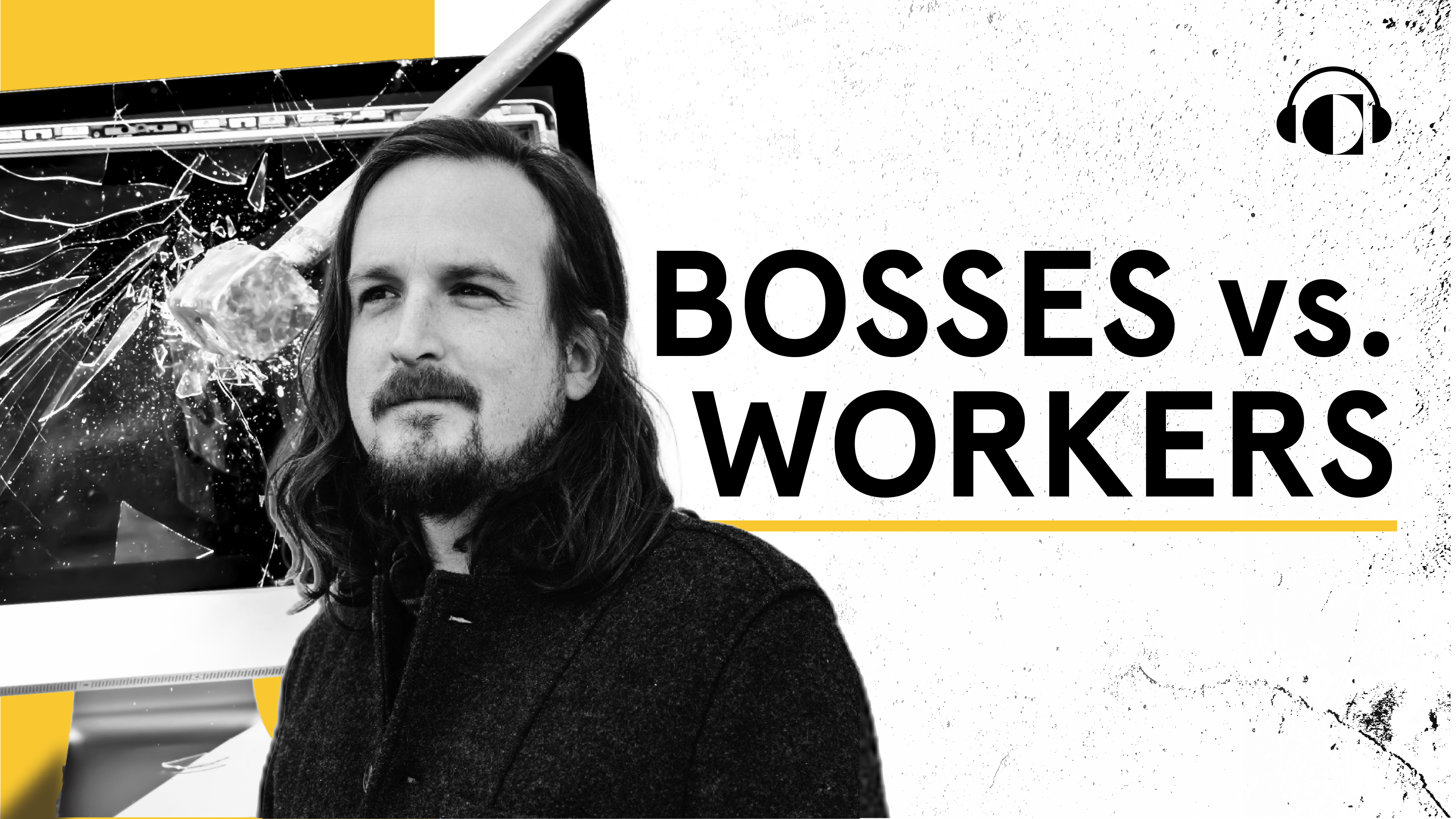
Brian Merchant on the Industrial Revolution’s failures, how AI undercuts workers, and the social order of technology.
Jon Bateman, Brian Merchant

The missing context that shows how AI isn’t the resource hog everyone thinks it is – with Andy Masley.

Jon Bateman, Andy Masley

Sophia Besch games out NATO’s future, Baltic scenarios, German rearmament, and Europe’s next way of war.

Jon Bateman, Sophia Besch