
• Research
  • Emissary
  • About
  • Experts
Carnegie Global logoCarnegie lettermark logo
DemocracyIran
  • Donate
{
  "authors": [],
  "type": "pressRelease",
  "centerAffiliationAll": "dc",
  "centers": [
    "Carnegie Endowment for International Peace"
  ],
  "collections": [],
  "englishNewsletterAll": "menaTransitions",
  "nonEnglishNewsletterAll": "",
  "primaryCenter": "Carnegie Endowment for International Peace",
  "programAffiliation": "MEP",
  "programs": [
    "Middle East"
  ],
  "projects": [],
  "regions": [
    "Egypt"
  ],
  "topics": []
}
REQUIRED IMAGE

REQUIRED IMAGE

Press Release

U.S. silence on Egypt’s democratic façade is misguided

The Obama administration’s silence on Egypt’s political crackdown only emboldens the regime and erodes U.S. credibility in the region.

Link Copied
Published on Feb 25, 2010
Program mobile hero image

Program

Middle East

The Middle East Program in Washington combines in-depth regional knowledge with incisive comparative analysis to provide deeply informed recommendations. With expertise in the Gulf, North Africa, Iran, and Israel/Palestine, we examine crosscutting themes of political, economic, and social change in both English and Arabic.

Learn More

WASHINGTON, Feb 25—Egypt’s upcoming election cycle—parliamentary elections in June and November and the September 2011 presidential election—will have no impact on the internal distribution of power. While it is too late to influence the upcoming elections, the Obama administration’s silence on Egypt’s political crackdown only emboldens the regime and erodes U.S. credibility in the region, explains a new commentary by Marina Ottaway.

Key conclusions:

  • Egypt’s ostensibly multiparty system is in reality a single party regime. The country’s constitution and the National Democratic Party’s close ties to the security apparatus ensure that it will retain control of the parliament and presidency.
  • There is no viable opposition in Egypt. Leftist and liberal parties remain weak and ineffective, and protests, though numerous, have failed to translate into cohesive organizations. The Muslim Brotherhood is deeply divided, and its internal elections in January 2010 saw reformers pushed out in favor of conservative leaders.
  • A more vocal United States is unlikely to damage the bilateral relationship or Egypt’s policies toward Israel or Hizbollah and Hamas.
  • At this stage, U.S. involvement will not change the upcoming elections—it is too late to rebuild political opposition. Instead, the United States should focus on a long-term strategy.

A three-step process for the United States:

  1. Candidly outline the principles for political reform and signal that Egypt’s elections have nothing to do with democracy.
  2. Get to know all political organizations and protest movements and open a dialogue with them on how the United States can effectively aid in democracy promotion.
  3. After the first two steps, engage with the Egyptian government in an open debate on the political system, with a willingness to frankly discuss U.S. policies in the region.

“None of the steps envisaged here is going to make the elections in the forthcoming cycle into meaningful expressions of citizen choice. It is already too late to overcome the one-dimensionality of the Egyptian political scene,” writes Ottaway. “But if steps are not taken now, we will find ourselves facing a new cycle of meaningless elections five years from now.”

###


NOTES

  • Click here to read the commentary online
  • Marina Ottaway, director of the Carnegie Middle East Program, specializes in democracy and post-conflict reconstruction issues, with special focus on problems of political transformation in the Middle East.
  • The Carnegie Middle East Program combines in-depth local knowledge with incisive comparative analysis to examine economic, socio-political, and strategic interests in the Arab world to provide analysis and recommendations in both English and Arabic that are deeply informed by knowledge and views from the region.
  • The Carnegie Middle East Center based in Beirut, Lebanon, aims to better inform the process of political change in the Middle East.
  • Carnegie's Arab Reform Bulletin offers a monthly analysis of political and economic developments in Arab countries.
  • Press Contact: David Kampf, 202/939-2233, dkampf@ceip.org
Egypt

Carnegie does not take institutional positions on public policy issues; the views represented herein are those of the author(s) and do not necessarily reflect the views of Carnegie, its staff, or its trustees.

More Work from Carnegie Endowment for International Peace

  • Commentary
    Diwan
    On AI, Cairo Plays China and the U.S. Off Against Each Other

    Huawei pushed hard to enter the Egyptian data centers market, until the Americans made a better offer.

      • Angie Omar

      Angie Omar

  • People dancing in the foreground, with a group of people in suites watching and an Air China plane in the background
    Commentary
    Emissary
    The Two Key Takeaways From Xi’s Egypt Visit

    Amid celebrations of bilateral ties was a deeper focus on stability in the Middle East.

      Amr Hamzawy
  • Commentary
    Sada
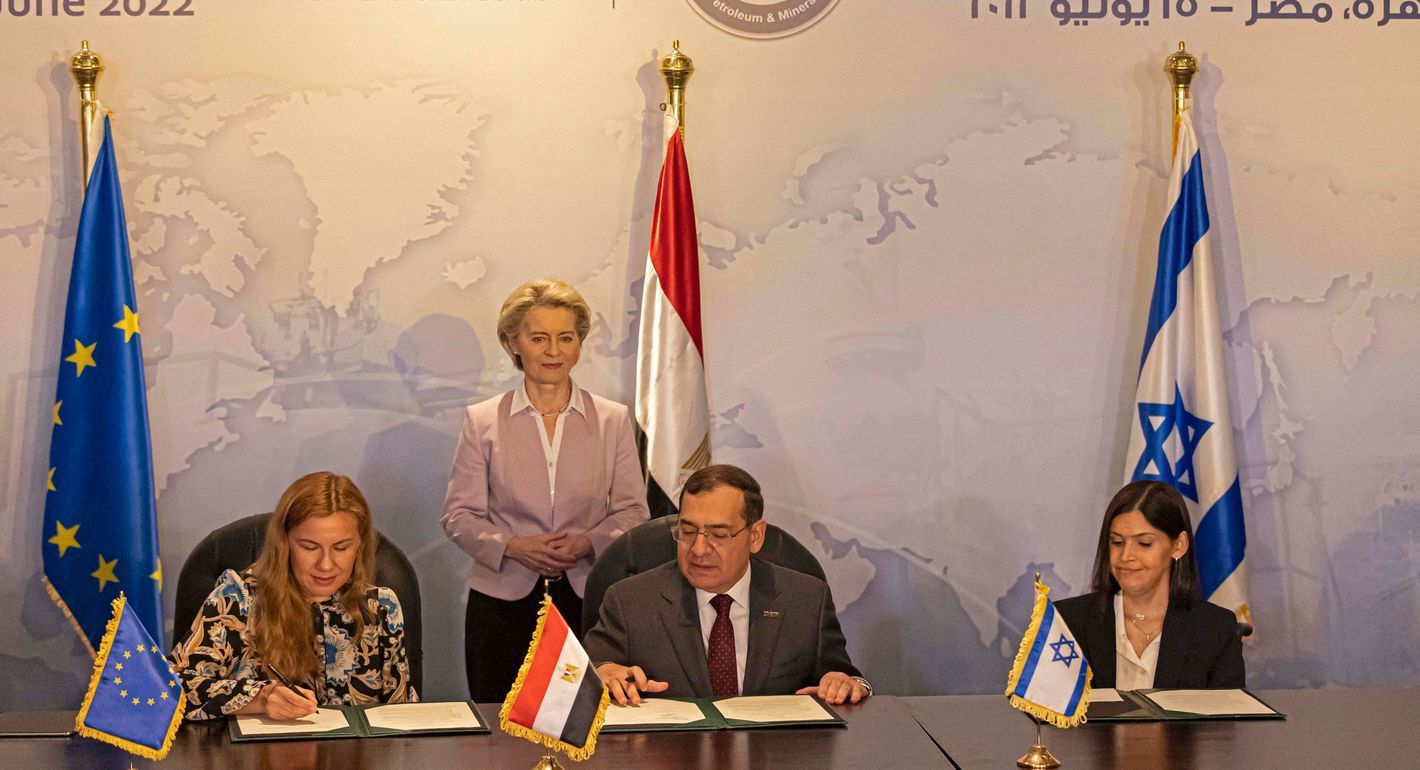
    Gas and Peace: Can Energy Trade Contain Egypt-Israel Conflict?

    Can economic ties help contain conflict between Egypt and Israel, or do they simply postpone confrontation? Drawing on the German-Russian experience, the article examines how the gas deal creates mutual dependence, keeps channels of cooperation open, and raises the cost of conflict, without necessarily delivering lasting peace.
      Nourhan Hefzy
  • Port cranes at sunset
    Commentary
    Emissary
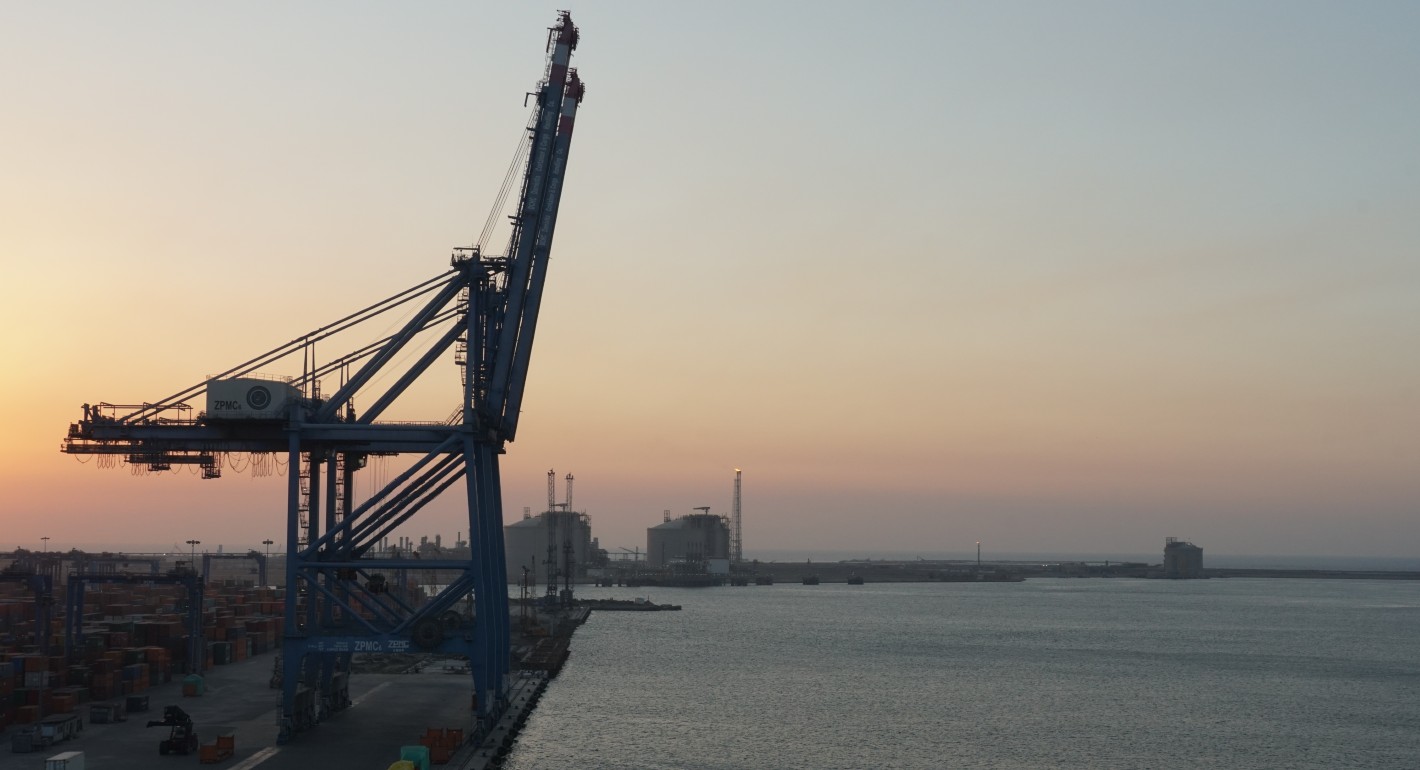
    The Drone Attack on Egypt and the Widening Middle East War

    The targeting of Damietta Port appears to be more than a mere security message.

      Amr Hamzawy

  • Paper
    Egypt’s Military Landlord Economy and its Limitations

    The armed forces champion a form of capitalism that is generating revenue, but its reliance on rent faces diminishing returns, leaving the country with massive sunk costs and deferred returns, deepening dependency on external borrowing.

      Yezid Sayigh

Get more news and analysis from
Carnegie Endowment for International Peace
Carnegie global logo, stacked
1779 Massachusetts Avenue NWWashington, DC, 20036-2103Phone: 202 483 7600
  • Research
  • Emissary
  • About
  • Experts
  • Donate
  • Programs
  • Events
  • Blogs
  • Podcasts
  • Contact
  • Annual Reports
  • Careers
  • Privacy
  • For Media
  • Government Resources
Get more news and analysis from
Carnegie Endowment for International Peace
© 2026 Carnegie Endowment for International Peace. All rights reserved.
