

Commentary
The EU’s new migration policy is not suited to today’s realities. With climate change increasingly becoming a driver of displacement, Europe needs to rethink its deterrence-focused approach.
Shana Tabak
{
  "authors": [],
  "type": "other",
  "centerAffiliationAll": "",
  "centers": [
    "Carnegie Endowment for International Peace"
  ],
  "collections": [],
  "englishNewsletterAll": "",
  "nonEnglishNewsletterAll": "",
  "primaryCenter": "Carnegie Endowment for International Peace",
  "programAffiliation": "",
  "programs": [],
  "projects": [],
  "regions": [
    "North Africa",
    "Egypt"
  ],
  "topics": []
}
Source: Getty
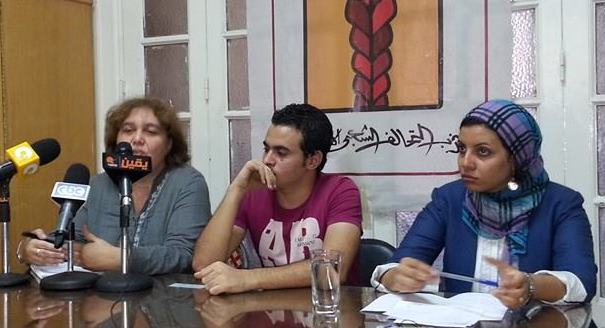
A backgrounder on the Socialist Popular Alliance Party.
This resource was published on 10/19/2011 and is not updated to reflect changing circumstances.
Socialist Popular Alliance Party is a new leftist political party founded after the January 2011 uprising. It is the first of the new leftist parties to be legally recognized, gaining official party recognition in October 2011. It was originally a member of the Coalition of Socialist Forces, then joined the Egypt Bloc, but pulled out of that alliance in October 2011. The party participated in 2011 parliamentary elections as a member of the “Completing the Revolution” Alliance before later joining the Revolutionary Democratic Coalition.
Abu al-Ezz al-Hariri: founding member
Abd al-Ghaffar Shukr: prominent member
Ibrahim al-Esawi: prominent member
Mohamed al-Agaty: prominent member
Mustafa Kamel al-Sayyid: prominent member
The Socialist Popular Alliance Party was founded in March 2011 following the January 2011 uprising. A number of the party’s members were formerly members of the al-Tagammu Party, but split from al-Tagammu because of disagreements over the November 2010 parliamentary elections and the January 2010 uprising. Previous al-Tagammu members include Abd al-Ghaffar Shukr and Ibrahim al-Esawi, both prominent Egyptian leftist thinkers.
On May 10, 2011, the Socialist Popular Alliance Party formed the Coalition of Socialist Forces with the Social Party of Egypt, the Democratic Labor Party, the Egypt Communist Party, and the Revolutionary Socialists. On September 28, it became the first new leftist political organization to submit a request to be recognized as an official political party and it was legally recognized on October 13, 2011.
Carnegie does not take institutional positions on public policy issues; the views represented herein are those of the author(s) and do not necessarily reflect the views of Carnegie, its staff, or its trustees.

The EU’s new migration policy is not suited to today’s realities. With climate change increasingly becoming a driver of displacement, Europe needs to rethink its deterrence-focused approach.

Shana Tabak

This will be the region’s most representative tournament, amid broad changes in its footballing landscape.

Issam Kayssi

If Indigenous land and water dispossession is ignored, climate adaptation strategies risk reproducing inequalities and worsening acute climate vulnerability.

Frederic Wehrey, Charles H. Johnson
Strengthening U.S.-Africa trade and advancing U.S. interests aren’t conflicting goals.


Tyler Beckelman, Kholofelo Kugler

A partnership between India, a country of subcontinental size, and Africa, a continent of fifty-four countries, may seem asymmetric until one notes that both are home to nearly the same number of people—1.4 billion. This essay spells out the existing challenges to the partnership, its optimal potential, and the possible pathways to realize it over the next quarter-century.

Rajiv Bhatia