• Research
  • Emissary
  • About
  • Experts
Carnegie Global logoCarnegie lettermark logo
DemocracyIran
  • Donate
{
  "authors": [],
  "type": "pressRelease",
  "centerAffiliationAll": "dc",
  "centers": [
    "Carnegie Endowment for International Peace"
  ],
  "collections": [],
  "englishNewsletterAll": "asia",
  "nonEnglishNewsletterAll": "",
  "primaryCenter": "Carnegie Endowment for International Peace",
  "programAffiliation": "AP",
  "programs": [
    "Asia"
  ],
  "projects": [],
  "regions": [
    "East Asia",
    "Japan"
  ],
  "topics": []
}
REQUIRED IMAGE

REQUIRED IMAGE

Press Release

James L. Schoff Joins Carnegie Endowment for International Peace

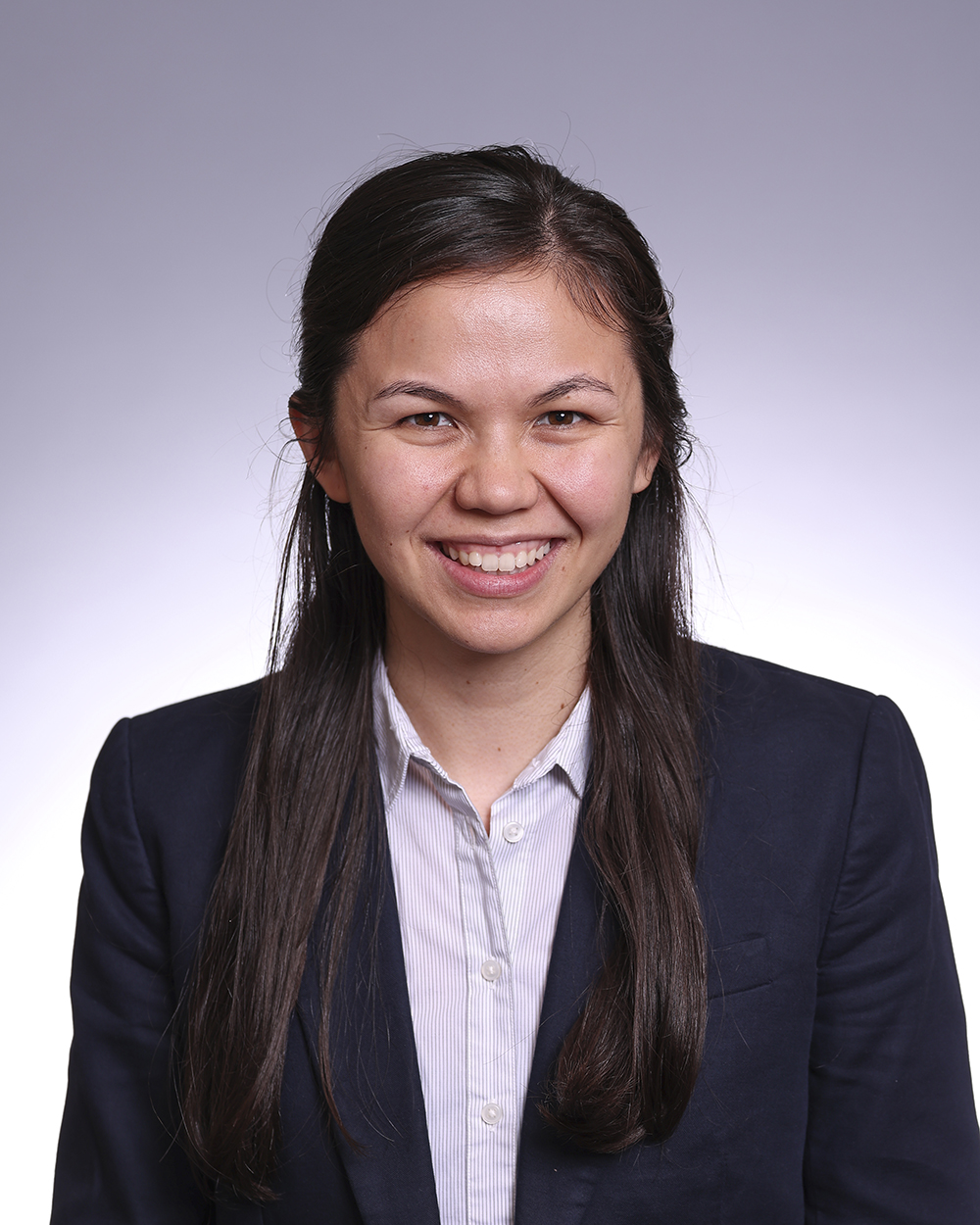
James L. Schoff is joining the Carnegie Endowment for International Peace as a senior associate specializing in Japan. He was previously senior adviser for East Asia policy at the U.S. Office of the Secretary of Defense.

Link Copied
Published on Sep 4, 2012
Program mobile hero image

Program

Asia

The Asia Program in Washington studies disruptive security, governance, and technological risks that threaten peace, growth, and opportunity in the Asia-Pacific region, including a focus on China, Japan, and the Korean peninsula.

Learn More

WASHINGTON—James L. Schoff is joining the Carnegie Endowment for International Peace as a senior associate specializing in Japan, based in Washington, D.C. He was previously senior adviser for East Asia policy at the U.S. Office of the Secretary of Defense and director of Asia Pacific Studies at the Institute for Foreign Policy Analysis (IFPA).

Schoff will be working on policy issues related to Japan, its relations with the United States, and its role in the world. His appointment was made possible thanks to the generous support of the Center for Global Partnership and Mitsubishi Corporation (Americas).

Making the announcement, Douglas Paal, vice president for studies, said, “I am delighted to welcome Jim to the Asia Program at the Carnegie Endowment. In addition to his expertise on alliance and regional security issues, Jim’s work has shown a deep understanding of Japan’s history, economy, and politics. His experience makes him well positioned to research a broad range of issues involving Japan, which will certainly be a valuable contribution to Carnegie’s work on Asia.”

Schoff added, “I am excited about this opportunity to work with the Carnegie Endowment, a leading international institution. I look forward to collaborating with colleagues in Carnegie’s global offices to analyze domestic and foreign policies in Japan, which impact many of the region’s most pressing issues.”

Founded in 1910, Carnegie is America’s oldest international affairs think tank. Carnegie is in the process of building the world’s first truly global think tank with research centers in Washington, Moscow, Beijing, Beirut, and Brussels. The Carnegie Asia Program in Beijing and Washington provides clear and precise analysis to policymakers on the complex economic, security, and political developments in the Asia-Pacific region.

NOTES
James L. Schoff is a senior associate in the Carnegie Asia Program. His research focuses on U.S.-Japan relations and regional engagement, Japanese politics, and the private sector's role in Japanese policymaking. He previously served as senior adviser for East Asia policy at the U.S. Office of the Secretary of Defense, and as director of Asia Pacific Studies at the Institute for Foreign Policy Analysis (IFPA).

At the Department of Defense, Schoff was responsible for strategic planning and policy development for relations with Japan and the Republic of Korea. He also spearheaded trilateral initiatives and regional security cooperation issues, including missile defense, disaster relief, and maritime security. He was awarded the Secretary of Defense Medal for Exceptional Public Service.

From 2003 to 2010, Schoff directed Asia Pacific Studies at IFPA in Cambridge, Massachusetts, where he specialized in East Asian security issues, U.S. alliance relations in the region, and WMD nonproliferation focused on North Korea. Prior to joining IFPA, he served as program officer in charge of policy studies at the United States-Japan Foundation in New York.

The Carnegie Asia Program in Beijing and Washington provides clear and precise analysis to policy makers on the complex economic, security, and political developments in the Asia-Pacific region.

Press Contact: Charita Law, +1 202 939 2233, pressoffice@ceip.org

East AsiaJapan

Carnegie does not take institutional positions on public policy issues; the views represented herein are those of the author(s) and do not necessarily reflect the views of Carnegie, its staff, or its trustees.

More Work from Carnegie Endowment for International Peace

  • Commentary
    Emissary
    In Its Iran War Debate, Washington Has Lost the Plot in Asia

    The United States ignores the region’s lived experience—and the tough political and social trade-offs the war has produced—at its peril.

      Evan A. Feigenbaum

  • apan's 8,900-ton Maritime Self-Defense Force supply ship Oosumi leaves Muroran port escorted by the 4,550-ton destroyer Murasame bound for Kuwait February 20, 2004 in Muroran, Japan.
    Article
    Japan’s Security Policy Is Still Caught Between the Alliance and Domestic Reality

    Japan’s response to U.S. pressure over Hormuz highlights a broader dilemma: How to preserve the alliance while remaining bound by legal limits, public opinion, and an Asia-centered security agenda. Tokyo gained diplomatic space through an alliance-embracing strategy, but only under conditions that may not endure.

      • Ryo Sahashi

      Ryo Sahashi

  • Implementing the Biden Administration’s China Strategy
    Report
    Implementing the Biden Administration’s China Strategy

    At the heart of Biden’s approach to China was the consolidation of a framework for strategic competition with an eye toward coexistence.

      • Senkai Hsia

      Christopher S. Chivvis, Senkai Hsia

  • apan's Prime Minister Sanae Takaichi (L) reacts as US President Donald Trump delivers a speech in front of US Navy personnel on board the US Navy's USS George Washington aircraft carrier at the US naval base in Yokosuka on October 28, 2025.
    Article
    Takaichi’s Security Agenda After the Landslide Election

    Backed by a new LDP supermajority, Prime Minister Takaichi aspires to revise Japan’s long-standing security doctrine. Ahead of her visit to Washington, she faces fiscal hurdles for her proposed defense spending while needing to navigate President Trump’s request for naval assets to the Strait of Hormuz.

      • Harukata Takenaka

      Harukata Takenaka

  • Japanese Prime Minister Sanae Takaichi delivers a speech during the graduation ceremony at the National Defense Academy of Japan on March 14, 2026 in Yokosuka, Kanagawa Prefecture, Japan.
    Article
    Revisiting Japan’s Non-Nuclear Principles: Between a Nuclear Allergy and Umbrella

    Japan’s prime minister, Takaichi Sanae, may kickstart a discussion on Japan’s non-nuclear principles.

      Shizuka Kuramitsu

Get more news and analysis from
Carnegie Endowment for International Peace
Carnegie global logo, stacked
1779 Massachusetts Avenue NWWashington, DC, 20036-2103Phone: 202 483 7600Fax: 202 483 1840
  • Research
  • Emissary
  • About
  • Experts
  • Donate
  • Programs
  • Events
  • Blogs
  • Podcasts
  • Contact
  • Annual Reports
  • Careers
  • Privacy
  • For Media
  • Government Resources
Get more news and analysis from
Carnegie Endowment for International Peace
© 2026 Carnegie Endowment for International Peace. All rights reserved.