

Research
- +4
Milan Vaishnav, Rahul Verma, Rukmini S., …
{
  "authors": [
    "Christophe Jaffrelot"
  ],
  "type": "legacyinthemedia",
  "centerAffiliationAll": "dc",
  "centers": [
    "Carnegie Endowment for International Peace"
  ],
  "collections": [],
  "englishNewsletterAll": "ctw",
  "nonEnglishNewsletterAll": "",
  "primaryCenter": "Carnegie Endowment for International Peace",
  "programAffiliation": "SAP",
  "programs": [
    "South Asia"
  ],
  "projects": [],
  "regions": [
    "South Asia",
    "India"
  ],
  "topics": []
}
Source: Getty
Indian secularism does not imply the secularisation of society. On the contrary, far from excluding religion from the public sphere, Indian secularism officially recognises all faiths.
Source: Indian Express
Speaking as the chief guest at a conference at Gujarat University’s convention hall on August 2, Supreme Court judge Justice Anil R. Dave said, “Had I been the dictator of India, I would have introduced Gita and Mahabharata in Class I. That is the way you learn how to live life. I am sorry if somebody says I am secular or I am not secular. But we have to get good things from everywhere.”
These words reflect some of the current misunderstandings about Indian secularism. It is in consonance with Indian secularism to borrow “good things from everywhere”, including the Gita and the Mahabharata. This “ism” does not imply the secularisation of society. On the contrary, whereas French laïcité involves a clear separation between public and religious spaces, far from excluding religion from the public sphere, Indian secularism officially recognises all faiths, as evident from the Constitution and its implementation in the first decades of the Indian republic.
Jawaharlal Nehru himself wrote in 1961: “We talk about a secular state in India. It is perhaps not very easy even to find a good word in Hindi for ‘secular’. Some people think it means something opposed to religion. That obviously is not correct. What it means is that it is a state which honours all faiths equally and gives them equal opportunities.” Sarvepalli Radhakrishnan, president of India when Nehru was prime minister, expressed a similar vision in these eloquent terms: “When India is said to be a secular state, it does not mean that we as a people reject the reality of an unseen spirit or the relevance of religions to life or that we exalt irreligion. It does not mean that secularism itself becomes a positive religion or that the state assumes divine prerogatives. Though faith in the supreme spirit is the basic principle of the Indian tradition, our state will not identify itself with or be controlled by any particular religion.”
The specificity of Indian secularism transpires clearly in these quoted passages. Far from being areligious, irreligious or anti-religious, this principle is, on the contrary, perfectly compatible with religiosity. But, recognising the importance of religion in the public space, the state intervenes in favour of all religious communities. It thus subsidises all kinds of religious activities, including pilgrimages for Sikhs (to Pakistan) and Hindus (like the one to Amarnath in Jammu and Kashmir). The state also subsidises major religious celebrations such as the Kumbh Melas. The one in 2001, for instance, cost Rs 120 crore. Since 1993, Indian pilgrims to Mecca have been largely state-funded, too.This multicultural approach has been recently illustrated in the way President Pranab Mukherjee hosted an iftar party towards the end of Ramzan, soon after publicly offering prayers at the Padmanabhaswamy temple.
This rather unique configuration is the product of a long history. Its immediate antecedent can be found in the words and deeds of Mahatma Gandhi, who advocated the recognition of religious communities in the public space and their cohabitation as early as 1919, during the Khilafat Movement in which he joined forces with Muslim leaders. Subsequently, he tried to make the Congress party a “parliament” in which all denominations were represented. In Hind Swaraj (1909), he promoted a conception of the Indian nation that ruled out identifying the nation with any religion: “If the Hindus believe that India should be peopled only by Hindus, they are living in dreamland. The Hindus, the Mahomedans, the Parsis and the Christians who have made India their country are fellow countrymen, and they will have to live in unity, if only for their own interest. In no part of the world are one nationality and one religion synonymous terms; nor has it ever been so in India.”
Beyond Gandhi’s contribution, going further back in time, emperor Akbar practised religious tolerance. During his rule, Islam had a limited place in the state apparatus, in which several communities other than the Muslims participated. This modus operandi was already in existence under the reign of Ashoka. While he worked for the glory of Buddhism with the fervour of a new convert, this emperor also advocated coexistence of religions and mutual respect.
Like Justice Dave, these architects of Indian secularism thought that they had “to get good things from everywhere”, including the Gita, the Quran, the Bible, etc. For them, the question of teaching one religion alone never arose. The fact that it does today is revealing of the way Hindu majoritarianism is gaining momentum. This view clearly contradicts the Constitution because it implies the non-recognition of all religions on an equal footing. Freedom of conscience, speech and worship was written into the Constitution through a number of articles having convergent effects. Article 15 forbids discrimination on religious grounds (among others); Article 16 applies this rule to recruitment in the civil service; Article 29 to admission to a public school or receiving state aid. Most especially, Article 25 states: “Subject to public order, morality and health… all persons are equally entitled to freedom of conscience and the right freely to profess, practise and propagate religion.”
In addition to these individual rights, there are collective rights — the Indian state not only recognises no official religion and protects citizens from having to pay religious taxes, but it also gives each religion equal consideration. Article 26 stipulates: “Subject to public order, morality and health, every religion, religious denomination or any section thereof shall have the right: (a) to establish and maintain institutions for religious and charitable purposes; (b) to manage its own affairs in matters of religion; (c) to own and acquire movable and immovable property; and (d) to administer such property in accordance with law”. Article 30 reads similarly: “All minorities, whether based on religion or language, shall have the right to establish and administer educational institutions of their choice.” In awarding aid to educational institutions, the state must in no way discriminate against those administered by a religious or linguistic minority. It is worth noting that the importance given to collective rights by Indian secularism is one of its trademarks, as is its correlative respect for the role of religions in the public space.
If India was to discontinue this tradition and replace it with Hindu majoritarianism, it would embark on the same trajectory as its neighbours — except Nepal, where secularism has recently become the order of the day. The past experience of the other countries of South Asia shows that minorities have been the first casualties of the erosion of secularism, regardless of the majority religion. Hindus, as a minority, have been at the receiving end in Sri Lanka, Pakistan and Bangladesh where religious conflicts have resulted in violence.
Former Nonresident Scholar, South Asia Program
Jaffrelot’s core research focuses on theories of nationalism and democracy, mobilization of the lower castes and Dalits (ex-untouchables) in India, the Hindu nationalist movement, and ethnic conflicts in Pakistan.
Recent Work

Milan Vaishnav, Rahul Verma, Rukmini S., …
Christophe Jaffrelot
Carnegie does not take institutional positions on public policy issues; the views represented herein are those of the author(s) and do not necessarily reflect the views of Carnegie, its staff, or its trustees.

With the growth in points of friction between the great powers, organizations like the SCO will continue to play a role in the strategic adaptation of the smaller powers caught between them.

Temur Umarov
Xi, Putin, and other regional leaders are back-slapping in Bishkek, but the SCO has yet to answer the most serious questions about continental Asia's economic future.

Evan A. Feigenbaum

In any defense establishment, change is an ongoing process. However, despite the best of intentions, existing bureaucracies, bound by habit and years of socialization, have their limits in implementing transformative change.

Anit Mukherjee

As AI grows more sophisticated, as the supply chains that power it become more contested, and as access to frontier models becomes geopolitically charged, India must begin to ask a different set of questions. Not what applications it can build on someone else’s infrastructure but what the world needs.

Konark Bhandari
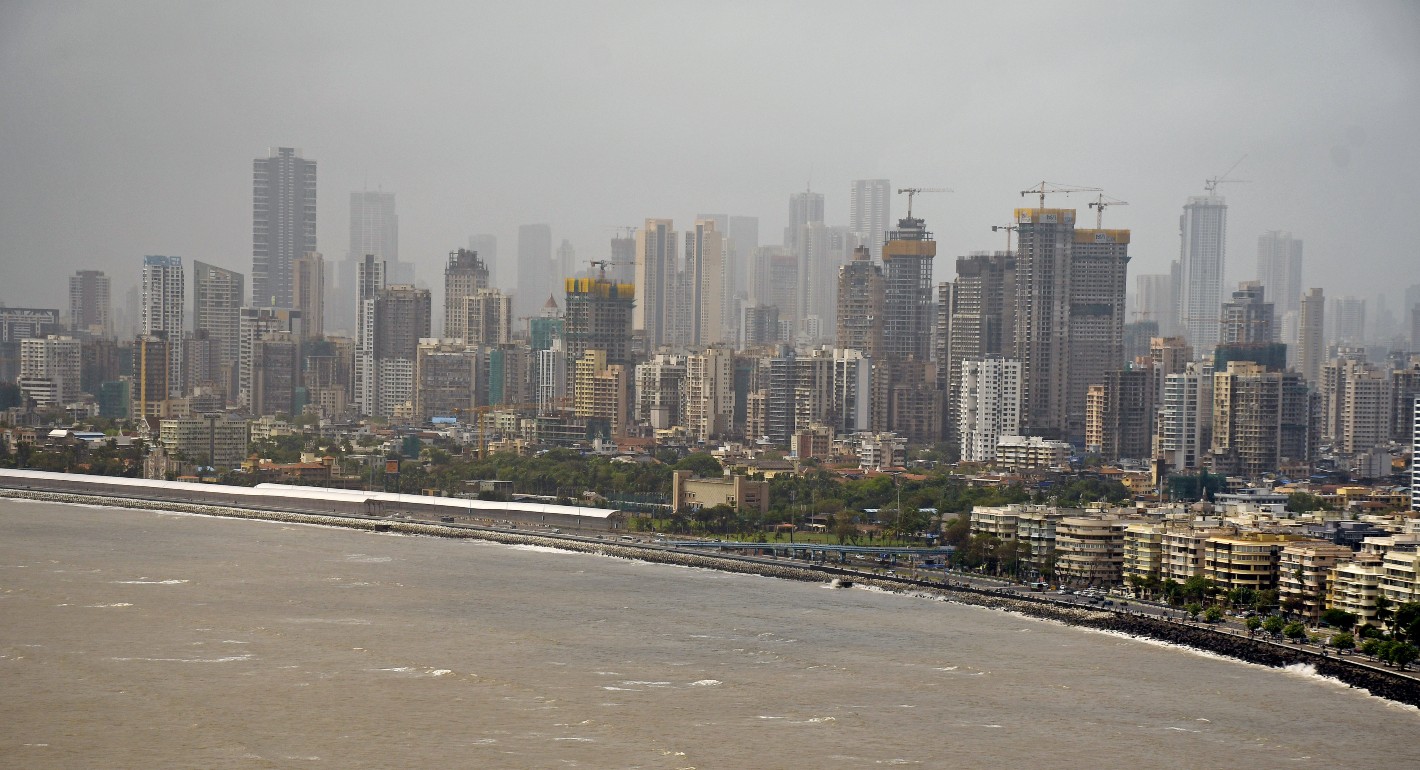
As India undergoes a demographic transition, its cities will be its economic powerhouse—but only if it accurately captures city growth and empowers cities to support their citizens.
Apoorva Jadhav