

Paper
The nuclear relationship between China and the United States is increasingly shaped by widening perception gaps rather than deliberate strategic design.
Tong Zhao
{
  "authors": [],
  "type": "legacyinthemedia",
  "centerAffiliationAll": "dc",
  "centers": [
    "Carnegie Endowment for International Peace"
  ],
  "collections": [],
  "englishNewsletterAll": "asia",
  "nonEnglishNewsletterAll": "",
  "primaryCenter": "Carnegie Endowment for International Peace",
  "programAffiliation": "AP",
  "programs": [
    "Asia"
  ],
  "projects": [],
  "regions": [
    "East Asia",
    "Southeast Asia"
  ],
  "topics": []
}
Source: Getty
Following the Permanent Court of Arbitration’s ruling in favor of the Philippines on the South China Sea issue and its rejection of any legal basis for Beijing to claim historical rights to the nine-dash line, Chinese leadership must be wrestling with the question of whether to transform its disavowal of the decision into more than words
Source: Australian Broadcasting Corporation
Following the Permanent Court of Arbitration's ruling in favor of the Philippines on the South China Sea issue and its rejection of any legal basis for Beijing to claim historical rights to the nine-dash line, Douglas Paal discusses potential Chinese responses to the ruling with ABC's Fran Kelly. He states that the Chinese leadership must be wrestling with the same questions of whether to transform its disavowal of the court's decision into more than words, and addresses the potential effects of further Chinese militarization in the South China Sea.
Carnegie does not take institutional positions on public policy issues; the views represented herein are those of the author(s) and do not necessarily reflect the views of Carnegie, its staff, or its trustees.

The nuclear relationship between China and the United States is increasingly shaped by widening perception gaps rather than deliberate strategic design.

Tong Zhao

U.S. trading partners in Asia are closely watching the dispute for signs of how it may affect their own interests.

Barbara Weisel
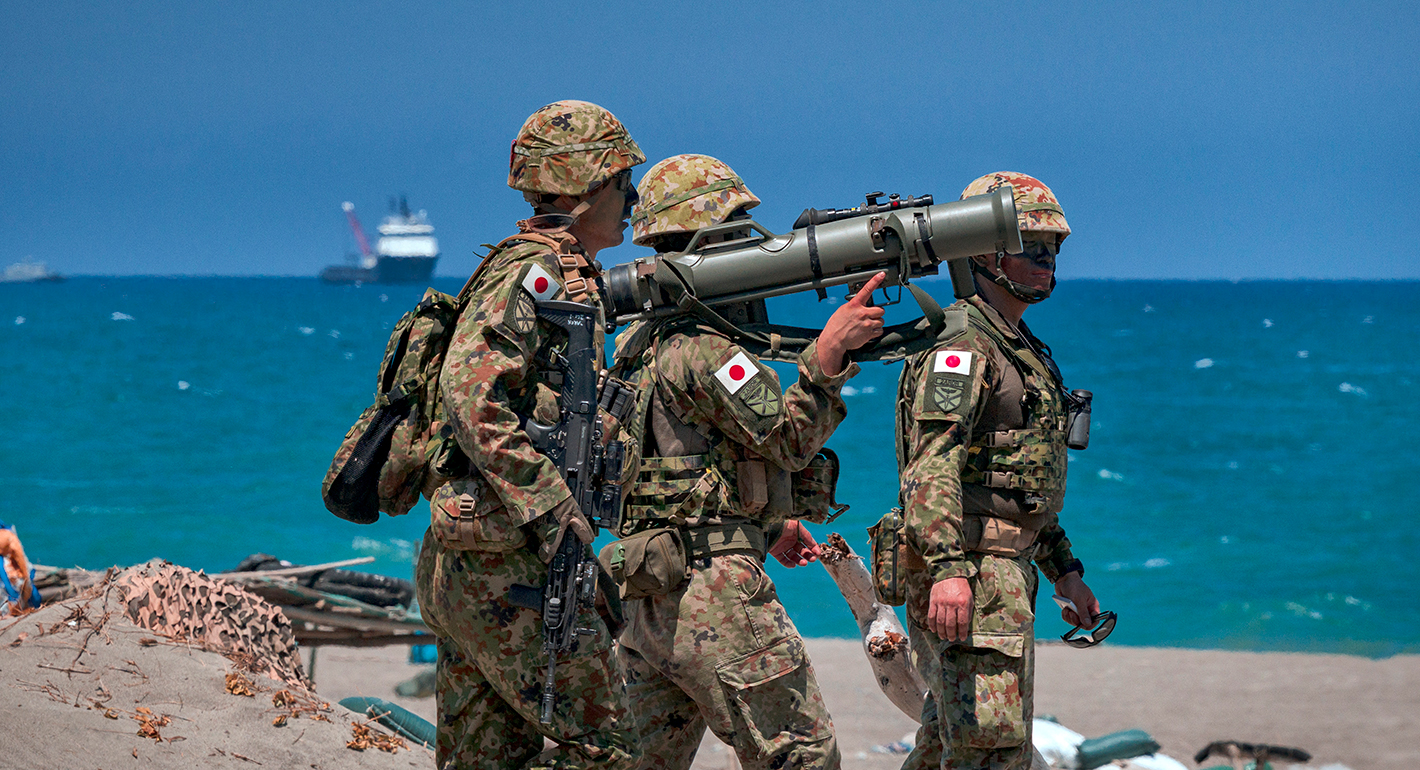
Japan’s revision of its three strategic documents reflects an intention to keep the United States engaged in the region while Japan fills any vacuums of U.S. power to preserve the Indo-Pacific order.

Ryo Sahashi

Chinese biotech companies have been on the receiving end of U.S. economic coercion. Yet their responses have differed significantly because firm and state interests are not uniformly aligned. For Washington, treating all Chinese tech firms the same, irrespective of their actual interests, risks pushing them farther into Beijing’s corner.

Xue Gong

Thailand is no longer safe for regional activists; neither are Cambodia, Laos, or Vietnam for Thai dissidents who had typically sought refuge in those countries.

Janjira Sombatpoonsiri