

Other
François Godement, Ashley J. Tellis
{
  "authors": [
    "François Godement"
  ],
  "type": "legacyinthemedia",
  "centerAffiliationAll": "dc",
  "centers": [
    "Carnegie Endowment for International Peace"
  ],
  "collections": [],
  "englishNewsletterAll": "asia",
  "nonEnglishNewsletterAll": "",
  "primaryCenter": "Carnegie Endowment for International Peace",
  "programAffiliation": "AP",
  "programs": [
    "Asia"
  ],
  "projects": [],
  "regions": [],
  "topics": [
    "Economy"
  ]
}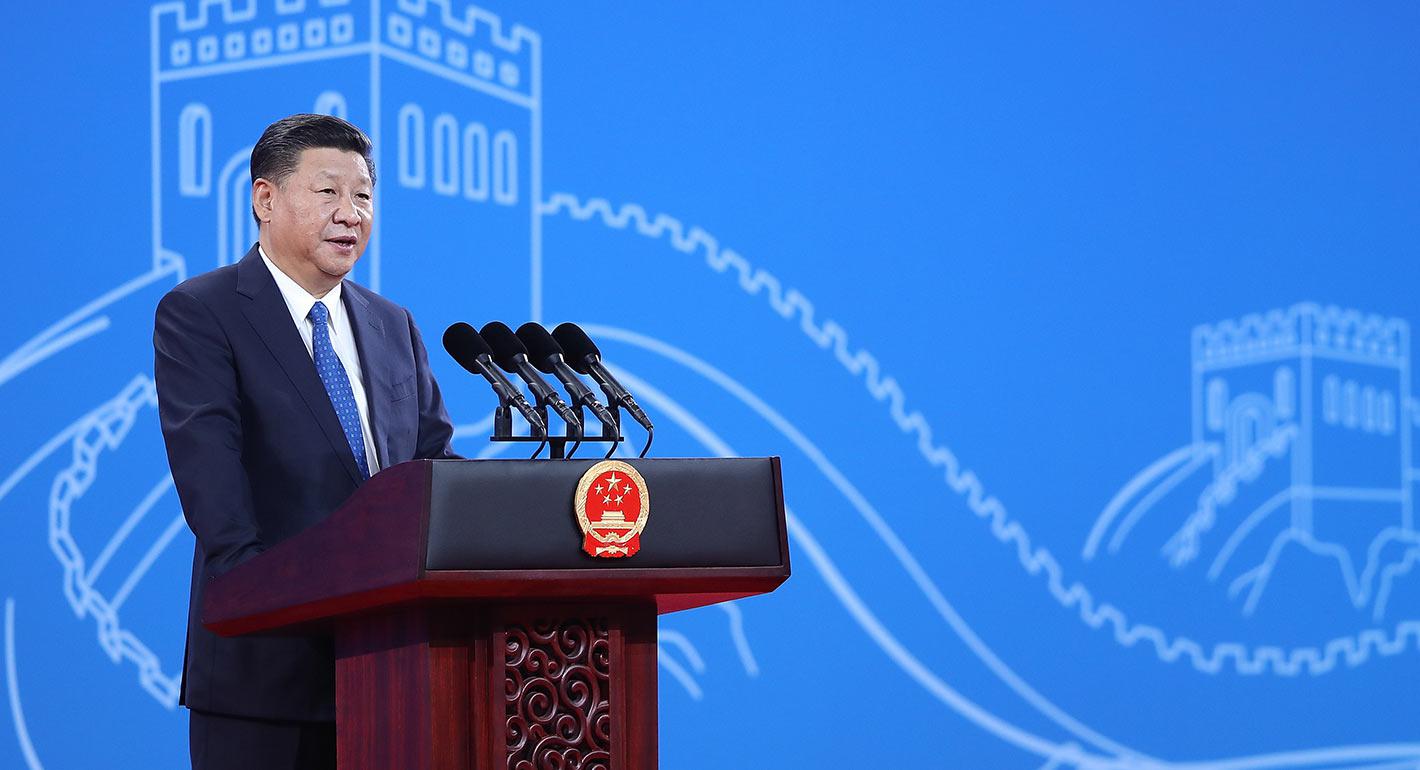
Source: Getty
2019 is a year full of ambiguities for the Chinese economy, mainly due to two reasons.
Source: Institut Montaigne
2019 is a year full of ambiguities for the Chinese economy, mainly due to two reasons. The first is the important psychological pressures caused by the US-China trade war, which could potentially reverse the global trade trends that were largely dominated by China in the last decades. The second is the unclear messages conveyed by the Chinese government regarding its economic policy. In response to pressures coming from abroad, the government has alluded to possible reforms. Yet it has also taken defensive measures in order to resist these pressures. It has intensified its efforts to restrain domestic debts and liabilities. Yet at the same time, it has also adopted new stimulus measures, including new credit lines, to revive the economy. Adapt and resist, stop and go... No wonder that, after a phase of seeming invulnerability to US pressures, Chinese economists are showing signs of anxiety. Indeed, not only is the economy drifting, but it might also be tanking.
Such observations could however end up being the mere expression of unfounded pessimism after a phase of unbridled optimism.
The trade conflict has already had two significant consequences.
This article was originally published by Institut Montaigne.

Former Nonresident Senior Fellow, Asia Program
Godement, an expert on Chinese and East Asian strategic and international affairs, was a nonresident senior fellow in the Asia Program at the Carnegie Endowment for International Peace.
Recent Work
François Godement, Ashley J. Tellis

François Godement, Abigaël Vasselier
Carnegie does not take institutional positions on public policy issues; the views represented herein are those of the author(s) and do not necessarily reflect the views of Carnegie, its staff, or its trustees.

The Plaza Accord was not an externally imposed punishment of Japan but part of a broader restructuring that Japanese economists and policymakers themselves recognized was necessary. Its effects were undermined, however, when Tokyo responded to the resulting slowdown with policies that exacerbated investment, credit expansion, and the very imbalances the adjustment was intended to resolve.

Michael Pettis

A summer of escalation in the Black Sea has hurt Ukraine economically and is exacerbating world food security. A truce is needed—as is a broader reframing of Europe’s Ukraine strategy.

Thomas de Waal
The Bureau of Industry and Security needs to adjust its focus and practices to maintain its position as the U.S. government’s primary champion of international technological competition.
Geoffrey Irving

Depleted financial reserves and a shrinking tax base mean it is no longer possible to simultaneously deliver high defense spending, price stability, and economic growth.

Alexandra Prokopenko

U.S. trading partners in Asia are closely watching the dispute for signs of how it may affect their own interests.

Barbara Weisel