Tacit Alliance: Russia and China Take Military Partnership to New Level
By cooperating with China in the military sphere, Russia loses virtually nothing in terms of security, while making life difficult for the United States, strengthening its relationship with a key partner, and gaining an economic advantage.
Link Copied
By Vassily Kashin
Published on Oct 22, 2019
Russian President Vladimir Putin’s speech at the recent Valdai forum contained two fundamental points regarding China. His official confirmation that Russia is helping China to create a missile launch detection system got more attention, but of no little importance was Putin’s assessment of the state of Russian-Chinese relations: “This is an allied relationship in the full sense of a multifaceted strategic partnership.”
For a long time after Moscow and Beijing normalized their relationship in 1989, both countries rejected the very idea of alliances as only increasing tensions in various parts of the world. They carefully avoided using the word “ally” in regard to each other until relatively recently, when Russia began using it quite casually.
China continues to avoid the term at an official level, preferring official wording about an “all-encompassing partnership and strategic interaction,” and insisting that relations with Russia are “the best they have ever been.”
Despite a strict adherence to the term “strategic alliance” over a military one, since 2018, military cooperation between the two countries has reached a new level. It would appear that Russia began pushing for a boost in military cooperation soon after the outbreak of the conflict in Ukraine in 2014 and the start of Moscow’s long-running standoff with Washington. In 2017, Russia initiated the signing of a three-year road map for bilateral military cooperation. For China, the crunch apparently came in 2018, with the start of its full-scale confrontation with the United States, including the trade war launched by U.S. President Donald Trump’s administration.
This new level of military cooperation is primarily the full-fledged expansion of cooperation to cover strategic arms. The Russian leadership has acknowledged that it helped China to create a missile launch detection system, and for any country, this is the most important and sensitive component in the strategic nuclear forces control system.
The precise parameters of Russia’s involvement are not known. We do not know which elements of the missile launch detection system were involved: the ground-based or space-based component, the control system and data-processing system, or all the elements. What is clear is that Russia’s assistance was apparently on a big enough scale to be of political importance, and that the Russian leadership did not believe it was possible to continue concealing it.
Previously, no information about cooperation on strategic systems had appeared in open sources. It was known only that the countries were working together broadly on the creation of air defense and anti-missile defense systems via the regular Airspace Security computer-simulated joint anti-missile drills.
The new level can be expected to include cooperation in other sensitive fields, such as strategic missile defense, hypersonic technology, and the construction of nuclear submarines. Joining forces in these areas is mutually beneficial for Russia and China in both financial and technological terms, while posing minimal risk to national security.
Russia and China’s geographical proximity means that in order to contain one another (should their relationship suddenly deteriorate), they need a very different set of forces and resources than those that they use to contain the United States and its allies.
In the event of a fallout with China, Russia would be most concerned about Chinese ground troops and the Chinese arsenal of short and intermediate-range missiles. The increased capability of the Chinese navy, construction of a Chinese missile launch detection system, strategic anti-missile defense, and an increase in the number of intercontinental missiles don’t pose any particular problem for Moscow. By cooperating with China in these areas, therefore, Russia loses virtually nothing in terms of security, while making life difficult for the United States, strengthening its relationship with a key partner, and gaining a significant economic advantage.
Consequently, with the irreversible worsening of their relations with the United States, both Russia and China have seen the obstacles to broadening their cooperation to more sensitive areas disappear. Furthermore, the arms race in areas of breakthrough technology (such as hypersonic weapons, artificial intelligence, and automated systems) and the United States’ attempts to activate the potential of its allies like Japan and Israel is actually pushing Moscow and Beijing to cooperate in these areas.
An important issue in Russia-China cooperation remains the possible integration of the missile launch detection system, which would give both countries a significant advantage in terms of the speed with which they would be warned of a missile strike from the United States (for China, from warning stations in Russia’s north, and for Russia, from stations in southern and southeastern China). If the two countries take this step (most likely after the Chinese system goes online), Sino-Russian military integration will match the level of the military allies led by the United States, which shares information from its missile detection system with a range of allies, including France and the UK.
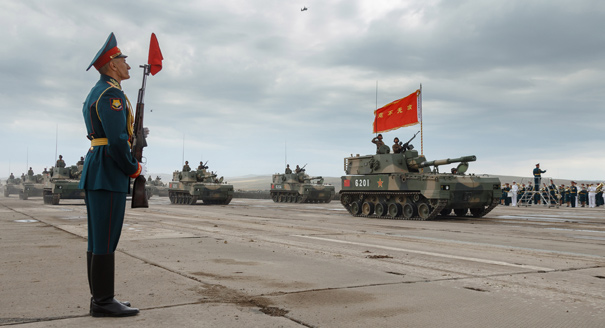
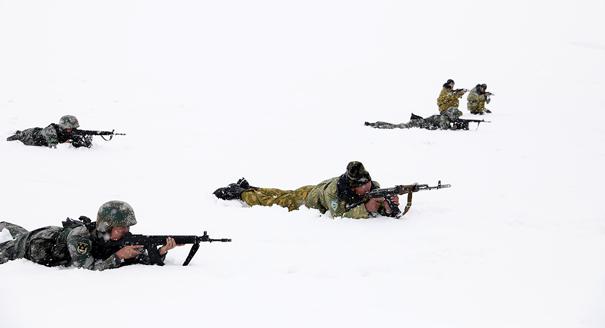
Another aspect of cooperation could be the transition to joint strategic command post exercises, with the direct participation of senior military personnel. The countries have agreed to hold annual maneuvers that are the top of a pyramid of other exercises carried out by Russia and China since 2005, both under the aegis of the Shanghai Cooperation Organization and on a bilateral basis. These drills cover practical issues of interaction between various kinds of armed forces and military branches.
Another sign of the new caliber of cooperation is Russia and China’s readiness to jointly use their armed forces to take demonstrative action in various parts of the world. In 2017, Chinese navy ships carried out joint exercises with their Russian counterparts in the Baltic, sparking ire among a range of NATO countries. In July 2019, the first joint patrol by Russian and Chinese long-range bomber aircraft took place over the Pacific Ocean: an explicit demonstration of the possibilities of joint action in the event of a conflict with the United States.
Now there is talk of possible trilateral maneuvers with Iran in the western part of the Indian Ocean, which, despite their stated focus on anti-terror measures, demonstrates preparation for the joint strengthening of their positions in remote parts of the world.
This new caliber of Sino-Russian military relations will likely be enshrined in the Sino-Russian agreement on military cooperation, which will replace a rather vague document signed in 1993 and is likely to be signed in the near future.
This publication is part of the Sino-Russian Entente project carried out with the support of the UK Foreign and Commonwealth Office.
About the Author
Vassily Kashin
a senior fellow at the Institute of Far Eastern Studies of the Russian Academy of Sciences and an expert on China's military-industrial complex
Carnegie does not take institutional positions on public policy issues; the views represented herein are those of the author(s) and do not necessarily reflect the views of Carnegie, its staff, or its trustees.
More Work from Carnegie Endowment for International Peace
Even if there is cause for competition in Central Asia, both Moscow and Beijing see friendly bilateral relations as a priority, especially against the backdrop of their escalating confrontation with the West.
Russia needs foreign students, and not only to diversify its exports. Connections with people who have lived in a partner state are a valuable resource for fostering cooperation and an instrument of soft power.
By acting as the driving force behind anti-Chinese initiatives, Lithuania hopes to focus U.S. attention on the region and procure guarantees that Washington will not scale back its presence in Eastern Europe and the Baltic states.
China’s new isolation has created plenty of difficulties in Sino-Russian ties, but its influence on strategic relations should not be exaggerated: the problems that have arisen can hardly be described as a serious crisis.