

Commentary
Even if there is cause for competition in Central Asia, both Moscow and Beijing see friendly bilateral relations as a priority, especially against the backdrop of their escalating confrontation with the West.
Temur Umarov
{
  "authors": [
    "Sergei Kapitonov"
  ],
  "type": "commentary",
  "centerAffiliationAll": "",
  "centers": [
    "Carnegie Endowment for International Peace",
    "Carnegie Russia Eurasia Center"
  ],
  "collections": [
    "Pax Sinica"
  ],
  "englishNewsletterAll": "",
  "nonEnglishNewsletterAll": "",
  "primaryCenter": "Carnegie Russia Eurasia Center",
  "programAffiliation": "",
  "programs": [],
  "projects": [],
  "regions": [],
  "topics": []
}
Source: Getty
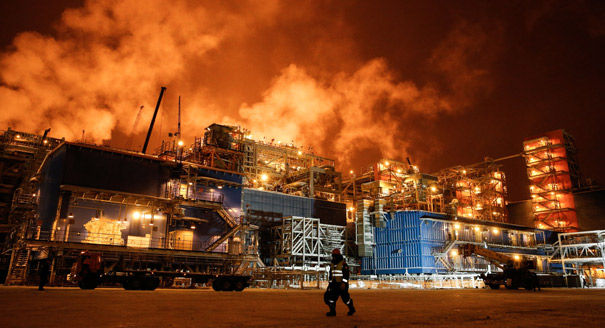
The Power of Siberia pipeline is a long overdue step in the right direction in developing the strategic relationship with China in the gas sector. Yet plenty of questions remain about the implementation of future pipeline projects.
Gazprom launched its Power of Siberia pipeline to China on December 2: the Russian company’s first step onto a Chinese gas route stretching for more than 8,000 kilometers. The gas pipeline is not due to reach full operating capacity until 2025, but certain conclusions can already be drawn regarding demand for Russian gas delivered via the pipeline on the Chinese market, as well as the project’s advantages and shortcomings.
Five and a half years have passed since the signing of the “contract of the century,” as it was referred to at Gazprom. Building the pipeline and the Amur gas processing plant and developing the Chayanda and Kovykta fields cost more than 3 trillion rubles ($47 billion), making it the biggest investment project in Gazprom’s history.
The launch is an important milestone for China, too. The pipeline will take Russian gas to China’s northeastern provinces, which have until now been heavily dependent on coal. The region is home to the oldest coal-powered heat and power plants, as well as industrial enterprises that use coal as their main fuel source, and this has not failed to impact the region’s ecology.
China’s powerful gas transmission system will be able to transport Russian gas as far as Beijing and, eventually, further south. Deliveries of gas from Russia will provide an impetus to develop China’s gas supply infrastructure. In the border province of Heilongjiang, where Russian gas will enter the country, work has only just begun on building local gas distribution networks.
Supplies via the Power of Siberia could be particularly useful during peak demand in northern China in the winter, especially when Turkmenistan fails to meet its obligations regarding delivery volumes.
With the arrival of Russian gas, China is also in the process of deregulating its gas market: two natural gas trading exchanges have been established, and an independent gas transmission operator is soon expected to be assigned. A recent government directive in China allowing the deregulation of gas prices at the entrance to local gas distribution networks is extremely important for deliveries of Russian gas. Thanks to this deregulation of wholesale gas prices, companies importing gas via pipelines—primarily PetroChina—will no longer incur losses from importing gas that they then go on to resell on the local market. PetroChina regularly sustained losses ($3.6 billion in 2018) in this sector of the business because tariffs did not cover the cost of transmission for gas companies.
On one hand, most industry-specific agencies forecast significant growth in gas consumption in China in the next fifteen to twenty years. The country’s CNPC Economics and Technology Institute expects that gas consumption there will reach 695 billion cubic meters in 2040, compared with 282 billion in 2018. On the other hand, the dynamic of gas consumption in China will to a large extent depend on state policies concerning the replacement of coal with gas, the development of renewable energy sources, and strategic decisions regarding energy security, such as the acceptable level of dependency on imports.
China’s plans to develop its own gas deposits must also be taken into account, including its troubled shale gas program. In the short term, the program is clearly not going to meet its goals of 30 billion cubic meters by 2020 (in 2018, about 10 billion cubic meters were produced). Still, it would be shortsighted not to consider these plans when implementing a fifteen- to twenty-year energy strategy.
None of these factors are likely to affect acquisitions under the current contract, depending on changes to the macroeconomic situation, since the contract is on a take-or-pay basis. They could, however, complicate negotiations over new projects, such as the Altai gas pipeline or the Far East route. Considering China’s traditionally tough negotiating position on prices, these talks are unlikely to be easy, either with regard to the current contract or to new agreements.
In terms of scale, Russia’s ongoing eastern gas program is comparable with the semi-military operation to explore the Urengoy and Yamburg gas fields in the 1970s and 1980s. Now as then, everything has been staked on developing two gigantic fields: Chayanda and Kovykta, with their combined reserves of 3.9 trillion cubic meters. The remaining resources in eastern Siberia—up to 2.5 trillion cubic meters—are not within the orbit of the Power of Siberia project.
Considering the economic and political balance in Russia, the likelihood of those remaining resources being developed by independent companies and put up for export seems low. One option for monetizing those resources is the production of small- and medium-scale liquefied natural gas (LNG) and its delivery to external markets via a unified export channel. This is the model used to produce LNG in the settlement of Nizhny Bestyakh in Russia’s eastern republic of Yakutia, from where the first deliveries of LNG were sent off to Mongolia recently. Small-scale LNG could also be used for supplying gas to isolated populated areas. Another option is the production of petrochemical products, something the Irkutsk Oil Company is planning in the Irkutsk region.
Gazprom’s interests could also potentially include resources belonging to other companies, if an agreement is reached with China on increasing delivery volumes. After all, 50 billion cubic meters a year from Chayanda and Kovykta are currently allocated down to the last cubic meter. As well as supplying wet gas to the Amur gas processing plant, and dry gas to China, Gazprom will also deliver to gas supply networks in Yakutia and the Amur region, as well as to the Sibur petrochemical project.
The Power of Siberia is a long overdue step in the right direction in developing the strategic relationship with China in the gas sector. Yet plenty of questions remain about the implementation of future pipeline projects.
How far will demand for gas in China be managed? What opportunities does China have to develop its own resources? What will be the state of the global LNG market, and how tough will China’s negotiating position be on prices? The answers to these questions will forge the outline of the future relationship between the world’s biggest exporter of energy resources and its biggest consumer of them.
Sergei Kapitonov
Carnegie does not take institutional positions on public policy issues; the views represented herein are those of the author(s) and do not necessarily reflect the views of Carnegie, its staff, or its trustees.

Even if there is cause for competition in Central Asia, both Moscow and Beijing see friendly bilateral relations as a priority, especially against the backdrop of their escalating confrontation with the West.

Temur Umarov

Russia needs foreign students, and not only to diversify its exports. Connections with people who have lived in a partner state are a valuable resource for fostering cooperation and an instrument of soft power.
Raisa Epikhina
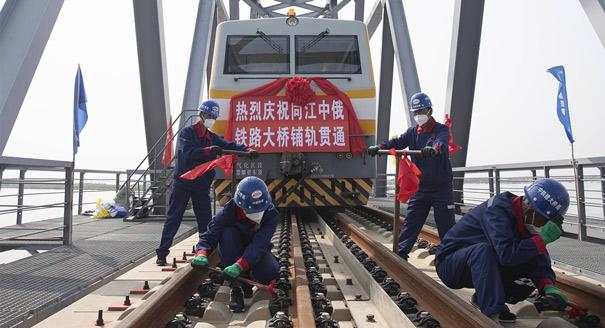
If the pandemic has highlighted one source of friction in Russia-China relations, it is inadequate governance.

Yanliang Pan

By acting as the driving force behind anti-Chinese initiatives, Lithuania hopes to focus U.S. attention on the region and procure guarantees that Washington will not scale back its presence in Eastern Europe and the Baltic states.

Denis Kishinevsky

China’s new isolation has created plenty of difficulties in Sino-Russian ties, but its influence on strategic relations should not be exaggerated: the problems that have arisen can hardly be described as a serious crisis.
Yaroslav Shevchenko