

Commentary
Russian strikes are weakening the economy sustaining Ukraine’s war effort. Closing the growing funding gap will require more European support and politically contentious reforms in Kyiv.
Balázs Jarábik
{
  "authors": [
    "Hanna Notte",
    "Hamidreza Azizi"
  ],
  "type": "commentary",
  "centerAffiliationAll": "",
  "centers": [
    "Carnegie Endowment for International Peace",
    "Carnegie Russia Eurasia Center"
  ],
  "collections": [],
  "englishNewsletterAll": "",
  "nonEnglishNewsletterAll": "",
  "primaryCenter": "Carnegie Endowment for International Peace",
  "programAffiliation": "",
  "programs": [],
  "projects": [],
  "regions": [],
  "topics": [
    "Economy"
  ]
}
Source: Getty
As was the case in 2006 and 2010, perceptions of Iranian intransigence in the face of constructive Western overtures—which may well be forthcoming under the Biden administration—could lead to a hardening of Russia’s stance, which is ultimately underpinned by concerns of nonproliferation and the integrity of the P5+1 process.
Almost one month into Joe Biden’s presidency, the new U.S. administration is yet to set out a road map for reviving diplomacy with Iran and returning to the 2015 nuclear deal (the Joint Comprehensive Plan of Action, or JCPOA). Tehran, meanwhile, appears committed to playing hardball and raising the stakes for Washington by gradually reducing some of its nuclear commitments.
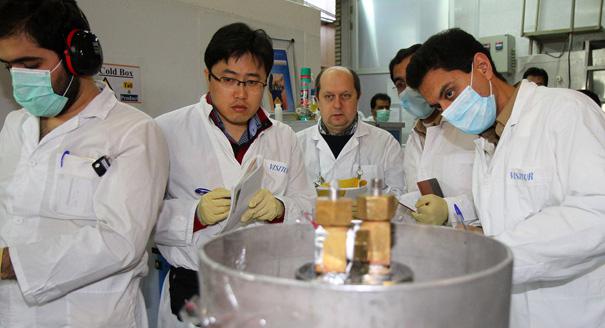
In November 2020, the Iranian parliament passed a law obliging the government to restore parts of the country’s nuclear program that had been halted under the terms of the JCPOA. In compliance with that law, the Iranian government has already installed more advanced centrifuges at the Natanz and Fordow facilities, resumed uranium enrichment to 20 percent purity, and started producing uranium metal.
A yet more controversial step could be in the offing, as the law requires the government to stop implementing the International Atomic Energy Agency (IAEA) Additional Protocol, which guarantees extensive verification mechanisms for Iran’s nuclear program. Tehran has threatened to suspend the protocol from February 21 unless the United States lifts nuclear-related sanctions.
Meanwhile, in unprecedented remarks, Iran’s intelligence minister, Mahmoud Alavi, warned on February 9 that Western pressure might eventually push Tehran to seek nuclear weapons, since “a cornered cat may behave differently from when the cat is free.” Tehran’s defiant stance has raised concerns not only in the West, but also among Russian officials.
Russia has backed Iran in the nuclear dispute since the Trump administration took the United States out of the JCPOA in May 2018. Then secretary of state Mike Pompeo’s efforts at garnering international support for an extension of the arms embargo against Iran were rebuffed by Russian diplomats, who derided the U.S. ploy as an attempt to “have its cake and eat it too.”
When the IAEA’s board of governors passed a resolution last summer calling on Tehran to grant the agency access to possible undeclared nuclear materials and activities from the pre-2003 period, Russia criticized the move as counterproductive. Moscow also repeatedly denounced the Trump administration’s “maximum pressure” campaign against Tehran as illegal and misguided, calling on other members of the P5+1 group of countries to ensure that Iran continues to benefit economically from the JCPOA.
That said, the Russian government has been historically consistent in contending that while Iran is entitled to use nuclear energy, IAEA oversight is required to ensure the peaceful nature of the Iranian program. Russian nonproliferation policies vis-à-vis Iran have occasionally clashed with Washington’s approach over the appropriate means—such as the suitability of sanctions to pressure Iran—but never over the desired end: that the Islamic Republic should not come into possession of a nuclear weapon. Iran’s recent escalatory steps and statements therefore pose a question regarding Russia’s red lines: How will Moscow react if Tehran takes its nuclear posturing one step too far?
History may offer some clues here. In 2003, the Russians repeatedly encouraged Iran to sign the Additional Protocol, and two years later spared no criticism when Tehran suspended voluntary implementation of it, even supporting the IAEA board of governors’ decision to report Iran’s nuclear file to the UN Security Council in early 2006. In 2009 and 2010, Iranian concealment of its (then) secret Fordow facility and rejection of the Tehran Research Reactor proposal—under which Iran would have sent low-enriched uranium to Russia for enrichment up to 19.75 percent before France would have converted it into fuel rods for a research reactor in Tehran—led Russia to support UN sanctions against the Islamic Republic.
Though Russia remained less alarmed about Iran’s nuclear ambitions than the United States, it increasingly perceived Iranian posturing on the nuclear issue as intransigent and adventurist, doubting the Mahmoud Ahmadinejad government’s reliability as a responsible interlocutor.
More recently, as Iranian rhetoric has gotten tougher and actions violating UN Resolution 2231 have been announced at an accelerating pace, Russian diplomats have returned to familiar admonitions. Given Russia’s position that implementation of the Additional Protocol is needed to ensure the necessary transparency of Iran’s activities, Iranian threats to reduce cooperation with the IAEA have caused concern in Moscow.
A Russian appeal in November that Tehran’s abandonment of the Additional Protocol could lead to a serious “deterioration of the situation” was reinforced a few days later by warnings that Iranian plans to install three more cascades of advanced IR-2m centrifuges at Natanz were not helping to ameliorate the “already tense atmosphere.” And just last week, Iran’s announcement of uranium metal production caused Moscow to release perhaps its strongest reprimand so far, calling for Iran’s “restraint and a responsible approach” amid professions of Russia’s readiness to work closely with the Biden administration to save the nuclear deal.
As Biden’s top diplomats, led by Secretary of State Antony Blinken and Iran Envoy Robert Malley, devise their diplomatic choreography toward a “longer and stronger” nuclear deal with Iran, Russia will not be interested in helping Washington by pressing Tehran on missiles and regional proxies: issues it has always considered extraneous to the nuclear deal. Moscow will also be reluctant to push Iran to agree to more onerous nuclear requirements, such as longer sunset provisions or stronger verifications.
The Russians considered the original JCPOA to be “balanced” and never agreed with the maximalist position—supported by the staunchest critics of the nuclear deal—that Iran should be denied the right to enrich. Russian resistance to seeking further concessions from Tehran is also sustained by broader grievances over what Moscow has viewed as a tendency by the IAEA and Organisation for the Prohibition of Chemical Weapons watchdogs to single out U.S. adversaries (Iran and Syria) for special treatment, bowing to what Russian diplomats mockingly call a “rules-based international order”—in which the United States invents the rules as it sees fit.
That said, if Iran ceases implementation of the Additional Protocol—compliance with which Russia considers Iran’s obligation—or takes further escalatory steps, it will likely test Russia’s patience. As was the case in 2006 and 2010, perceptions of Iranian intransigence in the face of constructive Western overtures—which may well be forthcoming under the Biden administration—could lead to a hardening of Russia’s stance, which is ultimately underpinned by concerns of nonproliferation and the integrity of the P5+1 process. Even if the Iranians do feel like a “cornered cat,” escalatory action and heated rhetoric could unduly antagonize their closest friends on the UN Security Council.
This article was published as part of the “Relaunching U.S.-Russia Dialogue on Global Challenges: The Role of the Next Generation” project, implemented in cooperation with the U.S. Embassy to Russia. The opinions, findings, and conclusions stated herein are those of the author and do not necessarily reflect those of the U.S. Embassy to Russia.

Hanna Notte
Director of the Eurasia Nonproliferation Program at the James Martin Center for Nonproliferation Studies
Hamidreza Azizi
Visiting fellow at the German Institute for International and Security Affairs (SWP).
Hamidreza Azizi is a visiting fellow at the German Institute for International and Security Affairs (SWP).
Carnegie does not take institutional positions on public policy issues; the views represented herein are those of the author(s) and do not necessarily reflect the views of Carnegie, its staff, or its trustees.

Russian strikes are weakening the economy sustaining Ukraine’s war effort. Closing the growing funding gap will require more European support and politically contentious reforms in Kyiv.

Balázs Jarábik
Economic recovery has brought Sri Lanka a modicum of stability, but domestic strains and great-power rivalry could test how long it lasts.
Avinash Paliwal
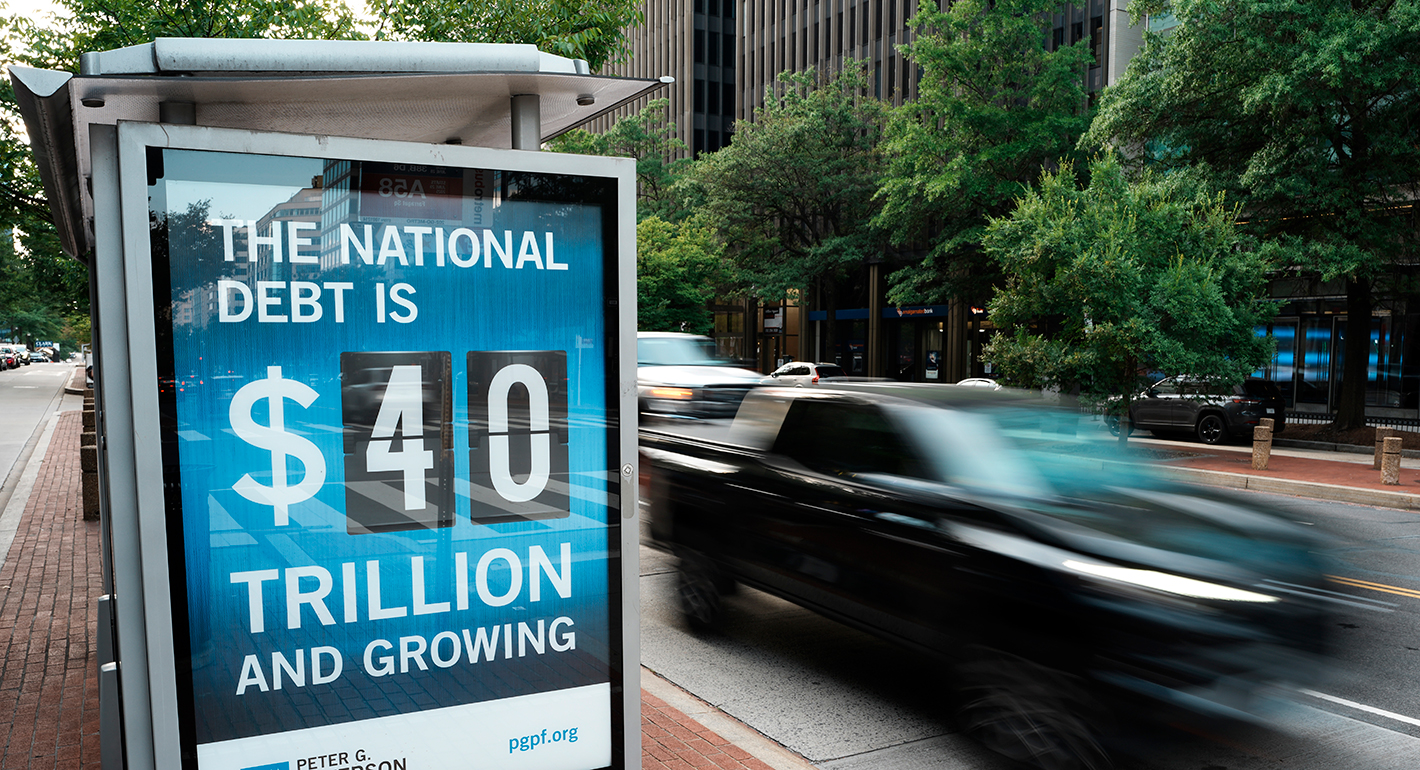
Policy proposals on sovereign debt must both match the scale of the challenge and be implementable within existing political constraints.
David McNair

For every ruble allocated to social policy, health, and education in 2027, double that amount is earmarked for the army, the police, and the security services.

Alexandra Prokopenko

The European Commissioner for Trade is headed to China. But after President Xi’s bridge-building visit to Washington, can a more isolated EU overcome Beijing’s stranglehold on critical raw materials? Who will blink first?

Rym Momtaz, ed.