

Article
A notable degree of participative democracy has firmly arrived in Europe. But to have more far-reaching impact, democratic deliberation needs to move into a radically new phase.
Richard Youngs
Source: Getty
Defenders of democracy often split over perceptions, methods, urgency levels, and priorities.
Democratic backsliding, the gradual and piecemeal erosion of democracy under elected governments, is the primary challenge to the quality and even the survival of liberal democracy in the twenty-first century. Our research shows that of the twenty-five countries (see appendix A) that have undergone one or more episodes of democratic backsliding since 1990, only four have reversed the decline and recovered to their original quality of democracy. Three of these recoveries are still too recent to count as “sustained” by our criteria (five years or more): Guatemala and Poland have been recovering since 2023 and Czechia since 2021, and Czechia’s 2025 election brought a previous backslider, Andrej Babiš, back to power.1 Only Sri Lanka has sustained its recovery more than five years. In contrast, democracy is still eroding in nine of the twenty-five countries, such as Mexico and Hungary. The rest had uncertain outcomes: Six countries, including Bolivia, Moldova, and Serbia, have experienced what we call “arrested reversals,” beginning to reverse their backsliding but then starting to erode democracy once again. Another six have only very recently begun to reverse their slides and have not yet recovered their original level of democracy, such as Botswana since 2023 and the Philippines since 2021.
Creating a “democratic playbook” to counter the “authoritarian playbook” that backsliding leaders employ is thus an urgent task today for democracy defenders—a diverse group whose precise contours vary in every democracy under pressure but which can include policymakers, politicians, civic groups, journalists, judges, scholars, business leaders, ordinary citizens, and others.2 However, arriving at a common set of approaches to countering backsliding is hard. Democratic institutions and democracy defenders’ mental road maps are designed to work against obvious, known threats such as violent takeovers, totalitarian ideologies, and specific, visible antidemocratic transgressions. They have more difficulty interpreting and reacting to threats that are ensconced in seemingly legal and democratic mechanisms. Their different interpretations, as well as their own varied interests, can produce competing views about the best responses to backsliding.
In other words, uncertainty and divisions often emerge in backsliding contexts among democracy-defending actors about whether there is actually a threat to the democratic system of governance or democratic regime itself—including open political contestation, the legitimacy of political opposition and free media, and rule of law—and if there is, how imminent that threat is.3 We call this regime uncertainty.4 These actors try to divine the intentions of the governing party and leaders, and they struggle to interpret the significance of specific governmental actions, speeches, and policy changes. They ask themselves questions such as: Are these just policies that I don’t like, though I acknowledge the other camp won the election and has the right to implement their desires? Or are these behaviors undermining fundamental guarantees of liberal democracy, such as due process, individual autonomy, and free and fair elections? Are they independent events or are they interconnected developments on a slippery slope destined to damage democracy as severely as a coup does, albeit over time? It becomes difficult to answer these questions when changes occur in piecemeal fashion and with apparent democratic legitimacy, like a compliant legislature approving the leader’s agenda or refusing to call out real abuses.
Uncertainty and divisions often emerge in backsliding contexts among democracy-defending actors about whether there is actually a threat to the democratic system.
Typically, democratic backsliding gives rise to two disparate mindsets among the citizenry. People who support backsliding governments vote for desired policy change, while opponents begin to vote based on their fear that the backsliders will change the regime itself to an authoritarian one. Take the Immigration and Customs Enforcement (ICE) killings of nonviolent American citizens Renee Good and Alex Pretti in Minneapolis in early 2026, which raise questions about the contours of legitimate government violence in a democracy, well beyond policy differences over immigration.5 The verbal boxing between the government and its civil rights critics and the escalation of violence surrounding the administration’s mass deportations mean that conflicting views of the enforcement actions are no longer simply policy differences. Instead, they raise the question of whether Americans can still expect to live under a political regime that respects opposition criticism and human rights even on a de jure level. Meanwhile, government supporters may still link these events with their desire for immigration control and other policy changes. The public becomes split into two different mental worlds—a major obstacle for democracy defenders to overcome.
In this way, regime uncertainty produces debate and polarization in wider public perceptions over whether the leader or government is threatening or deepening democracy.6 Democracy-eroding governments claim to be disrupting the existing system that they rightly or wrongly describe as unresponsive, rooting out the “deep state” or the old “corrupt establishment” and thus improving democracy. For example, U.S. President Donald Trump repeatedly referred to the “deep state” to describe a bureaucracy slow-walking or resisting his policy changes in his first term.7 Similarly, Türkiye’s AKP governments in the 2000s framed their democracy-eroding actions as a survival struggle against the Turkish deep state,8 and Hugo Chávez referred to the mainstream parties governing Venezuela in the decades before his election as a corrupt elite stealing the oil birthright of the Venezuelan people.9 Supporters of the government applaud this and become willing to overlook questionable means for the sake of the promised ends. In response, opponents tend to close ranks around the cause of defending democracy and begin to overlook the need for reforming the very systems they try to protect. Meanwhile, many supporters expect the changes to serve their interests, while opponents fear the opposite. Divides ensue over institutions like bureaucracies and the justice system as well. Are they exercising normal oversight to constrain an out-of-bounds leader and apply the law equally to him or her, or are these institutions being weaponized to punish political actors because of political differences?
Regime uncertainty produces debate and polarization in wider public perceptions over whether the leader or government is threatening or deepening democracy.
This article analyzes three dilemmas that arise from uncertainty about the threat of democratic backsliding. First, it causes divisions among democracy defenders. Second, it creates a wedge between democracy defenders and the public. Third, it can demobilize voters. But democracy defenders can overcome the dilemmas of regime uncertainty and reach a greater consensus about the nature of the threat and strategies to respond by learning from comparative cases about early warning signs, educating citizens and key stakeholders, and acknowledging and learning from their own past mistakes.
The regime uncertainty that tends to arise in backsliding contexts creates internal disagreements among democracy defenders. They must decide whether the government’s potentially disruptive and radical policies are a legitimate part of the democratic process or a threat to the democratic regime that they should call out and try to stop.
Figure 1 shows how democracy defenders are often divided on whether they initially perceive specific government actions and policies to constitute an imminent threat or not. Based on their assessment of threat, they make their choice of responses. Their different perceptions divide democracy defenders into three groups: cautioners, alarmists, and strategic alarmists. The basic division tends to continue in an iterative sequence as the government and its opponents continue to interact over time.
In addition to differently interpreting the level of threat and which goals they should prioritize, democracy defenders also split over how they should counter the incumbent (see table 1). Should they use institutional or non-institutional methods? That is, should they work within established political institutions and procedures like legislatures or courts, assuming that this will suffice to stop backsliding, or should they treat these formal institutions as captured or paralyzed by the backsliding leader and focus instead on non-institutional channels such as protests and strikes? Should they use normal or extraordinary methods? Impeachment and government shutdown, for example, are institutional yet extraordinary (rarely used, reserved for exceptional contexts) measures. Similarly, while sit-ins and strikes are non-institutional methods of democratic protest that are normal in many democracies, civil disobedience and general strikes are both extraordinary and non-institutional. They may be necessary to defend democracy but are highly disruptive and costly, so they should be used only when there is no other way to pressure the authorities to reverse undemocratic actions.
Alarmists perceive an imminent threat to the democratic regime and think that the opposition’s overarching goal should be democracy defense using extraordinary institutional or non-institutional methods (boxes B and D in table 1) before it becomes too late. Many alarmists are realists who interpret the government’s actions form a pattern of behavior and reveal a set of interests preconditioning the government to seek more and more power at the expense of democracy.
Cautioners warn against drastic measures before sufficient evidence points to serious erosion of checks and balances. They see some democratic violations but do not yet perceive an imminent danger to democracy and therefore feel that only normal institutional opposition behavior (box A in table 1) is necessary and legitimate.
Strategic alarmists see a regime threat to democracy and think that regime defense should be the opposition’s goal; nevertheless, they think that opposition actors should engage as much as possible in normal politics for strategic reasons, such as their assessment of power balances, the hardship of convincing a diverse and imperfectly informed citizenry and their credibility with the public and international actors. Thus, they consider methods in boxes A, B and C in table 1. They eschew extraordinary non-institutional methods (box D).
The specific measures available will be determined by each national context and constitutional arrangements. But table 1 offers examples of what different methods look like.10
For example, significant policy disruption occurred in the United Kingdom when the country voted in 2016 in favor of exiting the European Union (EU) in the polarizing “Brexit” referendum. British society polarized strongly over the issue, which eclipsed normal partisan divides and other issue-based disagreements. But there was no imminent threat to democracy, even though those who voted against Brexit may have been concerned about the long-term political and economic consequences of leaving the EU. Hence, the context was still “normal,” since democracies can have crises and major disagreements over fundamental policies that they can still resolve without breaking down.
By comparison, a different and extraordinary context was present during Türkiye’s referendum in 2010, even though the decision on the ballot on its own seemed to be less consequential than Brexit. All appeared “normal” as the Justice and Development Party (AKP) government put to public vote an omnibus bill—a favorite element of the contemporary democracy erosion toolkit—featuring twenty-six constitutional amendments as a single package.11 Most were uncontroversial democratic reforms that strengthened civil liberties and social rights such as collective bargaining for civil servants. Mixed among them, however, were several amendments that cracked the door open for the government to pack the judiciary with loyalists.12 Naturally, the government denied having any such intentions. This convinced many pro-democracy voters who wanted reforms to support the amendments, justifying their vote based on a now infamous motto: “Insufficient but Yes.”13 They were cautioners. They assessed each amendment individually and in isolation from the broader political context and argued that the favorable amendments outweighed the problematic ones.
In turn, many people who opposed the amendments were alarmists. They viewed the problematic amendments as part of a larger set of earlier government policies and ideological interests, such as partisan appointments, perniciously polarizing statements, and the AKP’s political-Islamist background. Turkish alarmists argued that there was an imminent threat to democracy that could be irreversible if the controversial amendments were allowed to pass.14
Some alarmists also promoted extraordinary non-institutional actions such as a general strike or a vote boycott to bring attention to the fact that they believed Türkiye was in an extraordinary political context rather than a normal context. In this way, they hoped to demonstrate a rejection by the people of the package as a whole.
Other Turkish voters responded, in everyday discussions in media and on the streets, as strategic alarmists. Like the alarmists, they saw an extraordinary context of regime threat; they were suspicious of the government’s democratic commitments, but they still voted in favor of the package. They thought that voting against the amendments would make things even worse, for example, by enhancing the government’s authoritarian impulses and alienating its supporters, while voting in favor would, they thought, reduce polarization and help to keep the government on an inclusive and democratic path. Some of the strategic alarmists were also well-informed analysts who followed the public opinion polls and realized that the public did not see eye to eye with alarmist intelligentsia about the democracy threat; the majority was content with the government’s overall policy performance and reformist image and evaluated the ballot in terms of issues and fixing past democracy deficits. In other words, strategic alarmists saw the regime uncertainty in the public and guessed that alarmism would weaken rather than strengthen the public support of the democracy defenders. These divisions among Turkish political actors and voters are typical of democratic erosion processes.
Another example is that of Venezuela when Hugo Chávez was first elected president in 1998. He moved quickly to enact fundamental change—proposing the election of a constituent assembly to write a new constitution. While at first opposition political parties operated as if in a normal context, launching candidates for the assembly in an uncoordinated fashion, they were soundly defeated by the coordinated governing alliance, whose nominees easily won in a fragmented field. Soon after, opposition actors (including business, labor, the Catholic church hierarchy, and media organizations) began to interpret Chávez’s conflictual moves such as decree laws as an imminent threat to their interests and the democratic regime. They began to act instead as alarmists and used extraordinary and non-institutional methods to try to remove Chávez from power, including a military coup, a general strike, and mass protests in 2002 and 2003. When those means failed, the opposition split over the next decade into strategic alarmists who wanted to recover their own democratic legitimacy and pushed for an electoral strategy to defeat Chávez and his party, and alarmists who pursued election boycotts.15
The main challenges for democracy defenders, especially those who compete for political office during democratic erosion, are often not the weakness of their available resources or how formidable their autocratic rivals are. They are indecision, oscillation between different courses of action, poor timing, and inability to achieve consensus over how to interpret and frame the political context and what kind of means to use against democratic backsliding. These differences emerge among political actors and civil society actors as well as between them and social movements and ordinary citizens. The resulting rifts divide and weaken democratic resilience against autocracy.
A sticky problem for democracy defenders is how they should justify their counter-backsliding actions and aims to the public, and how to do so without harming their democratic legitimacy and credibility. They are at once purporting to protect democracy from the backsliding threat, while also challenging the backsliding incumbent government for power. While many pro-democracy political oppositions may believe that urgent and drastic measures are necessary to reverse backsliding before it is too late, citizens may not be convinced and may even believe the political parties are raising the alarm for self-interested political reasons rather than responding to a genuine regime threat. Because democratic spaces often remain open until very advanced stages of backsliding, early transgressions may not look serious enough to cause democracy to break down and to justify alarmism. But each transgression brings the system one step closer to a future breakdown.
A sticky problem for democracy defenders is how they should justify their counter-backsliding actions and aims to the public.
For example, in the early months of Trump’s second administration, when Republicans controlled both houses of Congress in addition to the presidency, the Democratic Party was in a weak position. The Trump administration and Elon Musk’s Department of Government Efficiency were firing federal workers, closing congressionally created agencies, and refusing to spend the money appropriated by Congress earlier in that fiscal year—disregarding separation of powers and Congress’s power of the purse.16 In this context, the Democratic Party had to decide whether to force a government shutdown: a truly extraordinary measure that would be legitimate only under exceptional circumstances. The Democrats were faced with challenging questions and trade-offs. Did the Trump administration’s actions amount to stifling democracy and justify such a hardball response? How would the public react to such a measure? Would going along with the Republican strategy to continue funding without negotiations (until funds ran out in March 2025) foster an atmosphere of compromise between the parties, or would it encourage more democracy-backsliding actions by the incumbent? The Senate Democratic leader ultimately cooperated with Republicans to avoid a costly shutdown, but generated much ire among supporters and fellow lawmakers who wanted the party to stand up to the Republicans and the president.17
By the third government shutdown debate of Trump’s second term, in late January 2026, alarm had risen more widely in U.S. society as well as among Democratic party leadership about alleged constitutional violations such as forced home entry and aggressive tactics by the ICE officers that, among other human rights violations, resulted in the killings of Good and Pretti in Minnesota. Democrats this time united in threatening a partial government shutdown—an extraordinary but institutional response (box B in table 1)—if policy changes were not made.18 Democratic party rhetoric cited ICE’s actions as one more example of democracy-eroding behavior of the Trump administration.
The passage of time between the first and the third shutdowns made it easier for Democrats to unite around a strategy, as the perception of regime threat rose within both the party and its supporters. In the first shutdown debate, proponents both of shutdown and of compromise struggled to find convincing arguments and justifications to explain their choice to each other and the broader public, some of whom interpreted the political context differently. By early 2026, after the shock of the ICE killings, Democrats united rapidly and presented clear demands to the administration and to the public.
Similar dilemmas have arisen many times in other cases, such as Türkiye, where democracy has been backsliding longer and more deeply than in the United States. Nevertheless, many seasoned political actors still try to draw lessons from opposition successes during the bygone pre-AKP era of the 1990s—where the context was not democratic backsliding but sluggish democratization. Opposition party leaders often faced strong pressures from their bases and civil society actors to pursue extraordinary methods such as boycotts and civil disobedience against AKP-led backsliding. Until recently, however, they generally shunned such methods, fearing chaos, alienation of centrist voters, and deepening the economic crisis.19
When democracy defenders adopt alarmist rhetoric and strategies, they risk demobilizing voters who may assume that if they are already in a non-democratic context, it is not worthwhile to vote or to risk participating in a political protest. For example, when the Venezuelan opposition parties denounced as fraudulent the results of the 2004 recall referendum attempt to remove Chávez from power in the middle of his term, they struggled to motivate voters to participate in local elections later that year. In 2005, they decided at the last minute to boycott the legislative elections; in 2006, they organized to present a unified candidate to challenge Chávez in the presidential election. The opposition lost all of these votes and confused voters, opening the door for Chávez’s party to gain complete control over not only the legislature but also the Supreme Court and other institutions.20
In contrast, Turkish opposition politicians take care to highlight that elections are winnable and avoid complaining in public about the growing unfairness of the various elections held over the past two decades, while they privately admit how extremely unlevel the playing field has become for the opposition. Autocratization and economic decay have been significantly more moderate in Türkiye than in Venezuela, but though the Turkish opposition’s strategies may have slowed backsliding, they have not stopped it.21
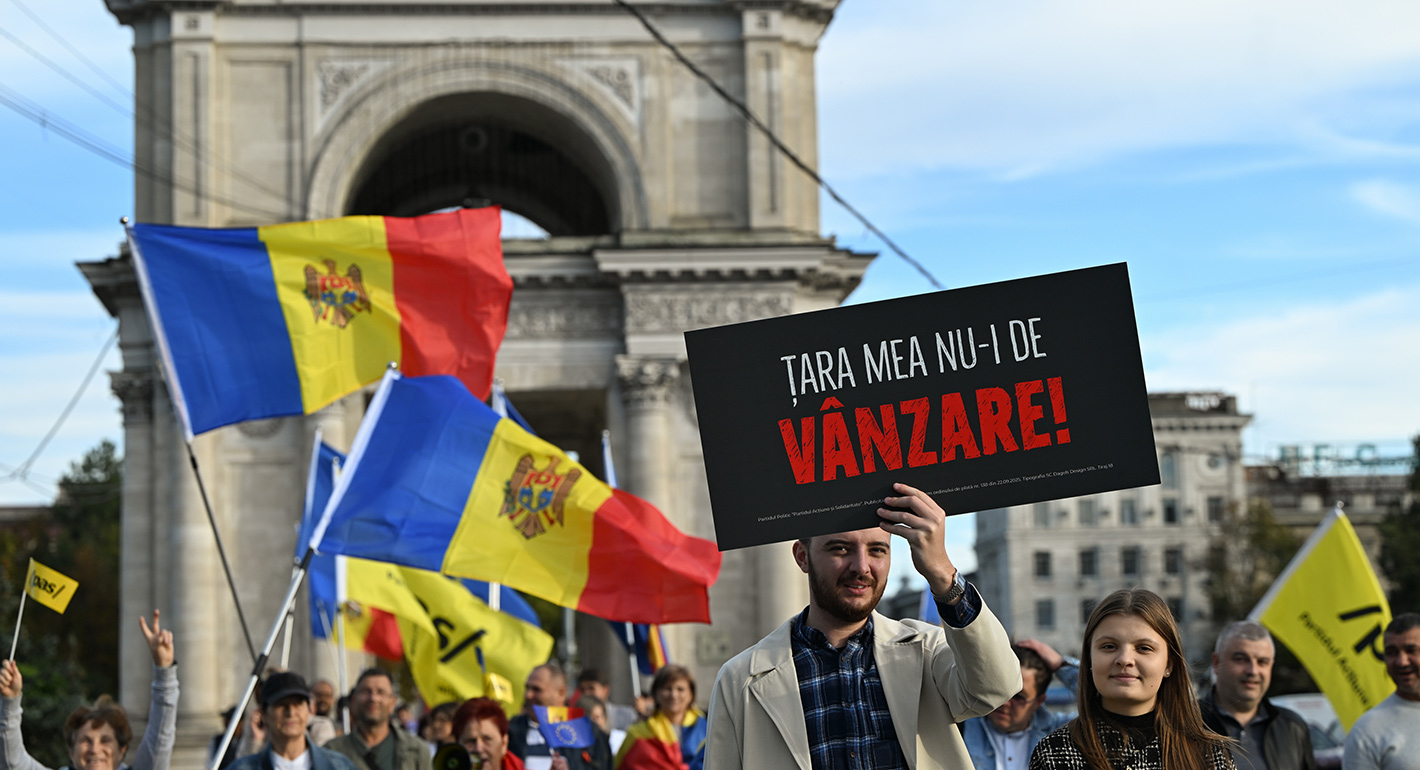
When backsliding has progressed to the point that regime threat is clear, democracy defenders can more easily unite on a strategy to challenge the backsliding leader. In Venezuela, the opposition political parties finally united in 2015 (a decade and a half into the Chávez/Maduro backsliding process) to decisively win a supermajority in the legislative elections in coordinated candidate nominations.22 They had learned from their prior boycott experiences the risks of that strategy and were able to agree on a more effective strategy in the face of a clear regime threat. Smaller polities may also find it easier to achieve consensus over democratic erosion and unite to unseat democracy-eroders, as opponents did in North Macedonia in 2016, in Mauritius in 2024, and in Moldova in 2019–2020.23
Agreeing on a strategy, such as forming a broad opposition electoral coalition to emphasize democratic principles, can increase the chances of opposition success in contexts of democratic backsliding.24 However, even when opposition forces form an electoral coalition and win an election, they have not necessarily overcome regime uncertainty altogether. Before the 2023 Turkish elections, opposition parties with different perceptions of regime uncertainty managed to form a big-tent coalition, but then oscillated between ordinary “election coalition” and extraordinary “democracy coalition” frameworks, undermining their effectiveness and public credibility and contributing to their defeat.25
Even when opposition forces form an electoral coalition and win an election, they have not necessarily overcome regime uncertainty altogether.
Developing an effective toolkit to overcome the specific dilemmas of regime uncertainty and answering the larger question of what strategies effectively counter democratic backsliding will take time, research, and deliberation. The lessons can be extracted from empirical research and from practical experiences, reflections, and insights of democracy defenders on the ground. But some preliminary lessons on overcoming regime uncertainty can already be identified:
With democratic backsliding continuing in many countries, those fighting to safeguard democracy must continuously and urgently adjust to ever-changing political conditions and expectations. Among their many challenges, a key one is to develop new discourses, mental frames, methods, and coalitions to overcome the regime uncertainty that backsliding typically produces.
In our quantitative analysis, we made an explicit effort to incorporate the qualities that scholars identify as the distinct characteristics of democratic backsliding into our measurement criteria, and established conditions for sustained and arrested reversals and recoveries. To capture the gradual (yet over time significant) nature of democratic backsliding and to distinguish it from other types of autocratization, we created several criteria.
First, we expected a backsliding episode to feature a continuous decline of at least five years, with a minimum total decline of 0.1 during the whole episode. Second, our criteria established a ceiling for annual decline, 0.084 points per annum in a country’s liberal democracy score in V-Dem’s 2025 dataset.27 We arrived at this number by taking the average of the annual fall that experts assessed in a country’s liberal democracy score as a result of coups (military, civilian or self-coups)—to represent rapid autocratization as opposed to backsliding—since 1990, in the V-Dem dataset’s variable “regime end type (v2regendtype).”
For “recovery,” we required that the country recovered its original liberal democracy score, and for any reversal or recovery to count as “sustained,” we required that the country maintain at least its original score for a minimum of five years.28 Our results are similar to other alarming findings, differing in degree as a result of our strict criteria that aim at better representing democratic backsliding as a distinct mode of autocratization.29 Some studies have also produced less alarming findings.30
Note: This analysis builds on Murat Somer and Alper Yılmaz, “Old Autocracy or Something New?: Conceptualizing and Measuring Democratic Erosion and Overcoming It,” APSA Preprints, December 11, 2023, https://doi.org/10.33774/apsa-2023-sshrp. We are grateful to Alper Yılmaz, graduate research assistant at Özyeğin University’s international relations department, for his outstanding work to update the data and prepare the table.

Murat Somer
Professor, Özyeğin University, Istanbul
Murat Somer is professor of politics and international relations at Özyeğin University, Istanbul, and an expert on political polarization and depolarization, democratic erosion, recovery and oppositions, and ethnic, religious, and secular conflicts and politics in Türkiye and around the world.

Nonresident Scholar, Democracy, Conflict, and Governance Program
Jennifer McCoy is a nonresident scholar in the Democracy, Conflict, and Governance Program, where she focuses on political polarization and democratic resilience in the U.S. and around the world.
Carnegie does not take institutional positions on public policy issues; the views represented herein are those of the author(s) and do not necessarily reflect the views of Carnegie, its staff, or its trustees.

A notable degree of participative democracy has firmly arrived in Europe. But to have more far-reaching impact, democratic deliberation needs to move into a radically new phase.

Richard Youngs
AI technology has proliferated extensively and offers authoritarian leaders three crucial advantages: scale, speed, and efficiency. As a result, it has undoubtedly become a crucial tool of repression. But AI tools also give individuals and activists the means to organize, resist, and hold their governments accountable. Today, it is far more difficult for autocratic leaders to hide their corrupt practices and govern in darkness.

Steve Feldstein, Shreya Joshi

The world is at a critical inflection point, where a combination of ever more powerful AI systems, accelerating proliferation, and a corresponding norms vacuum is setting up a dangerous set of conditions.
Steve Feldstein
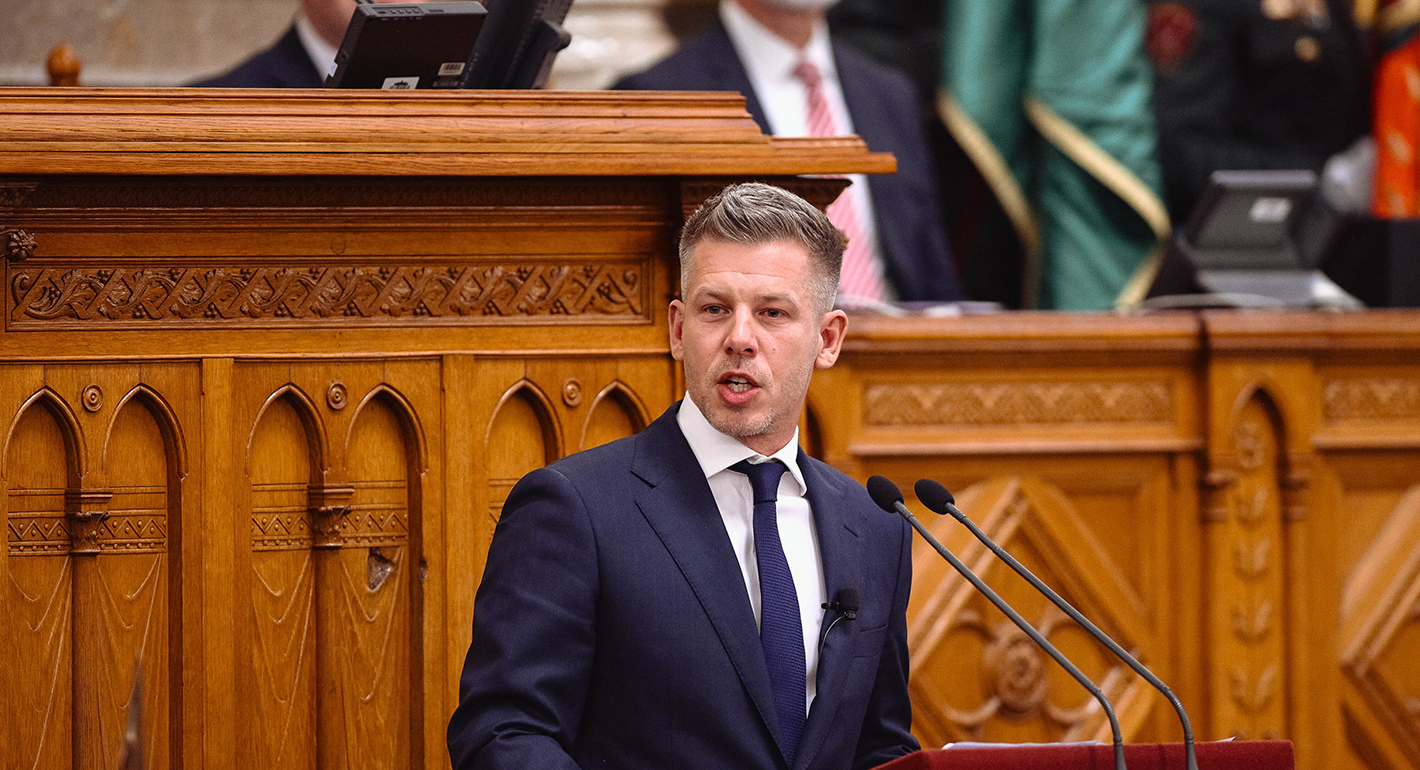
Despite myriad challenges and occasional stumbles, the new Hungarian government is moving ahead with energy and conviction to uproot years of illiberalism and corruption and rebuild Hungarian democracy.

Thomas Carothers
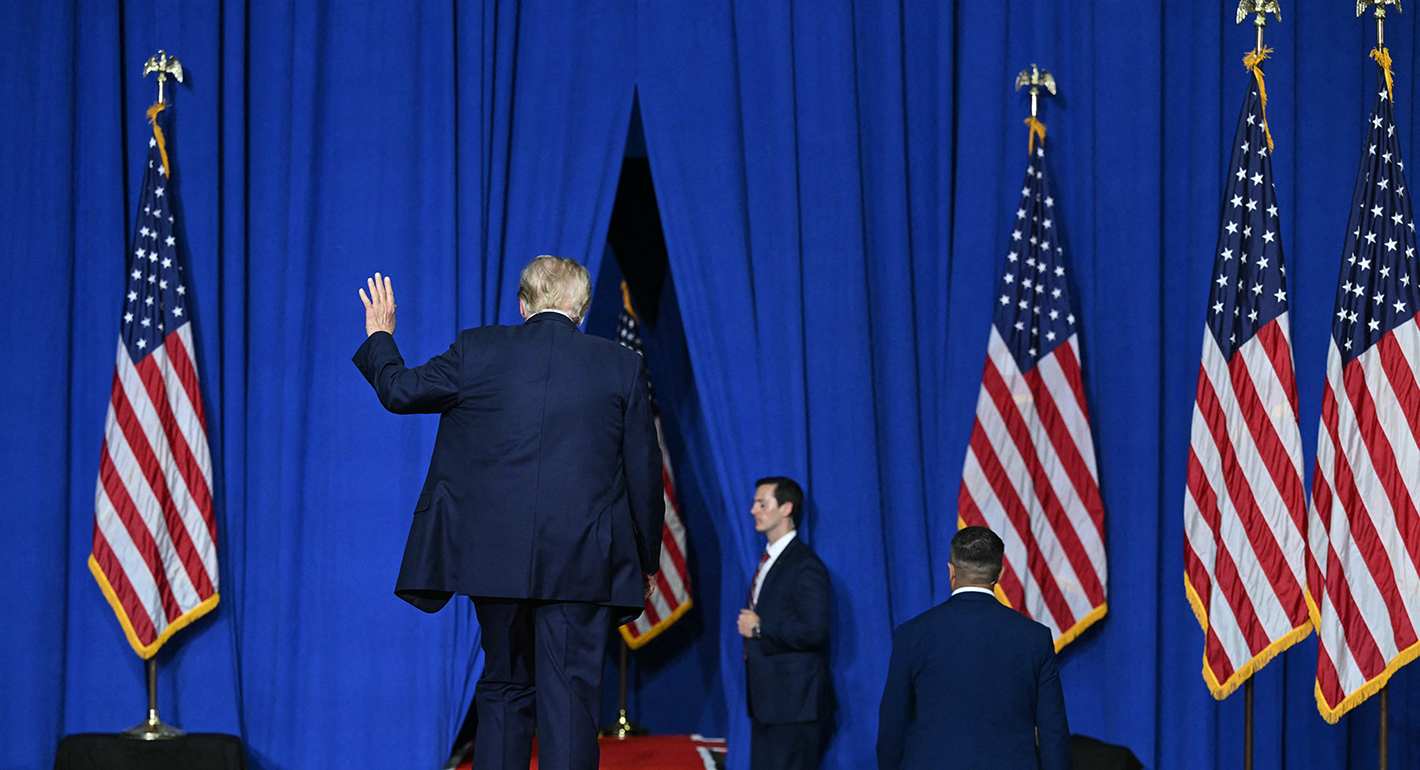
By abandoning past U.S. pro-democracy policies and adopting several lines of pro-autocratic action, the Trump administration has fundamentally repositioned the United States vis-à-vis democracy in the world.
Thomas Carothers