

Commentary
Sada launches its first eBook, a collection of essays that explores the region’s deep political changes since the Arab uprisings.
Intissar Fakir
{
  "authors": [
    "Mansoor Al-Jamri"
  ],
  "type": "commentary",
  "blog": "Sada",
  "centerAffiliationAll": "",
  "centers": [
    "Carnegie Endowment for International Peace"
  ],
  "collections": [],
  "englishNewsletterAll": "",
  "nonEnglishNewsletterAll": "",
  "primaryCenter": "Carnegie Endowment for International Peace",
  "programAffiliation": "",
  "programs": [],
  "projects": [],
  "regions": [
    "Bahrain"
  ],
  "topics": []
}

REQUIRED IMAGE
Opposition Shi'i deputies in parliament have had unusual success lately in getting agreement from pro-government Sunni deputies on amending the constitution to increase the powers of the elected lower house. But even with such cooperation the legislative process will be nearly impossible to navigate.
The Bahraini lower house of parliament has seen an unusual development in recent months: cooperation between opposition and pro-government factions on proposals to amend the kingdom's 2002 constitution. While the two groups differ on almost every subject, they share a desire to increase the powers of the body to which both belong.
Mansoor Al-Jamri
Carnegie does not take institutional positions on public policy issues; the views represented herein are those of the author(s) and do not necessarily reflect the views of Carnegie, its staff, or its trustees.
Sada launches its first eBook, a collection of essays that explores the region’s deep political changes since the Arab uprisings.

Intissar Fakir

Falling government revenues are pushing Bahrain’s government to implement economic reforms, but it will need to make political concessions to pursue long-term changes.
Abdulla Abdulaal
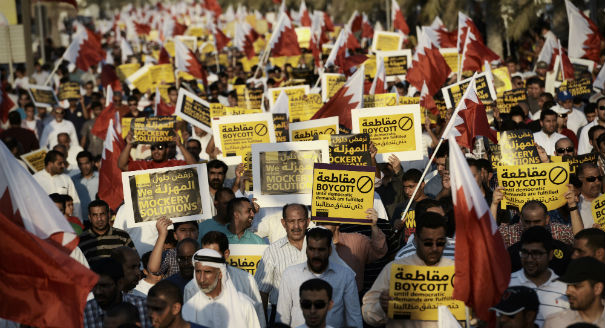
Upcoming elections in Bahrain are likely to prompt more opposition protests, rather than providing a means of channeling and containing opposition activity.

Jane Kinninmont
The recent efforts to label the Muslim Brotherhood as a terrorist organization puts Bahrain’s leadership at odds with its domestic ally against the Shia opposition.
Ibrahim Hatlani
The responses of Gulf Cooperation Council countries to the 2011 uprisings only reinforce a culture of state dependency.
Suliman Al-Atiqi