
• Research
  • Emissary
  • About
  • Experts
Carnegie Global logoCarnegie lettermark logo
DemocracyIran
  • Donate
REQUIRED IMAGE
Report

China's Financial Sector: Contributions to Growth and Downside Risks

Link Copied
By Dr. Albert Keidel
Published on Jan 25, 2007

Additional Links

Full Text (PDF)
Program mobile hero image

Program

Asia

The Asia Program in Washington studies disruptive security, governance, and technological risks that threaten peace, growth, and opportunity in the Asia-Pacific region, including a focus on China, Japan, and the Korean peninsula.

Learn More

Source: Conference Paper

As global financial markets reel from the blows of developed-country financial failures in the fall of 2008, what is the status of China’s financial system? Many contend that China’s financial system is weak and ill-suited for supporting sustained modernization. This paper disagrees and explains why. Its analysis of China’s financial system helps provide an understanding of why China’s economy will weather the current financial storm in good shape.  This paper is forthcoming in 2009 in a volume to be published by the Milken Institute. [1]  A preliminary version was presented at an academic conference in early 2007.

Any evaluation of China’s financial system and its prospects must concentrate on its contribution to China’s economic growth and to related solutions to a range of domestic economic goals.  The evolution of China’s financial system, in all its various dimensions, is in midstream, with its many market and non-market aspects reforming simultaneously.  Its hybrid nature, which combines policy-directed lending and nascent market-based institutions, has aspects considered by some foreign observers to be not only unconventional but also inefficient.  In fact, the system appears to serve China’s current needs well.

[1] James R. Barth, John A. Tatom, and Glenn Yago (eds.), China’s Emerging Financial Markets: Challenges and Opportunities (Santa Monica, CA: Milken Institute, 2009)

Click here for full text.

About the Author

Dr. Albert Keidel

Former Senior Associate, China Program

Keidel served as acting director and deputy director for the Office of East Asian Nations at the U.S. Department of the Treasury. Before joining Treasury in 2001, he covered economic trends, system reforms, poverty, and country risk as a senior economist in the World Bank office in Beijing.

    Recent Work

  • Article
    As China's Exports Drop, Can Domestic Demand Drive Growth?

      Dr. Albert Keidel

  • Article
    China’s Fourth Quarter 2008 Statistical Record

      Dr. Albert Keidel

Dr. Albert Keidel
Former Senior Associate, China Program
Albert Keidel
China

Carnegie does not take institutional positions on public policy issues; the views represented herein are those of the author(s) and do not necessarily reflect the views of Carnegie, its staff, or its trustees.
More Work from Carnegie Endowment for International Peace

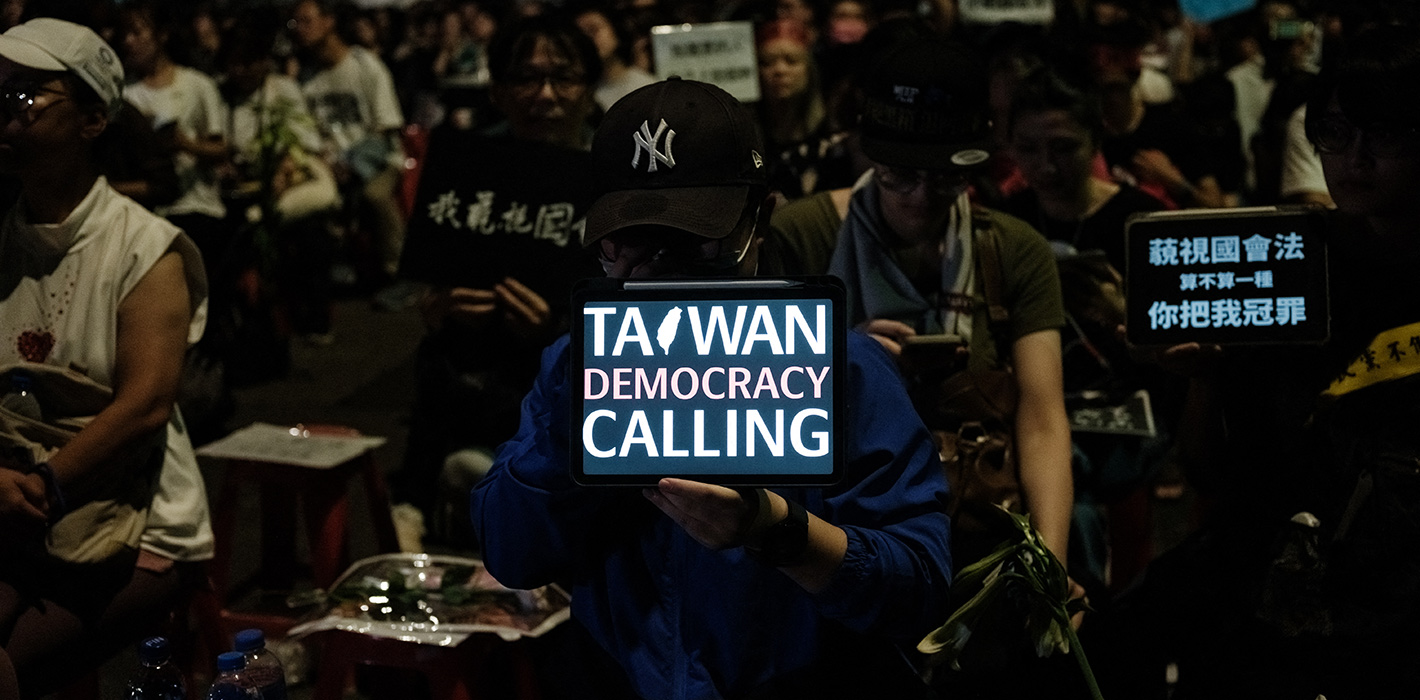
  • A demonstrator holds a tablet displaying a message as they occupy a road in protest against plans by the main opposition Kuomintang (KMT) and the Taiwan People's Party (TPP) to expand the parliamentary powers during the vote for the Parliament reform bill, outside the Parliament in Taipei on May 24, 2024. T
    Article
    Digital Hegemony and the Reification of Taiwan’s “Unification-Independence” Dichotomy

    Governments now deploy online platforms to shape public opinion and influence collective cognition. This is acutely apparent between China and Taiwan.

      Frank Cheng-Shan Liu
  • Article
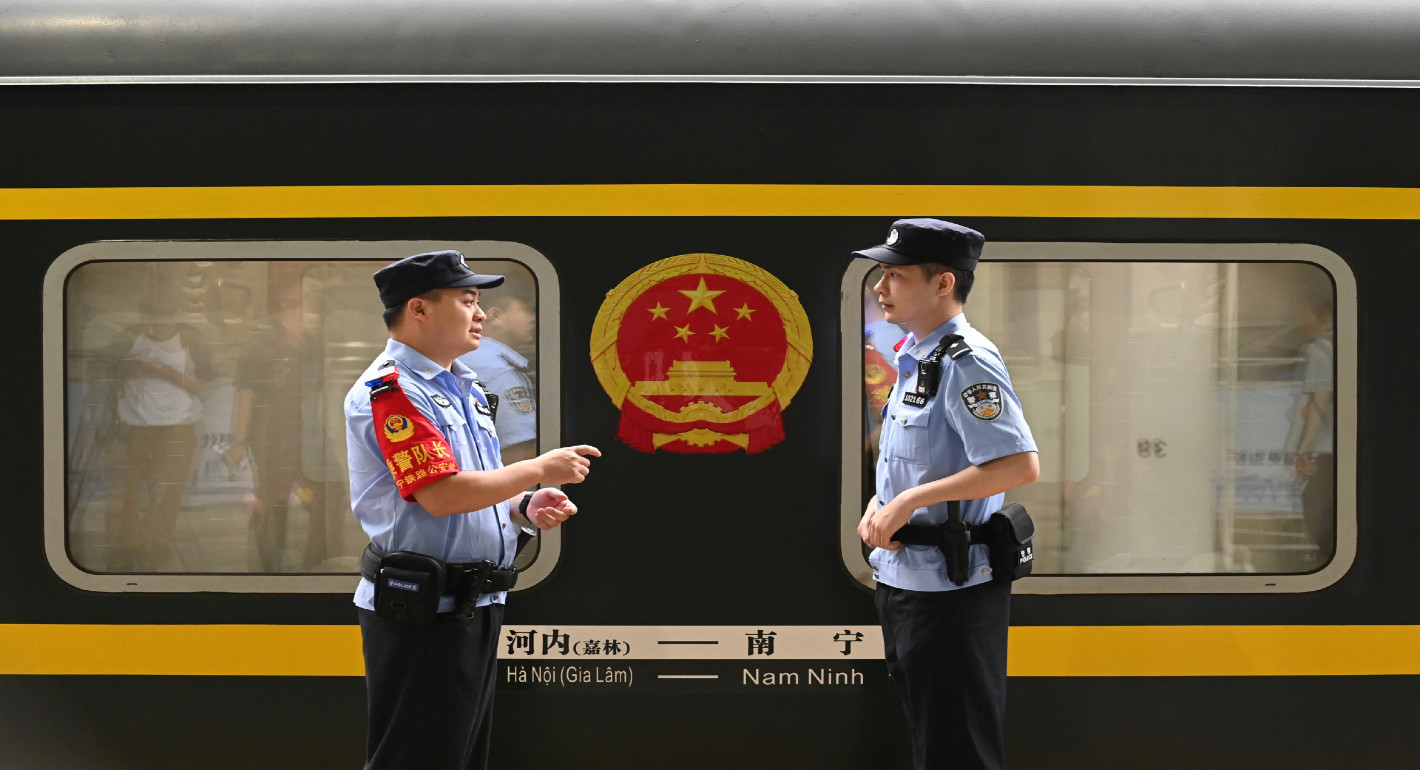
    Leveraging Internal Security Cooperation with Vietnam Offers a Glimpse of Future Chinese Diplomacy with Southeast Asia

    Despite long-standing differences, China and Vietnam are reinforcing common ground for collaboration, especially in public security. This internal security–centered diplomacy offers a strengthened road map for how China moves forward with Southeast Asia.

      Sophie Zhuang

  • Commentary
    China’s Energy Security Doesn’t Run Through Hormuz but Through the Electrification of Everything

    Across Asia, China is better positioned to withstand energy shocks from the fallout of the Iran war. Its abundant coal capacity can ensure stability in the near term. Yet at the same time, the country’s energy transition away from coal will make it even less vulnerable during the next shock.


      • Damien Ma

      Damien Ma

  • Commentary
    China Financial Markets
    What GDP Means in a Soft Budget Economy Like China

    The GDP measure is an attempt to measure value creation in an economy. This measure, however, can vary greatly between economies that have disciplinary mechanisms that force them to recognize investment losses quickly and economies that don’t, and can postpone this recognition for many years.

      Michael Pettis

  • Xi walking into a room with people standing and applauding around him
    Commentary
    Emissary
    The Xi Doctrine Zeros in on “High-Quality Development” for China’s Economic Future

    In the latest Five-Year Plan, the Chinese president cements the shift to an innovation-driven economy over a consumption-driven one.

      • Damien Ma

      Damien Ma

Get more news and analysis from
Carnegie Endowment for International Peace
Carnegie global logo, stacked
1779 Massachusetts Avenue NWWashington, DC, 20036-2103Phone: 202 483 7600Fax: 202 483 1840
  • Research
  • Emissary
  • About
  • Experts
  • Donate
  • Programs
  • Events
  • Blogs
  • Podcasts
  • Contact
  • Annual Reports
  • Careers
  • Privacy
  • For Media
  • Government Resources
Get more news and analysis from
Carnegie Endowment for International Peace
© 2026 Carnegie Endowment for International Peace. All rights reserved.
