
• Research
  • Emissary
  • About
  • Experts
Carnegie Global logoCarnegie lettermark logo
DemocracyIran
  • Donate
{
  "authors": [
    "Uri Dadush",
    "Bennett Stancil"
  ],
  "type": "other",
  "centerAffiliationAll": "",
  "centers": [
    "Carnegie Endowment for International Peace"
  ],
  "collections": [],
  "englishNewsletterAll": "",
  "nonEnglishNewsletterAll": "",
  "primaryCenter": "Carnegie Endowment for International Peace",
  "programAffiliation": "",
  "programs": [],
  "projects": [],
  "regions": [
    "North America"
  ],
  "topics": [
    "Economy",
    "Trade"
  ]
}
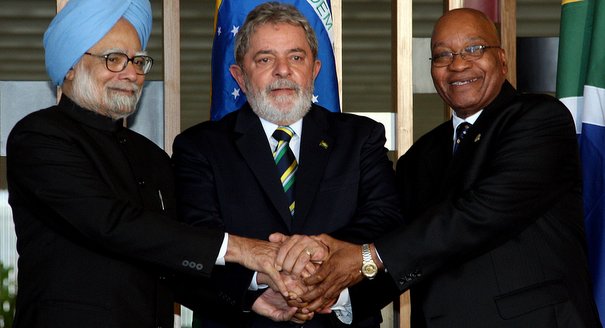
Source: Getty

Other

The World Order in 2050

The world’s economic balance of power is shifting, as emerging countries rapidly overtake traditional Western powers as the predominant world economies. The recent global recession has only accelerated this trend.

Link Copied
By Uri Dadush and Bennett Stancil
Published on Apr 21, 2010

The rise of China, India, and other emerging markets has been anticipated for years by numerous economists, and the recent global recession has only accelerated this trend. New projections for economic growth through 2050 offer insight into the implications of this changing economic landscape.

Key Conclusions

  • The world’s economic balance of power is shifting rapidly. China remains on a path to overtake the United States as the world’s largest economic power within a generation, and India will join both as a global leader by mid-century.

  • Traditional Western powers will remain the wealthiest nations in terms of per capita income, but will be overtaken as the predominant world economies by much poorer countries. Given the sheer magnitude of the challenge of lower-wage competition, protectionist pressures in advanced economies may escalate.

  • The global economic transformation will shift international relations in unpredictable ways. To retain their historic influence, European nations will be pressed to conduct foreign policy jointly—an objective implied by their recently ratified constitution—and will need to reach out to emerging powers. Japan and Russia will seek new frameworks of alliances. The largest emerging nations may come to see each other as rivals.

  • Absolute poverty will be confined to small pockets in sub-Saharan Africa and India, though relative poverty will persist, and may even become more acute. Carbon emissions are also on a path toward climate catastrophe, and by mid-century may constitute a serious risk to the global growth forecast.

  • International organizations such as the IMF will be compelled to reform their governance structures to become more representative of the new economic landscape. Those that fail to do so will become marginalized.

About the Authors

Uri Dadush

Former Senior Associate, International Economics Program

Dadush was a senior associate at the Carnegie Endowment for International Peace. He focuses on trends in the global economy and is currently tracking developments in the eurozone crisis.

Bennett Stancil

Former Research Assistant, International Economics Program

Authors

Uri Dadush
Former Senior Associate, International Economics Program
Uri Dadush
Bennett Stancil
Former Research Assistant, International Economics Program
EconomyTradeNorth America

Carnegie does not take institutional positions on public policy issues; the views represented herein are those of the author(s) and do not necessarily reflect the views of Carnegie, its staff, or its trustees.

More Work from Carnegie Endowment for International Peace

  • Commentary
    Carnegie Politika
    Who Is Funding Russia’s War in the 2027 Budget?

    For every ruble allocated to social policy, health, and education in 2027, double that amount is earmarked for the army, the police, and the security services.

      Alexandra Prokopenko

  • Commentary
    Strategic Europe
    Taking the Pulse: Can the EU Stare Down China on Trade?

    The European Commissioner for Trade is headed to China. But after President Xi’s bridge-building visit to Washington, can a more isolated EU overcome Beijing’s stranglehold on critical raw materials? Who will blink first?

      • Rym Momtaz

      Rym Momtaz, ed.

  • Commentary
    Carnegie Politika
    International Demand for Russia’s Arctic Shipping Route Is Unlikely to Last

    Cargo traffic through Russia’s Northern Sea Route has increased because of the disruption caused by the conflict in the Middle East, the Ukraine war, and U.S.-China tensions.

      • Mikhail Korostikov

      Mikhail Korostikov

  • Commentary
    Strategic Europe
    How Le Pen Benefits from the Stalemate in Ukraine

    The domestic impacts of how long it is taking to end the war in Ukraine have pushed the French electorate to the political extremes and compromised the country’s diplomatic capacity.

      • Rym Momtaz

      Rym Momtaz

  • Commentary
    China Financial Markets
    The Plaza Accord and Its Relevance for China

    The Plaza Accord was not an externally imposed punishment of Japan but part of a broader restructuring that Japanese economists and policymakers themselves recognized was necessary. Its effects were undermined, however, when Tokyo responded to the resulting slowdown with policies that exacerbated investment, credit expansion, and the very imbalances the adjustment was intended to resolve.

      Michael Pettis

Get more news and analysis from
Carnegie Endowment for International Peace
Carnegie global logo, stacked
1779 Massachusetts Avenue NWWashington, DC, 20036-2103Phone: 202 483 7600
  • Research
  • Emissary
  • About
  • Experts
  • Donate
  • Programs
  • Events
  • Blogs
  • Podcasts
  • Contact
  • Annual Reports
  • Careers
  • Privacy
  • For Media
  • Government Resources
Get more news and analysis from
Carnegie Endowment for International Peace
© 2026 Carnegie Endowment for International Peace. All rights reserved.


