

Research
- +6
Yasmine Farouk, Nathan J. Brown, Maysaa Shuja Al-Deen, …
{
  "authors": [
    "Intissar Fakir"
  ],
  "type": "other",
  "centerAffiliationAll": "dc",
  "centers": [
    "Carnegie Endowment for International Peace"
  ],
  "collections": [],
  "englishNewsletterAll": "menaTransitions",
  "nonEnglishNewsletterAll": "",
  "primaryCenter": "Carnegie Endowment for International Peace",
  "programAffiliation": "MEP",
  "programs": [
    "Middle East"
  ],
  "projects": [],
  "regions": [
    "North Africa",
    "Morocco"
  ],
  "topics": []
}
Source: Getty
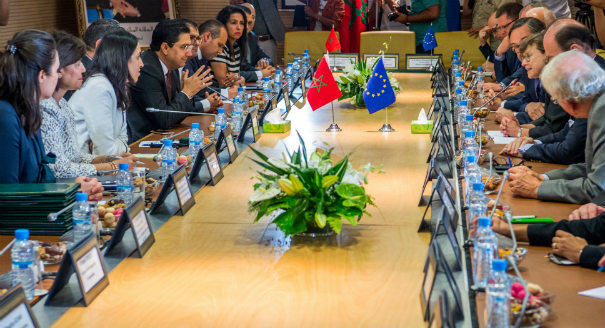
Morocco’s domestic challenges are giving greater urgency to certain aspects of the EU–Morocco relationship even as the traditional pillars—security, migration and trade—remain important.
Source: IEMed
Morocco’s domestic challenges are giving greater urgency to certain aspects of the EU-Morocco relationship even as the traditional pillars of the relationship—security, migration and trade—remain important. EU policymakers should be aware that many Moroccans are thinking beyond these traditional aspects. On these historical pillars, EU-Morocco relations have faced a number of challenges over the past few years, particularly tensions around migration and the status of the Western Sahara. Yet many Moroccans seem eager for the relationship to also reflect internal challenges. Over the past two years, Morocco has been navigating a series of internal political and social crises, which at their heart are about the quality of governance: whether the palace or the elected government ought to be empowered to govern the country and, consequently, who ought to be held accountable for any failures.
The 2018 Euromed Survey revealed that Moroccans think democracy, rule of law and good governance should be the most important aspects of EU-Morocco relations (see Graph 1). Respondents also indicated that the EU’s support for authoritarian regimes is likely to have the most negative effect on the stability of Southern and Eastern Mediterranean countries. That many Moroccans think democracy and effective governance should be part of the country’s EU relations is a result of circumstances that have been amplified since 2011.
Relative to other countries in the region, Morocco charted a more stable path forward during the 2011 protests. The Moroccan protest movement did not aim to topple the regime—the monarch, in this case—but rather called on it to reform. People envisioned the king playing a role in which he “reigned but did not govern.” Indeed, Mohammed VI, under pressure from the growing protest movement, promised constitutional reforms that passed in July 2011, ceding some historically royal privileges to the government and parliament. A timid implementation of the constitutional changes followed, but over the past two years there has been a clear reversal. In one notable example, the Islamist Party for Justice and Development (PJD), at the center of the push and pull between monarchy and government about how much responsibility (and accountability) ought to be given to the government, won a second term in 2016. After its win, the monarchy became intent on regaining control of the political process by cajoling and intimidating the various political parties with which the PJD needed to ally to form a coalition. This orchestrated political crisis stalled the government formation process and resulted in a weak coalition led by a deeply damaged and compromised PJD. Morocco’s elected government returned to being a weak institution again, subject to citizens’ scorn…

Former Fellow, Middle East Program, Editor in Chief, Sada
Intissar Fakir was a fellow and editor in chief of Sada in Carnegie’s Middle East Program.
Recent Work



Yasmine Farouk, Nathan J. Brown, Maysaa Shuja Al-Deen, …
Intissar Fakir
Carnegie does not take institutional positions on public policy issues; the views represented herein are those of the author(s) and do not necessarily reflect the views of Carnegie, its staff, or its trustees.

In Egypt’s dense cities, the disappearance of foliage has health implications and punishes daily commuters.

Angie Omar

The aftermath of the Ceuta crisis shows Europe has drawn the wrong lessons. Rather than doubling down on failed migration policies, the EU needs to address the underlying roots of such episodes.

Richard Youngs
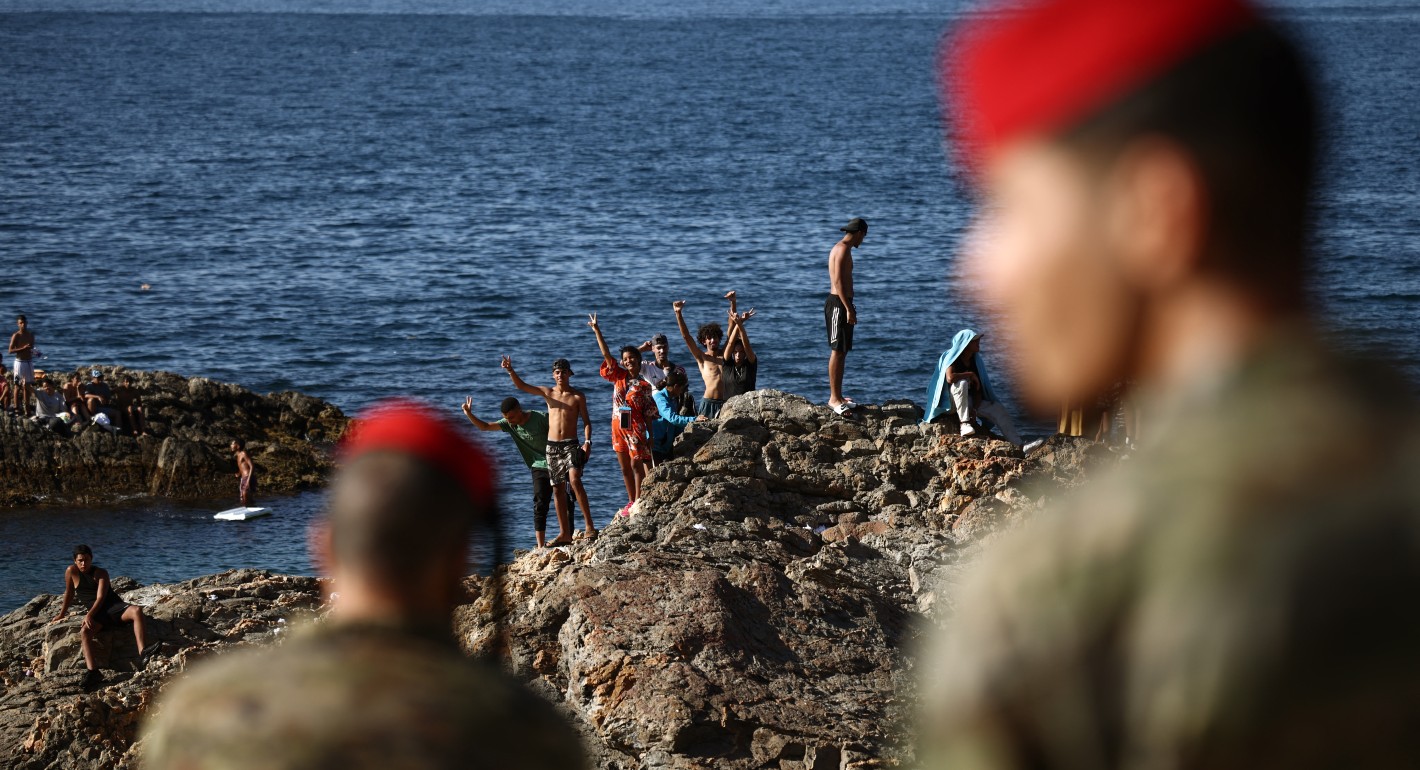
Most migrants may have left Ceuta, but the effects may linger.


Alejandro Martin Rodriguez, Sarah Yerkes
Saied’s main accomplishment has been to destroy a decade’s worth of democratic progress.
Sarah Yerkes

The armed forces champion a form of capitalism that is generating revenue, but its reliance on rent faces diminishing returns, leaving the country with massive sunk costs and deferred returns, deepening dependency on external borrowing.

Yezid Sayigh