

Paper
Sarah Yerkes, Natalie Triche, Amr Hamzawy
{
  "authors": [
    "Sarah Yerkes"
  ],
  "type": "commentary",
  "blog": "Emissary",
  "centerAffiliationAll": "dc",
  "centers": [
    "Carnegie Endowment for International Peace"
  ],
  "englishNewsletterAll": "menaTransitions",
  "nonEnglishNewsletterAll": "",
  "programAffiliation": "MEP",
  "programs": [
    "Middle East"
  ],
  "regions": [
    "Tunisia",
    "North Africa"
  ],
  "topics": [
    "Domestic Politics",
    "Economy",
    "Foreign Policy",
    "Democracy"
  ]
}
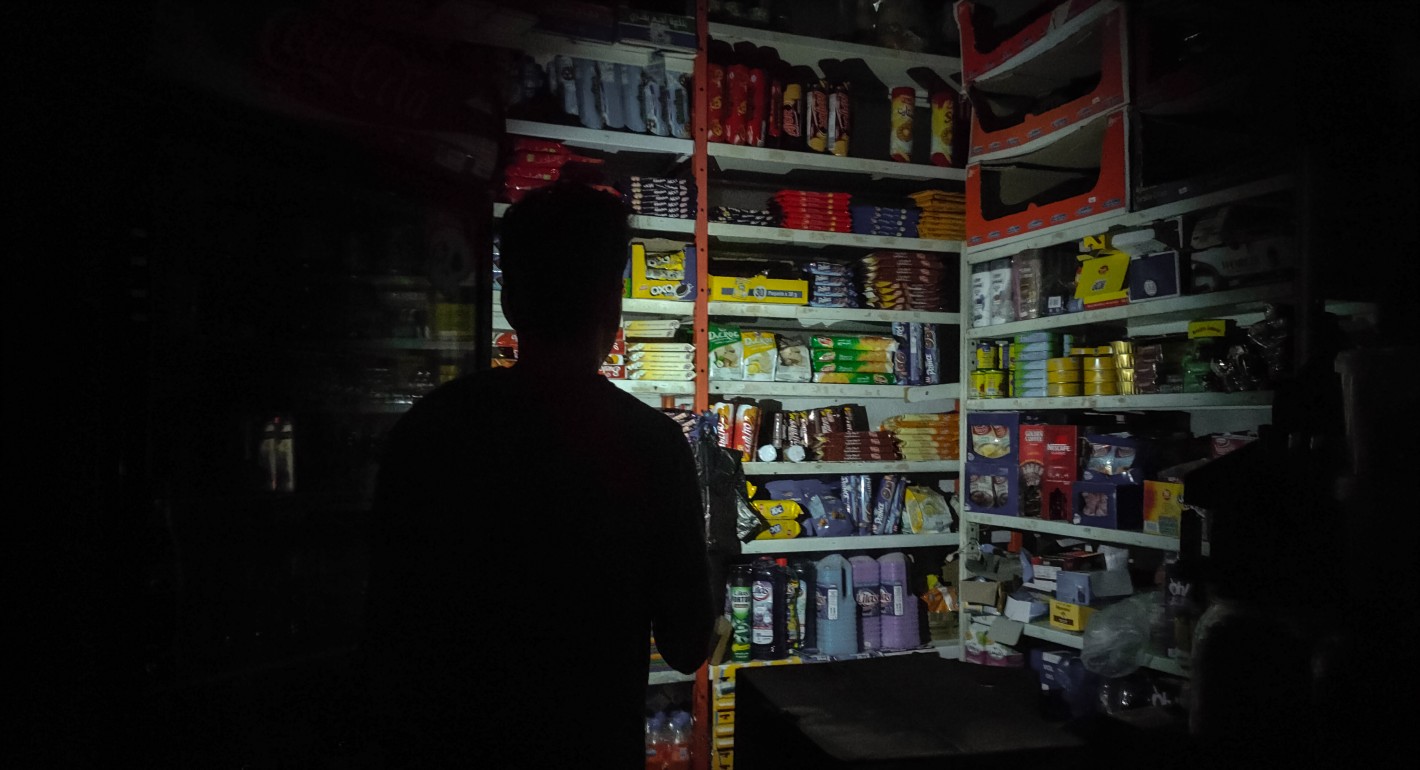
A shopkeeper uses his smartphone flashlight during a power outage in Ariana, Tunisia, on July 14, 2026. (Photo by Chedly Ben Ibrahim/NurPhoto via Getty Images)
Saied’s main accomplishment has been to destroy a decade’s worth of democratic progress.
Five years ago last month, Tunisian President Kais Saied declared a self-coup, setting the country down a path that has left it worse off economically, politically, and internationally.
The July 25, 2021, coup initially received tremendous domestic support. At the time, Tunisia was suffering from three interrelated crises: The political system was fragmented and paralyzed, economic performance was plummeting after finally posting its first gains since the 2011 revolution, and the country was experiencing the highest number of per capita pandemic cases in all of Africa. Officially, Saied’s actions—sold to the public as a “temporary” measure—were meant to wrestle power away from what was seen as an ineffective and incompetent political class. In reality, in the intervening five years, Saied’s main accomplishment has been to destroy a decade’s worth of democratic progress and isolate Tunisia from its former partners and allies.
Economically, Saied has failed to improve any of Tunisia’s economic indicators. While several aspects of the economy—including inflation, unemployment, and fiscal deficit—remain today where they were in 2021, others—including GDP growth and public debt—have moved strongly in the wrong direction under Saied’s stewardship. Making an argument that Saied has improved the economy as he promised five years ago is impossible.
Politically, the picture is even worse. Saied was elected in a free and fair democratic contest in 2019, the latest step in a democratic transition that began with the Tunisian revolution in 2010–2011. After the revolution, the country drafted a liberal, pluralistic constitution; held a series of national and local elections; created a comprehensive transitional justice process; began to address rampant corruption; and embarked on a comprehensive decentralization process. But within the year following his self-coup, Saied had suspended the democratically elected parliament, fired nearly all of the members of the cabinet, arrested dozens of his political opponents, dissolved the Supreme Judicial Council, dismissed fifty-seven judges, and rewritten the constitution. Over the next four years he signed a series of decree laws, including Decree Law 54 that criminalizes “false information” (aka fake news) with punishments up to ten years in prison. He arrested dozens more politicians, lawyers, former officials, and journalists—including his own chief of staff. He also engineered a sham reelection in which nearly every potential challenger was jailed, exiled, or barred from running prior to the vote.
Internationally, Saied has both intentionally and unintentionally alienated nearly all of Tunisia’s former allies and partners, perhaps with the exception of Algeria and Italy. Prior to the power grab, Tunisia enjoyed broad U.S. and European support and was in negotiations with the International Monetary Fund (IMF) for a $1.9 billion loan. But in April 2023, Saied rejected the IMF loan, stating that this deal, which had been worked out by his own government, would impinge on Tunisian sovereignty. The rejection had ramifications well beyond the relationship with the IMF, as most of the country’s creditors—including the United States and the EU—made an IMF loan a condition of their own support for the country’s economy in free fall. The EU, which was previously the biggest financial and rhetorical supporter of Tunisia’s democratic transition, shifted to a far more transactional relationship in the wake of Saied’s actions, trading democratic conditionality for cooperation on migration. But here, too, Saied managed to ruffle feathers, returning 60 million euros to the EU, calling the foreign assistance insulting to Tunisia. And the United States, formerly a crucial partner of and donor to Tunisia, dramatically scaled back its assistance, shifting to a primarily military partnership that is more akin to the U.S.-Tunisia relationship prior to the revolution. As a result of these actions, Tunisia’s creditors have downgraded the country, making it harder for it to attract investors.
Perhaps the most devastating loss from Saied’s reign has been the loss of Tunisia’s vibrant civil society and younger generation of political activists, whether through imprisonment, exile, or self-censorship. Nearly every political actor from the democratic period has been targeted by Saied, and many remain in forced exile, sentenced in absentia. Others across the political spectrum, from Islamist leader Rachid Ghannouchi to Tunisian American centrist Olfa Hamdi to right-wing antidemocratic pol Abir Moussi, sit in Tunisian prisons on charges that have been widely criticized by human rights organizations. Furthermore, Saied himself remains a political island, lacking a political party and with very few advisers. As a result, the country lacks both an heir apparent to the dictator, whose term should end in 2029, and a viable opposition.
Nevertheless, the Tunisian public has become restive as of late. On the anniversary of the power grab, thousands of Tunisians marched in the capital, repeating one of the slogans of the revolution: “The people want the fall of the regime.” Their demands for Saied’s resignation and the release of political prisoners are coupled with anger and frustration over public service failures in the midst of sweltering heat. But these protests are nowhere near the level of those that preceded the Arab Spring.
And because Tunisia remains just stable enough—the economy remains precariously balanced on the cliff’s edge, and the democratic government and military managed to largely eradicate the country’s homegrown terrorist threat—the international community has mostly given Saied a pass. The United States and Europe offered some weak and fairly toothless statements of condemnation in the weeks following the self-coup, and today, Tunisia is mostly an afterthought. The United States has very little engagement with the country outside of military cooperation, and Europe is almost entirely focused on a policy (driven by Italian Prime Minister Giorgia Meloni) of throwing inducements at Tunisia to keep migrants from crossing the Mediterranean to Italy. There is no external pressure on Saied to curb his repression or return the country to a democratic path. And while there have been some protests in the country against him, they have remained relatively small and have not swayed Saied to change his ways. Tunisia is thus stuck in what appears to be a sustainable status quo that—while it benefits no one outside of Saied—at least for now is likely to hold.
The latest from Carnegie scholars on the world’s most pressing challenges, delivered to your inbox.

Acting Co-Director and Senior Fellow, Middle East Program
Sarah Yerkes is acting co-director and a senior fellow in the Middle East Program at the Carnegie Endowment for International Peace. Her research focuses on democracy and governance, U.S. foreign policy towards the Middle East and North Africa, and political and economic reform in Tunisia.
Recent Work

Sarah Yerkes, Natalie Triche, Amr Hamzawy
Carnegie does not take institutional positions on public policy issues; the views represented herein are those of the author(s) and do not necessarily reflect the views of Carnegie, its staff, or its trustees.
Kais Saied has chipped away at a decade of progress, but a few factors offer hope for the country’s democratic future.
Sophia Besch, Sarah Yerkes
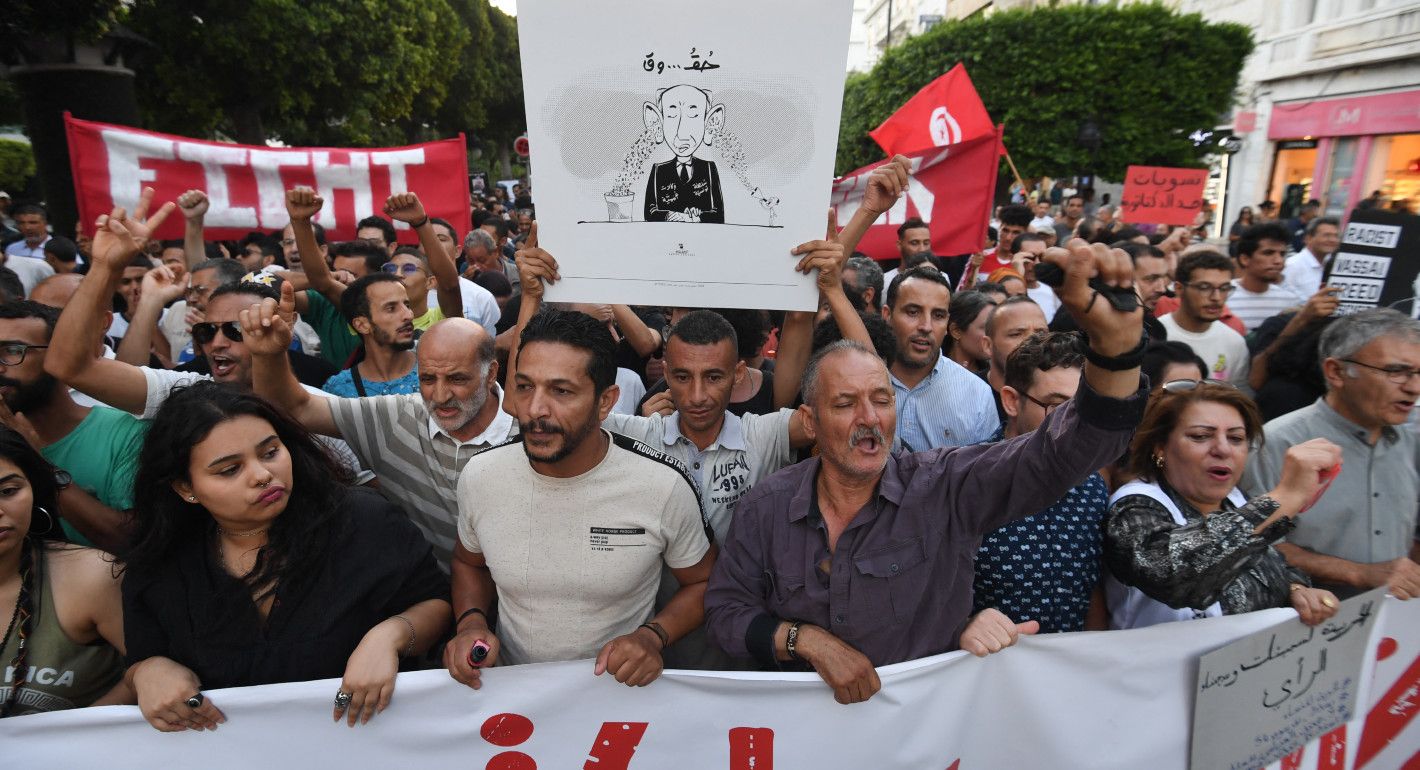
Dozens of Tunisians expressed interest in running, but almost all have been disqualified or jailed under the president’s legal changes.
Sarah Yerkes

Rubio’s recent visit brought welcome attention, but more capital requires governance changes that may be a hard sell for regional governments.

Jennifer B. Murtazashvili
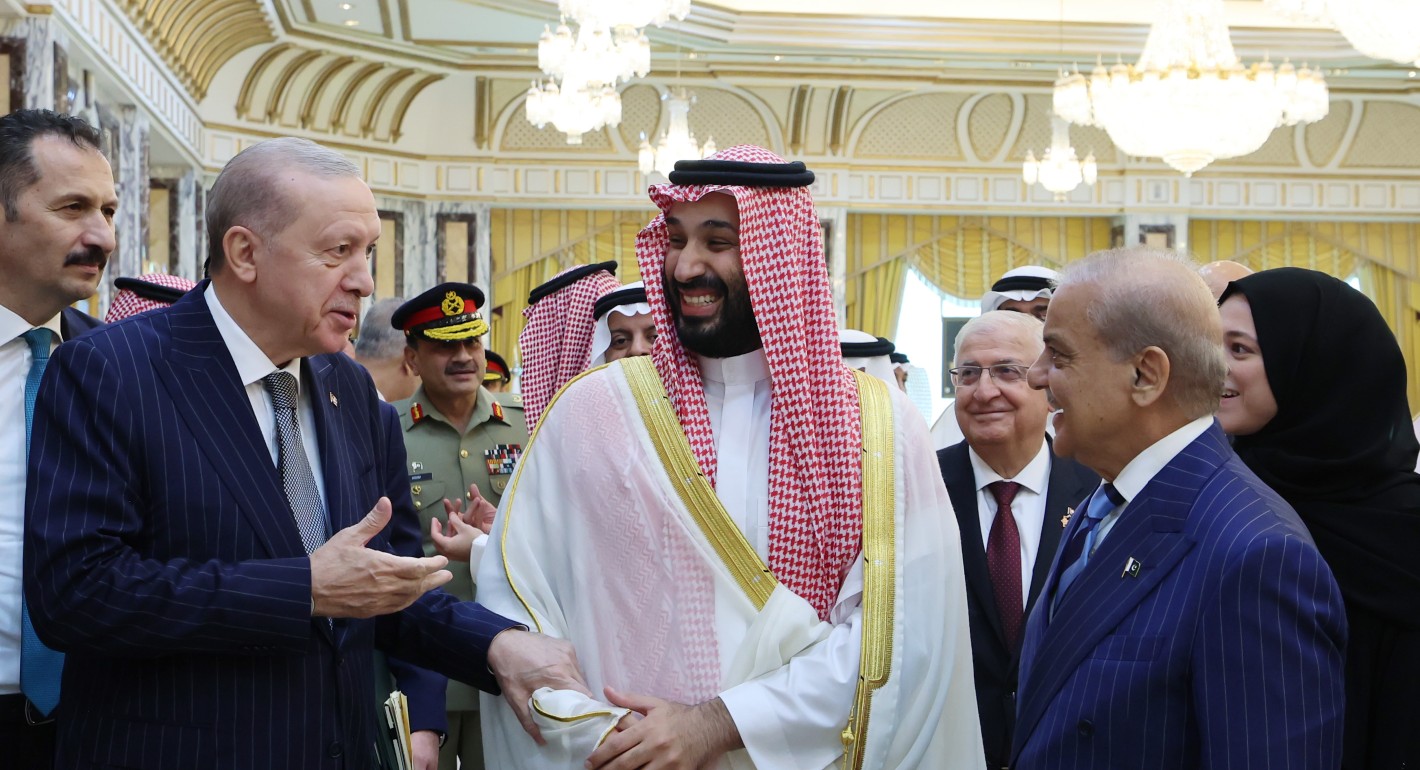
Why Pakistan, Saudi Arabia, and Turkey are joining forces on regional security.

Alper Coşkun, Amr Hamzawy

Despite public disputes over trade and immigration, the strategic partnership’s foundations remain sturdy.

Sameer Lalwani