

Research
- +8
William J. Burns, Michael Chertoff, Catherine Ashton, …
{
  "authors": [
    "William J. Burns"
  ],
  "type": "legacyinthemedia",
  "centerAffiliationAll": "",
  "centers": [
    "Carnegie Endowment for International Peace"
  ],
  "collections": [],
  "englishNewsletterAll": "",
  "nonEnglishNewsletterAll": "",
  "primaryCenter": "Carnegie Endowment for International Peace",
  "programAffiliation": "",
  "programs": [],
  "projects": [],
  "regions": [],
  "topics": [
    "Foreign Policy"
  ]
}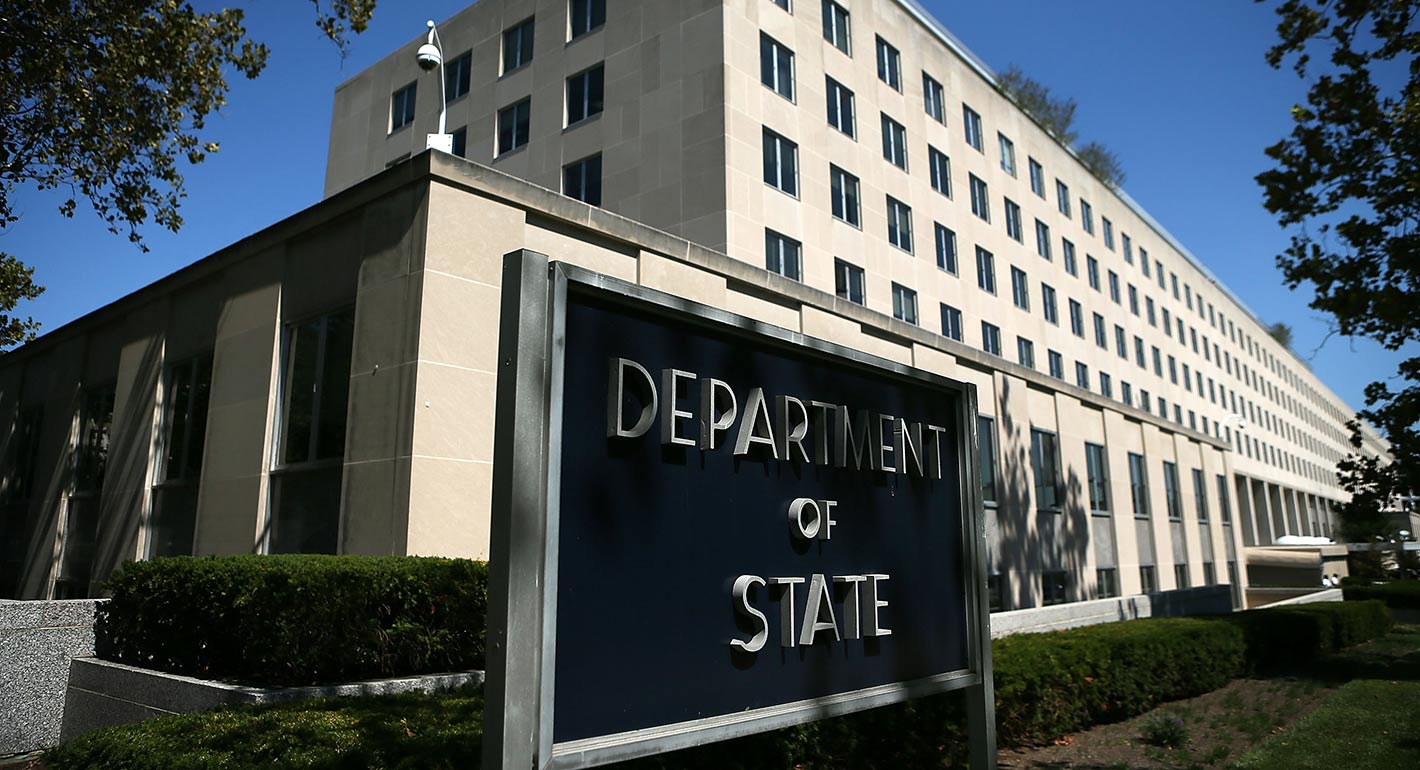
Source: Getty
A cure for America’s diplomatic decay will involve more than just seeing the back of Donald Trump.
Source: New York Times
American diplomacy is dangerously adrift. It’s tempting to simply blame President Trump. His erratic leadership and narcissistic brand of diplomacy were on full display at the Hanoi summit with Kim Jong-un of North Korea. Untethered to the judgments of his intelligence community, dismissive of careful preparation and transfixed by his powers of persuasion, the president gave Mr. Kim an unearned boost in stature and came home empty-handed.
But the roots of America’s diplomatic decay run deeper, and a cure will involve more than just seeing the back of Donald Trump.
For 33 years, under five presidents and 10 secretaries of state, I played a modest role in the wider drama of American foreign policy and its occasional diplomatic triumphs. Those peaks, however, overshadowed debilitating trends.
Our dominance in a more benign post-Cold War environment lulled us into complacency. The shock of Sept. 11 led us to rely even more on the American military as our tool of first resort, with diplomacy an afterthought with fewer and fewer resources.
We didn’t make it any easier for ourselves at the State Department. We buried our agility and initiative with layer upon layer of bureaucracy. And as the costs of misadventures abroad became more obvious, a yawning gap emerged between a Washington establishment preaching the gospel of American indispensability and a skeptical American public.
President Trump channeled those frustrations and difficulties, fed them and made them infinitely worse. At precisely the time when diplomacy matters more than ever to American interests — when we are no longer the only country calling the shots — the president is engaged in unilateral diplomatic disarmament: hollowing out the idea of America, retreating from international commitments and disdaining the institutions and practitioners of diplomacy. Not surprisingly, adversaries are taking advantage, allies are hedging and the global order we did so much to shape and defend is teetering.
For all the damage we’re doing to ourselves, it’s not too late to shift course. We’re no longer the singular dominant power that we were just after the Cold War, but we’re still the pivotal player. We still have lots of assets: the world’s best military; an economy that is bigger and more innovative than anyone else’s, even though it is plagued by inequalities; and a capacity for alliances and coalition building unmatched by our rivals. We still have a window of American pre-eminence before us, in which we can help shape international order to safeguard our interests and values, before others shape it for us.
What that requires is the revival of American diplomacy as our primary tool for navigating a more crowded, complicated and competitive world. That will not be easy. Diplomacy is among the oldest of professions, but also among the most misunderstood. It is by nature an unheroic, quiet endeavor, often unfolding in back channels out of sight and out of mind. Crises averted are less captivating than military victories; diplomacy’s preventive care is less compelling than the military’s surgical feats.
The Trump administration has made the formidable task of diplomatic renewal even harder and more urgent — embracing early on the biggest budget cuts in the modern history of the State Department, driving out many of its most capable senior and midlevel officers, cutting intake into the Foreign Service by more than half, leaving key ambassadorships and senior roles in Washington unfilled, reversing what was admittedly slow progress on gender and ethnic diversity, and blacklisting individual officers simply because they worked on controversial issues in the previous administration.
There is no neat alchemy to address President Trump’s diplomatic malpractice, let alone decades of drift, but there are at least three imperatives.
First, we have to recapture the fundamentals of diplomatic tradecraft. Diplomats have been overwhelmed by existential angst, trying desperately to prove they are more than just village watchmakers in a smartwatch world. Over the course of my career, information exploded in pace and volume; the near-monopoly on power of states was steadily eroded by nonstate actors — from the benign, like the Gates Foundation, to the malign, like Al Qaeda; and the near-monopoly on presence and insight that diplomats used to have in foreign capitals also shrank. But the core roles and qualities of good diplomacy are not fundamentally different today from what they were in earlier eras.
Diplomats are classic organizers, harnessing all the levers of American influence, investing in alliances, mobilizing coalitions, endlessly adapting institutions and managing the gray area between peace and war. Even as the landscape shifts, the fundamentals — a nuanced grasp of history, mastery of foreign languages and facility in negotiations — remain indispensable.
Second, we urgently need to build modern capabilities on top of that traditional foundation. Recent efforts at transformation have tended to focus on the capillaries of institutional change, rather than the arteries, more on how we look than how we work. We need to strip down the State Department’s bureaucracy and make it more nimble. We ought to invest heavily in 21st-century skill sets so that we can better compete in the new global economy, cope with global challenges like climate change and maximize the benefits of the revolution in technology while minimizing its disruptions.
Third, we have to construct a new domestic compact between government and citizens about America’s role in the world, and the utility of diplomacy in this new era. As we near the end of the second decade of a military campaign in Afghanistan and continue to wrestle with the consequences of the war in Iraq, Americans are naturally exasperated about the costs in blood and treasure, and the indiscipline that all too often belies our rhetoric about disciplined leadership. We have to demonstrate that diplomacy and international influence are aimed as much at enabling domestic renewal as they are at shoring up global order. We need to show that smart foreign policy not only begins at home, in the strength of our political and economic system, but ends there too — in better jobs, more prosperity, a healthier climate and greater security.
Getting beyond the age of Trump is a necessary, but not sufficient, condition for diplomacy’s revival. We have to learn the lessons of not only Mr. Trump’s demolition of diplomacy but also our frequent inattention to its significance over the past quarter-century. Diplomacy at its best rarely swaggers. It’s about quiet power. But if we’re not louder about one of our nation’s biggest assets and best-kept secrets, we risk losing it.
This article was originally published in the New York Times.

Former Carnegie President (2015-2021)
A former career diplomat, William J. Burns served as director of the CIA, deputy secretary of State, and ambassador to Russia and Jordan. Burns was also president of the Carnegie Endowment for International Peace from 2015 to 2021.
Recent Work
William J. Burns, Michael Chertoff, Catherine Ashton, …
William J. Burns
Carnegie does not take institutional positions on public policy issues; the views represented herein are those of the author(s) and do not necessarily reflect the views of Carnegie, its staff, or its trustees.
Why governance of rapidly evolving technology will be distributed and complex.


Stewart Patrick, Scott Singer

It should address the shortcomings of previous crisis communication efforts and adapt to the demands of frontier AI.

Lucy Luo

Washington’s decision to support some UN functions while letting others wither is pulling the organization apart at the seams.
Stewart Patrick, Theodore Zaritsky

Are Germany’s economic, industrial, and political struggles becoming a liability for the EU’s ability to rise to the geopolitical moment?

Rym Momtaz, ed.

China’s police training infrastructure construction projects provide benefits to recipient countries, promote China’s image as a major global security provider, and are likely to reinforce alignment between Beijing’s security priorities and those of countries in the Global South.


Cameron Waltz, Sheena Chestnut Greitens, Kim Nguyen, …