

Commentary
Zainab Usman, Anthony Carroll
{
  "authors": [
    "Anthony Carroll"
  ],
  "type": "commentary",
  "blog": "Emissary",
  "centerAffiliationAll": "",
  "centers": [
    "Carnegie Endowment for International Peace"
  ],
  "englishNewsletterAll": "",
  "nonEnglishNewsletterAll": "",
  "primaryCenter": "Carnegie Endowment for International Peace",
  "programAffiliation": "",
  "programs": [],
  "projects": [],
  "regions": [
    "South Africa",
    "Southern, Eastern, and Western Africa"
  ],
  "topics": [
    "Democracy"
  ]
}
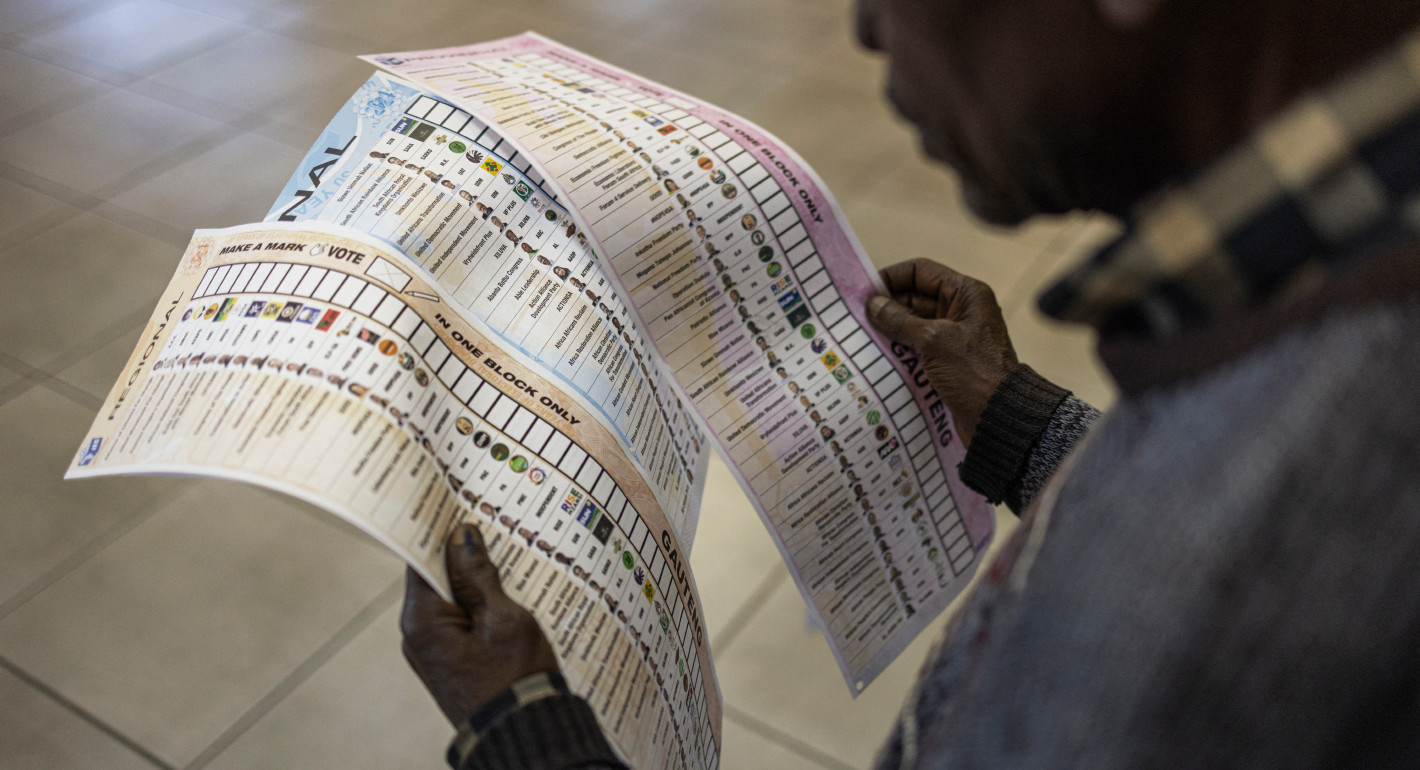
A man checks his ballots at a polling center in Johannesburg. (Photo by Michele Spatari/AFP via Getty Images)
The contest could be another notch in the ANC’s winning streak or a watershed moment for South Africa’s pluralistic democracy.
On May 29, South Africans will decide across three separate ballots the control of Parliament and nine provincial assemblies. The election will determine whether the African National Congress (ANC), led by President Cyril Ramaphosa, is able to maintain its thirty-year grip on the electorate or if the party that has ruled since the end of apartheid will be forced to form a coalition for the first time. The interests of the possible governing coalitions have wide-ranging implications domestically, regionally, and globally, as South Africa continues to make its case as a standard-bearer for international leadership on the continent.
Despite a wide margin of error in opinion polling and decline in vote-share from 69 percent in 2004 to 57 percent in 2019, the ANC is still expected to maintain its leadership of any government that would form following the elections, which are overseen by the highly trusted Independent Electoral Commission.
However, South Africans are increasingly dissatisfied with many aspects of the country’s governance. Employment, migration, and infrastructure are all emerging as voting issues, especially among younger voters who make up 18 percent of the voting population. Also on voters’ minds is corruption: in April, the National Prosecuting Authority revealed that 700 public officials had been arrested for corruption since the previous national election.
Invalid video URL
Politically, four main parties have positioned themselves in direct opposition to the ANC, leading to concerns of political gridlock if long-standing rivals are forced to govern together. Opposition parties include the Democratic Alliance, led by John Steenhuisen; the Economic Freedom Fighters, led by Julius Malema; the Inkatha Freedom Party, led by Velenkosini Hlabisa; and the MK party, led by Jacob Zuma, who has since been barred from running for parliament due to a prior conviction.
In the runup to the election, the ANC has campaigned on a wide number of issues, hoping to cater to its existing base and attract fringe voters to make up the expected shortfalls. In full campaign mode, Ramaphosa promised 2.5 million job opportunities over five years and a clean transition from coal to green energy. Elsewhere, the ANC has also made its support for the Palestinian cause clear, highlighting historical ties between the anti-apartheid movements in South Africa and in Palestine and bringing the government’s genocide case against Israel at the International Court of Justice.
With opinion polls swinging wildly, this week’s vote could be another notch in the ANC’s national winning streak or a watershed moment for South Africa’s pluralistic democracy.
This monthly newsletter is a careful curation of the Carnegie Africa Program’s work and interests. We track key trends within the U.S., on the African continent, in Asia, Europe and around the world as they relate to Africa. We announce upcoming events and share information about recent publications.

Former Nonresident Scholar, Africa Program
Anthony (Tony) Carroll was a nonresident scholar in the Carnegie Africa Program.
Recent Work
Zainab Usman, Anthony Carroll
Zainab Usman, Anthony Carroll, Saskia Holman, …
Carnegie does not take institutional positions on public policy issues; the views represented herein are those of the author(s) and do not necessarily reflect the views of Carnegie, its staff, or its trustees.

The Horn of Africa countries are among those facing a new security calculus.


Andrew Leber, Lesley Anne Warner
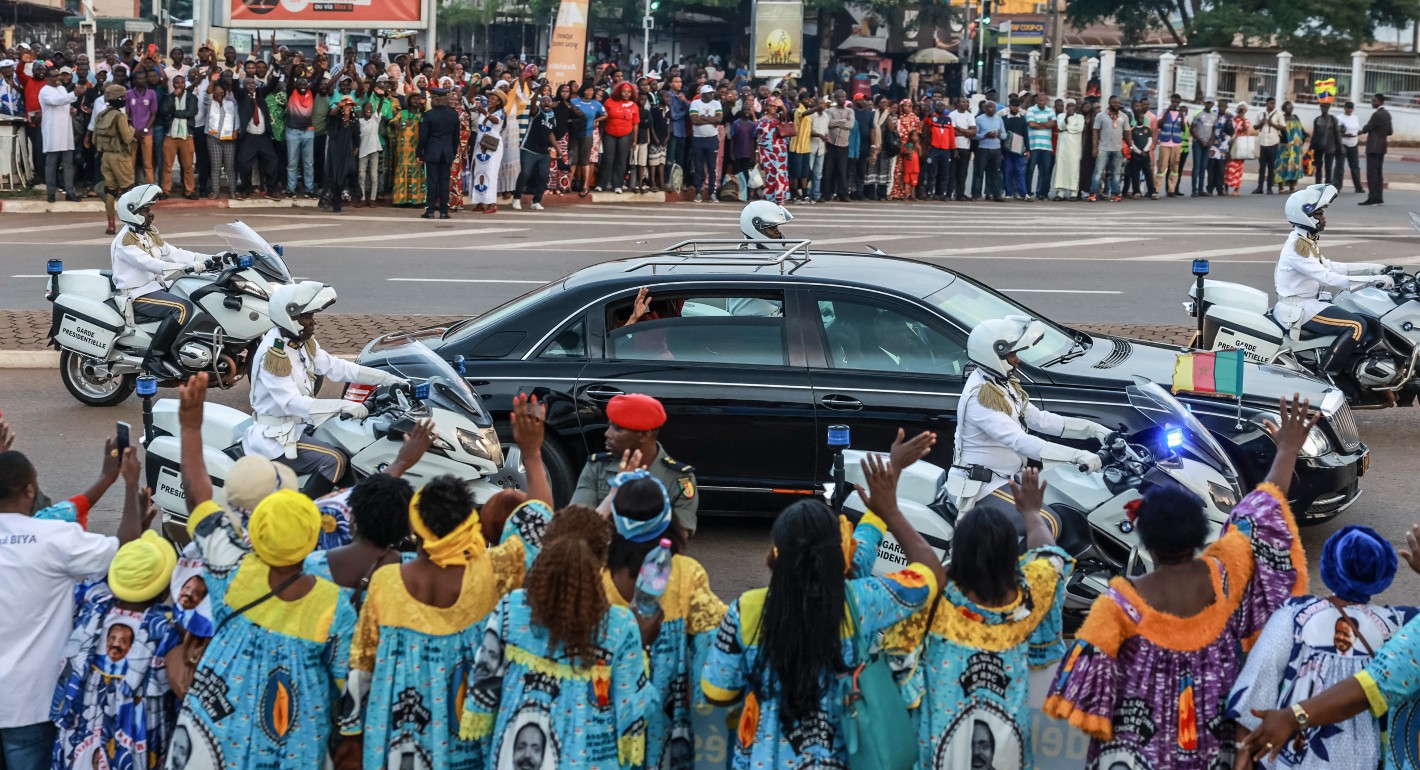
The ninety-three-year-old Biya’s absence and refusal to name a vice president threaten to upend domestic and regional stability.
Lesley Anne Warner
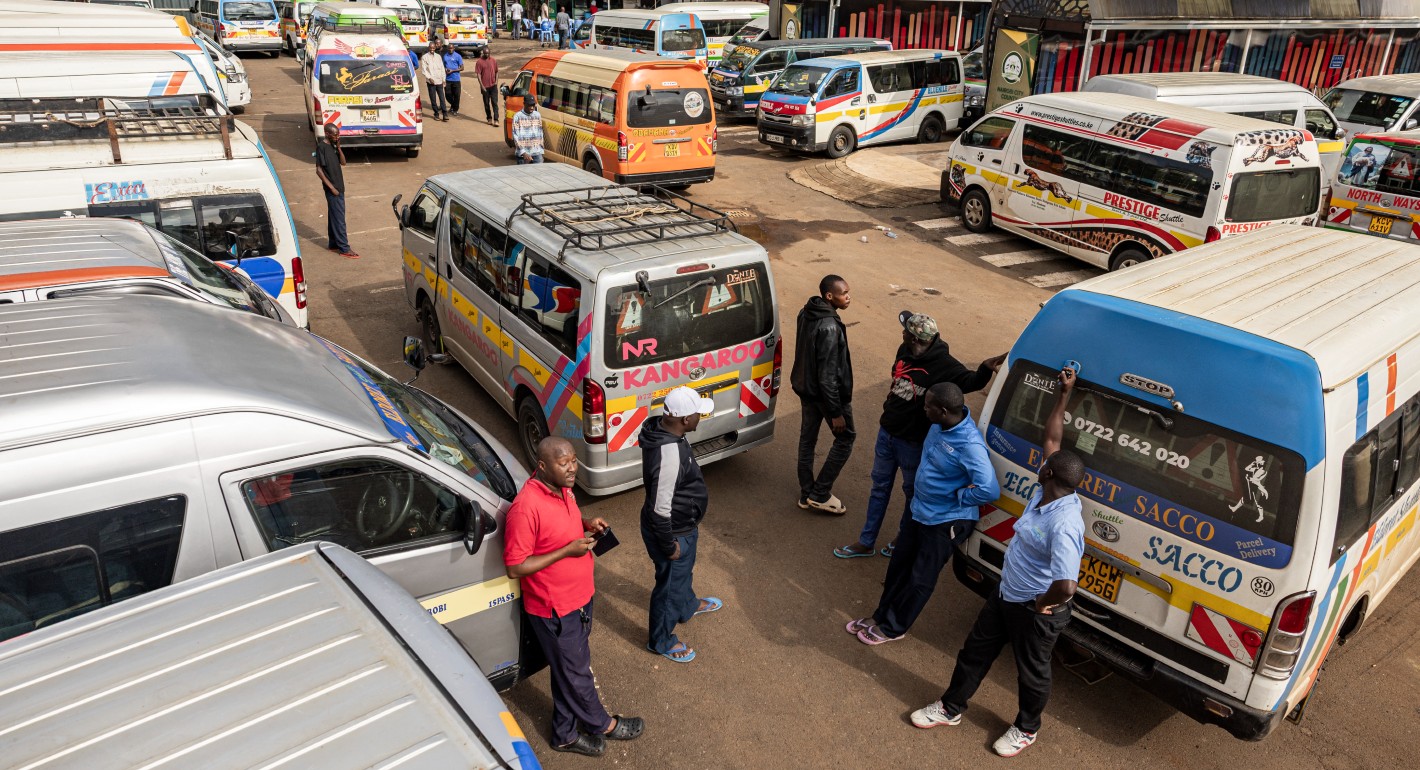
The conflict has sent economic and political shock waves through a country with no representation at the negotiating table—and Kenya is not alone.
Georgia Schaefer-Brown, Jane Munga
Saied’s main accomplishment has been to destroy a decade’s worth of democratic progress.

Sarah Yerkes

In Colombia and elsewhere in the region, the United States is trying to shape election outcomes—but at what cost?
Oliver Stuenkel, Adrian Feinberg