

Research
- +5
Herbert Crowther, Darcie Draudt-Véjares, Walter James, …
{
  "authors": [
    "Darcie Draudt-Véjares"
  ],
  "type": "commentary",
  "blog": "Emissary",
  "centerAffiliationAll": "dc",
  "centers": [
    "Carnegie Endowment for International Peace"
  ],
  "collections": [
    "Korea: Emerging Player",
    "Dynamic Governance Risks in Asia"
  ],
  "englishNewsletterAll": "asia",
  "nonEnglishNewsletterAll": "",
  "primaryCenter": "Carnegie Endowment for International Peace",
  "programAffiliation": "AP",
  "programs": [
    "Asia"
  ],
  "regions": [
    "South Korea"
  ],
  "topics": [
    "Democracy",
    "Domestic Politics"
  ]
}
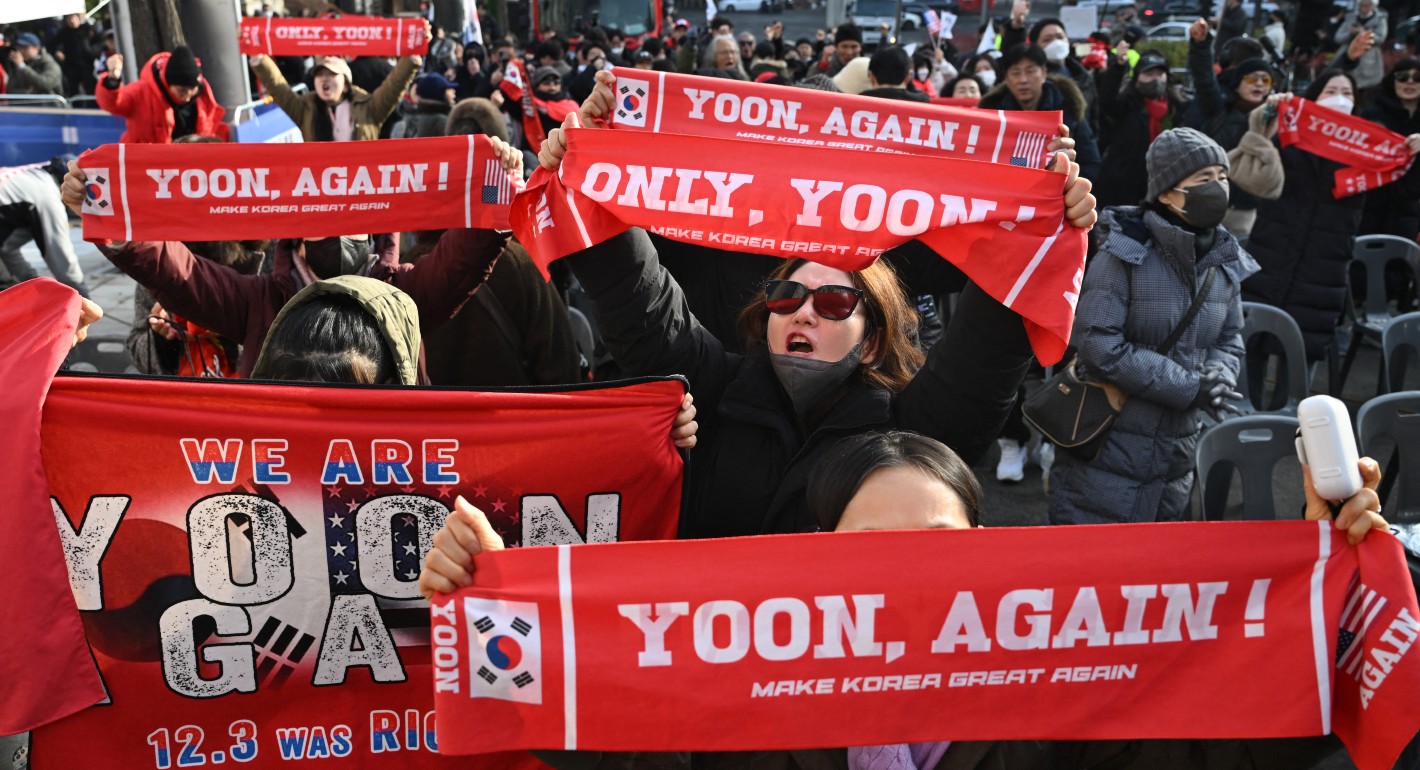
Yoon supporters demonstrate in front of the Seoul Central District Court in Seoul on January 16, 2026. (Photo by Jung Yeon-je/AFP via Getty Images)
Lessons from Korea’s political right.
On Thursday, February 19, the impeached former South Korean president Yoon Suk-yeol will receive a decision from the Seoul Central District Court for his most serious charge of insurrection. For many Koreans, Yoon’s sentencing will turn the page on a frustrating year of the country’s notoriously scandal-ridden but resilient democratic history.
Yoon has left an indelible mark on the trajectory of conservative politics in Korea. Most recently, in late January, South Korea’s main conservative party, the People’s Power Party (PPP), expelled party chief Han Dong-hoon after his family made derogatory statements about Yoon. The expulsion was undoubtedly significant, but the more notable takeaway is what it says about the current state of conservative dynamics in Korea.
Over the past year, the PPP has suffered impeachment, electoral defeat, and visible institutional decay. The party has been subsumed by vicious infighting and an unresolved contest over what—and who—is legitimate and representative of the conservative base and the national interest.
Yet the broader conservative movement has persisted, with the far-right movement pushing to reshape the public voice of conservatism. Yoon has become a symbolic rallying point for far-right forces, but—already serving jail time—he himself cannot take part in reconstruction of the party or leadership renewal. The result is sustained conservative ideological energy coupled without effective party mediation—a condition that could reshape Korean politics and offer lessons for other countries facing similar movements.
Intraparty fighting and personality-driven politics are hardly new in South Korea. Korea’s parties are notoriously weakly institutionalized. Across the four decades of South Korea’s democratic history, parties have repeatedly dissolved, rebranded, and reorganized around new charismatic leaders after electoral defeat—often changing names while preserving core personnel, electoral bases, and policy priorities.
Reconstitution, rather than fragmentation, has historically been the dominant response to crisis in Korean politics. But this began to change in 2017, following the impeachment of President Park Geun-hye in connection with a political scandal. After Park’s ouster, the conservative camp retained the party label rather than rebranding itself—potentially leaving it in the leadership crisis it faces today. Speaking to the risks of this strategy, then–Daegu mayor and longtime conservative Hong Joon-pyo captured frustration with this decision, arguing on social media that “a sick forest must be burned down and replanted with healthy trees.”
Then, in December 2024, Yoon’s short-lived martial law declaration and subsequent impeachment—as well as the election that followed—fully exposed that underlying vulnerability.
The PPP entered the campaign divided by leadership struggles, procedural disputes, and an inability to distance itself from Yoon’s premature end to his presidency. But rather than consolidating around a credible alternative to now-President Lee Jae-myung, the party projected dysfunction and indecision to many voters.
What is remarkable, then, is how the conservative movement rebounded and transformed since Yoon’s attempted autogolpe. Prior to his martial-law declaration, Yoon’s public support had plummeted to a crippling low—below 20 percent—and even conservatives rated him in the thirtieth percentile.
Now, even as he awaits his sentencing for insurrection charges (he already received a five-year sentence on charges of abuse of power), Yoon has become a symbolic figurehead for the conservative movement tacking further to the right. He represents not simply a wronged conservative party seeking redress for elections it claims were stolen, but for a broader anti-progressive movement that casts the current president as a communist threat and Yoon as the defender of anti-communism. Notably, this symbolism has not translated into a widely accepted, credible, or operational leader for the broader conservative camp, but it has expanded the weakened party’s reach.
In the months since his impeachment, far-right mobilization—both online and offline—has emerged nationwide. The far-right movement—previously the bastion of disaffected young men and elderly citizens—has expanded, with direct references to the U.S. Make America Great Again (MAGA) movement and a new young female conservative cohort. Now, far-right grassroots and online mobilization around Yoon are the loudest and most visible conservative voices in the PPP.
Two dynamics underpin conservative politics despite party weakness: the rising influence of social networks and the growing distrust of the progressive camp. Together, they have reinforced negative partisanship—political attachment driven primarily by opposition to the other side—as the dominant rally point.
First, social networks. For much of South Korea’s democratic history, parties coordinated and mobilized social institutions as part of an elite-driven electoral machine and deep-seated regional strongholds. Churches, online media ecosystems, and activist networks increasingly operate as autonomous centers of conservative authority, supplying energy, legitimacy, and organizational capacity that parties no longer reliably provide.
This shift has become especially visible in the post-impeachment period. With Lee’s party controlling both the executive and legislature, conservatives have been mobilizing through YouTube and coordinating through messaging services such as the home-grown app KakaoTalk rather than through party headquarters. Yoon himself was suspected to have taken cues from far-right YouTube channels in developing his election fraud theories.
These far-right voices have not been without their critics in the party. Han, the ousted PPP leader, recently lamented the dominance of social media influencers on party politics: “The reasonable majority remains silent and inactive, extremist forces gain dominance, becoming the central power that regresses society.” He added that “the active majority must become the central force.” This is particularly striking since Han had sought to prevent Yoon’s impeachment, arguing that it would present “unprepared chaos” to citizens.
Post-impeachment protests and rallies reflect South Korea’s longstanding mass protest culture across the political spectrum, but the institutional direction of influence has shifted: rather than coordinating these networks, the PPP leadership now draws momentum and credibility from them. Longtime conservative journalist and commentator Cho Gap-je, associated with the traditional anti-communist and national security–focused wing of South Korean conservatism, criticized the PPP for failing to distance itself from the far-right “Yoon Again” faction. In an interview on SBS, one of South Korea’s major national broadcasters, he went so far as to liken the movement to a parasitic worm that had taken over the party’s body.
A second force binding conservative politics together is the persistence of distrust toward the progressive camp—on a moral basis, rather than a policy one. Korea is extremely polarized, with political competition often framed in existential terms. (According to Pew Research, South Koreans’ feelings of polarization are on par with Americans as the most polarized country in the world.) Progressives in Korea are often portrayed as threats to the political community rather than as legitimate rivals.
This framing draws force from South Korea’s unresolved Cold War context. Although active conflict ended in 1953, the country remains formally at war with North Korea, and anticommunism continues to function less as a policy position than as a boundary of political legitimacy—shaping judgments about who can be trusted to govern. Over the past year, this boundary has been reinforced across conservative social media and protest rhetoric.
When he was still in office, Yoon lambasted his critics as “communist totalitarian and anti-state forces.” Since his impeachment, his supporters continue to depict Lee and the progressives as illegitimately elected, pro–North Korea, or fundamentally dangerous to the nation, spreading their message on massively subscribed YouTube channels as well as at rallies and marches across the country. Corruption investigations, impeachment proceedings, and court rulings are similarly cast as political persecution rather than routine democratic accountability.
Together, these dynamics have reshaped how Korean conservative politics function, defined more by what it opposes than what it supports. This negative partisanship strengthens the separation between voters and party organizations and leaders. As the party institution lacks or loses capacity to organize, discipline, and represent the vocal and mobilized social networks, conservative alignment has become more strongly reproduced through institutions outside the party itself.
These social institutions do more than circulate political messages. They also socialize participants and amplify certain voices into a new partisan orientation—allowing conservative politics to endure even without a coherent party center.
What is striking about the post-Yoon impeachment period of Korean conservative dynamics is not the weakness of the PPP itself, but its departure from the earlier blueprint of reorganizing around a new charismatic leader. The party missed its usual window for reinvention following Yoon’s impeachment, leaving it suspended in limbo between organizational continuity, political legitimacy, and collapse. Some political commentators in Korea have suggested that the PPP’s failure to distance itself from Yoon led to its loss in the 2025 election.
Instead of distancing itself from a discredited leader, PPP National Assembly members rallied behind Yoon and sought to block impeachment. This form of party discipline appears to reflect not organizational strength, but fear that abandoning Yoon would be interpreted within conservative social networks as a moral betrayal of the broader conservative cause.
In theory, conservative politics still could fragment along issue-specific lines. Alternatively, charismatic figures emerging from churches, media platforms, or activist networks could try to become new figureheads and reshape party politics. In practice, however, these pathways have so far failed to generate a credible, broadly accepted leader capable of translating movement energy into institutional renewal.
The social dynamics of conservativism—reinforced by far-right rhetoric amplified through YouTubers and other social media influencers—are preventing the emergence of a reformist or centrist conservative alternative. Although third parties exist in the legislature, South Korea’s effective two-party structure—and the dominance of negative identity politics—limits space for other conservative alternative parties to develop.
Although expelled PPP members are increasingly speaking out and taking action against what they describe as the pro-Yoon camp’s “purge” of the party, the current trajectory suggests a remaking of conservative party politics in a more populist, movement-linked image—one in which mobilization remains strong but organizational authority remains weak. With the next general election not until 2028, conservative actors have time to rebuild organizational capacity, recruit candidates, and attempt reputational rehabilitation, but the hurdles to do so are substantial. A critical variable to watch will be whether conservative elites rely on familiar PPP figures, elevate a younger generation of politicians already inside government, or expand recruitment from outside traditional party pathways.
More broadly, the core risk is not that South Korea’s conservatives have been formally captured by the far right, but that conservative politics is being pulled rightward in the absence of a governing center—leaving mobilization without mediation, visibility without leadership, and opposition without a credible institutional vehicle.
This dynamic may hold broader lessons beyond South Korea. For U.S. observers, Korea’s trajectory raises questions about what happens to leadership, legitimacy, and institutional authority when a party—even one far more organizationally robust than Korean parties, such as the U.S. Republicans—enters a post-charismatic phase after a leader who has profoundly reshaped its platform and identity. The South Korean experience highlights how the loss of a governing center can allow some voices to dominate while leaving parties ill-equipped to translate mobilization into political action.

Fellow, Asia Program
Darcie Draudt-Véjares is a fellow for Korea studies in the Asia Program at the Carnegie Endowment for International Peace. Her research focuses on South Korean political economy, governance, and foreign policy, particularly the intersection of economics, technology, and geopolitics.
Recent Work

Herbert Crowther, Darcie Draudt-Véjares, Walter James, …
Darcie Draudt-Véjares
Carnegie does not take institutional positions on public policy issues; the views represented herein are those of the author(s) and do not necessarily reflect the views of Carnegie, its staff, or its trustees.

Despite public disputes over trade and immigration, the strategic partnership’s foundations remain sturdy.

Sameer Lalwani
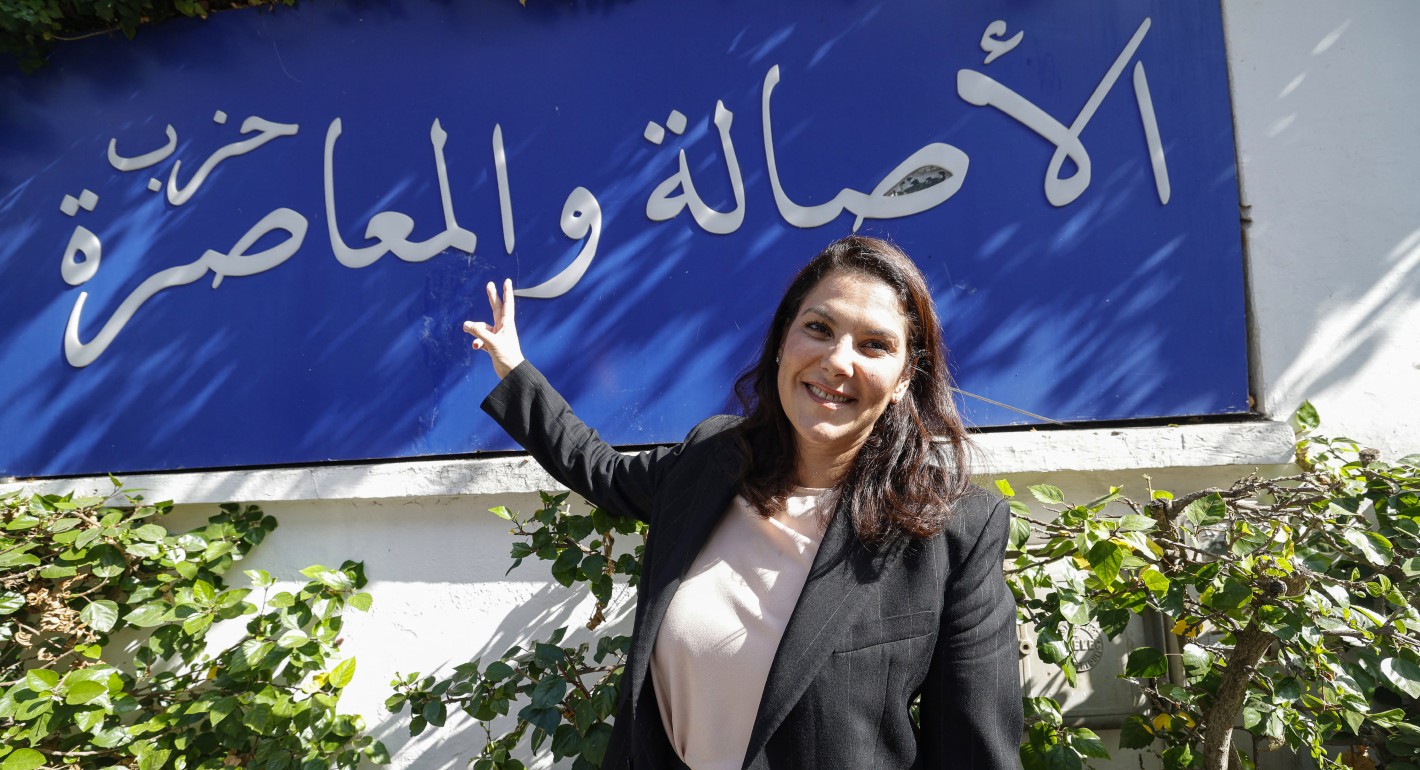
Fatima El Mansouri is the country’s first female prime minister. She’s also a privileged insider in a largely ceremonial position.

Sarah Yerkes
Why governance of rapidly evolving technology will be distributed and complex.


Stewart Patrick, Scott Singer
Washington’s decision to support some UN functions while letting others wither is pulling the organization apart at the seams.
Stewart Patrick, Theodore Zaritsky

The books, podcasts, and films that explain the world it made.

Andrew Leber