

Commentary
Oliver Stuenkel, Adrian Feinberg
{
  "authors": [
    "Oliver Stuenkel"
  ],
  "type": "commentary",
  "blog": "Emissary",
  "centerAffiliationAll": "",
  "centers": [
    "Carnegie Endowment for International Peace"
  ],
  "englishNewsletterAll": "",
  "nonEnglishNewsletterAll": "",
  "primaryCenter": "Carnegie Endowment for International Peace",
  "programAffiliation": "",
  "programs": [],
  "projects": [],
  "regions": [
    "Mexico"
  ],
  "topics": [
    "Democracy",
    "Climate Change"
  ]
}
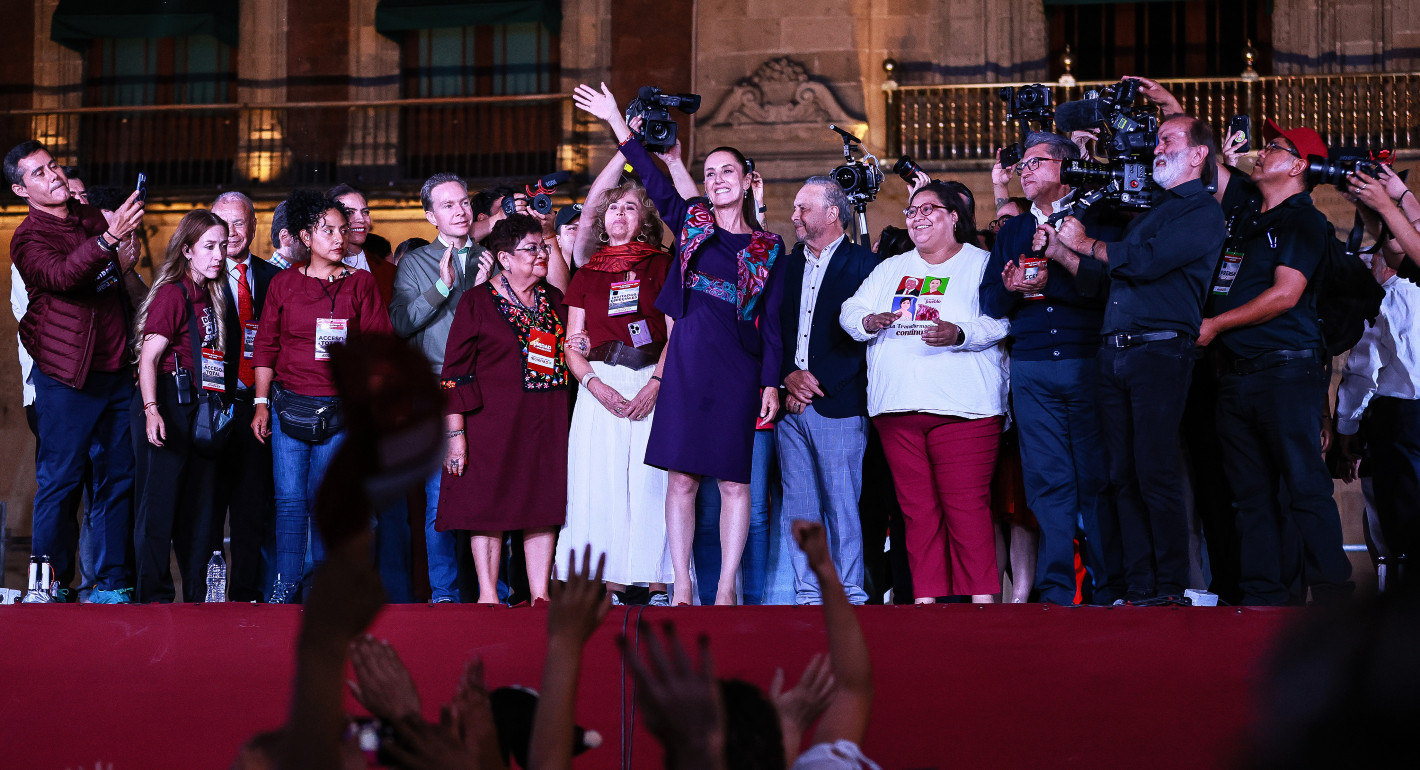
Claudia Sheinbaum waves to the crowd in Mexico City on Sunday. (Photo by Manuel Velasquez/Getty Images)
The president-elect will inherit profound challenges, including cartel violence and climate change adaptation.
As expected, Claudia Sheinbaum decisively won Mexico’s presidential single-round election on Sunday and will take office on October 1. Sheinbaum—a center-left former head of government of Mexico City and protégée of outgoing president Andrés Manuel López Obrador, known as AMLO—obtained 59 percent of the vote. That share is more than twice as much as runner-up Xóchitl Gálvez, a conservative entrepreneur, and is the highest vote percentage in the nation’s democratic history. Morena, the president-elect’s party, will hold majorities in both houses of Congress.
Sheinbaum was boosted by AMLO’s charisma and capacity to set the public debate agenda, as well as his successes in reducing poverty and unemployment during his term. However, Sheinbaum will inherit profound challenges when it comes to corruption, violence, economic growth, and adapting to climate change.
Five major questions stand out as the environmental scientist, first woman, and first Jewish person to lead Mexico takes power.
Invalid video URL
The first is whether Sheinbaum will continue the steady erosion of democracy that her predecessor and mentor, AMLO, has overseen during his six years in office. This erosion includes the weakening of independent regulators such as the electoral authority. Given her party’s large congressional majorities, she may seek to implement reforms that weaken checks and balances and cement her party’s hold on power. Morena and its allied parties already govern twenty-four of Mexico’s thirty-two states.
The second key issue will be whether Sheinbaum can do more than her predecessor to harness Mexico’s unique opportunity over escalating U.S.-China tensions. U.S. companies are engaged in nearshoring to reduce some of their exposure to China, and the Mexican economy stands to benefit as both trade and political ties between Washington and Beijing are becoming less predictable. AMLO has earned criticism from investors for the ballooning budget deficit—the largest since the 1980s—and a number of controversial infrastructure projects.
Third, analysts wonder whether AMLO, the Morena founder who has single-handedly transformed Mexico’s political landscape, will leave politics altogether or whether he will seek to influence Sheinbaum—as often happens in Latin America. Whether Sheinbaum can retain the remarkably high approval ratings of AMLO, whose charisma assured a large number of diehard followers, is also unknown.
The fourth question is whether Sheinbaum will play a more visible role on the global stage. AMLO hardly traveled abroad, and he pursued an unambitious and lackluster foreign policy limited to Mexico’s core issues, such as migration and trade with the United States. But Mexico is both a member of the G20 and a crucial voice on matters such as migration, the environment, and women’s rights. During her campaign, Sheinbaum defended measures to combat gender violence and highlighted the need to fight climate change, making her well-positioned to take a more active stance.
Fifth, and perhaps most importantly, is whether Sheinbaum will be capable of addressing cartel violence and the country’s extremely high murder rate. Approximately 170,000 people have been killed since AMLO took office in 2018, and the cartel-driven violence is the single biggest challenge facing Latin America’s second-most-populous country. Given that the violence is a structural issue caused by factors such as inequality, poverty, the U.S. demand for illegal drugs, corruption among security forces, and increasingly powerful transnational crime, the probability of meaningful success is unfortunately low.
Understand the world with the latest from our scholars around the world.
Senior Fellow, Democracy, Conflict, and Governance Program
Oliver Stuenkel is an associate professor at the School of International Relations at Fundação Getulio Vargas (FGV) in São Paulo, Brazil. He is also a senior fellow affiliated with the Democracy, Conflict, and Governance Program at the Carnegie Endowment for International Peace.
Recent Work
Oliver Stuenkel, Adrian Feinberg
Oliver Stuenkel, Adrian Feinberg
Carnegie does not take institutional positions on public policy issues; the views represented herein are those of the author(s) and do not necessarily reflect the views of Carnegie, its staff, or its trustees.

Despite its flop at the box office, the film raises important questions for the climate community to answer.
Leonardo Martinez-Diaz
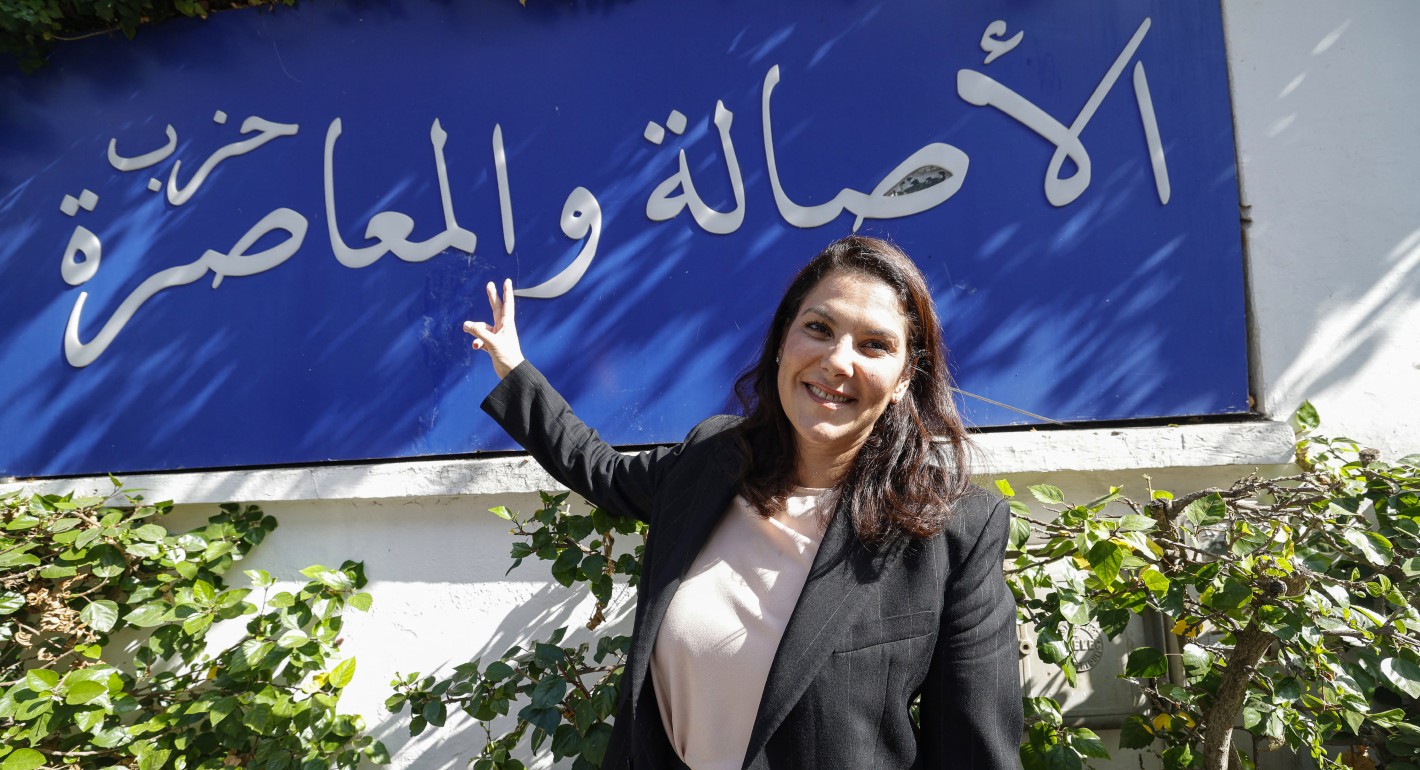
Fatima El Mansouri is the country’s first female prime minister. She’s also a privileged insider in a largely ceremonial position.

Sarah Yerkes
They face an uphill climb, but they could draw on a strategy that other diplomats have used in the past.


Shana Tabak, Alejandro Martin Rodriguez

By focusing only on hard security, the Shield ignores the conditions that fuel cartel power.
Alejandro Martin Rodriguez, Kayly Ober
Saied’s main accomplishment has been to destroy a decade’s worth of democratic progress.
Sarah Yerkes