

Paper
- +1
Nur Arafeh, Ishac Diwan, Hamza Meddeb, …
{
  "authors": [
    "Marwan Muasher"
  ],
  "type": "commentary",
  "blog": "Emissary",
  "centerAffiliationAll": "dc",
  "centers": [
    "Carnegie Endowment for International Peace"
  ],
  "englishNewsletterAll": "menaTransitions",
  "nonEnglishNewsletterAll": "",
  "primaryCenter": "Carnegie Endowment for International Peace",
  "programAffiliation": "MEP",
  "programs": [
    "Middle East"
  ],
  "projects": [],
  "regions": [
    "Palestine"
  ],
  "topics": [
    "Foreign Policy",
    "Democracy"
  ]
}
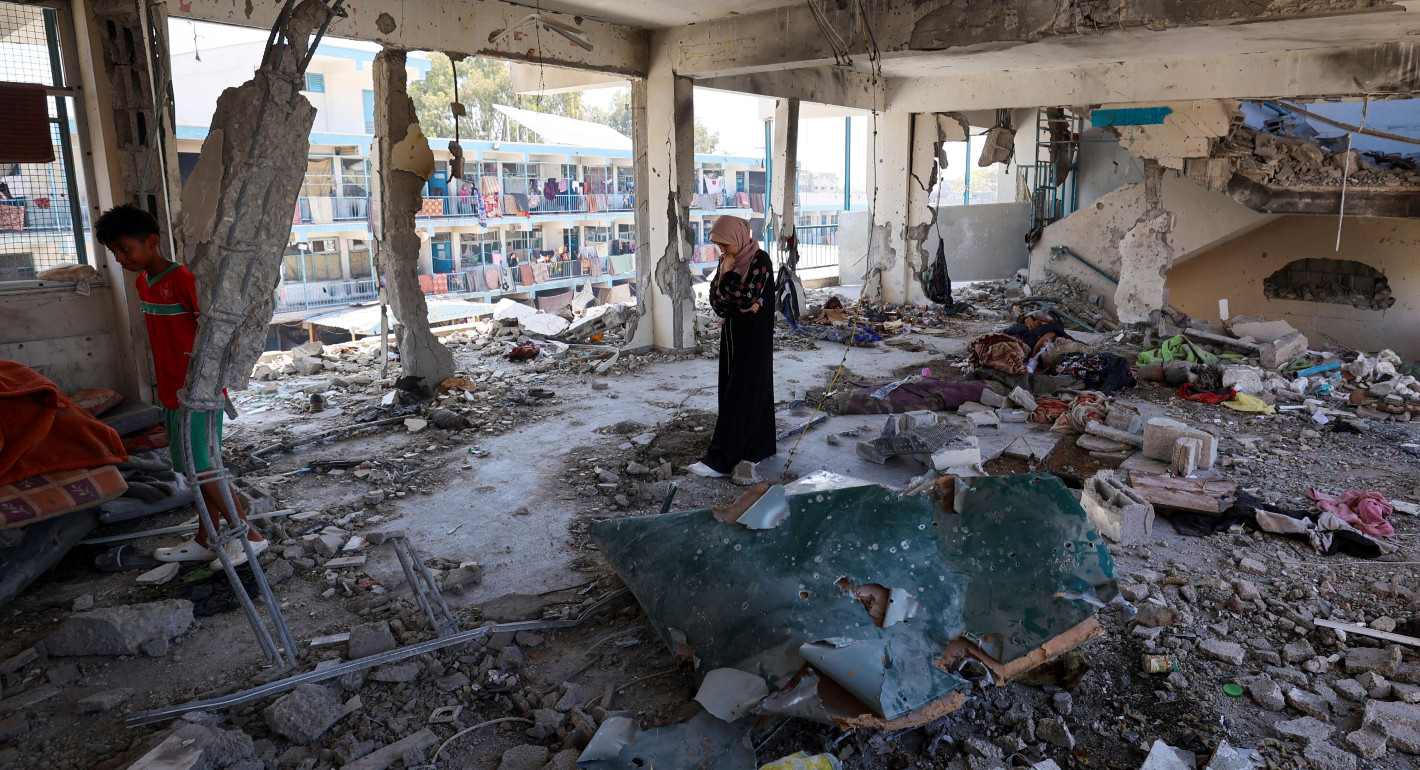
A woman stands in a former UNRWA classroom in June. (Photo by Eyad Baba/AFP via Getty Images)
In December 2000, then U.S. president Bill Clinton introduced his “parameters” to solve the Palestinian-Israeli conflict to Palestinian and Israeli delegates at the White House. Ever since, the international community has accepted a two-state solution—a Palestinian state on the basis of the 1967 borders, in addition to an Israeli state, as the logical way to solve this enduring conflict.
But negotiations to reach that outcome have been elusive. The two-state solution depends on Israel ending its occupation of Palestinian territories, yet it continues to build settlements. Since 2000, the Israeli position has evolved from nominal acceptance of the two-state solution while working to sabotage it, to outright opposition to it. Israeli Prime Minister Benjamin Netanyahu recently stated that a two-state solution is a “reward for terrorism.”
By continuing to support a two-state solution while doing nothing in the past ten years to affect its implementation, the international community has essentially given Israel veto power over this path.
That is why recognition of a Palestinian state is essential. Out of 193 UN member states, 144 have done so—including most recently Ireland, Norway, and Spain. This recognition sends a strong message of support for a two-state outcome and sets an international legal marker that stands against Israel’s attempts to kill the solution and maintain the occupation indefinitely.
In the video below, Carnegie Vice President for Studies Marwan Muasher explains why increased recognition of a Palestinian state reaffirms the international community’s commitment to the two-state solution and lays a foundation for a credible political horizon that deals with the root causes of the problem: occupation.
Invalid video URL
More videos on Palestine:

Vice President for Studies
Marwan Muasher is vice president for studies at Carnegie, where he oversees research in Washington and Beirut on the Middle East. Muasher served as foreign minister (2002–2004) and deputy prime minister (2004–2005) of Jordan, and his career has spanned the areas of diplomacy, development, civil society, and communications.
Recent Work
Nur Arafeh, Ishac Diwan, Hamza Meddeb, …


Nathan J. Brown, Alper Coşkun, Amr Hamzawy, …
Carnegie does not take institutional positions on public policy issues; the views represented herein are those of the author(s) and do not necessarily reflect the views of Carnegie, its staff, or its trustees.

In an increasingly competitive landscape, Seoul should expand its current partnership with Washington and deepen ties with Brussels and New Delhi.

Darcie Draudt-Véjares, Milo McBride

Even if the administration maintains its broader trade policy, it should use tariffs more strategically and work with U.S. partners, not against them.
Barbara Weisel
Democrats now have the gavel and the purse, but the executive branch still pulls the levers on the U.S. role in the world.


James M. Acton, Dan Baer, Mark Baldassare, …
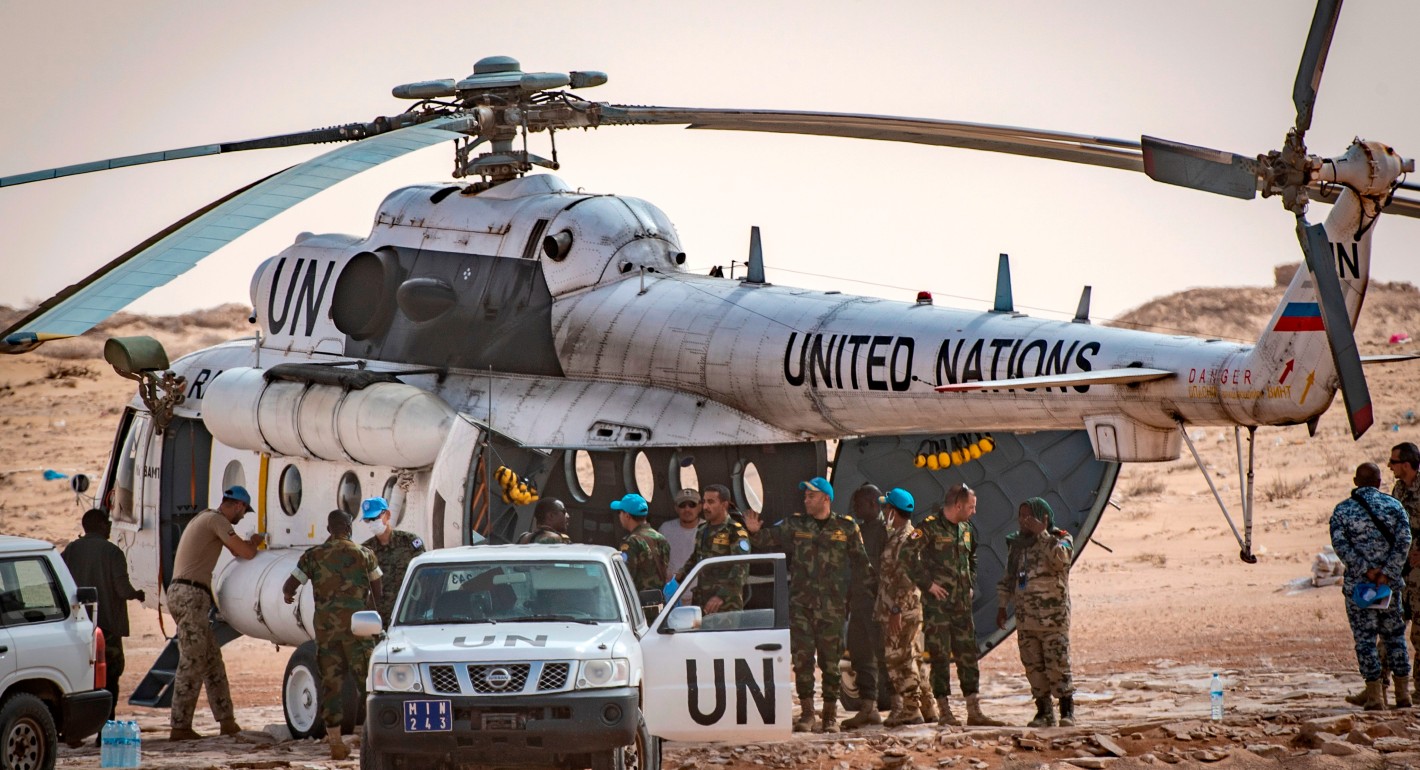
MINURSO’s renewal by the Security Council became highly politicized. Its expiration brings concerns about renewed violence and the future of demining efforts.

Sarah Yerkes

As the United States exits UN climate efforts, these smaller and less formal groupings will take on greater significance in global climate governance.
Theodore Zaritsky, Stewart Patrick