

Q&A
- +1
Sophia Besch, Steve Feldstein, Stewart Patrick, …
{
  "authors": [
    "Sophia Besch"
  ],
  "type": "commentary",
  "blog": "Emissary",
  "centerAffiliationAll": "dc",
  "centers": [
    "Carnegie Endowment for International Peace"
  ],
  "collections": [
    "European Politics",
    "Transatlantic Cooperation"
  ],
  "englishNewsletterAll": "ctw",
  "nonEnglishNewsletterAll": "",
  "primaryCenter": "Carnegie Endowment for International Peace",
  "programAffiliation": "EP",
  "programs": [
    "Europe"
  ],
  "projects": [],
  "regions": [
    "United States",
    "Europe"
  ],
  "topics": [
    "Security",
    "EU Foreign Policy",
    "Foreign Policy",
    "Military",
    "EU"
  ]
}
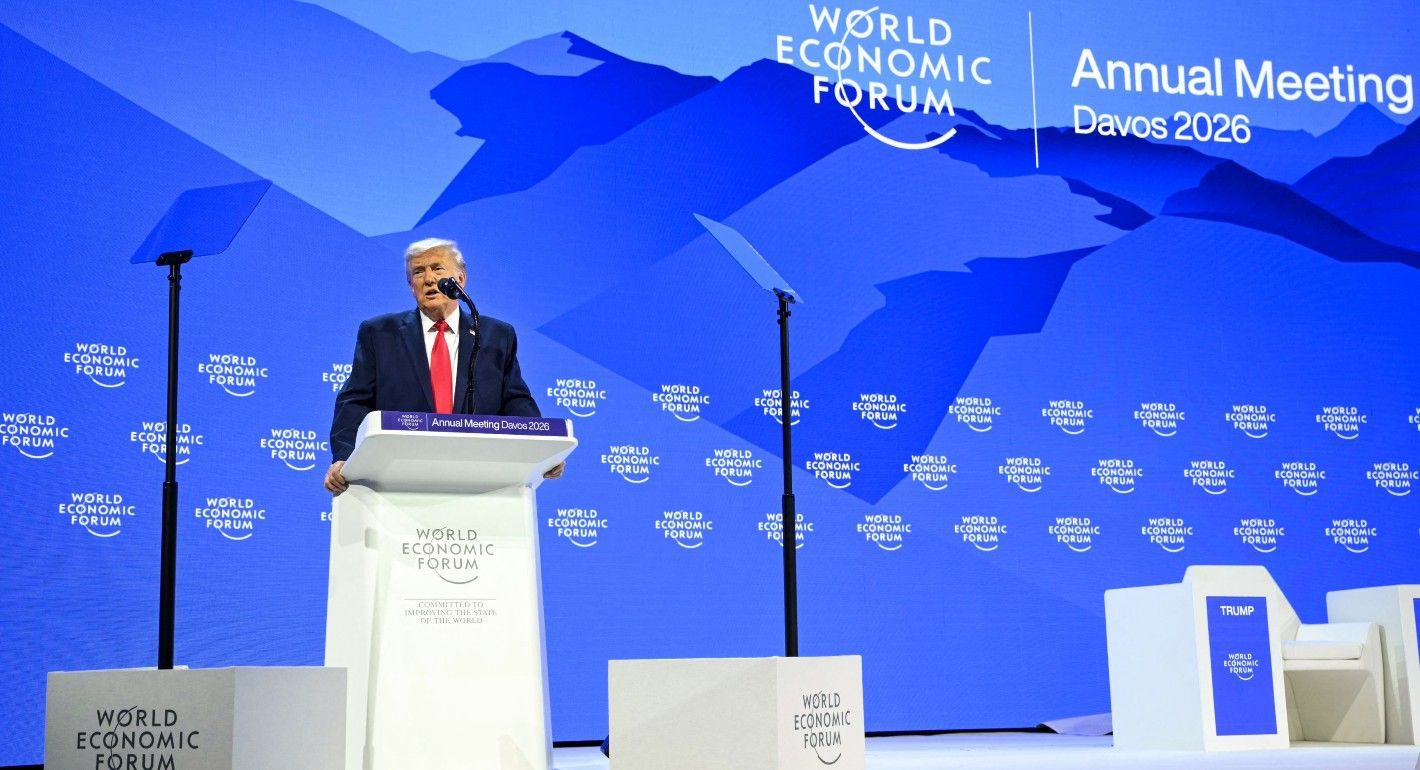
Trump speaks at the World Economic Forum in Davos on January 21, 2026. (Photo by Mandel Ngan/AFP via Getty Images)
They cannot return to the comforts of asymmetric reliance, dressed up as partnership.
President Donald Trump has stepped back from his most explicit threats over Greenland. At Davos on Wednesday, he ruled out military action and dropped plans for tariffs against European allies. That retreat should not be mistaken for closure. The president has not abandoned his determination to acquire Greenland. He has merely adjusted his tactics.
The episode matters because it crossed a line that cannot be uncrossed: The most powerful member of NATO openly challenged the territorial integrity, sovereignty and political agency of another. Even without force or sanctions, that breach weakens the alliance in a lasting way. The easing of immediate pressure does not close the matter. It sharpens the question of what Europe learns, and whether it is willing to act on it.
From the moment Trump revived his long-standing interest in Greenland early in his second term, a loose coalition of advisers, officials, and business figures set about presenting the idea as strategic realism rather than imperial whim. The United States, they argued, had compelling reasons to want the world’s largest island more firmly under its control. There was the economic promise: Greenland is rich in critical minerals, including rare earths essential for clean energy, defense production, and advanced manufacturing. It sits astride emerging Arctic Sea routes. Some American advocates spoke of new subsea data cables and energy-hungry data centers powered by Arctic renewables.
The reality turned out to be far less enticing. Greenland has almost no industrial infrastructure. Exploiting its resources at scale would require decades of investment in roads, ports, power generation, and airfields, all at immense cost. More importantly, neither Denmark nor Greenland has ever closed the door to foreign investment or cooperation. On the contrary, both have signaled openness to licensing, joint ventures, and regulatory coordination, making annexation economically unnecessary. That may explain why the economic argument has quietly receded from official American rhetoric.
The security rationale has endured longer. Initially it was diffuse, invoking China’s self-declared status as a “near-Arctic state” and Russia’s expanding military footprint in the High North, ignoring the fact that the real China threat in the Arctic today is not in Greenland, but in Alaska. Over time, this argument hardened into a more coherent narrative: The United States must act pre-emptively to prevent China from establishing a lasting foothold in Greenland ten years from now, which could threaten American hemispheric interests.
Europeans have, over the course of the past year, engaged with this argument on its merits.
Within NATO, allies have worked to sharpen the alliance’s Arctic focus. Finland’s and Sweden’s accession has transformed the strategic map of the High North, while allied planners have stepped up exercises, contingency planning, and coordination around Arctic and North Atlantic security, including the protection of sea lines of communication and undersea infrastructure. Against this backdrop, officials have floated the idea of an “Arctic Sentry” mission, modeled loosely on NATO’s air and maritime policing operations, as a way to provide surveillance and presence without permanent basing. The discussion reflects a broader shift: Arctic security has moved from a peripheral concern to a standing item in NATO’s threat assessments, broadly in line with longstanding American priorities. Denmark, for its part, has acknowledged post–Cold War complacency, raised defense spending to 3.5 percent of GDP, and invested $13.7 billion in Arctic security in the past year alone. A sizeable portion of that money is flowing to American defense firms. Greenland itself is tightening foreign-investment screening and putting as much distance as it can between its economy and China.
Anticipating U.S. pushback that neither Denmark nor NATO could be trusted to secure American interests in the Arctic, Copenhagen and Nuuk made clear that Washington was welcome to expand its military presence on the island. After the end of World War II, America operated seventeen facilities there; today it has one. A 1951 defense treaty already grants Washington broad access. If the Greenland dispute were truly about Arctic security, all this should have eased tensions. Instead, it did the opposite.
European troop deployments—framed as a contribution to Arctic security and coordinated with the U.S. military, but at the same time clearly sending a subtle message to Washington—were recast by Trump as provocations. Tariff threats followed. The pattern suggests that the problem is not insufficient reassurance, but the absence of a negotiable policy demand.
At this point, the simpler explanation fits better. The president wants Greenland not because it solves a defined security problem, but because it satisfies a personal impulse: territory as legacy, sovereignty as real estate.
“Psychologically,” claimed Trump at Davos, to defend Greenland, the United States needed to own it. Acquiring Greenland would place him in a line of American presidents who expanded the nation’s map. That ambition collides directly with the only red lines Denmark, Greenland, and Europe have drawn: territorial integrity and self-determination.
Greenlanders have been unequivocal. Polls show overwhelming opposition to annexation. The largest demonstrations in the island’s history have taken place, echoed by protests in Copenhagen. Yet the White House showed little interest in de-escalation, compromise, or procedural off-ramps. Offers of cooperation have been ignored. Concessions were met with escalation.
Transatlantic relations have endured severe strains before. NATO allies have clashed over Türkiye’s invasion of Cyprus, there have been repeated confrontations between Türkiye and Greece in the Aegean, and the Cod Wars between Britain and Iceland. But this episode is different in kind.
For the first time, the alliance’s leading power is openly questioning the territorial integrity of another member state. Even if military action remains unlikely, the implications are corrosive. An alliance built on collective defense cannot function normally if its most powerful member and designated primary security guarantor treats borders as bargaining chips.
Over the course of the past week, European officials began to say so, using unprecedented language once reserved for adversaries, not allies. That alone is a measure of how far the relationship has deteriorated.
U.S. Democrats have urged Europeans to “stand up” to Trump, perhaps seeking an outlet for their own sense of powerlessness and frustration and insisting that things could not possibly get worse than they already were. They could, of course.
Economic conflict with the United States would be exceedingly painful for Europe. Tariffs would disrupt supply chains, raise prices, and slow growth. And tariffs sit at the lower end of America’s escalation ladder. Washington’s real advantage lies in its ability to extend economic pressure into finance, technology, and the dollar-centered financial system—areas where Europe is more vulnerable and has fewer credible countermeasures.
But Europe’s greatest vulnerability is not economic, but strategic. Its security and defense still depend heavily on American assets.
Over the past year, European governments have invested immense diplomatic effort, huge financial resources, and no small measure of pride and dignity in preventing transatlantic escalation. Across the five years Trump has been president, the United States has not withdrawn from the alliance or dismantled its European force posture.
A week in which Europeans considered ending their strategy of endless appeasement raises an uncomfortable question: Is America’s continued presence in NATO the result of European diplomacy, or did the U.S. force posture in Europe barely waver because the president and U.S. institutions themselves have little appetite for withdrawal?
Trump’s performance at Davos strongly suggests that the latter is true. NATO offers Trump leverage, visibility, and ready-made stages for performance. He feels ownership and pride of the United States’ role in the alliance. Congress has drawn firm red lines around membership, and even skeptics within the administration recognize that walking away from NATO would carry high domestic political costs.
The president called Greenland a “piece of ice, cold and poorly located,” blatantly dismissing the concerns and agency of its inhabitants. He suggested that he was owed the island for his contributions to NATO. At the same time, he appeared confused that Europeans went from “calling me daddy, the last time” to now thinking he was a “terrible human being.” This confusion, too, is the result of a year’s worth of unbased flattery.
Trump’s record offers mixed lessons. He is unpredictable. He sometimes doubles down. But he is also sensitive to cost—especially when it shows up in markets, business sentiment, and Republican political prospects. Trump tends to squeeze those he perceives as weak and recalibrates when resistance becomes expensive.
Pushback does not guarantee success, but submission guarantees continued squeezing. So warned Canadian Prime Minister Mark Carney at Davos on Tuesday: “You cannot live within the lie of mutual benefit through integration, when integration becomes the source of your subordination.” Europe’s predicament over Greenland this last week fitted that description uncomfortably well.
It mattered that Trump initially chose to threaten Europeans with tariffs. Had he tied Greenland to Ukraine negotiations, hinted at immediate military withdrawal from Europe, or refused to take military action against the island off the table, the continent would have been on far shakier ground. Instead, he shifted the contest into a domain where Europe has leverage, then retreated when costs loomed.
The European Union remains the world’s largest trading bloc, with regulatory reach and market weight that few partners can ignore. Yet it has long hesitated to deploy that power against Washington. In this case, it did not need to act. The possibility of a transatlantic rupture was enough to influence markets and change the calculus in Washington.
That outcome should be read as a warning, not a comfort. Europe avoided escalation, but it did so without resolving the deeper problem: uncertainty about whether it would ever be willing to use its own instruments.
The most relevant of these instruments discussed this past week is the Anti-Coercion Instrument (ACI), adopted in 2023 and designed precisely to respond to attempts to extract political concessions through economic pressure. It might have allowed the EU to respond collectively, using qualified-majority voting, without the need for unanimity. But the European debate in recent days revealed familiar hesitations and divisions. Some leaders, including French President Emmanuel Macron, argued that the EU should activate the ACI to signal resolve, while others, such as Italian Prime Minister Giorgia Meloni, worried about escalation, illustrating how self-imposed restraint and disunity remains Europe’s main brake.
In fact, the political conditions for greater unity were stronger than often assumed. Even far-right European parties struggled to defend coercion against Greenland. The tariff threat also pushed Britain and the EU closer together, reinforcing shared interests on trade and sovereignty. The problem was not a lack of common ground, but reluctance to stand on it.
Europe’s leverage worked this time without being used. That will not always be the case. Deterrence depends on clarity as much as capacity. Talking up the ACI as a powerful deterrent while never deploying it risks draining its credibility. Unless European leaders agree among themselves the red lines that trigger collective tools, restraint will continue to look less like responsibility and more like vulnerability.
Even though this chapter in the confrontation over Greenland is moving toward a diplomatic climbdown, the damage will not be easily undone. Some NATO leaders, having gone through bouts of existential angst last spring only to emerge intact after the Hague summit, now speak with a kind of hardened realism. The transatlantic alliance, they say, may simply have to weather an unprecedented crisis every six months. That may be a workable rule of thumb for crisis management. It is a fragile basis for trust.
Denmark and Greenland have been explicit that the United States already enjoys everything it has ever asked for on the island. Existing treaties grant broad access, including the right to build new military facilities. A creative solution to the president’s demands may be to allow the United States to claim sovereignty only over certain patches of land to build military bases. But allowing a foreign power to position forces on one’s territory ultimately rests on trust in restraint.
That trust has been shaken irreparably. Even if tensions ease, the episode leaves a mark. An alliance can survive repeated shocks. But each one raises the threshold to restore confidence.
Europeans did not have to make a decision this week about retaliation. But they must use this episode to reflect on the fact that fragmentation carries its own costs. When Europe cannot speak clearly about its red lines, it invites testing. Pressure does not need to succeed to be repeated. It only needs to go unanswered.
Ultimately, the deeper lesson of Greenland and the many humiliations of the past year is that Europe’s vulnerability lies in its dependence on the United States. Economic tools can raise costs at the margin; they cannot substitute for power. European leaders face a more consequential task: building the foundations of autonomy that were allowed to erode. That means investing seriously in military capability, integrating defense planning and procurement, diversifying trade partners, and reducing exposure in critical economic domains, from energy and technology to finance and supply chains. There can be no return to the comforts of asymmetric reliance, dressed up as partnership.
Greenland should be treated as a precedent, not an aberration. The immediate threat has receded, but the underlying reality remains: Europe is dealing with an ally willing to test boundaries, probe weakness, and turn dependence into leverage. In response, Europe must pair greater unity and clarity about its red lines with sustained efforts to reduce the vulnerabilities that make coercion effective in the first place. That means building military capacity, strengthening industrial and economic resilience, and ensuring that restraint is a choice rather than a necessity. Without that shift, Europe will remain vulnerable not because it lacks capacity, but because it has not learned how to use it.
The latest from Carnegie scholars on the world’s most pressing challenges, delivered to your inbox.

Senior Fellow, Europe Program
Sophia Besch is a senior fellow in the Europe Program at the Carnegie Endowment for International Peace. Her research focuses on European foreign and defense policy.
Recent Work


Sophia Besch, Steve Feldstein, Stewart Patrick, …

Sophia Besch, Erik Brown, Rafaela Uzan
Carnegie does not take institutional positions on public policy issues; the views represented herein are those of the author(s) and do not necessarily reflect the views of Carnegie, its staff, or its trustees.
The United States ignores the region’s lived experience—and the tough political and social trade-offs the war has produced—at its peril.

Evan A. Feigenbaum
Neither the Abraham Accords nor the presence of large U.S. bases are enough to protect Arab Gulf states.

Marwan Muasher
A conflict launched in the name of American security is producing the opposite effect.

Sarah Yerkes
Restoring competence and trust to the anemic, neglected disaster recovery agency is a matter of national security.


Sarah Labowitz, Debbra Goh

Although the IAA often differs from the IRA, European policymakers can still take note of the U.S. act’s shortcomings.

Milo McBride