

Commentary
Judy Dempsey
{
  "authors": [
    "Judy Dempsey"
  ],
  "type": "legacyinthemedia",
  "centerAffiliationAll": "dc",
  "centers": [
    "Carnegie Endowment for International Peace",
    "Carnegie Europe"
  ],
  "collections": [
    "EU Integration and Enlargement"
  ],
  "englishNewsletterAll": "ctw",
  "nonEnglishNewsletterAll": "",
  "primaryCenter": "Carnegie Europe",
  "programAffiliation": "EP",
  "programs": [
    "Europe"
  ],
  "projects": [],
  "regions": [
    "Europe",
    "Western Europe",
    "Iran"
  ],
  "topics": [
    "EU",
    "Democracy"
  ]
}
Source: Getty
Poland’s politics matters to the EU, because of its size, the way the nation has managed its transition to democracy and, until recently, its outward-looking foreign policy.
Source: Washington Post
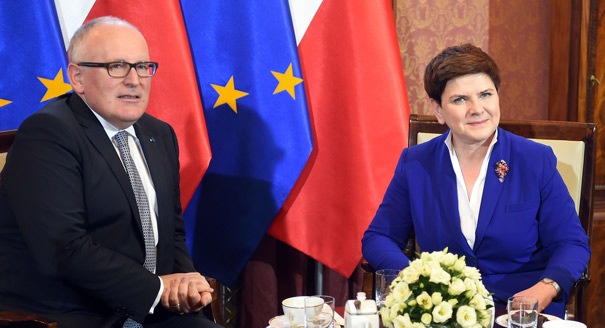
Frans Timmermans is no pushover, as the Polish government is beginning to find out.
The soft-spoken but plain-speaking first vice president of the European Commission — the E.U.’s executive branch — is responsible for ensuring that each member state abides by the rule of law. He takes it very seriously.
The so-called Rule of Law Framework was introduced in 2014. As Timmermans constantly reminds his audiences, the European Union is built on a common set of values, enshrined in the E.U. Treaty. “These values include respect for the rule of law. . . . Making sure the rule of law is preserved is a collective responsibility of the E.U. institutions and of all member states,” he said recently.
Were it as simple as that.
Defying Brussels, on Saturday, Polish President Andrzej Duda signed into law a controversial amendment, which, in the view of Timmermans, undermines the independence and transparency of the Constitutional Tribunal, Poland’s highest court.
Besides overturning decisions made by the previous center-right Civic Platform government, which appointed five judges to the Constitutional Tribunal just before it lost October’s parliamentary elections, the law provides that four of the 15 judges will be able to block the announcement of a new ruling by up to six months. That will greatly weaken the court’s ability to check government actions that violate constitutional norms.
Just days before Duda signed the law, Timmermans, a former Dutch foreign minister who has much experience with human rights and rule of law issues, had issued his second warning to Warsaw. He said the commission believed there was a systemic threat to the rule of law in Poland.
In jargon-free language, he went on to list a number of recommendations, from proposing that judges nominated by the previous Civic Platform government be allowed take up their positions on the tribunal to the court being allowed to publish and implement judgments. Warsaw has three months to respond.
But why is Jaroslaw Kaczynski , the leader of the Law and Justice party and the real power behind Prime Minister Beata Szydlo’s government, so intent on curbing the powers of the Constitutional Tribunal?
One reason is the politics of revenge.
Law and Justice justifies all the judicial and personnel changes by saying that it is only undoing what its predecessors, Civic Platform, did during its stint in power from 2007 through 2015. Indeed, Law and Justice had already tried to steer the country in a conservative, Euroskeptic direction between 2005 and 2007, trends that Civic Platform reversed.
Such polarizing politics has its roots in the Solidarity movement that brought the communist regime to its knees in 1989. Then, Solidarity and the communists agreed to hold roundtable talks to pave the way for a peaceful transition to democracy. Those talks exposed deep ideological divisions within Solidarity.
One wing was dominated by liberal, secular intellectuals who believed in inclusive politics during the transition period. Their “shock therapy” economic policies were aimed at modernizing Poland as quickly as possible so as to end the influence of the old communist nomenklatura.
The other wing, led by conservatives and hard-line anti-communists, wanted a clean break with the past. That meant no politics of inclusion. These two wings have since continued to compete for Poland’s past and future.
The second and related reason is Law and Justice’s goal to regain as much sovereignty as possible from Brussels.
Party officials say they have had enough of the E.U. values such as supporting gender equality, of a secularism that plays down Europe’s Christian traditions and of the institutions in Brussels whose intrusion the party believes undermines Poland’s sovereignty. Law and Justice also deeply opposes any attempts by the European Commission to relocate refugees to the member states.
Kaczynski’s policies have won unequivocal backing from Hungarian Prime Minister Viktor Orban, who has become Central Europe’s ideological Euroskeptic leader.
Timmermans, for his part, knows that if the commission were to threaten sanctions against Poland, such as suspending its voting rights, it would lead to a nasty backlash not only by Warsaw but also from other Euroskeptic movements across the E.U. Europe would be further weakened.
But Law and Justice hasn’t had a free ride on its own turf. Poland has a vibrant civil society and opposition.
What is happening in Poland matters to the E.U., because of its size, the way the nation has managed its transition to democracy and, until recently, its outward-looking foreign policy.
It particularly matters to Poland’s eastern neighbors, particularly Ukraine and Belarus and, further afield, Georgia and Moldova. They have looked to Poland as a model and inspiration, much to Russia’s chagrin. Poland’s current direction must please one leader above all: Vladimir Putin.
This article was originally published by the Washington Post.

Nonresident Senior Fellow, Carnegie Europe
Dempsey is a nonresident senior fellow at Carnegie Europe
Recent Work
Judy Dempsey
Judy Dempsey
Carnegie does not take institutional positions on public policy issues; the views represented herein are those of the author(s) and do not necessarily reflect the views of Carnegie, its staff, or its trustees.

French President Emmanuel Macron has unveiled his country’s new nuclear doctrine. Are the changes he has made enough to reassure France’s European partners in the current geopolitical context?

Rym Momtaz, ed.
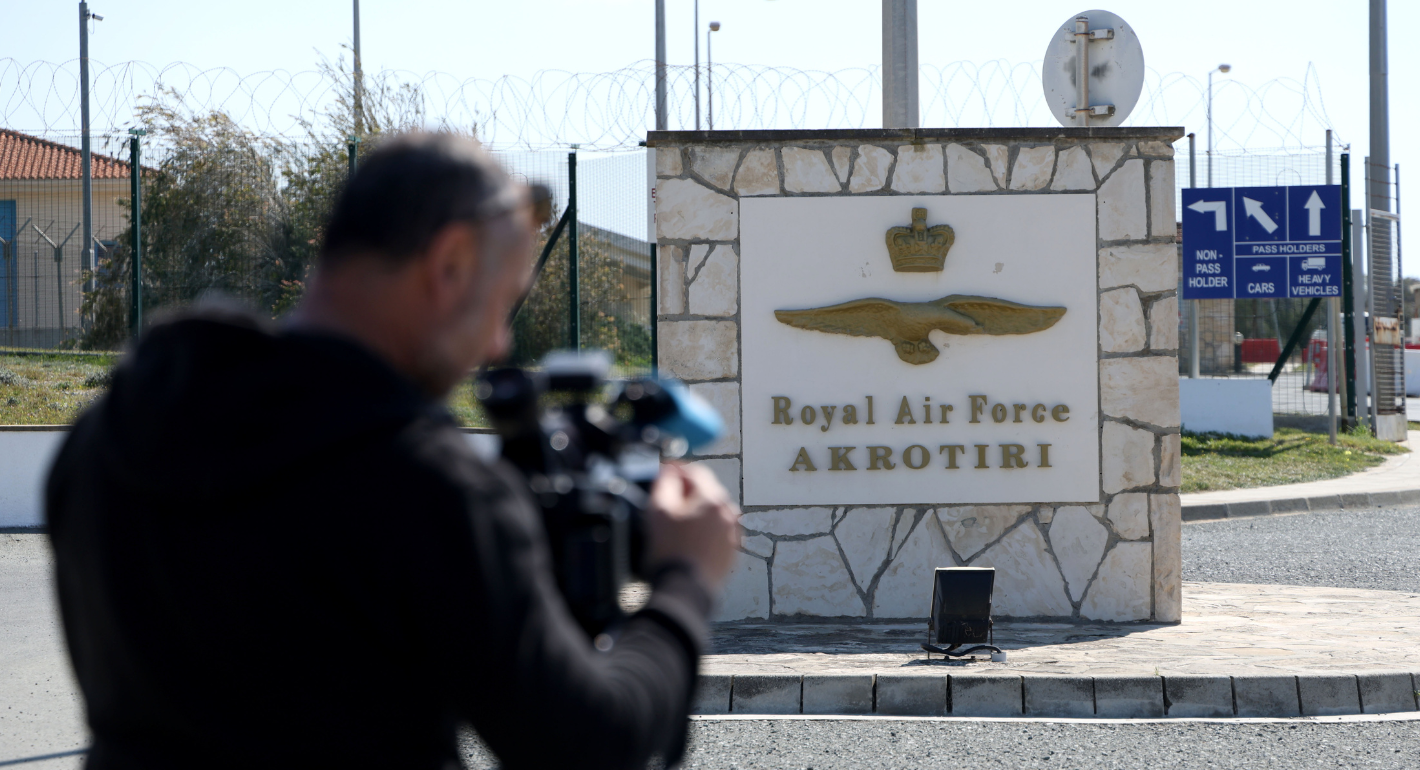
The drone strike on the British air base in Akrotiri brings Europe’s proximity to the conflict in Iran into sharp relief. In the fog of war, old tensions in the Eastern Mediterranean risk being reignited, and regional stakeholders must avoid escalation.

Marc Pierini
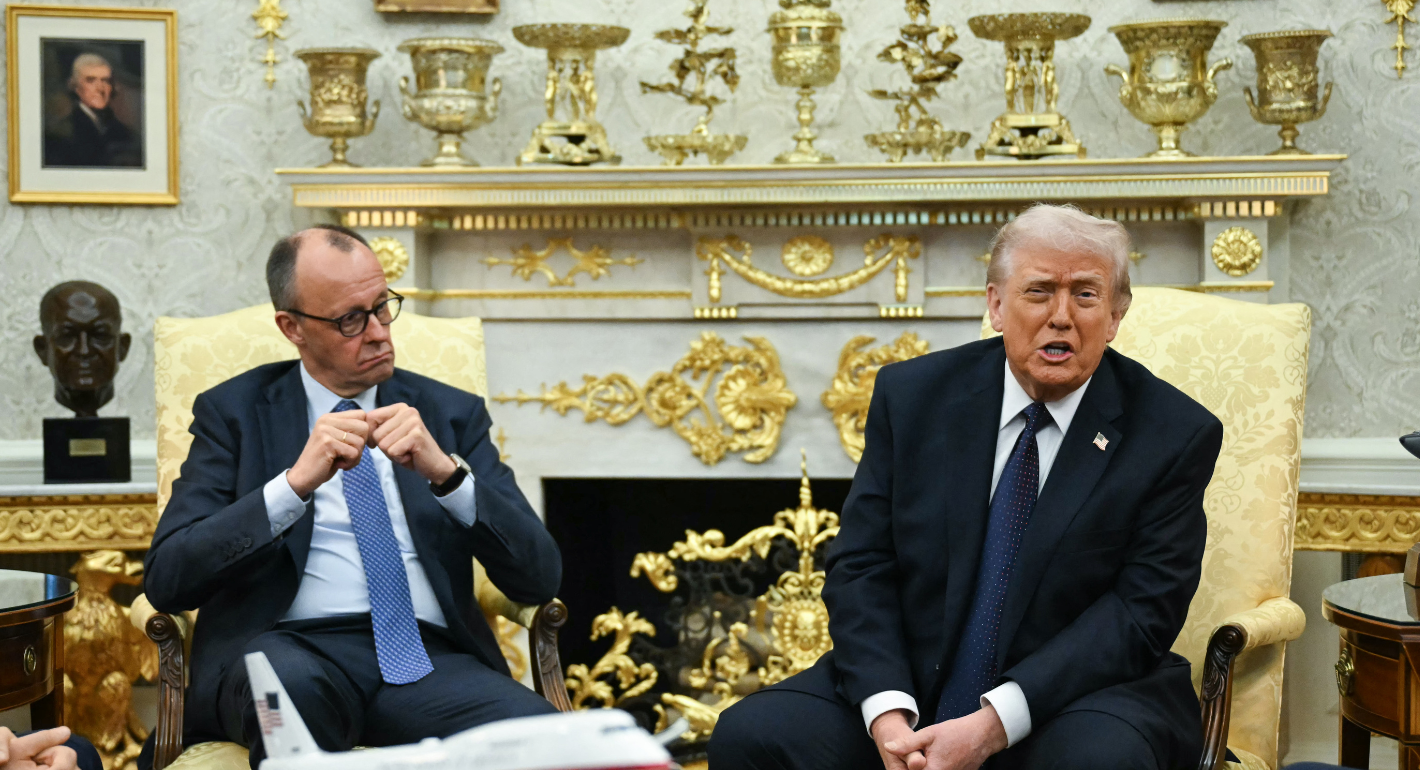
European reactions to the war in Iran have lost sight of wider political dynamics. The EU must position itself for the next phase of the crisis without giving up on its principles.

Richard Youngs
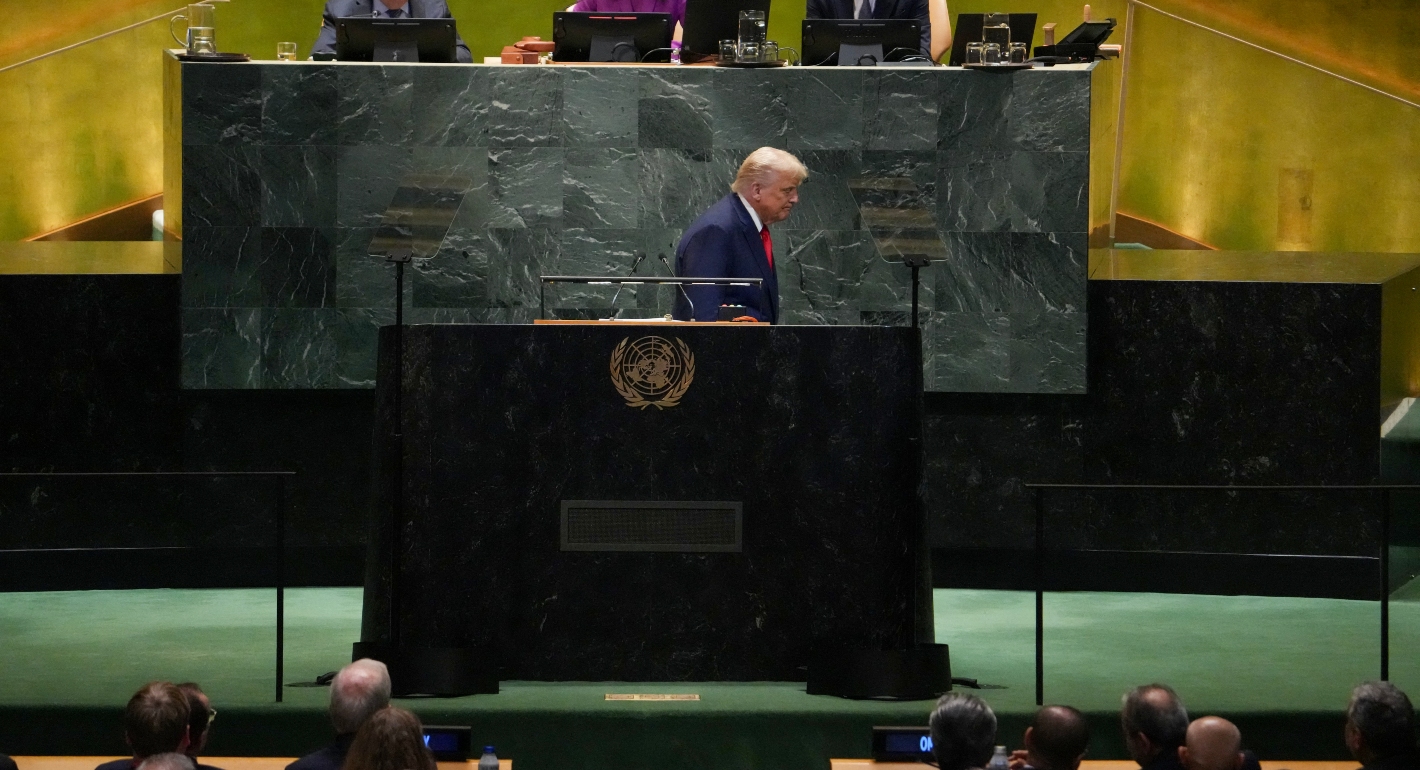
For years, the United States anchored global cyber diplomacy. As Washington rethinks its leadership role, the launch of the UN’s Cyber Global Mechanism may test how allies adjust their engagement.

Patryk Pawlak, Chris Painter
Europe isn’t as weak in the new geopolitics of power as many would believe. But to leverage its assets and claim a sphere of influence, Brussels must stop undercutting itself.

Dimitar Bechev