Source: Washington Post
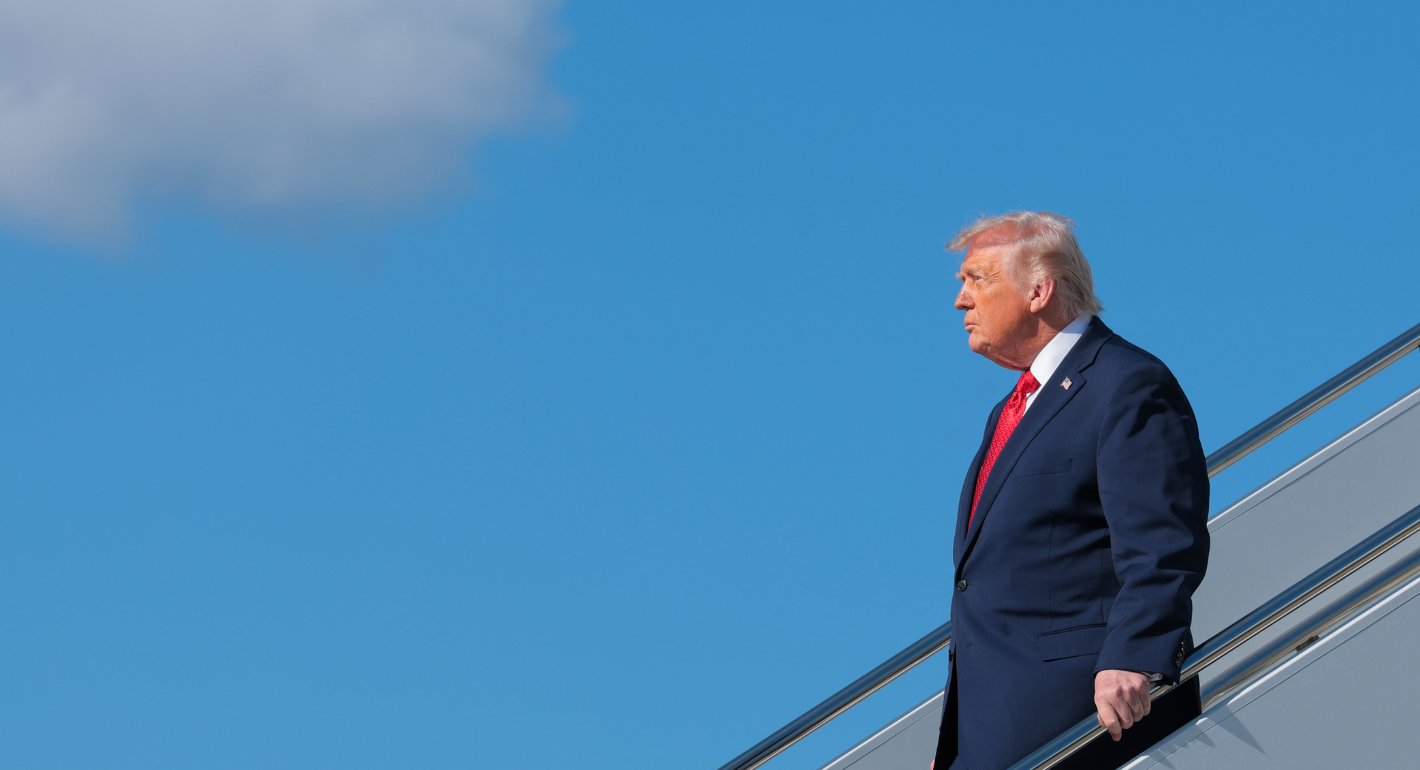
When President Trump withdrew the United States from the Paris climate accord, it was that decision, more than his refusal to endorse NATO’s mutual defense clause, that shook most European leaders. America was reneging on its role as a global leader.
The repercussions for Europe are immense.
Trump’s decisions on both NATO and climate change weaken the transatlantic relationship. This is good news for President Vladimir Putin and other like-minded regimes. The Russian leader can now just sit in the Kremlin and see his goal of weakening the special bonds between the United States and Europe taking shape. European leaders know that the European Union is still unprepared militarily, strategically and politically to establish its own independent defense structures, even if German Chancellor Angela Merkel and French President Emmanuel Macron support the idea. NATO remains their security guarantee. They will just have to pay more for it, as Trump has demanded.
China and India are set to play greater economic and political roles in the coming years. By pulling out of the Paris accords and the Trans-Pacific Partnership (TPP), the United States is ceding ground to China. The withdrawals leave Asian countries vulnerable to China’s insatiable appetite for global influence — as European leaders have seen in the past week.
Over the past several days, Chinese Premier Li Keqiang has been feted in Europe. Merkel (who has visited China 11 times since taking office in 2005) rolled out the red carpet for the Chinese delegation. Take note: It was Berlin that Li Keqiang visited first; Brussels was two days later.
The Europeans are buoyed that China, with many caveats, signed the Paris accords. This is good news for Europe’s renewable energy sector, which China needs. But China is no substitute for Europe’s special ties with the United States — any European pivot to China is paved with boulders.
Of course, the EU can boast that bilateral trade with China is worth more than $1.5 billion a day. But there’s a big imbalance. EU exports amount to $190 billion a year, almost half the value of China’s exports to the bloc. Merkel and other EU leaders have repeatedly complained that China is dumping cheap steel on European markets.
The good news is that the EU is united over confronting China on this issue by asserting that China is in breach of the World Trade Organization’s anti-dumping rules.
There’s a change, too, over China’s buying spree throughout Europe. Several EU leaders criticize Russia for investing in Europe. Until recently, there was hardly an outcry about Chinese investments, especially in strategically related sectors, let alone the transparency of those investments.
European business leaders, too, are asking how China can invest in whatever sector it likes in Europe but why the same is not true for European companies operating in China. For example, a foreign company has to establish a joint venture with a Chinese partner. Going it alone is not possible.
According to a survey by the European Union Chamber of Commerce in China, more than 61 percent of respondents said they believe that environmental regulations are strongly enforced against foreign companies; 14 percent and 17 percent reported that they are strongly enforced against Chinese privately owned and state-owned enterprises, respectively.
Furthermore, only 15 percent of respondents said they believe that regulatory barriers would decrease over the next five years. In short, European companies are not convinced about China’s reform agenda and the rhetoric over free trade.
As Francois Godement, Asia specialist at the European Council on Foreign Relations, argued, “Free trade is for China the freedom to export, while the EU is a principal promoter of deep and reciprocal trade agreements.”
Human rights and Internet control are other issues. European leaders are beginning to speak out about conditions in China, again in sharp contrast to their statements about human rights violations in Russia.
The EU members also complain about China’s economic strength and geostrategic interests. China invests in infrastructure projects, particularly in Africa and the Middle East, in return for sought-after commodities and new export markets. But they are not matched by China on promoting development aid, assistance to refugees or regional security. That rankles the Europeans, who put much emphasis on soft power.
Yet it is Europe’s soft power that China takes advantage of. Because it has no collective hard power, Europe has no strategy about the future security of the South China Sea or about North Korea. That’s America’s remit.
Ironically, because Trump, like the Europeans, has so often berated China’s trade policies, the Europeans and the United States do see eye to eye on China’s protectionist trade policies and its geostrategic ambitions. But because the transatlantic relationship is so sour, European leaders will have to pull together more than ever to fight China’s protectionism, its human rights violations and its schadenfreude over a weakened West.
This article was originally published by the Washington Post.