Europe has no influence over Israel’s war in Gaza.
The twenty-seven member states are divided. The EU has been consistently unable to forge a strategy toward Israel in particular and the Middle East in general.
Projecting its values in the region amounts to naught. Its commitment to supporting a two-state solution to the Israel-Palestine conflict is just lip service.
Even now, with what is happening to Gaza and Israel’s latest illegal annexation of land in the occupied West Bank, the EU still supports a two-state solution. Pathetically, it will impose travel restrictions on Jewish settlers who are killing Palestinians in the West Bank. As if that would deter Benjamin Netanyahu’s ultra-nationalist government.
Israel aside, the EU’s strategy of buying off regimes in Egypt, Tunisia, and Turkey to stem migrant flows to Europe confirms the bloc’s inability to establish a coherent migration policy. Outsourcing is the order of the day.
Closer to home, Europe should be in a better position to act strategically.
Yet ten years into Russia’s invasion of Ukraine, the EU’s direct neighbor, Europe has forged no strategy for ending the war. It has no strategy for how to deal with Russia. Or how to enable Ukraine to win. Above all, it has no strategy for managing the war’s impact on Europe’s stability, security, and NATO’s deterrence.
Consider Europe’s policy toward Russia. The Cold War shaped a Western strategy based on deterrence. Over the years, détente and deterrence coexisted. The United States was pivotal, as was Germany. Successive German leaders supported détente at the expense of supporting dissident movements in communist-run Central and Eastern Europe. The status quo took precedence. These countries, fortunately, are now in the EU and NATO.
Yet Europe’s blind spot remains Ukraine—even though the country holds the key to European security and stability. As Russia’s war grinds on, Europe is unwilling to make the leap toward ensuring that Ukraine wins.
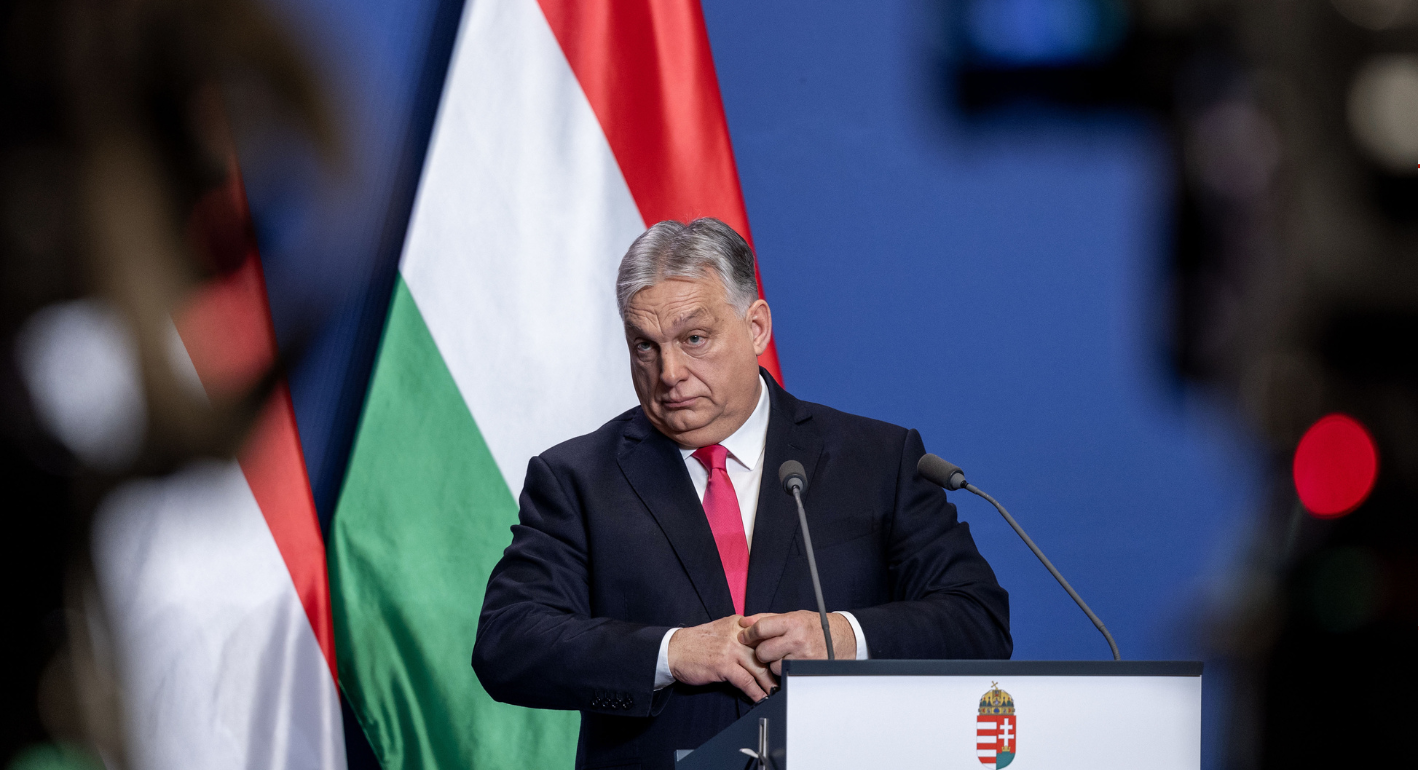
There are all sorts of excuses. The Central Europeans, the Baltic states and the countries in Southeastern Europe that had to endure a punishing Soviet occupation after 1945 know what is at stake: sovereignty and independence. That explains their unequivocal support—with the exception of Hungary—for Kyiv.
The Western Europeans, having enjoyed freedom, prosperity, and security after 1945, underpinned by American economic assistance and its security umbrella, have yet to change their mindset when it comes to Russia.
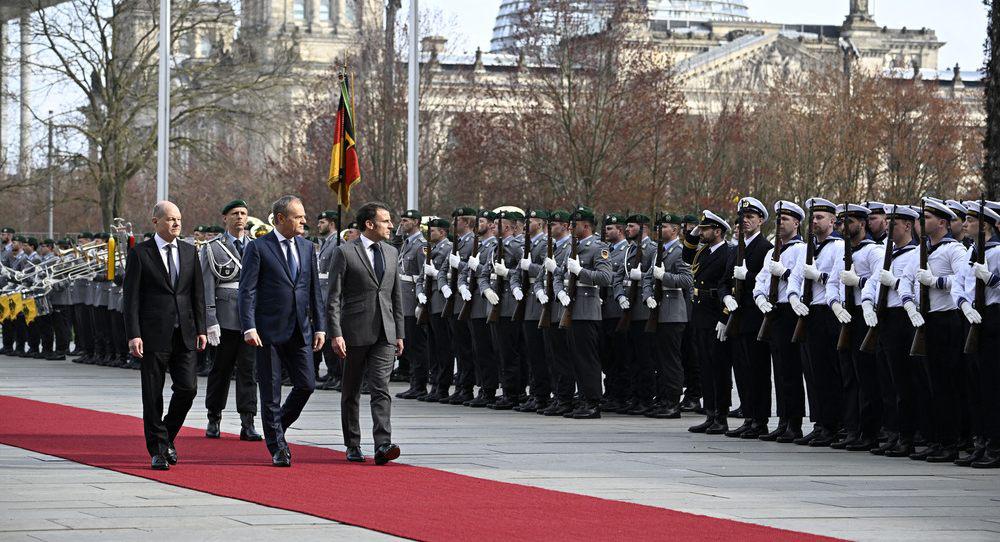
This mindset, supported by wings of German Chancellor Olaf Scholz’s Social Democratic party, is based on the idea that one can negotiate with Moscow at the expense of Ukraine’s territorial integrity. This status quo still prevails.
French President Emmanuel Macron no longer believes that. Over the past year he has fundamentally changed his approach to Ukraine and Russia. He said why Ukraine needs to win. He has stepped up the supply of missiles and weapons.
More fundamentally—and this is not Macron taking advantage of the war to push his views on strategic autonomy—he sees why Europe needs a security structure to deal not only with Ukraine but to prepare for the day when U.S. commitment to Europe’s security changes. His ideas are vague at the moment. But Macron is right to raise these issues. Russia’s attack on Ukraine is about the future of Europe’s security and its ability to defend itself.
Germany has yet to understand why Ukraine must prevail. Scholz has been unwilling to debunk his party’s nostalgia for détente with Russia. He should be the European leader to articulate what this war means for the continent. It is about the end of the post–Cold War era. It is about the end of a Social Democratic belief that Russia must be part of any European security architecture. Scholz hankers after the ancien regime, the old status quo based on predictability. The latter is redundant if not anachronistic.
So, is Europe is going to act strategically? For far too long, it has been reactive rather than proactive. The U.S security guarantee encouraged complacency and free riding by many European countries.
Acting strategically is about reading warning signs. About having an integrated intelligence, military, and security infrastructure to assess threats. About preempting and learning from past events.
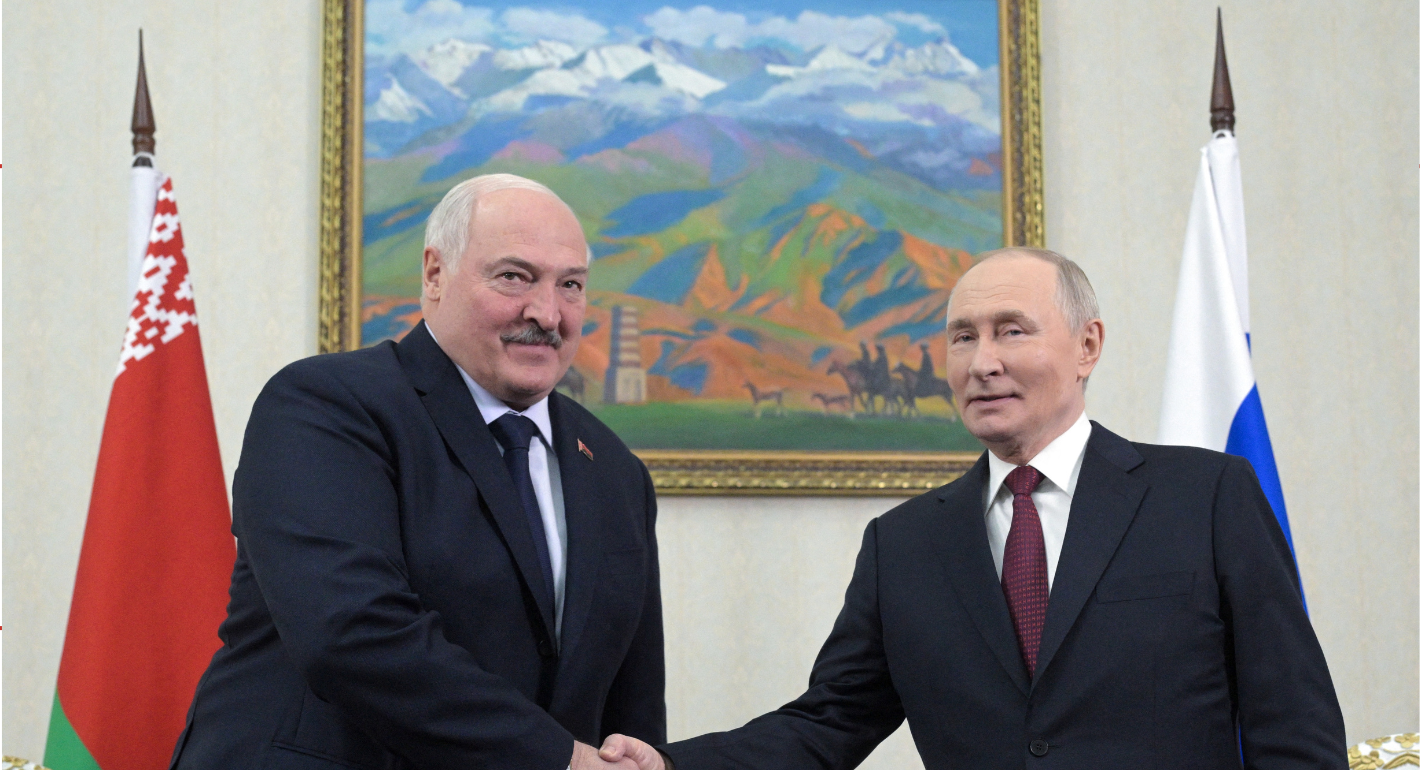
Vladimir Putin’s ruthless war Chechnya, his war in Georgia, his invasions of Ukraine, his support for the regime in Belarus, and his pervasive disinformation wars as well as cyber and chemical attacks are surely enough to make Germany and the rest of the EU understand why the outcome of the war in Ukraine matters.
Simply reacting is no longer an option. Strategy needs to become a priority. And for that to happen, Europeans need to establish a security architecture that recognizes how Russia upends Europe’s stability. Ukraine shows what is needed. Strategy.