• Research
  • Emissary
  • About
  • Experts
Carnegie Global logoCarnegie lettermark logo
Democracy
  • Donate
Podcast Episode
Carnegie India

India's Lunar Exploration: Past, Present, and Future with Jatan Mehta

In this episode of Interpreting India, Tejas Bharadwaj sits down with Jatan Mehta, an independent space writer and author of the popular blog Moon Monday, to explore India's lunar exploration strategy in the context of growing global interest in the moon.

Link Copied
By Tejas Bharadwaj and Jatan Mehta
Published on Oct 17, 2024

Subscribe on

SpotifyApple PodcastsAmazon MusicYoutube
Project hero Image

Project

Technology and Society

This program focuses on five sets of imperatives: data, strategic technologies, emerging technologies, digital public infrastructure, and strategic partnerships.

Learn More

Episode Summary

In this episode of Interpreting India, Tejas Bharadwaj sits down with Jatan Mehta, an independent space writer and author of the popular blog Moon Monday, to explore India's lunar exploration strategy in the context of growing global interest in the moon. The discussion covers the history of India's lunar missions, the scientific and strategic significance of lunar exploration, and how international partnerships are shaping the future of lunar exploration. The conversation also dives into India's participation in global programs like the Artemis Accords and its collaboration with other space-faring nations like Japan and the United States.

Episode Notes

India's lunar exploration journey began with Chandrayaan-1, which marked a significant milestone in 2008 by becoming the first Indian mission to orbit the moon. This mission also contributed to the discovery of water ice on the moon, catalyzing renewed global interest in lunar exploration. India has since built on this success with subsequent Chandrayaan missions, most recently Chandrayaan-3, which achieved a successful soft landing on the moon.

In this episode, Jatan Mehta discusses the strategic importance of lunar exploration for India and how Chandrayaan-3 has provided India with a solid foundation for future missions. He emphasizes that while India has made significant progress, it still lags behind space giants like China in terms of capabilities and resources. However, India's increasing participation in international collaborations, such as the U.S.-led Artemis Accords and the LUPEX mission with Japan, positions it well for future advancements in lunar exploration.

The discussion also touches on the challenges of lunar exploration, including the technical difficulties of landing on the moon and the uncertainties surrounding lunar resources like water ice. As nations compete for access to the moon's South Pole, Jatan explains that there is still much to learn about the actual accessibility of these resources.

Furthermore, Jatan highlights the role of private space companies and the growing interest in international partnerships. He mentions how India's collaboration with NASA and Japan could enhance its lunar capabilities, and the potential for India's private sector to contribute to global lunar missions.

Episode Contributors

Jatan Mehta is a globally published independent space writer and the author of Moon Monday, the world’s only newsletter dedicated to covering lunar exploration developments from around the globe. He also writes Indian Space Progress, a monthly report contextualizing the progress of India’s increasingly relevant space capabilities in the global arena. He has also been an Editorial Consultant for space organizations globally.

Tejas Bharadwaj is a research analyst with the Technology and Society Program at Carnegie India. He focuses on space law and policies and also works on areas related to applications of artificial intelligence and autonomy in the military domain and U.S-India export controls. Tejas is also part of the group that works in convening Carnegie India’s annual flagship event, the “Global Technology Summit” co-organized with the Ministry of External Affairs, Government of India.

Additional Readings

Moon Monday Blog by Jatan Mehta 
Chandrayaan Missions - ISRO
Artemis Accords
China's Lunar Exploration Program
NASA's CLPS Program

Hosted by

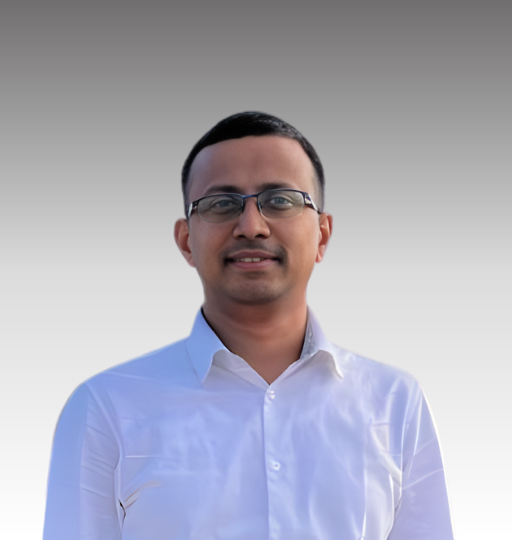
Tejas Bharadwaj
Senior Research Analyst, Technology and Society Program
Tejas Bharadwaj

Featuring

Jatan Mehta

Carnegie does not take institutional positions on public policy issues; the views represented herein are those of the author(s) and do not necessarily reflect the views of Carnegie, its staff, or its trustees.

More Work from Interpreting India

  • Podcast Episode
    Scarcity, Sovereignty, Strategy: Mapping the Political Geography of AI Compute

    In this episode of Interpreting India, Adarsh Ranjan is joined by Zoe Jay Hawkins, co-founder and deputy executive director of the Tech Policy Design Institute. They explore the evolving idea of AI sovereignty, the geopolitics of compute, and how countries are navigating access to the foundational infrastructure that powers artificial intelligence. Drawing from her research at the Oxford Internet Institute, Zoe unpacks the political geography of AI compute, the rising concentration of AI chips and data centers, and what this means for both developed and developing economies.

      Adarsh Ranjan, Zoe Jay Hawkins

  • Podcast Episode
    Cybersecurity in Outer Space: A Growing Concern

    In this episode of Interpreting India, host Tejas Bharadwaj is joined by P. J. Blount, an assistant professor of space law at Durham University. Together, they delve into the critical topic of cybersecurity in outer space, exploring the challenges and implications of protecting space-based assets amidst rising geopolitical tensions and technological advancements. Blount shares insights from his extensive research in international space law and cyberspace governance, highlighting the complexities of legal attribution and the evolving landscape of space security.

      Tejas Bharadwaj, P. J. Blount

  • Podcast Episode
    Unbundling AI Openness: Beyond the Binary

    In this episode of Interpreting India, host Shruti Mittal speaks with Chinmayi Sharma, associate professor of law at Fordham Law School. Together, they explore the evolving and often misunderstood debate on openness in artificial intelligence. Drawing from her forthcoming paper, Unbundling AI Openness, in the Wisconsin Law Review, Sharma explains why the traditional “open versus closed” framing oversimplifies the reality of modern AI development.

      Shruti Mittal, Chinmayi Sharma

  • Podcast Episode
    India’s Air Defense After Operation Sindoor: Lessons and the Road Ahead

    In this episode of Interpreting India, host Dinakar Peri is joined by Air Marshal Diptendu Choudhury, former Commandant of the National Defence College. Together, they unpack the evolution of India’s multilayered air defense network, tracing their journey from limited radar coverage in the 1960s to today’s multilayered, integrated network capable of projecting power into adversarial airspace.

      Dinakar Peri, Diptendu Choudhury

  • Podcast Episode
    Military AI and Autonomous Weapons: Gender, Ethics, and Governance

    In this episode of Interpreting India, host Charukeshi Bhatt is joined by Shimona Mohan, associate researcher at the United Nations Institute for Disarmament Research (UNIDIR). Together, they unpack the rapidly evolving landscape of artificial intelligence in the military domain, with a special focus on lethal autonomous weapons systems (LAWS).

      Charukeshi Bhatt, Shimona Mohan

Get more news and analysis from
Carnegie Endowment for International Peace
Carnegie global logo, stacked
1779 Massachusetts Avenue NWWashington, DC, 20036-2103Phone: 202 483 7600Fax: 202 483 1840
  • Research
  • Emissary
  • About
  • Experts
  • Donate
  • Programs
  • Events
  • Blogs
  • Podcasts
  • Contact
  • Annual Reports
  • Careers
  • Privacy
  • For Media
  • Government Resources
Get more news and analysis from
Carnegie Endowment for International Peace
© 2026 Carnegie Endowment for International Peace. All rights reserved.