• Research
  • Emissary
  • About
  • Experts
Carnegie Global logoCarnegie lettermark logo
Democracy
  • Donate
Podcast Episode
Carnegie India

Cybersecurity in Outer Space: A Growing Concern

In this episode of Interpreting India, host Tejas Bharadwaj is joined by P. J. Blount, an assistant professor of space law at Durham University. Together, they delve into the critical topic of cybersecurity in outer space, exploring the challenges and implications of protecting space-based assets amidst rising geopolitical tensions and technological advancements. Blount shares insights from his extensive research in international space law and cyberspace governance, highlighting the complexities of legal attribution and the evolving landscape of space security.

Link Copied
By Tejas Bharadwaj and P. J. Blount
Published on Oct 31, 2025

Subscribe on

SpotifyApple PodcastsAmazon MusicYoutube
Project hero Image

Project

Technology and Society

This program focuses on five sets of imperatives: data, strategic technologies, emerging technologies, digital public infrastructure, and strategic partnerships.

Learn More

In this episode of Interpreting India, host Tejas Bharadwaj is joined by P. J. Blount, an assistant professor of space law at Durham University. Together, they delve into the critical topic of cybersecurity in outer space, exploring the challenges and implications of protecting space-based assets amidst rising geopolitical tensions and technological advancements. Blount shares insights from his extensive research in international space law and cyberspace governance, highlighting the complexities of legal attribution and the evolving landscape of space security.

Episode Notes

The conversation explores how cybersecurity is integral to space operations, drawing parallels with traditional air defense strategies. Blount discusses the historical context of cybersecurity in space, the role of international law, and the challenges posed by non-state actors. He emphasizes the need for a holistic approach to cybersecurity that includes both space-based and terrestrial components, and the importance of international cooperation in addressing these challenges.

Blount warns of the increasing threats from cyber-attacks on space assets and the need for robust legal frameworks to ensure accountability and security. He calls for the development of comprehensive cybersecurity strategies that integrate space and cyberspace, ensuring resilience against a wide range of threats.

How can nations protect their space assets from cyber threats? What role does international law play in governing space cybersecurity? How should countries collaborate to enhance global space security?

Episode Contributors

P. J. Blount is assistant professor of space law at Durham University. He is also a visiting scholar at Mae Fah Luang University in Chiang Rai, Thailand. Previously, he served as a Lecturer in Law at Cardiff University, an adjunct professor for the LL.M. in the Air and Space Law at the University of Mississippi School of Law, a Postdoctoral Researcher at the University of Luxembourg, an adjunct professor at Montclair State University, and a Visiting Scholar at the Beijing Institute of Technology School of Law. 

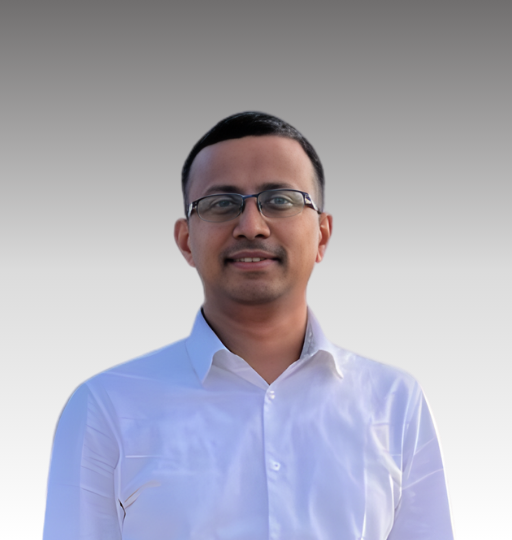
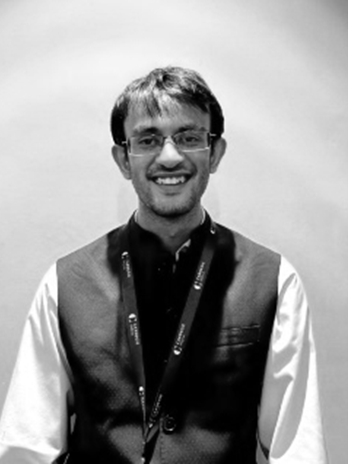
Tejas Bharadwaj is a senior research analyst with the Technology and Society Program at Carnegie India. He focuses on space law and policies and also works on areas related to AI in military domain, Defence tech and Cybersecurity. 

Hosted by

Tejas Bharadwaj
Senior Research Analyst, Technology and Society Program
Tejas Bharadwaj

Featuring

P. J. Blount

Carnegie does not take institutional positions on public policy issues; the views represented herein are those of the author(s) and do not necessarily reflect the views of Carnegie, its staff, or its trustees.

More Work from Interpreting India

  • Podcast Episode
    Scarcity, Sovereignty, Strategy: Mapping the Political Geography of AI Compute

    In this episode of Interpreting India, Adarsh Ranjan is joined by Zoe Jay Hawkins, co-founder and deputy executive director of the Tech Policy Design Institute. They explore the evolving idea of AI sovereignty, the geopolitics of compute, and how countries are navigating access to the foundational infrastructure that powers artificial intelligence. Drawing from her research at the Oxford Internet Institute, Zoe unpacks the political geography of AI compute, the rising concentration of AI chips and data centers, and what this means for both developed and developing economies.

      Adarsh Ranjan, Zoe Jay Hawkins

  • Podcast Episode
    Unbundling AI Openness: Beyond the Binary

    In this episode of Interpreting India, host Shruti Mittal speaks with Chinmayi Sharma, associate professor of law at Fordham Law School. Together, they explore the evolving and often misunderstood debate on openness in artificial intelligence. Drawing from her forthcoming paper, Unbundling AI Openness, in the Wisconsin Law Review, Sharma explains why the traditional “open versus closed” framing oversimplifies the reality of modern AI development.

      Shruti Mittal, Chinmayi Sharma

  • Podcast Episode
    India’s Air Defense After Operation Sindoor: Lessons and the Road Ahead

    In this episode of Interpreting India, host Dinakar Peri is joined by Air Marshal Diptendu Choudhury, former Commandant of the National Defence College. Together, they unpack the evolution of India’s multilayered air defense network, tracing their journey from limited radar coverage in the 1960s to today’s multilayered, integrated network capable of projecting power into adversarial airspace.

      Dinakar Peri, Diptendu Choudhury

  • Podcast Episode
    Military AI and Autonomous Weapons: Gender, Ethics, and Governance

    In this episode of Interpreting India, host Charukeshi Bhatt is joined by Shimona Mohan, associate researcher at the United Nations Institute for Disarmament Research (UNIDIR). Together, they unpack the rapidly evolving landscape of artificial intelligence in the military domain, with a special focus on lethal autonomous weapons systems (LAWS).

      Charukeshi Bhatt, Shimona Mohan

  • Podcast Episode
    Beyond Superintelligence: A Realist's Guide to AI

    In this episode of Interpreting India, host Nidhi Singh is joined by Sayash Kapoor, co-author of AI Snake Oil, to unpack the myths, misconceptions, and exaggerated expectations around artificial intelligence. Kapoor challenges the dominant narratives of both utopian and dystopian AI futures and advocates instead for a more grounded perspective, viewing AI as a “normal technology,” akin to electricity or the internet, whose impact will unfold gradually over decades.

      Nidhi Singh, Sayash Kapoor

Get more news and analysis from
Carnegie Endowment for International Peace
Carnegie global logo, stacked
1779 Massachusetts Avenue NWWashington, DC, 20036-2103Phone: 202 483 7600Fax: 202 483 1840
  • Research
  • Emissary
  • About
  • Experts
  • Donate
  • Programs
  • Events
  • Blogs
  • Podcasts
  • Contact
  • Annual Reports
  • Careers
  • Privacy
  • For Media
  • Government Resources
Get more news and analysis from
Carnegie Endowment for International Peace
© 2026 Carnegie Endowment for International Peace. All rights reserved.