

Commentary
The government’s gains in the northwest will have an echo nationally, but will they alter Israeli calculations?
Armenak Tokmajyan
{
  "authors": [
    "Dmitri Trenin"
  ],
  "type": "legacyinthemedia",
  "centerAffiliationAll": "",
  "centers": [
    "Carnegie Endowment for International Peace",
    "Malcolm H. Kerr Carnegie Middle East Center",
    "Carnegie Russia Eurasia Center"
  ],
  "collections": [],
  "englishNewsletterAll": "",
  "nonEnglishNewsletterAll": "",
  "primaryCenter": "Carnegie Russia Eurasia Center",
  "programAffiliation": "",
  "programs": [],
  "projects": [
    "Eurasia in Transition"
  ],
  "regions": [
    "Levant"
  ],
  "topics": []
}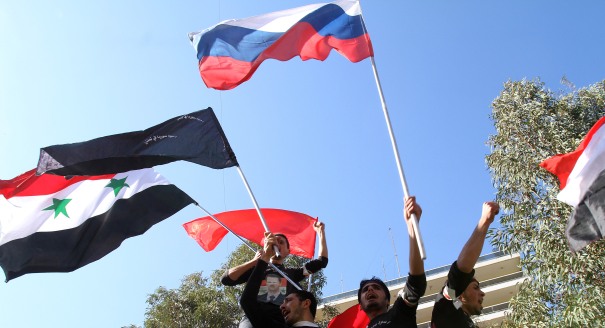
While Russia will not help push Syrian President Bashar al-Assad out, it must be careful about the consequences of a dispute with multiple countries over Syria. However, the West, too, needs to be careful not to antagonize Russia on this issue.
Source: Spiegel Online

Lavrov’s trip comes rather late in the game. I do not think the opposition is ready to talk with Assad, and I do not believe that the Western, Turkish, and Arab governments that sympathize with the opposition would bring opposition representatives to the negotiating table. Quite the opposite: they all have turned their backs on Assad. As for Moscow, it is both unwilling and unable to deliver Assad’s resignation.
The Syrian opposition, meanwhile, contains a number of factions. There is even an émigré opposition group that is based in Moscow. The more militant factions, such as the Free Syrian Army, are opposed to Russian or any other mediation.
Lavrov has praised Assad as a person who “understands his responsibility.” My feeling is that Russia will not dump Assad, and that it will pay the price. Moscow may prefer defeat to surrender.
Russia vetoed two United Nations Security Council (UNSC) resolutions on Syria because it saw them as unbalanced. The principles guiding Russia’s decisions include no regime change under outside pressure, no military intervention in a civil war, and no condemnation of Damascus alone. For example, Russia vetoed the last resolution because it demanded that Assad’s troops leave the cities but placed with no reciprocal demand on the opposition forces.
In Syria, Russia is, in a way, paying the West back for violating the terms of the UNSC resolution establishing a no-fly zone over Libya. What started as a preventive humanitarian measure turned out to be a military operation to change the regime in Libya. And in helping the Libyan rebels, NATO forces killed a number of Libyans, including civilians. Moscow felt this was clear abuse of the UNSC mandate. It’s not just that the Kremlin hawks have prevailed; it’s also that the doves there have turned more hawkish.
Russia’s economic interests in Syria are substantial, but not huge: about $1.5 billion in total arms purchases during the last decade; a gas pipeline across Syria to Jordan; prospecting for oil; and plans for a nuclear reactor. Before the global economic crisis, the two-way trade reached $2 billion.
Where many Westerners see democratic revolution, Russian leaders see uprisings ushering in chaos, the likely winners of which will be Islamist radicals. Moscow does not draw historical parallels with either the revolutions of 1848 or 1989, but with Russia’s own experience in 1917. In Syria, because of its demographics and geopolitics, the potential for violence and for regional destabilization is deemed to be higher than in any of the previous cases: Tunisia, Egypt, Libya, or Yemen.
Moscow opposes regime change in principle and does not think that outsiders know best. That argument is also self-serving: Russian leaders do not want the West to intervene in Russia’s neighborhood, say, in Belarus or Uzbekistan. And some Russian leaders, including Putin, are convinced that the West is plotting for their own overthrow. Again, in Syria today, Russians are correcting the mistake they feel they made by allowing the West to use force in Libya.
The upside for Israel from a regime change in Damascus would be the removal of an Iranian ally. The downside, of course, is the resulting chaos and the unleashing of anti-Israeli elements that Damascus had kept in reserve. It appears that the Israeli leaders, in anticipation of an impending clash with Iran, are prepared to take the risk: getting rid of an Iranian ally so close to Israel is more important.
The Palestinians, for now, are in a unifying mood and are steering clear of the Syrian imbroglio, and the leadership of Hamas has left Damascus.
As the Syrian uprising widens, more conflicts are erupting. Religious strife may get more intense—and more violent. Many Sunnis do not regard Syria’s ruling Alawites as true Muslims, and Lebanon’s Shias are not very far away and can be brought into the fray.
The underlying regional conflict behind the Syrian drama is that between, on the one hand, Shia Iran and its Shia allies in Syria, Lebanon, and Iraq, and, on the other hand, the Sunni coalition led by Saudi Arabia and the Gulf states, some of which have Shia minorities (or even a disgruntled Shia majority, as Bahrain).
Lavrov probably did not take Clinton’s call because he was not ready to at the time. It appears that the West paid him back when it refused to postpone the UNSC vote until after Lavrov’s return from Damascus, thus precipitating the Russian veto. Very strong language was indeed used by both Western and Russian representatives. The U.S.-Russian reset, however, has definitely not failed: U.S. cargo to and from Afghanistan are moving along Russian railroads, and U.S. soldiers are being ferried across Russian airspace.
I see no daylight between Putin’s and Medvedev’s positions on Syria. On Libya, too, there was no disagreement within the tandem: they just divided labor between themselves.
The drama of the Arab Awakening is only beginning to unfold. It is too early to say who will win or lose in the end. However, antagonizing America, Europe, Turkey, and the Arab states is not in Russia’s long-term interest.
Russia will certainly not help push Assad out, but it must be careful about the consequences of a spat with multiple countries, including Germany, over Syria. Escaping the West’s embrace to run into Beijing’s arms is not a particularly clever strategy. But the West, too, needs to be careful not to antagonize Russia on an issue which, the humanitarian tragedy notwithstanding, is of secondary importance for both.
Carnegie does not take institutional positions on public policy issues; the views represented herein are those of the author(s) and do not necessarily reflect the views of Carnegie, its staff, or its trustees.
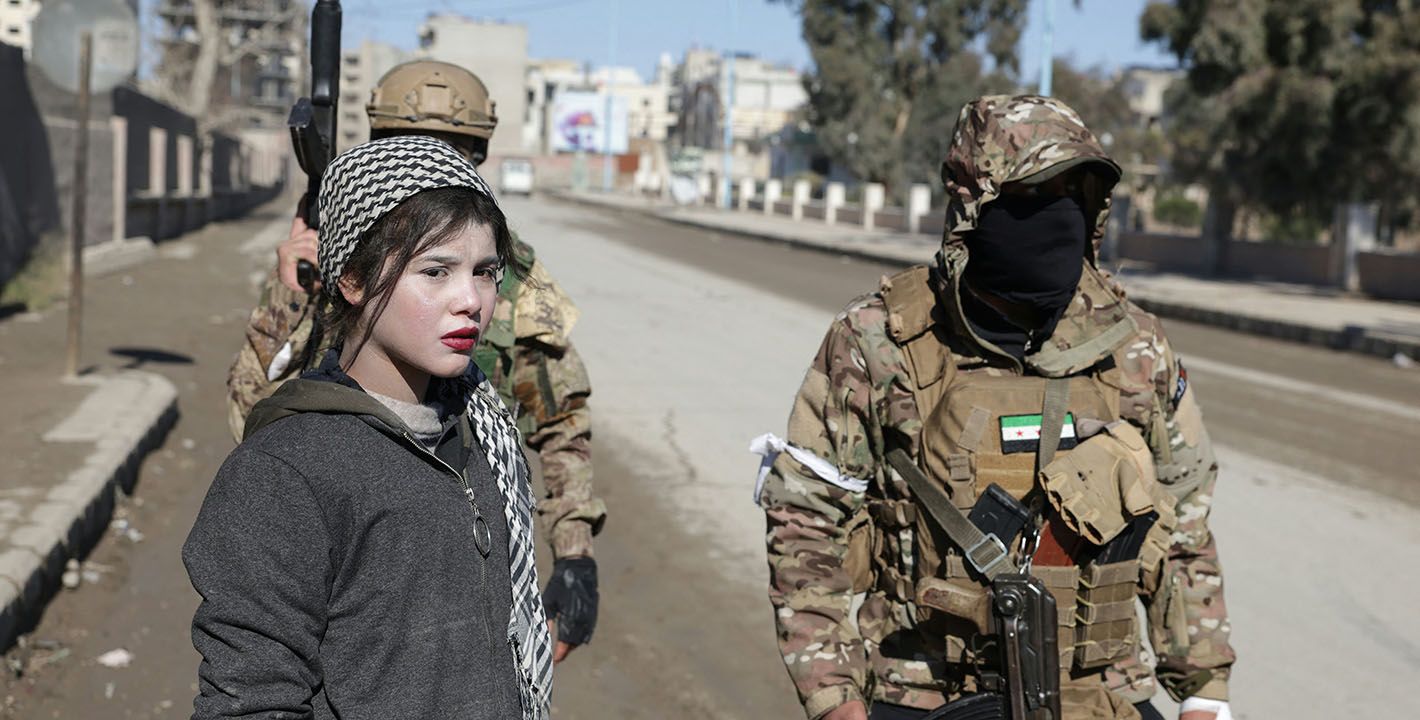
The government’s gains in the northwest will have an echo nationally, but will they alter Israeli calculations?
Armenak Tokmajyan
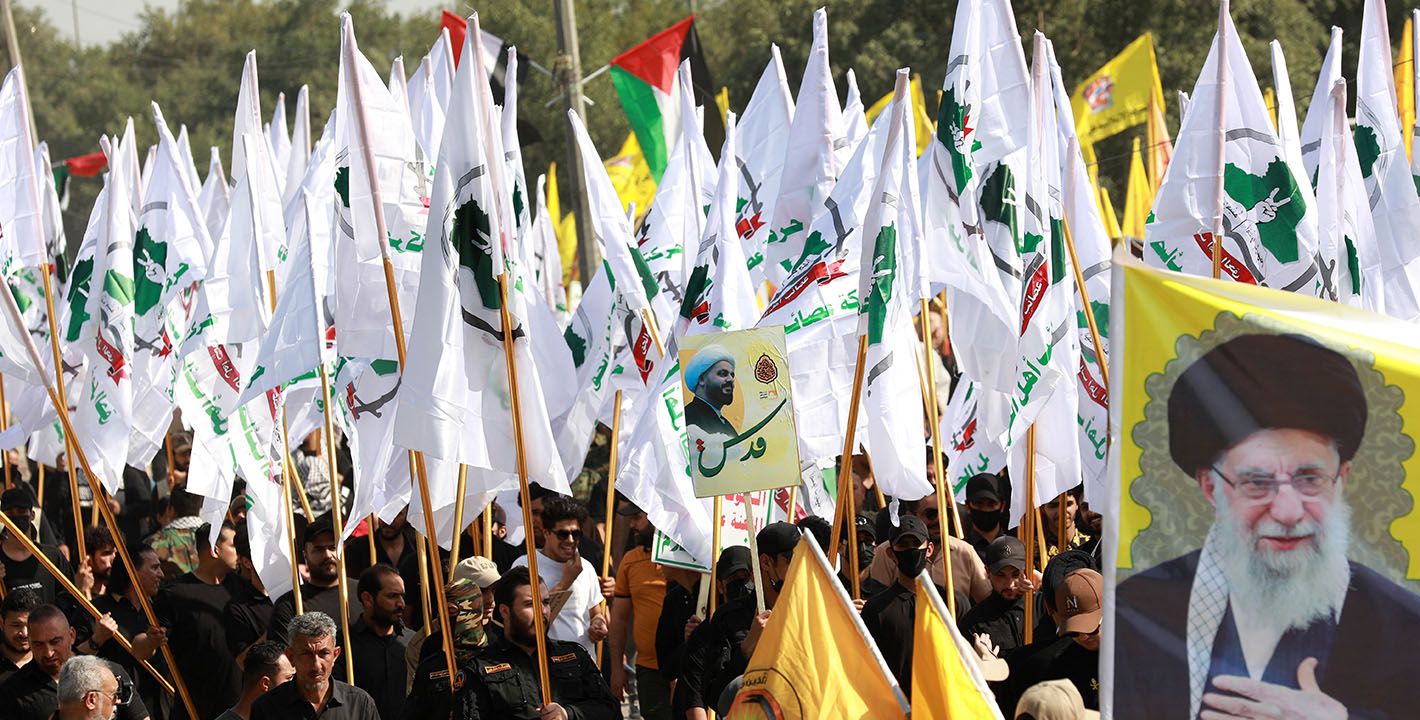
Beirut and Baghdad are both watching how the other seeks to give the state a monopoly of weapons.
Hasan Hamra
The country’s leadership is increasingly uneasy about multiple challenges from the Levant to the South Caucasus.
Armenak Tokmajyan
Recent leaks made public by Al-Jazeera suggest that this is the case, but the story may be more complicated.
Mohamad Fawaz
The U.S. is trying to force Lebanon and Syria to normalize with Israel, but neither country sees an advantage in this.
Michael Young