

In The Media
Michele Dunne, Robert Kagan
{
  "authors": [
    "Robert Kagan"
  ],
  "type": "legacyinthemedia",
  "centerAffiliationAll": "",
  "centers": [
    "Carnegie Endowment for International Peace"
  ],
  "collections": [],
  "englishNewsletterAll": "",
  "nonEnglishNewsletterAll": "",
  "primaryCenter": "Carnegie Endowment for International Peace",
  "programAffiliation": "",
  "programs": [],
  "projects": [],
  "regions": [
    "China"
  ],
  "topics": [
    "Foreign Policy"
  ]
}
REQUIRED IMAGE
Source: Carnegie
Reprinted with permission from the New York Times, January 15, 1999
In the past six months the Chinese Government has carried out the most systematic crackdown on political rights since the Tiananmen Square massacre of 1989. Dozens of democratic activists have been arrested, hundreds more have been detained, and three leaders, Xu Wenli, Wang Youcai and Qin Yongmin, have been sentenced to long prison terms. Their crime? Taking President Clinton at his word.
It was Mr. Clinton who last year emboldened Chinese democrats to press their Government for modest reforms. At the June summit in Beijing, the President declared that free speech, free association and freedom of religion were "the right of people everywhere and should be protected by their governments."
Upon his return to the United States, Mr. Clinton said his visit had made it "more likely that political dissent would be more respected," and his national security adviser, Samuel Berger, said the meeting had proved that "through engagement" it is possible to "promote American values" and "advance the process of change in China." Administration officials declared that China's decision to sign the international covenant on human rights was further evidence that American policy was a success.
Chinese democrats took the President seriously. They seized the occasion of his visit last June to begin seeking approval from their Government to register a new opposition party through appropriate legal means. Wang Youcai, Xu Wenli and others did not take to the streets or challenge Communist control. They merely asked their Government to abide by the rule of law and by the principles of the human rights covenant.
They hoped that the Government would be reluctant to clamp down on dissent for fear of angering Mr. Clinton and cooling his desire to establish his "strategic partnership" with China. They were wrong, and they have paid dearly. China's leaders seem confident that they will pay no significant price for the crackdown and that President Clinton will tolerate almost any misbehavior rather than change his policy of "engagement." So far, they are right. President Clinton has been silent. In fact, Administration officials, talking to reporters, have even begun criticizing the democrats for pressing too far and too fast.
The Administration is now twisting itself into a pretzel trying to defend its policy. In June, Mr. Berger said he hoped we would see that "through you can get a lot of serious things done." Now that all the supposed fruits of engagement have proved illusory, Mr. Berger has pivoted, arguing that engagement is "even more important when the pendulum on human rights appears to be swinging back." In other words, engagement is the right policy when it is working, and it is even more right when it is not working.
Last year the Administration dropped efforts to seek a United Nations resolution to review China's human rights performance in exchange for China's agreement to sign the human rights covenant. Now that China's promise has proved meaningless, the Administration should lobby hard for the resolution. It might even find allies in Europe, where the new German Government has taken a tougher line on China. Commerce Secretary William Daley is planning a trip to China in the spring with some American business leaders. Would the Administration cancel it as a protest against the crackdown?
These are small steps, but they would demonstrate that President Clinton was not just playing for the crowds back home when he spoke those bold words about freedom in China last year. Those Chinese who took his words seriously, and who are now in jail, deserve more than a policy of blind engagement.
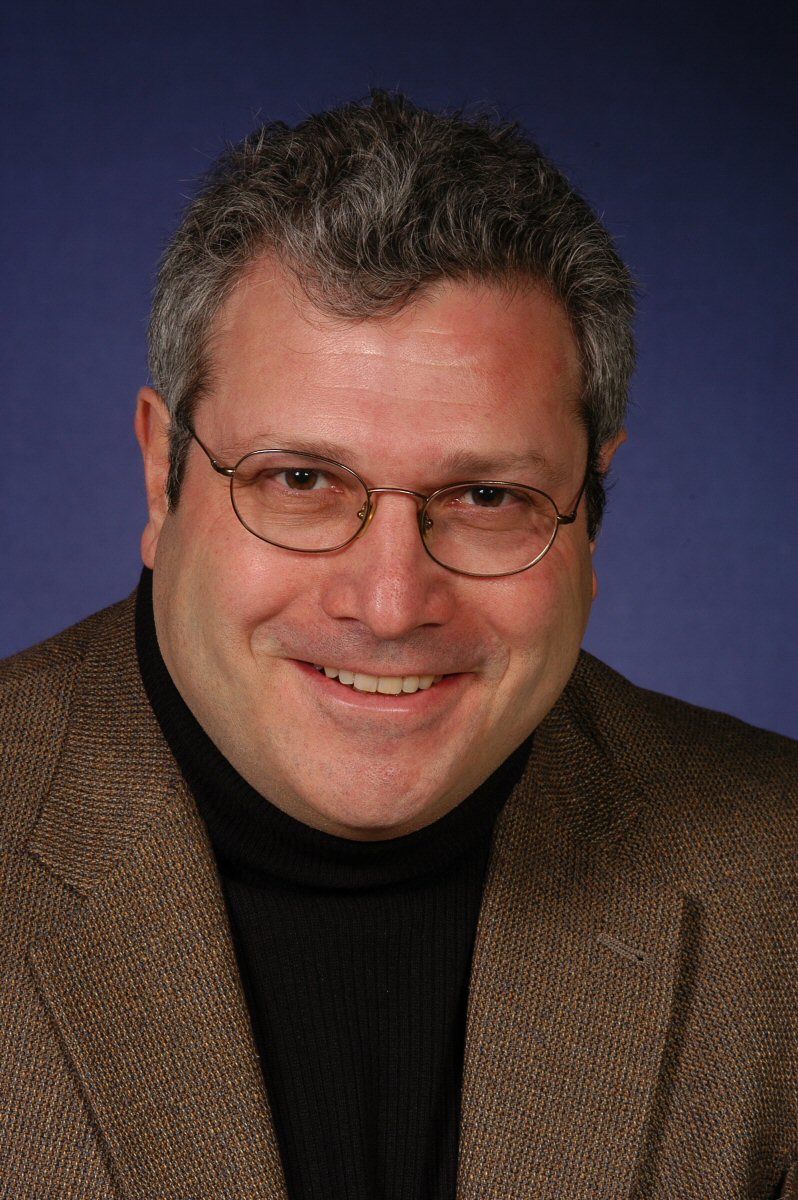
Former Senior Associate
Kagan, author of the recent book, The Return of History and the End of Dreams (Knopf 2008), writes a monthly column on world affairs for the Washington Post and is a contributing editor at both the Weekly Standard and the New Republic.
Recent Work

Michele Dunne, Robert Kagan
Robert Kagan, Michele Dunne
Carnegie does not take institutional positions on public policy issues; the views represented herein are those of the author(s) and do not necessarily reflect the views of Carnegie, its staff, or its trustees.

The European Commissioner for Trade is headed to China. But after President Xi’s bridge-building visit to Washington, can a more isolated EU overcome Beijing’s stranglehold on critical raw materials? Who will blink first?

Rym Momtaz, ed.

European NATO countries are wrestling with the possibility of U.S. disengagement from the alliance. With the continent’s security increasingly uncertain, governments must restore the credibility of their collective defense.



Hans-Dieter Lucas, Adam Thomson, Pierre Vimont

The new U.S.–Denmark–Greenland agreement will help Washington exert political, economic, and financial dominance under the guise of security. Yet, it acknowledged Copenhagen’s and Nuuk’s sovereignty on the island.

Marc Pierini

A summer of escalation in the Black Sea has hurt Ukraine economically and is exacerbating world food security. A truce is needed—as is a broader reframing of Europe’s Ukraine strategy.

Thomas de Waal

Are Germany’s economic, industrial, and political struggles becoming a liability for the EU’s ability to rise to the geopolitical moment?
Rym Momtaz, ed.