

Commentary
The European Commissioner for Trade is headed to China. But after President Xi’s bridge-building visit to Washington, can a more isolated EU overcome Beijing’s stranglehold on critical raw materials? Who will blink first?
Rym Momtaz, ed.
{
  "authors": [
    "Robert Kagan",
    "William Kristol"
  ],
  "type": "legacyinthemedia",
  "centerAffiliationAll": "",
  "centers": [
    "Carnegie Endowment for International Peace"
  ],
  "collections": [],
  "englishNewsletterAll": "",
  "nonEnglishNewsletterAll": "",
  "primaryCenter": "Carnegie Endowment for International Peace",
  "programAffiliation": "",
  "programs": [],
  "projects": [],
  "regions": [
    "United States",
    "Iraq"
  ],
  "topics": [
    "Security",
    "Military",
    "Foreign Policy"
  ]
}
REQUIRED IMAGE
Source: Carnegie
Reprinted with permission from the Weekly Standard, November 19, 2001
IS THE BUSH ADMINISTRATION really getting serious about fighting the war on terrorism?
On the one hand, there was still plenty of happy-talk flying fast and furious this past week. President Bush's speech Thursday night was upbeat and spared him media attacks for not addressing the nation on homeland security. But the American people don't really need to be told how to lead their lives. They need to see their government doing its job, both at home and abroad.
What they've seen too often instead are government agencies spinning madly to make it look like they're on top of the situation. The FBI, which has run itself into a brick wall in the anthrax investigation, has been declaring confidently that it has "a plan" and is sticking to it. The fact that the FBI hasn't the vaguest clue who sent the anthrax letters hasn't stopped it from leaking like mad the implausible "theory" that it may have been the work of some domestic extremist.
Meanwhile, on the day President Bush gave his "Let's Roll" speech, Attorney General John Ashcroft embarrassingly declared that the United States had "emerged victorious in the opening battle in the war on terrorism." Why? Because "two periods of extremely high threat have passed" without an additional attack. Sorry, but glad as we are that a couple of weeks have gone by without another terrorist catastrophe, that is not a "victory."
On the other hand, there are hopeful signs. As this magazine goes to press, there are indications that Secretary of Defense Rumsfeld's efforts to increase the pace and violence of the American offensive in Afghanistan are beginning to bear fruit on the ground. The Northern Alliance seems to be making progress in its effort to capture the northern city of Mazar-e-Sharif--a key stepping stone to removing the Taliban government in Kabul.
Until now, top American military officials, despite Rumsfeld's prodding, have been slow to escalate and have been resisting the call by civilian officials for a wider ground war. The commander in the region, General Tommy Franks, has seemed more interested in preserving what he recently called "the easiest exit strategy we've had in years" than in crushing the Taliban. According to our sources, deputy national security adviser Stephen Hadley recently expressed deep frustration with the military brass for its slow-as-molasses approach to the war. There is reason to believe he was reflecting the views of his boss, Condoleezza Rice. But four-star generals don't take orders from deputy national security advisers, or even from national security advisers. When will President Bush step in and find himself a Grant to take over from the McClellans?
Another sign of seriousness on the part of the administration would be greater urgency in planning for a military campaign against Iraq. The New York Times reported this past week that Saddam Hussein maintained a secret terrorist training camp for Islamic radicals from other countries, and that among the lessons taught at the terrorist school was how to hijack a passenger plane without weapons. We know that the mastermind of the September 11 attack, Mohamed Atta, held meetings a few months before with an Iraqi intelligence official in Prague. And Iraq is the only nation in the world, other than the United States and Russia, to have developed the kind of sophisticated anthrax that appeared in the letter sent to Senate Majority Leader Tom Daschle. What will it take for the FBI and the CIA to start connecting the dots here? A signed confession from Saddam?
The good news is that the winds appear to be shifting within the Bush administration on the Iraq question. While Secretary of State Colin Powell continues to promise the Arab world that the administration has no plans to go after Iraq, Condoleezza Rice seems to be throwing her considerable influence on the side of the hawks at the Pentagon. Rice said publicly last week, referring to Saddam's continuing efforts to build and stockpile weapons of mass destruction, that "there is plenty of reason to watch Iraq." Unlike Powell, she did not rule out any response. Privately, we have learned, she's even tougher. Rice recently told a visiting diplomat that the administration would deal with Iraq "at the right time" and that "we don't need a smoking gun" before taking action.
Further evidence that Rice may be separating herself from the Powell State Department came in her remarks rejecting a meeting between President Bush and Yasser Arafat at the United Nations. Arafat cannot claim to be a help in the war on terrorism, Rice warned, while he continues to "hug" Hezbollah and Hamas, two terrorist organizations that until recently the Bush administration had pretty much ignored in the interest of preserving Powell's Arab coalition. Although she has kept a low profile, the national security adviser probably remains the most influential person on the president's foreign policy team. Her recent statements are the best sign yet of the administration's increasing seriousness about fighting this war.
Finally, there is the question of the defense budget. We leave it to President Bush and his advisers to determine the best way of building our defenses while controlling pork barrel spending. But one thing is painfully obvious: There will have to be significant, sustained increases in spending on the armed forces. The United States is likely headed into a ground war of some size and duration in Afghanistan. The odds that we may soon be at war in Iraq grow daily. And the United States has other important security interests and obligations elsewhere in the world, especially in East Asia. Right now we simply do not have enough troops or weapons to carry out these missions. We will need to recruit more soldiers and procure more weapons--or risk losing the war on terrorism. But more troops cost money. As Thomas Donnelly of the Project for the New American Century has noted, recruiting, training, and equipping an additional 50,000 active-duty soldiers for the Army alone will cost an additional $15 billion per year. Right now, the president's total request for an increase in defense spending is $20 billion. There will have to be much more.
It's now two months since September 11. The administration's response has been in certain respects serious and impressive, in other respects uncertain and tentative. President Bush set a high standard for himself last Thursday when he closed his speech by invoking the memory of Todd Beamer and his fellow passengers on United Flight 93, saying, "Let's roll." It's a call the administration should heed.

Former Senior Associate
Kagan, author of the recent book, The Return of History and the End of Dreams (Knopf 2008), writes a monthly column on world affairs for the Washington Post and is a contributing editor at both the Weekly Standard and the New Republic.
William Kristol
Carnegie does not take institutional positions on public policy issues; the views represented herein are those of the author(s) and do not necessarily reflect the views of Carnegie, its staff, or its trustees.

The European Commissioner for Trade is headed to China. But after President Xi’s bridge-building visit to Washington, can a more isolated EU overcome Beijing’s stranglehold on critical raw materials? Who will blink first?

Rym Momtaz, ed.
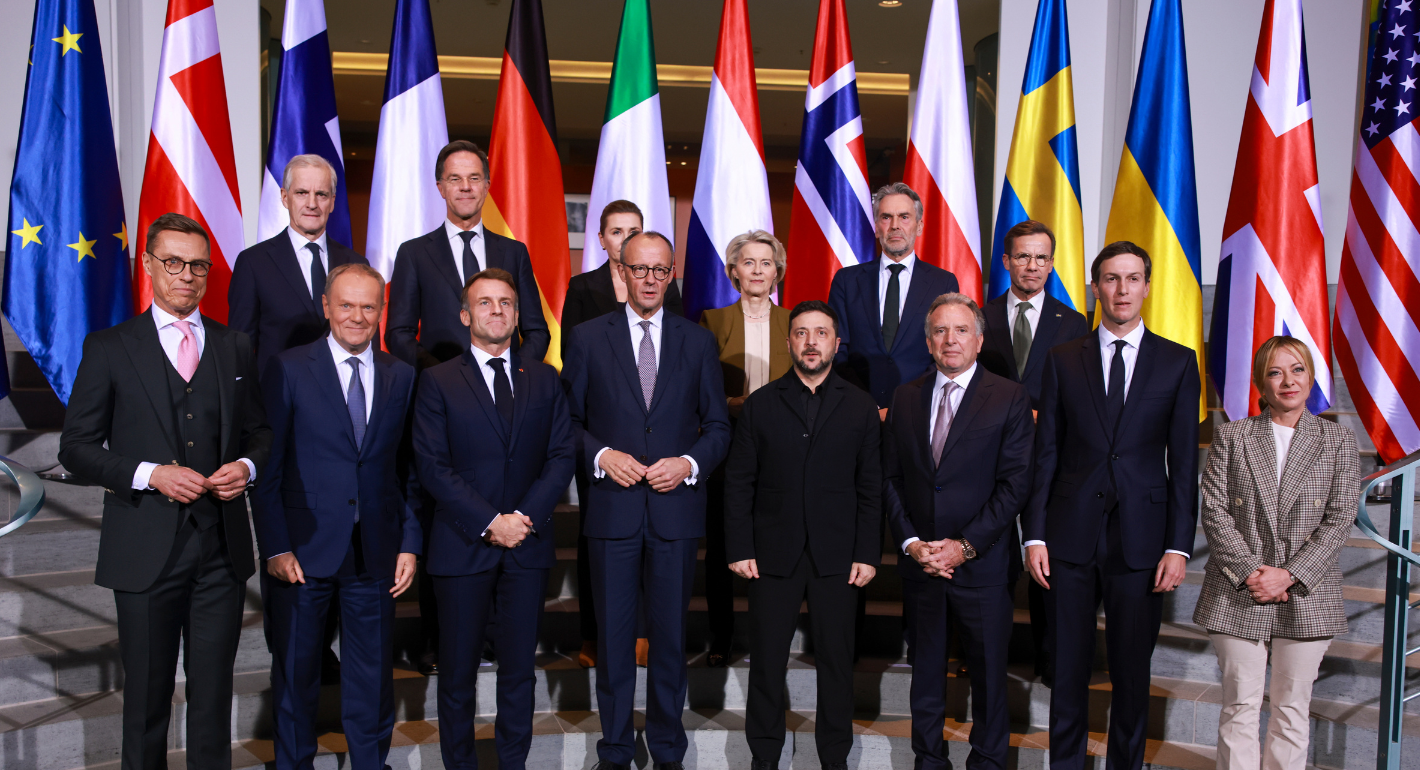
European NATO countries are wrestling with the possibility of U.S. disengagement from the alliance. With the continent’s security increasingly uncertain, governments must restore the credibility of their collective defense.


Hans-Dieter Lucas, Adam Thomson, Pierre Vimont

The new U.S.–Denmark–Greenland agreement will help Washington exert political, economic, and financial dominance under the guise of security. Yet, it acknowledged Copenhagen’s and Nuuk’s sovereignty on the island.

Marc Pierini

A summer of escalation in the Black Sea has hurt Ukraine economically and is exacerbating world food security. A truce is needed—as is a broader reframing of Europe’s Ukraine strategy.

Thomas de Waal

Are Germany’s economic, industrial, and political struggles becoming a liability for the EU’s ability to rise to the geopolitical moment?
Rym Momtaz, ed.