

Other
Anders Aslund
{
  "authors": [
    "Anders Aslund"
  ],
  "type": "legacyinthemedia",
  "centerAffiliationAll": "dc",
  "centers": [
    "Carnegie Endowment for International Peace"
  ],
  "collections": [],
  "englishNewsletterAll": "ctw",
  "nonEnglishNewsletterAll": "",
  "primaryCenter": "Carnegie Endowment for International Peace",
  "programAffiliation": "russia",
  "programs": [
    "Russia and Eurasia"
  ],
  "projects": [],
  "regions": [
    "Central Asia",
    "Caucasus",
    "Russia",
    "Azerbaijan",
    "Eastern Europe",
    "Ukraine",
    "Moldova"
  ],
  "topics": [
    "Economy",
    "Trade"
  ]
}
REQUIRED IMAGE
The soon-to-be members of the EU are to be congratulated but a new divide has emerged to their east. Until now, the EU has been so preoccupied with its enlargement that it has had little time to look further east. It must now face up to its responsibility and focus on what it can do. The EU's goal should be to integrate the post-Soviet economies for mutual economic benefit and political stability.
Source: Financial Times
The soon-to-be members of the European Union are to be congratulated - but a new divide has emerged to their east. The lucky 10 have steadily seen the share of their exports going to the EU rise from barely half in 1989 to two-thirds in 2000, according to the International Monetary Fund. When it comes to trade, the EU has been generous to them.
Further east, a different story has emerged. The 12 post-Soviet countries left out of EU expansion have recorded a slight decline in the share of their exports to the EU, from 33 per cent in 1989 to 31 per cent in 2000. Calculations according to the gravity model, which relates trade between market economies to their respective gross domestic product and distance, indicate that the EU should purchase about 58 per cent of the exports from these countries.
Initially, the problem was that market reforms were lagging behind in the east. But reforms have caught up in nine of the 12 countries and their overall exports have surged.
Curiously, the closer a post-Soviet country is to the EU, the less it exports there. In 2000, only 16 per cent of Ukrainian exports went to the EU, compared with 20 per cent of Moldovan exports. By contrast, that figure was about 35 per cent in the case of Russian, Armenian and Kyrgyz exports and 60 per cent in the case of Azerbaijani exports. The gravity model appears to have been reversed.
The explanation lies in the commodity structure of exports. Ninety per cent of Azerbaijan's exports is oil. Kyrgyzstan delivers gold to the EU, Armenia diamonds and Russia mainly oil and natural gas. By contrast, three-quarters of Ukraine's exports consist of so-called sensitive products - steel, agricultural goods, chemicals and textiles; Moldova exports mainly agricultural products.
Clearly, Moldova and Ukraine have fallen victim to EU protectionism. Worst off is Moldova, whose wine and fruit the EU has all but prohibited. As a result, the country has tumbled below Albania to become the poorest in Europe. It is little surprise that the communists regained power in the recent elections.
Things are likely to get even worse for these countries, too, because they are rapidly expanding production of sensitive goods, such as grain, steel and chemicals, as they upgrade their exports from raw materials to intermediary goods. This month, the EU responded by drastically tightening its import quotas for grain.
Until now, the EU has been so preoccupied with its enlargement that it has had little time to look further east. It must now face up to its responsibility and focus on what it can do.
The EU's goal should be to integrate the post-Soviet economies for mutual economic benefit and political stability. The EU is proposing that some, but not all, post-Soviet countries enter into its common Economic Area and comply with its stringent norms. It should not. This asymmetric concept was invented for potential EU members, which were required to adopt plenty of EU legislation without having any say. It may be good enough for Iceland or Norway but it was not for Switzerland and it will be unacceptable to Russia. Nor is it clear that the adoption of EU regulations would benefit the post-Soviet countries' economic development.
Instead of vague political talk, the EU should concentrate on economic substance and open its markets by offering normal and substantial free trade agreements. A free trade agreement, however, needs to be based on membership of the World Trade Organisation and today only the Kyrgyz Republic, Georgia, Moldova and Armenia are members of the WTO. The other post-Soviet countries are in essence outcasts in international trade. They need to become members of the WTO, particularly the big countries: Russia, Kazakhstan and Ukraine. The EU should do whatever it can to speed up their accession to the WTO. In addition, the real market economies in the region, notably Ukraine, should be granted market economic status, which helps in protectionist "anti-dumping" investigations.
In its policy towards the Balkan countries, the EU has made valuable trade concessions. The EU should make an exemption for Moldova - just as it did for Macedonia - to compensate for the hardship posed by the common agricultural policy. Europe's new divide must not become permanent.
Published in Financial Times, January 16 2003.
Former Senior Associate, Director, Russian and Eurasian Program
Recent Work
Anders Aslund
Anders Aslund
Carnegie does not take institutional positions on public policy issues; the views represented herein are those of the author(s) and do not necessarily reflect the views of Carnegie, its staff, or its trustees.
The wars in Ukraine and the Middle East are existential threats to Europe as a peace project. Leaders and citizens alike must reaffirm their solidarity to face up to today’s multifaceted challenges.

Marc Pierini
The U.S.-sponsored TRIPP deal is driving the Armenia-Azerbaijan peace process forward. But foreign and domestic hurdles remain before connectivity and economic interdependence can open up the South Caucasus.


Thomas de Waal, Areg Kochinyan, Zaur Shiriyev
The EU is structurally incapable of reacting to today’s foreign policy crises. The union must fold the EEAS into the European Commission and create a security council better prepared to take action on the global stage.

Stefan Lehne
The war in Ukraine is costing Russia its leverage overseas. Across the South Caucasus and Middle East, this presents an opportunity for Europe to pick up the pieces and claim its own sphere of influence.

William Dixon, Maksym Beznosiuk
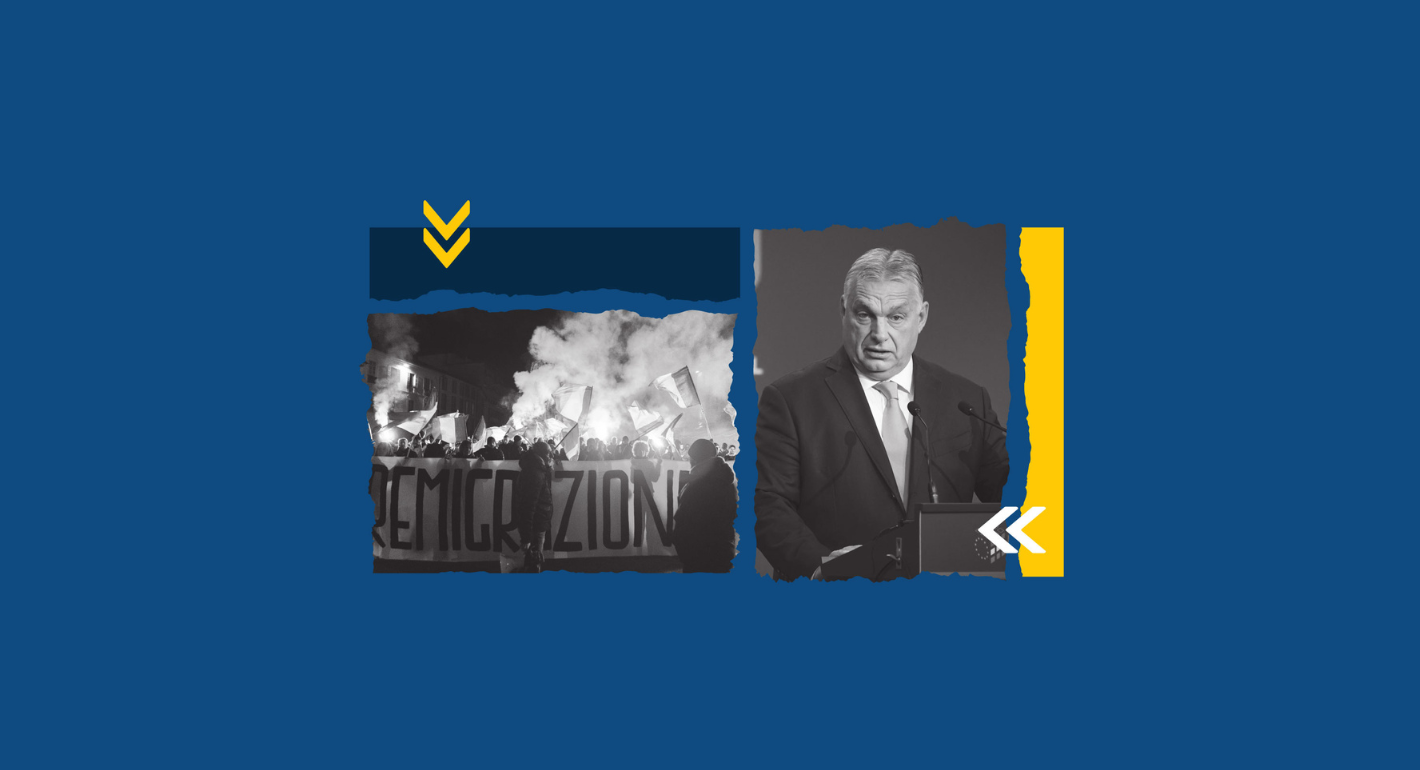
Amid increased polarization and the influence of disinformation, radical-right parties are once again gaining traction across Europe. With landmark elections on the horizon in several countries, are the EU’s geostrategic vision and fundamental values under existential threat?
Catherine Fieschi, Cas Mudde